Waste not, want not
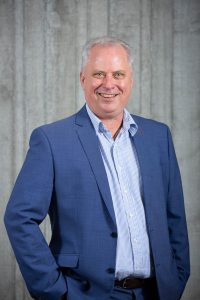
From the wine to the waste industry. WM New Zealand Managing Director Evan Maehl has gone from producing the wine to collecting the empty bottle from the kerbside, and he couldn’t be happier. He explains why waste is sexy, and why we should all care about it.

The days of the rubbish dump, seagulls circling overhead and infested with rats, are long gone. Waste management has gone high tech.
WM New Zealand (formerly Waste Management New Zealand) is our country’s leading materials recovery, recycling and waste management provider. Annually, it collects more than 1,000,000 tonnes of waste and recycles well in excess of 200,000 tonnes of that.
WM New Zealand Managing Director Evan Maehl says people have a lot of perceptions about the waste industry, not necessarily good. “Before I joined the industry, my memory was going with my father to the local tip, push off your waste and then look for bits to take home, usually to make a go-kart or something. It was pretty primitive compared to the waste management we have now.”
WM doesn’t just talk the talk, it walks the walk with its modern engineered landfills that capture biogas, predominantly methane, and turn it into electricity. Currently, they produce enough electricity to power 25,000 homes. As well, they use that electricity to power their fleet of 50 plug-in electric trucks.
Kiwis need to be better at watching what we consume, Maehl says, pointing to the fast-fashion industry we see clamouring for space in our social media feed, the likes of Chinese-based Temu and Shein. “It’s quite staggering, Shein produced 46 billion items in the last year. It might be more affordable, but it’s not your Swanndri that’s going to last 40 years, is it?”
The old adage of buying quality over quantity, something that will last, rings true. It is also about choosing natural fibres – something farmers have long known the value of, particularly when it comes to wool. Though it doesn’t mean we are immune from wasteful consumption.
“At the end of the day, it’s how much money people have in the bank account when they go to purchase an item. How do we get that message across, that how we consume is a bit of a problem? It’s also about how the products we consume are designed, as some packaging is unable to be recycled back into a circular economy,” he explains.
He uses an Australian example of bottled water – he doesn’t have the numbers for New Zealand, but you’d have to assume we are following a similar trend. In 2001 Australians consumed 240 million litres of bottled water, in glass or plastic packaging. Despite a proliferation of reusable drink bottle options, 20 years later that number had climbed to a staggering 13.6 billion litres, which translates to 504 litres per person annually. “When I was a kid, we drank water from the tap, or milk from a glass bottle,” Maehl points out.
In a farming context, the challenge is distance. In the waste industry, the cost is associated with moving the product. Farm waste tends to be dense rather than light, which adds to the cost of transporting it. The challenge is how to get waste off farm and into the circular economy.
“I think that’s part of the problem, it’s possibly seen as too hard, especially in more remote locations, and too uneconomic. New Zealand is justifiably proud of its farming heritage but I think there’s an opportunity there and it’s about how do we bring the circular economy to the farms?”
A big piece of the puzzle is having onshore manufacturers for recycling commodities. For example, there is currently nowhere in New Zealand to process recycled aluminium cans back into new cans, so they have to be exported offshore to recycle them.
Maehl points to a joint venture between WM and Marley spouting and guttering to address the problem of recycling the PVC pipe used in guttering and downpipes in houses, classed as number 3 plastic. WM has set up a collection system to retrieve the old product and take it to a facility where it is processed and pelletised, creating a recycled product that can be embedded into new PVC pipes.
“It’s about creating those circles onshore, not incurring carbon miles to make that product. Consumers are starting to want those recycled solutions to be offered to them. It’s now a pull, rather than a push into the market.”
Maehl has spent 11 and a half years in the waste industry and says sustainability is no longer fringe. “It’s mainstream. People are conscious about making the right decisions, but there is a lot of confusion out there.”
This brings us to the term circular economy – what does it actually mean? Maehl says it’s about keeping resources. “We do have a finite resource on this planet. It’s about keeping the resources we do have in play for as long as possible. Things can go around in a circle and, if they can’t, we need to question whether we are using the right products. How do we keep things going around for longer and longer?”
Farming and the good old-fashioned Kiwi number eight wire mentality go hand in hand. Farmers have long been masters of reusing and repurposing materials on farm, materials like battens in fences have often been reused in favour of a brand-new fence, for example. In the fencing space, recycled options like Future Post (New Zealand made from recycled plastic) and Repost, which takes waste posts from the viticulture industry and repurposes them, are now available and gaining momentum.
Maehl says reusing items has a big part to play in the sustainability conversation, and this includes the way products are designed, from the tomato sauce bottle on the dinner table to the suit you wear. “When I was young, we used to have hand-me-down clothes,” he says, another example of how consumer behaviour has changed over time.
The ability to repair things that are broken is another issue. If companies make it difficult for consumers to repair items, the convenience of buying a new item may seem like the easy option. “If something costs to fix and we make it difficult and closed loop in terms of fixing things, it’s that question of the right to repair, whether it’s a chainsaw or an electric toothbrush. The electric toothbrush is better for your teeth, but potentially not for the environment. There’s a trade-off, right? And there’s no one size fits all answer. Everyone is different.”
Maehl says there’s a lot of pressure on the primary sector around sustainability, something he remembers well from his time spent at the other end of the supply chain, in the wine industry. Proving sustainability will only become tougher and if we can’t step up to the mark in our markets, there are others in the cue waiting to jump in and take our place. “A good example when I was in the wine industry is we lightweighted our bottles, so when they were transported overseas, we were transporting less weight. The theory was that meant less carbon miles. Now, I curse that from a recycling perspective, because the bottles are lighter, they break easier. As I say, there’s no one answer that suits all.”
From the outside, people often view waste as a simple industry, with not much happening. In reality, it’s an innovative industry with a lot of moving parts. “It’s a fascinating industry to be in, we’re coming up with solutions. Waste touches everybody. Not too many people are zero waste in this country, yet. Waste is one of those things most people take for granted, they don’t think about it. For us, they sure think about it if we don’t pick up their bin on time.”
Maehl wants Kiwis to harness that good old number 8 wire thinking when it comes to waste, and to consider the purchasing decisions they make. “If I’m out at a bar, I will have the tap beer, which is a better choice than a can or bottle. Small consumers like us can send a tiny signal back up the supply chain.”
We can all send tiny signals, but he would also like to see supermarkets and the Government, who have the ability to send strong signals, show some leadership in this space.
He gives one final example. After 60 years of having a green Sprite bottle, which is not an easily recycled plastic as it is coloured, Coca-Cola changed to a clear PET 1 plastic bottle, which we have an onshore recycling solution for. “If Coca-Cola can change, I think everyone can change. Whether it’s in their home, school, business or farm. Everyone has to make an effort to change for the better. It requires some effort, and it requires you to care.”