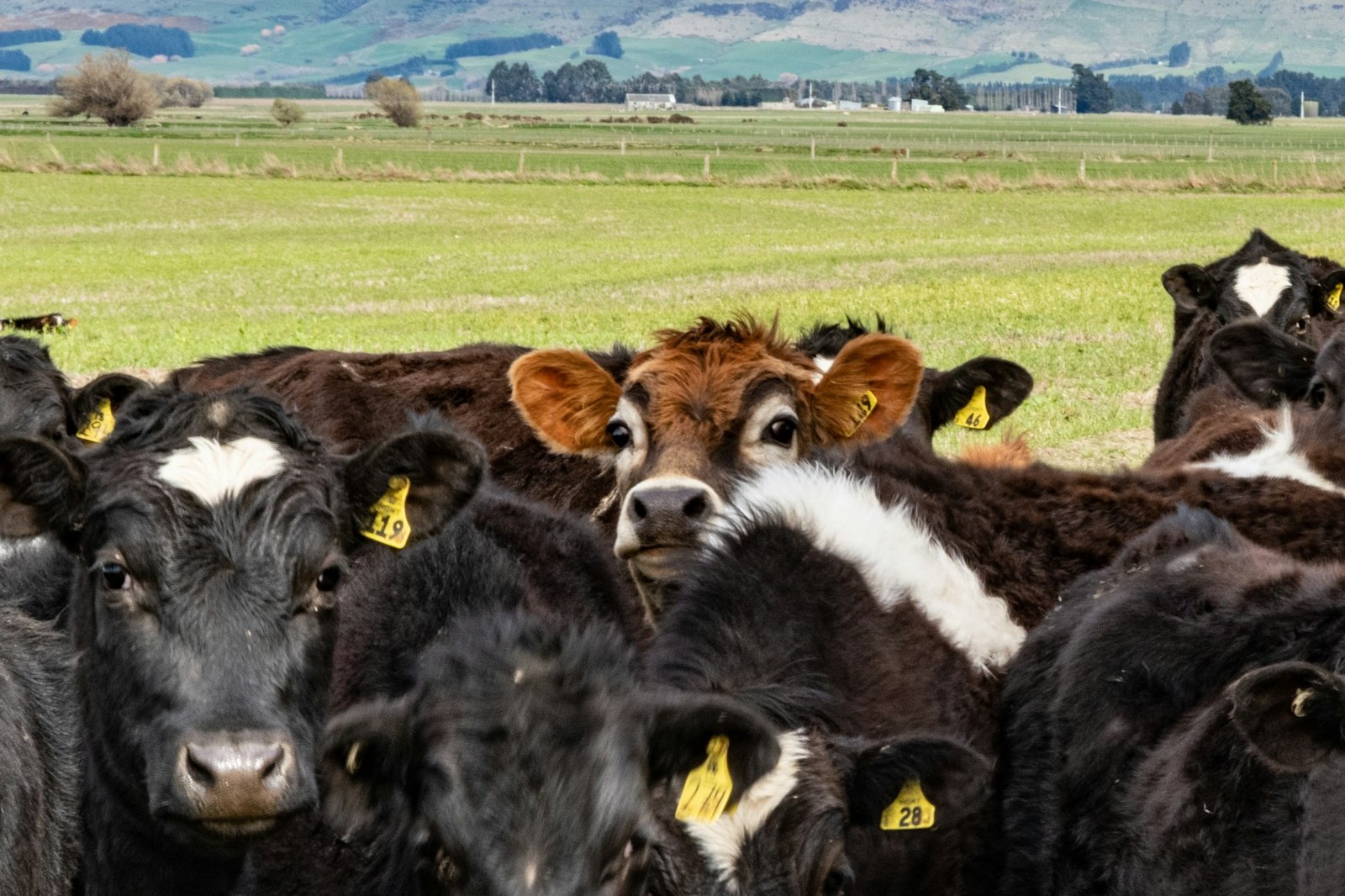
Flying into farming
Ron Small started off shepherding people around the skies. Now he prefers shepherding sheep and keeping his flying for fun. His 30-year professional flying career helped him get a foot into land, eventually owning the 3000-hectare Blairich Station in Marlborough. Words Joanna Grigg Photos Jim Tannock

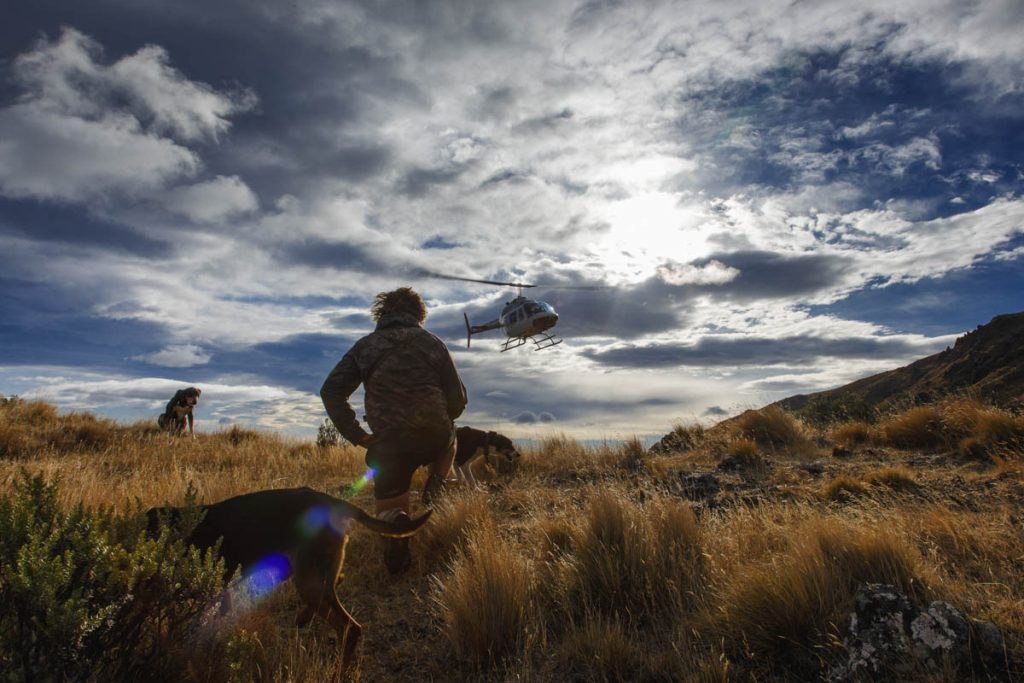
It wasn’t always an easy path for a young pilot. Born in Ranfurly and raised on a back-country station, Ron Small always had a love for the high country and Merinos. He got a taste for both mustering and flying after leaving school and working at Mesopotamia. He trained at the South Canterbury Aero Club and was soon topdressing at Mesopotamia using their Auster.
By 1974 Ron had his commercial licence and began a career with Air Safaris, Lake Tekapo. He jumped at the chance to pilot helicopters and spent a couple of years training in Queenstown, including a year in Fiordland where he long-lined out live deer.
Along with Alpine Guides, he pioneered heli-skiing, flying out of Glentanner airfield with Whirl Wide Helicopters. The team of alpine guides were great at ski guiding but it took a few close shaves with avalanches for Ron to learn the best landing spots. “I guess we developed the prototype for the sport.”
There weren’t so many rules those days, Ron said, it was a learn as you go environment. Heliskiing was popular in Canada so they had that to follow.
It was Ron who flew a long-line rescue mission on Mt Cook at 11,500 feet, to lift off trapped climbers Mark Inglis and Philip Doole. This was in 1982. Days before, an Air Force Iroquois helicopter crashed on the Empress Iceshelf, while attempting the rescue.
He was at the controls for many tourism adventure and extreme ski movies. If you ever saw the tourism movie with Billy T. James, shot in the Tiger Moth; that was Ron behind the controls in the helicopter.
A man of few words, he won’t volunteer information first hand and admits the people side of tourist helicopter work was not really his thing. After meeting Sue (a teacher in Tekapo), and starting a family, he wanted a change.
Rumours were circulating of a wool boom around the corner (it was well forecast, Ron says) and the Smalls decided to look for a farm. One rule – it had to be Merinos.
It was a challenge for a young pilot without farm ownership history, to be taken seriously by the land agents. They had a crack at a few Otago properties and were unsuccessful. Otago stations were tightly held so they were encouraged to look at Marlborough. “I didn’t know anything about the place.”
The Smalls went north in 1992 and, after two visits, put an offer on a 200ha hill country property, The Haycocks, Wairau Valley. “It was the era of discount mortgages and farmers exiting, so we were able to get in.”
Ron and Sue were helped into some good Merino genetics by the late Robert Jopp of Moutere Station. The Smalls and Jopps established the Moutere North Stud partnership at The Haycocks, in 1999. The founding flock was 50 Moutere ewes and a ram called Noah.
Ron and Sue started building a client base for rams. It was hard work getting back into farming fitness, after flying for so long, Ron said. When the 3000ha Blairich Station came up for sale 11 years later, Ron was ready to move up in scale. Longtime family accountant, the late Allan Hubbard, gave his financial support and they started a 50:50 partnership in the Awatere Valley property. Five years on, they were able to buy Allan out and, with his blessing, farm on their own account. “Allan’s contribution to agriculture was massive. He was instrumental in setting up maybe hundreds of young couples into farming,” says Ron. “It was all done on handshakes, in the days when they meant something.”
Twenty-five years later, Ron’s son Tom Small, his wife Claire and daughter Georgia, are living on Blairich and running the operation with Ron and Sue. Some of the flats which are suitable for vineyards have been subdivided off for Ron and Sue’s daughter Sally, and a parcel has been sold to a local wine company. Blairich will develop 12ha for their own vineyard, which will then be leased back to the wine company. All part of a long-term succession plan.
Blairich has been through tenure review. It is now 100% freehold, after 200ha of bush went into Crown ownership, as well as a cash payment made by the Smalls. Blairich is relatively scrub and weed free (90% effective for grazing). A spray and burn and spray policy, of the matagouri regrowth, keeps it clear, says Ron.
Burning after spraying is the secret, he said, as it kills residual plants and provides the ideal seed bed when over sowing. Done properly there should be no need to deal with regrowth for 20 years or more. “Leaving sprayed dead wood to break down is only half the job”.
Subterranean clover, cocksfoot, Arrowleaf and red clover have all been oversown. “Spending $500 a hectare is a cheap way to get land, otherwise you will slowly lose the farm,” explains Tom.
The 300ha of flats are a real asset and home to 60ha of lucerne for balage and hogget grazing. The heavier wetter areas are sown with fescue and annual clovers like Yannanicum. Hill blocks range from 40 to 174ha and a couple of higher blocks are up to 350ha.
Wool pays bills
Strong wool farmers, don’t turn away: Ron Small thinks Merinos could have a wider footprint across New Zealand farms.
He would say that of course, being in the business of selling Polled Merino rams. But at today’s lamb prices, he might have a point. It’s not just the joy of seeing white, pretty wool when you open the fleece but the wool cheque has been a steady earner. Ron said the perception of Merinos being difficult to manage is only partly true. “Sure, feet can be a problem in wetter environments as can worms, but if your management is ahead of the game, then no problem.”
He said genetics are the key to good animal health; choose conformation
and constitution before you consider wool quality.
Son, Tom Small says the 3600 Blairich commercial mixed age ewes clip five kg of fleece wool each. The majority is sold on forward contract at around $26/kg clean. The maths tells him he can bank on $80-100 per ewe/shorn. Auction prices are well down on last year, so uncontracted wool is expected to be down.
The 950 two-tooths clip a bit more as they are “fed a bit better”. All up, around 40 tonnes of wool leaves Blairich each year. Wool is between 17.2 and 17.5 micron and is highly regarded in both the competition and commercial worlds. Blairich has won the top commercial fleece prize at the Canterbury A&P Show several times.
Lamb returns are about 25% of overall income. Wether and some cull ewe lambs are typically sold store at weaning, in early January. Tom does see opportunities to winter lambs if he can find space. “It is a good return with the carcase and wool but they just impact ewes if we keep them on.”
Around 1500 ewe lambs are retained then culled to 1000 for breeding. The 600-stud ewe flock produces 380 of each sex, with 120 ram hoggets retained. Around 80 rams are sold each year. Tom said they primarily breed rams for their own use and any sales are a bonus. “Clients see the commercial benefits in our genetics which we take pleasure from, as a huge effort goes into data collection generating breeding values that mean something.”
Cattle make up 25% of the total stock units and the policy is to sell weaner calves from Angus/Hereford cows. The lambing percentage sits around 100% depending on whether lambs get nailed by pigs. Pig control is an ongoing effort. Two tooths scan 115-135% and lamb 95%. Tom aims to keep mixed age ewes scanning between 145% to 150%. “Any higher and the foetal loss increases as we struggle to feed that many twin-bearing ewes and run out of suitable lambing country.”
Ewes lamb October 10 and are shorn pre-lamb and priority-fed straight after shearing. They footbath as required and the presence of footrot is seen as a positive when breeding. “You can’t breed resistance without exposure to the disease,” said Tom.
Both Tom and Ron share a huge interest in breeding sheep and are prepared to put their hand up for industry jobs too. Ron was a founding director of the NZ Merino Company and has been President of the Stud Breeders Association and local Merino Association. He’s travelled to visit fine wool growers in South America, South Africa and Australia, and to markets in Germany.
Tom toured Merino studs in Australia in university holidays, in between finishing his B ComAg degree at Lincoln University. His career path took him to London, then across Russia, Mongolia and China, before ending up in British Columbia where he worked as a hunting guide. He had a stint in the gas fields of Alberta then spent a season branding calves from 10,000 cows at the 1.2 million ha Douglas Lake Ranch.
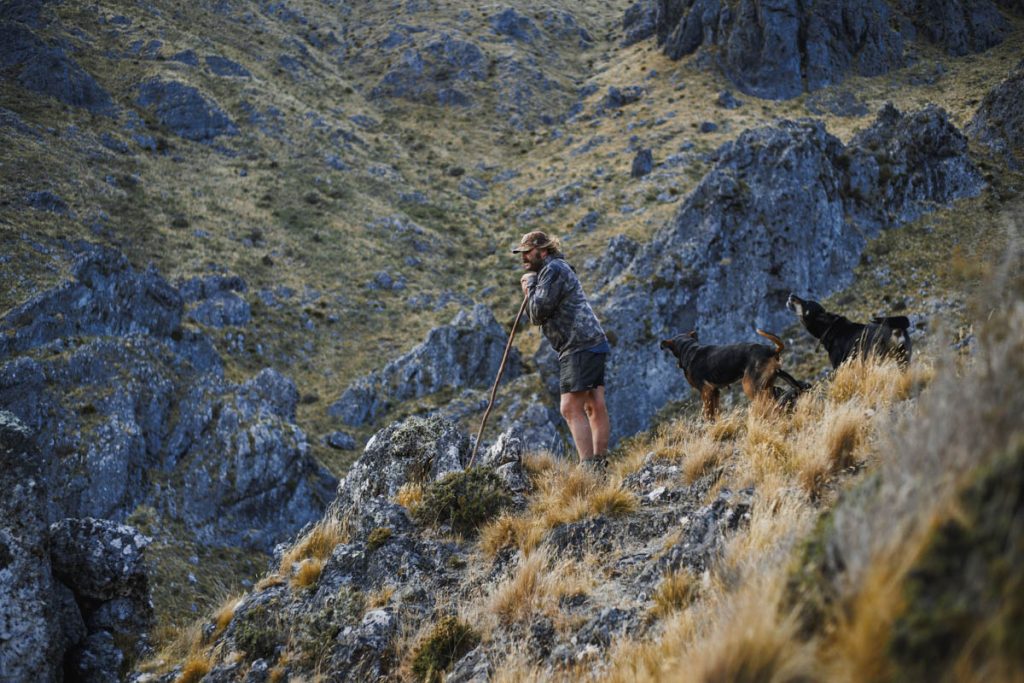
He’s been back at Blairich for 15 years. He and Claire travelled to Norway, Germany, Latvia and Lithuania, on the Devold growers’ trip in 2023. Blairich has supplied the Norwegian clothing company since the Sheep-to-Shop programme started. “It was great seeing our Blairich yarn at the factory being turned into a bolt of fabric with a Blairich tag, with complete traceability.”
Tom has been teaching Merino Sheep Judging for seven years and is a Marlborough Merino Association member.
Ron said that, for a bit, they tried to breed a range of types for clients, from super-fine wool for spinning into suit fabric, to slightly stronger wool suitable for outdoor wear. They are now focused on outdoor wear markets, breeding 17.5 micron wool with a slightly bolder crimp and a longer staple. Stud ewe staple can be 100mm and commercial 90mm. “Suiting was becoming very niche,” Ron said.
Polled Merinos (no horns) were introduced in 2016. Blairich Stud data is recorded on the Australian Merino Select system and they are one of six studs in NZ that have a Five Star Rating (top level) for the amount of data collected. NZ flocks are ahead of Australian stud flocks when it comes to data quality.
The breeding objective is balance. This means heavy-cutting and quality wool, combined with ‘enough’ growth and carcase plus improved health traits, said Ron.
Tom believes wool weights need to be collected from every stud sheep every year, not just as a yearling.
“There are sheep that clip heavy as a yearling but go on to be below average as they age and we don’t want those.”
“Yearling clean fleece weight breeding value is a poor predictor of lifetime wool production.”
The Footrot Breeding Value (FR EBV) is generated from data collected on farm, which involves scoring each foot (0 to 5) during an active footrot challenge. Ron said they have seen an improvement in footrot resistance in the stud families. A lucky purchase of a ram from Australia (Roseville Park 43) showed a -1 score on FR EBV.
“We have families of sheep that don’t lose condition when they have footrot, or recover quickly, or don’t get it at all,” says Tom. Troughing is done for all sheep through the yards but tipping and inspection is only done if it’s a really wet and troublesome season.
It’s Claire’s job to do the stud pedigree data entry, using an app called KoolStock. Mobble is used for tracking of all stock movements, stock numbers and treatments. Tom likes it as it’s simple to use and affordable.
When Country-Wide visited in late March, Blairich was in a six-month drought. Records show it was the driest period June to end January for 94 years. Over summer, Tom turned out the commercial ewes on the higher blocks. Stud ewes were being fed balage and oats. The ewe hoggets hadn’t had a change of scenery for a month. They are being fed oats on a sacrificial paddock. “Pasture growth picked up a little mid-March but is now going backwards,” Tom said.
Supplementary feeding will carry on as required. The secret to avoiding a costly wool break along the fibre is not changing feeding levels rapidly, said Ron. Wool can be discounted from $25 to $12/kg if not strong enough. The Smalls get a $2/kg premium on contract if wool is over 40 newtons. Wool misses the contract if under 36.
New woolshed and yards
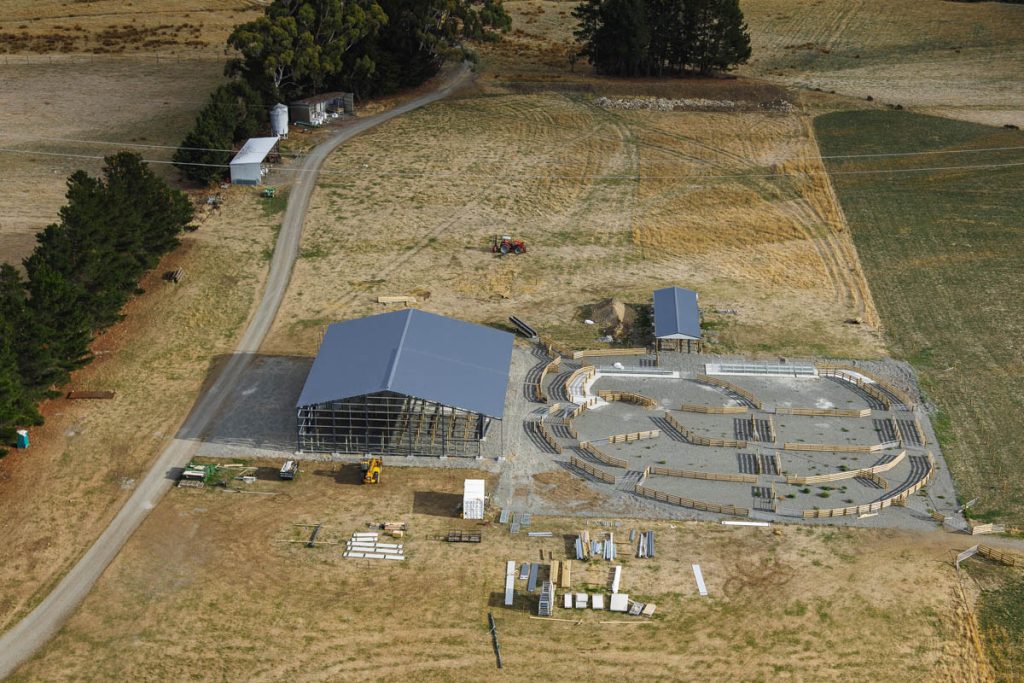
Farm succession meant the Blairich woolshed had to be moved or be rebuilt on a new site. “It was a dog of a shed really, so a new build was the best option,” shares Tom, who called on his past experience when organising the woolshed and yard build. Twenty years ago, he was a project manager in London, for a construction company kitting out supermarkets and thinks the principles are the same.
Farm Build Christchurch is doing the build and, together with Tom, customised the woolshed. Tom designed the sheep yards working from a range of Australian designs and yes, he admits he’s gone next level.
They are designed so stock treatments can be done while the drafting carries on. The drafting race runs north so there are no shadows in front of sheep. The working races are steel with a raised floor of plastic grating, so can be hosed out. The height is halfway between Tom’s height of 6’4” and shepherd Nicole – “she’s quite a bit shorter.” They are both three-way draft.
The circular layout helps sheep flow and there are small internal ‘diamond shaped’ pens in the centre. A third race on the outside is for classing. A weigh crate can be dropped in here.
The yards and 850 square metre woolshed are a significant financial investment. The woolshed will run off a generator as the quote for power was prohibitive. Quite ironic since the main South to North Island pylons run almost overhead.
One uncommon feature, are the Australian tumble swing gates, which roll up and back and lie parallel to the raceway. Tom saw them in Australia and liked them.
The woolshed is a steel portal shed and will have plastic mesh gratings above a concrete base. It will store 100 or so bales, close to half the annual clip. The north side has a kitchen, deck area and an animal health room.