Why a Southland dairy farmer built a 7ha wetland and installed solar
Cracking on with what’s “right” is beholden on farmers who truly want to farm for future generations. Southland dairy farmers, Jon and Birgit Pemberton, believe there is no time to wait.
SOUTHLAND DAIRY FARMER JON PEMBERTON has come to the conclusion New Zealand needs some serious structural changes to science and extension delivery if environmental outcomes are to be achieved.
Wider cost sharing to implement on-farm changes and sector-neutral regulation are also a must, he says.
His thoughts are the result of research and extensive travels carried out for his Nuffield Scholarship, which started out exploring whether a market mechanism could be developed at a catchment scale in New Zealand for nature-based solutions such as wetlands and significant plantings.
It was an idea sparked by both his and his wife Birgit’s endeavours on farm, their long-time involvement in their local catchment group, Jon’s experience as an Environment Southland Regional Councillor and Birgit’s work supporting farmers with farm plans.
The findings are novel for New Zealand and look for a bold new approach. In some aspects, they’re more stringent than you might expect from a farmer perspective, but they’re unapologetically aimed at getting the environmental outcomes Jon sees as imperative for the next generation.
The changes are big and structural and may be uncomfortable for some but the status quo on regulations and efforts driving environmental improvement are already costing farmers money and creating angst, all while often failing to achieve the outcomes needed anyway, he says.
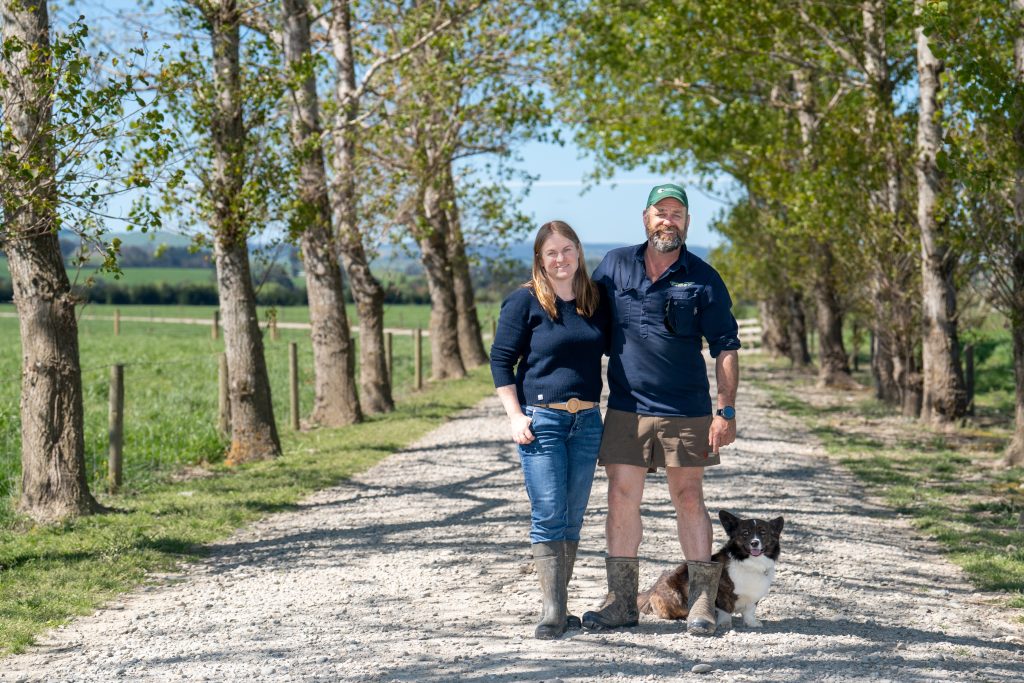
While ideally, he’s impatient to see definitive action and a long-term, concrete pathway forward, he’s also realistically pragmatic, as is Birgit. So the couple are just getting stuck in and taking actions themselves that already have the weight of scientific evidence behind them when it comes to sustainability – particularly when it comes to improving freshwater quality.
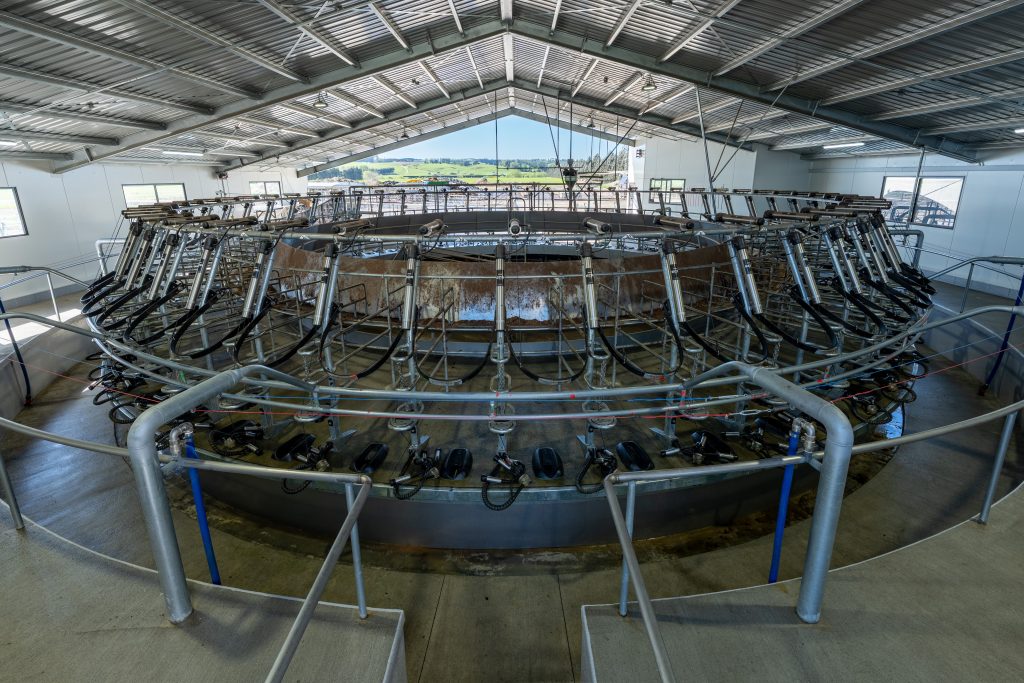
It’s those actions that have enabled them to purchase a neighbouring 116ha organic sheep farm, combine it with their existing 139ha dairy farm, and essentially re-convert it, building a new, 54-bail farm dairy to replace the 28-aside herringbone. They’ve also built a 350-cow concrete feed pad and sited it so it could be expanded in the future. A new central lane has simplified the farm layout too.
The re-conversion has brought their total farm area to 255ha but it’s also focused their farming activities to one location. Prior to the development, the couple had also been leasing a 260ha farm, 15 minutes away at Menzies Ferry, where they milked 800 cows.
They haven’t renewed that lease and last season, when cow prices were at a high, they sold most of the high-quality cows from the Menzies Ferry operation, leaving them with a young herd on the current farm for this season.
The Brydone development borders the Mataura River, a river the couple have strong feelings about living and working alongside. Over the past 10 years, they’ve both learned a great deal about what impacts it and how effects on the shallow aquifers under the farm land adjacent to it, can indirectly affect its health.
Scientists, including Land and Water Director Dr Clint Rissman, have helped build that knowledge through initiatives with the Three Rivers Catchment Group and the Edendale Aquifer Group.
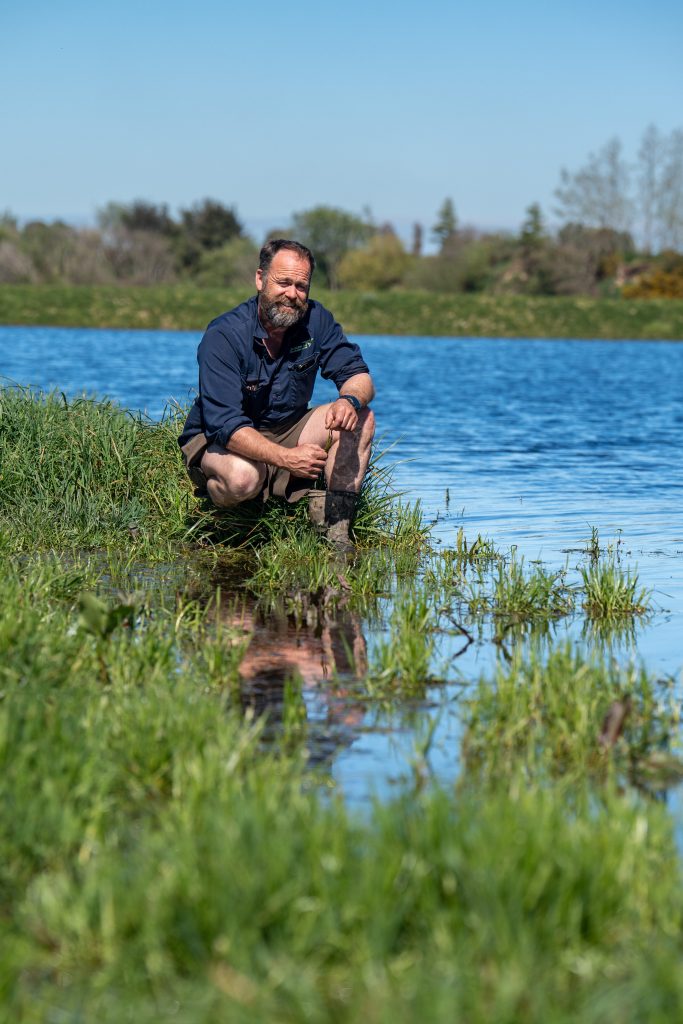
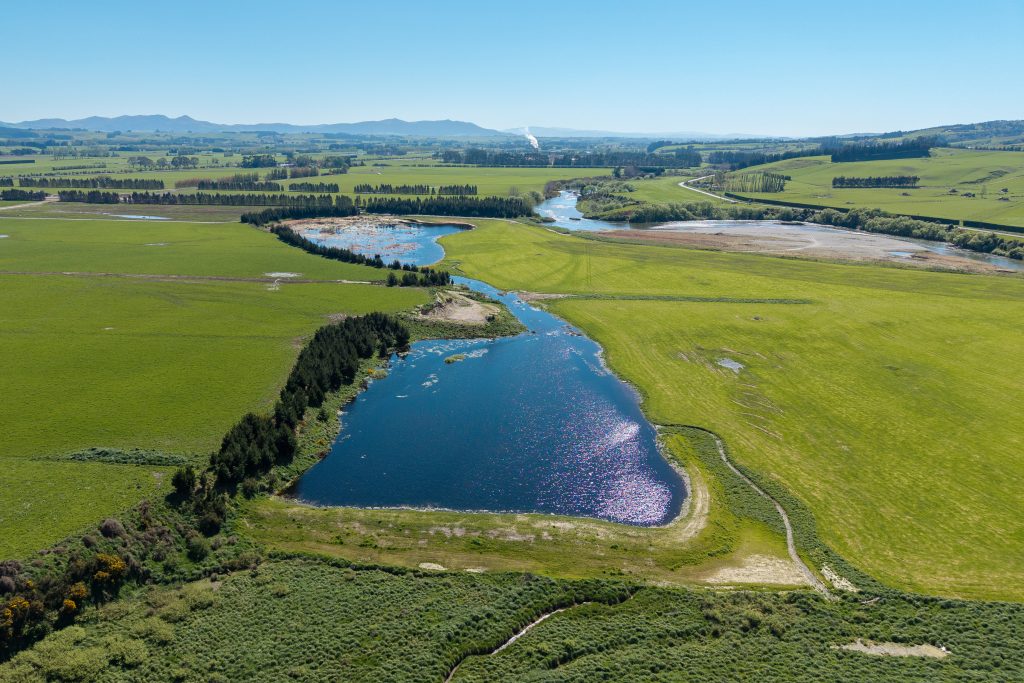
“To make the land use change, we had to look at the farm holistically. By building a wetland area on the low terrace adjacent to the river, we were enhancing what nature had already sort of started.
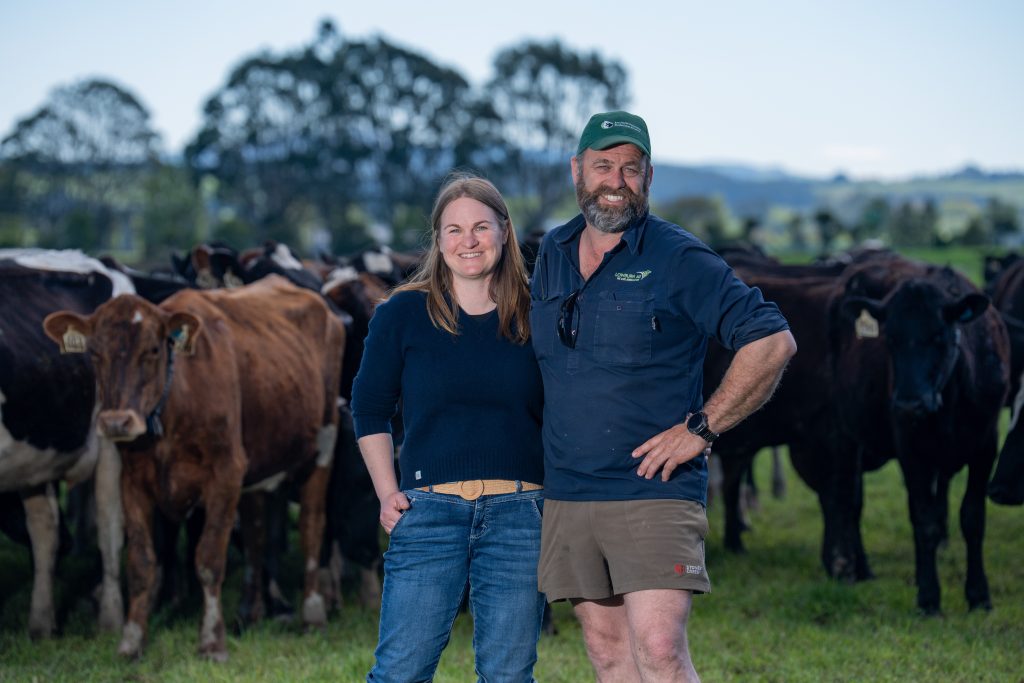
“Those flats already had a swampy area and we’d stopped grazing the bottom terrace, just making silage there. By formalising that and ensuring it wasn’t counted as a milking platform, we could cut nutrient losses from the whole farm, making the land use change possible,” Jon says.
The 7ha constructed wetland required three consents and input from consultants and engineers.
Regulations around construction within what’s deemed to be existing wetlands have been criticised by farmers and environmental groups alike as being prohibitive and cumbersome. But like many farmers, Jon has been prepared to push on with the process, at a cost, try to achieve win:win outcomes for the environment and the farming business.
“The rules in the NES (National Environmental Standards for Freshwater), that the previous Labour government wrote to protect water quality, are now getting in the way of enhancing existing wetlands. And while that was never the intention, changing legislation comes with a cost that the government hasn’t been prepared to spend.”
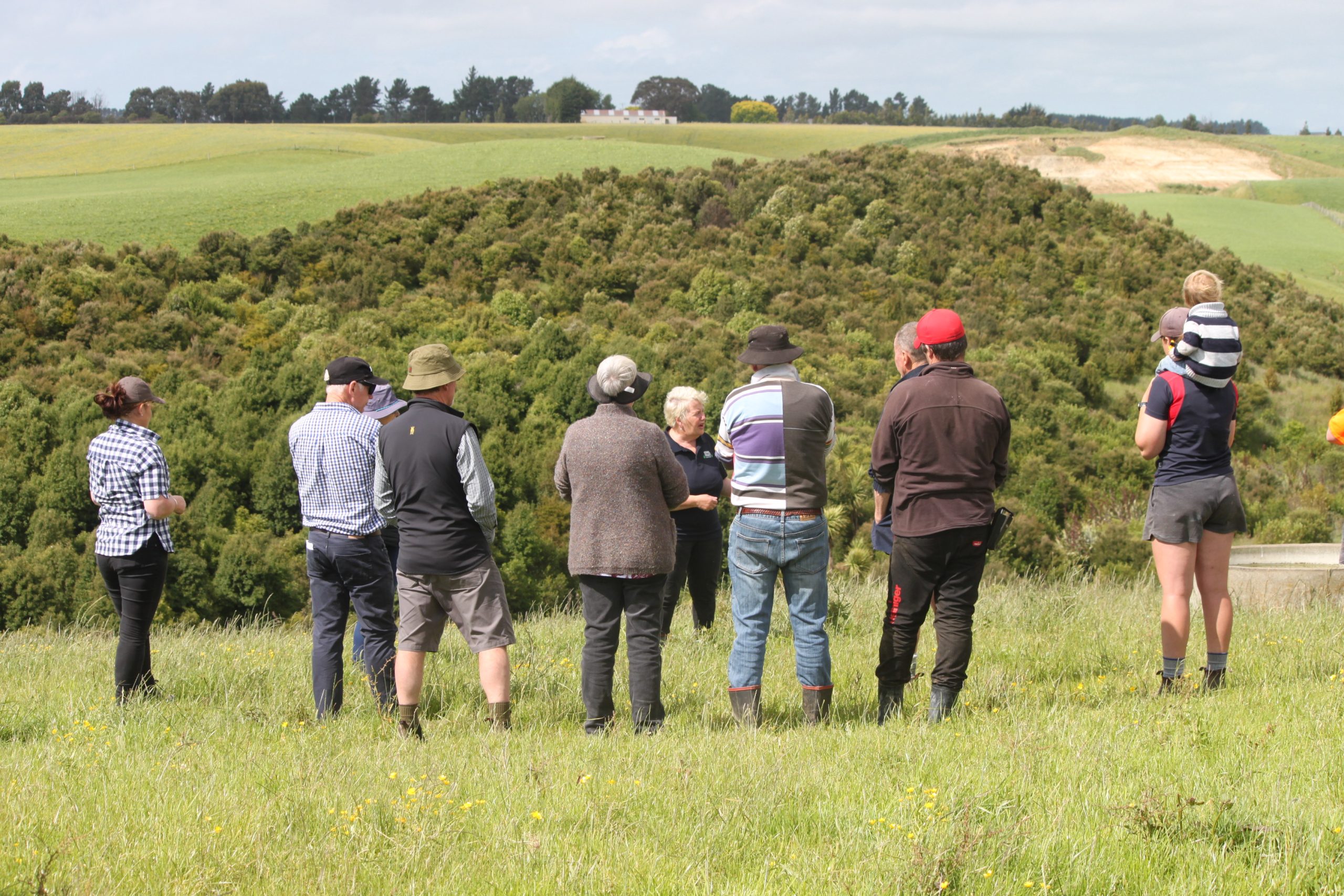
Fish & Game New Zealand and Bird Habitat Trust have helped fund the construction and the trust held its national AGM at the farm so members could visit the wetland. Jon says one of the most gratifying moments was when he saw the members enthusiastically watching cows being milked through the meeting room windows.
The couple have also worked with Clint to establish three water quality testing bores that can more directly measure the effects from the farm as the water supply bore on the farm is set into a shallow aquifer and is affected by what’s happening further up the catchment.
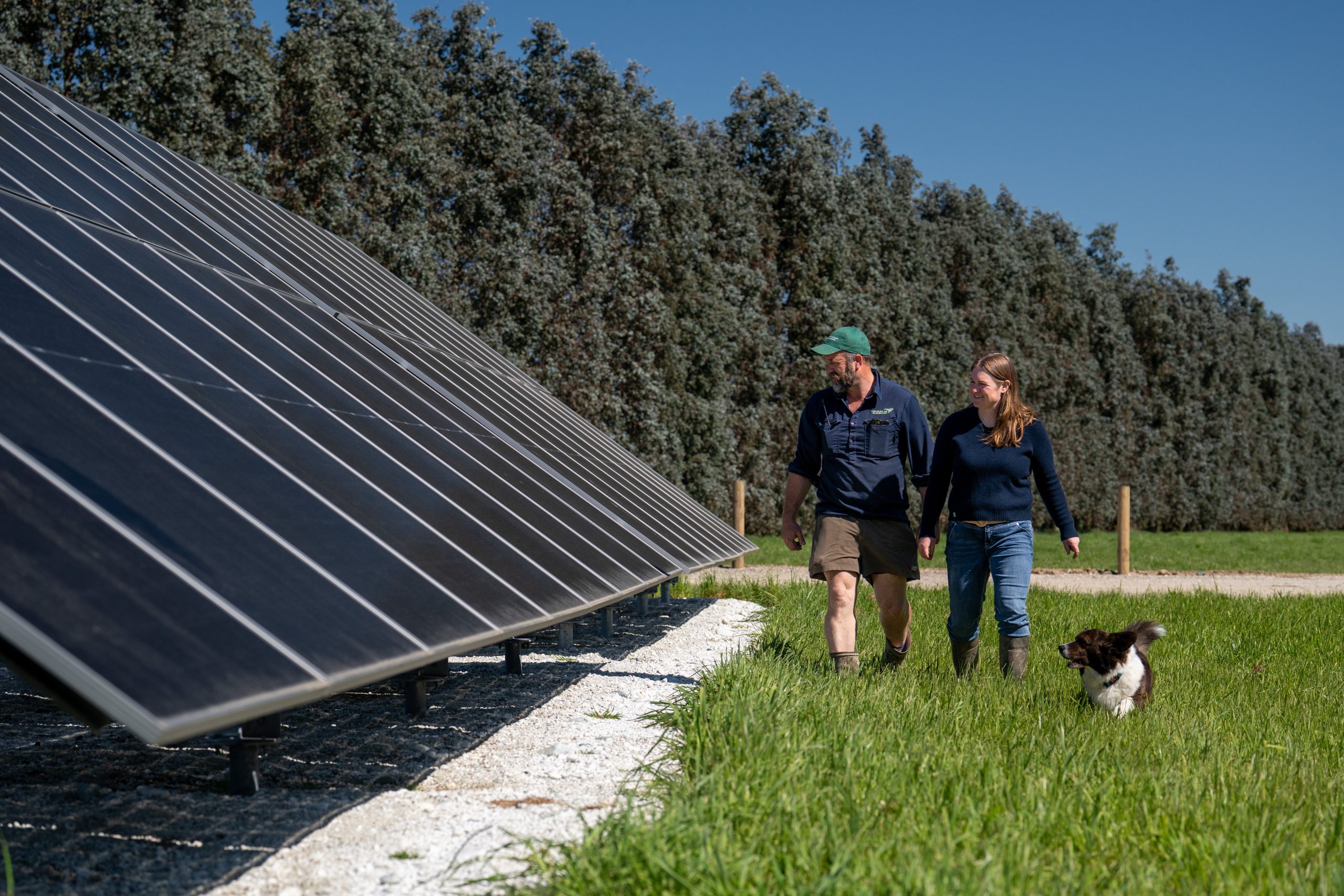
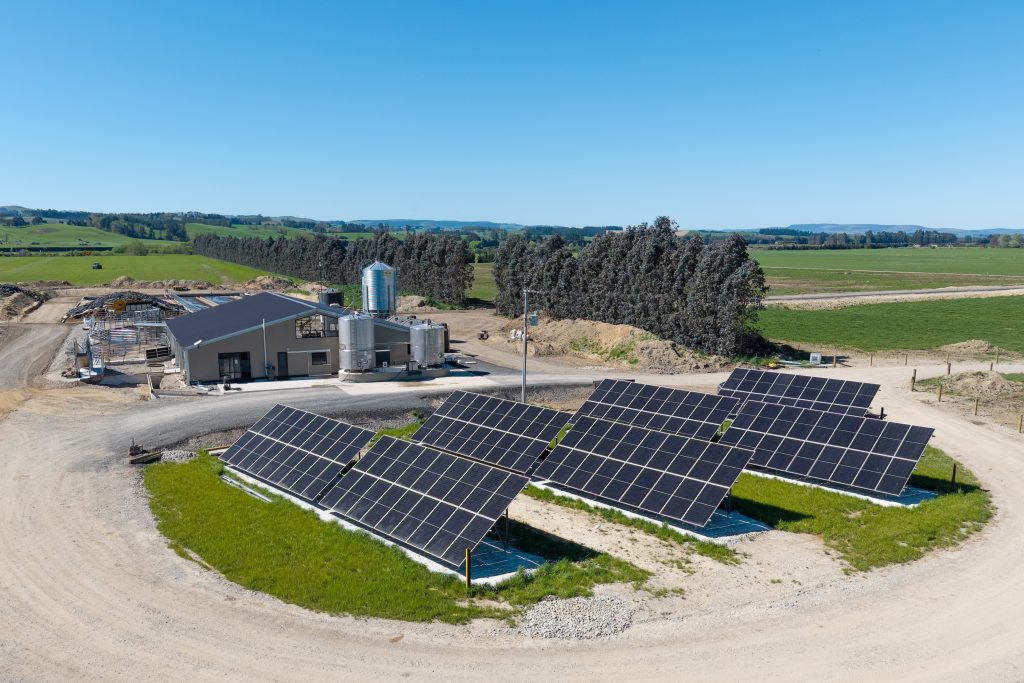
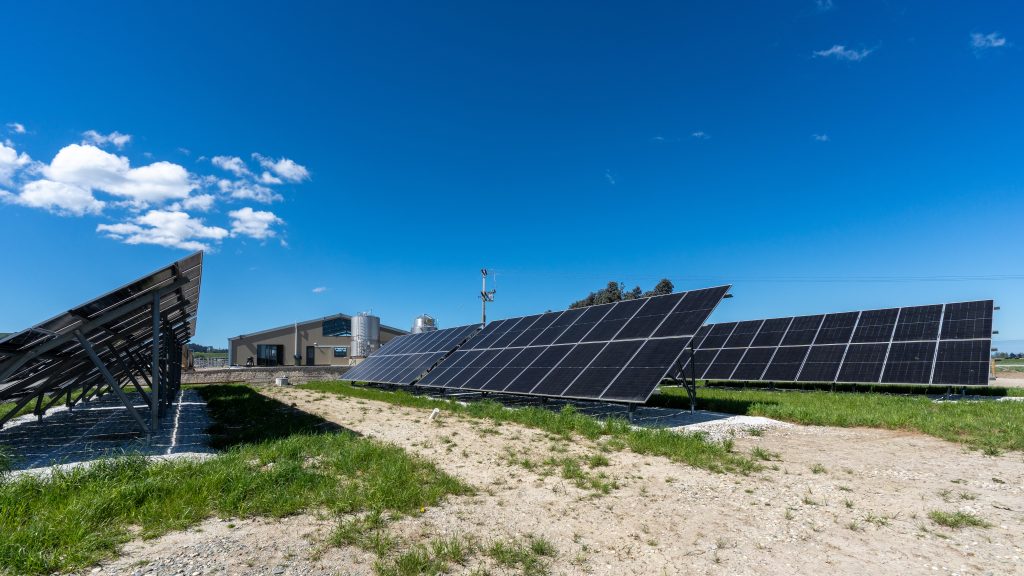
Sustainability, resilience and business productivity often go together. The wetland and removal of the lower terrace from the milking platform mean no trough and waterline or fence repairs during a flood. Likewise, ground-mounted solar panels and a battery, all installed in the tanker circle, are providing homegrown electricity that powers the farm dairy regardless of diesel shortages or electricity company outages.
The decision to go with solar was made when last year’s windstorm in Southland created so much havoc for the farm team after power outages and the backup generator also “blowing up” that it meant Jon had to return home from Rome.
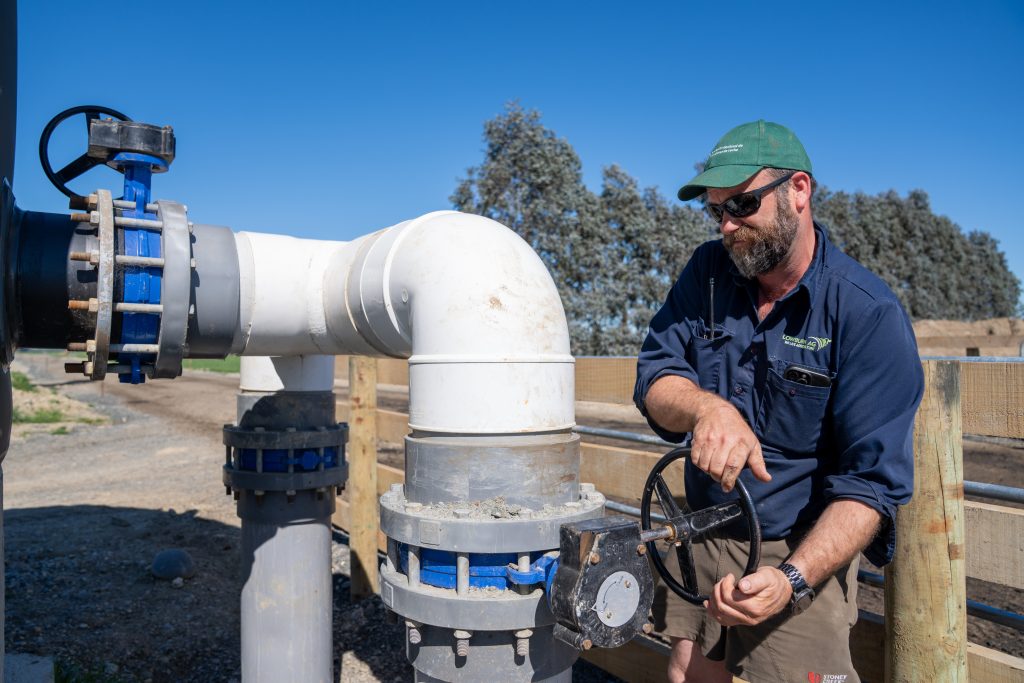
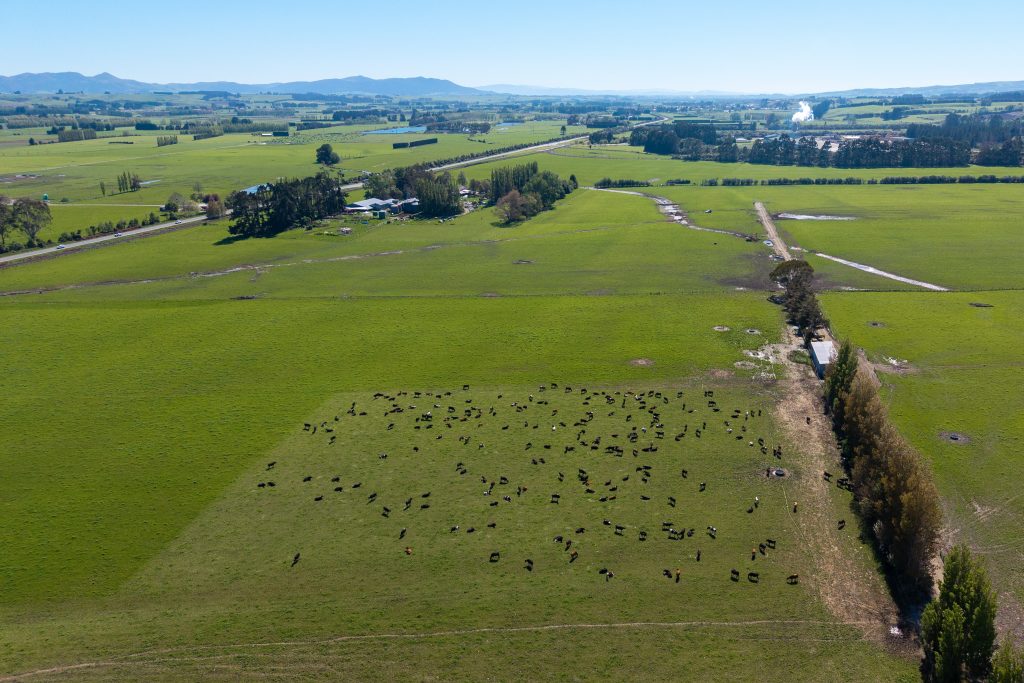
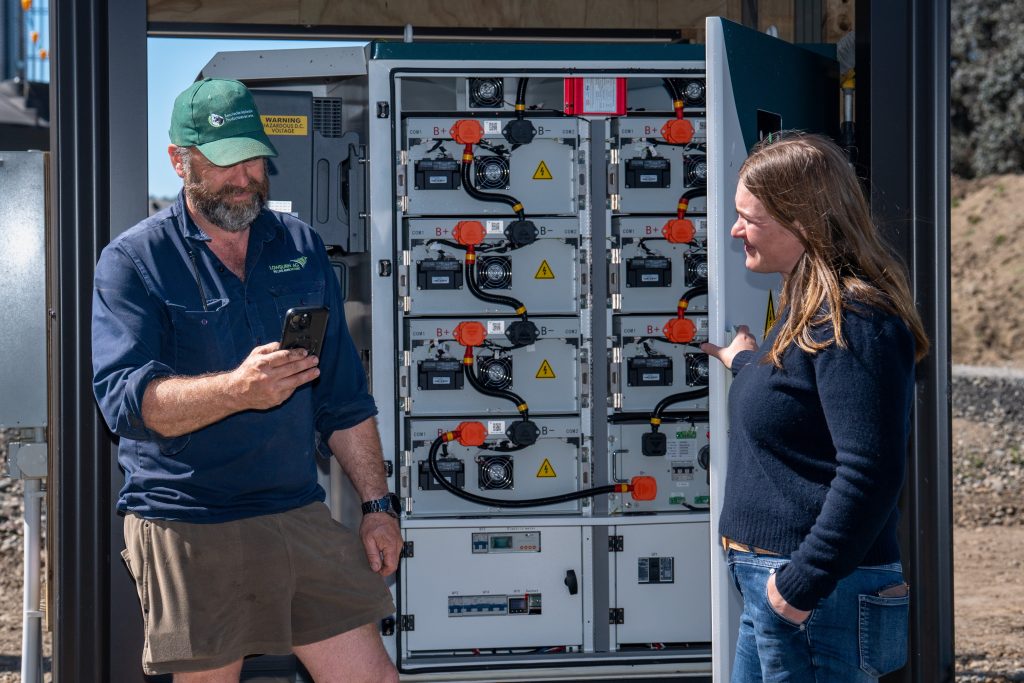
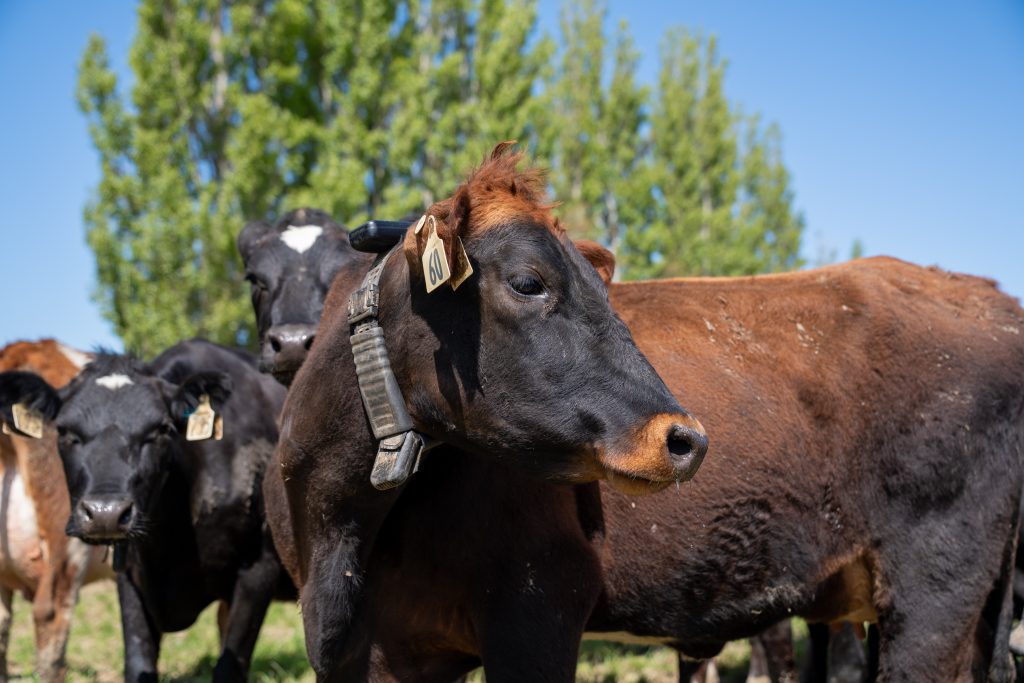
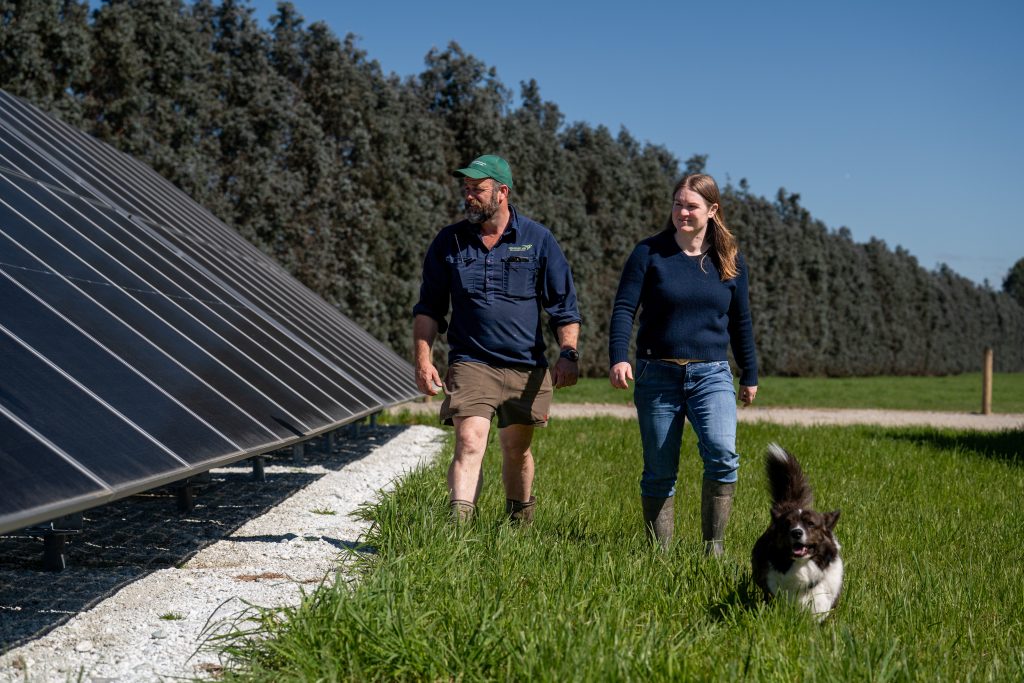
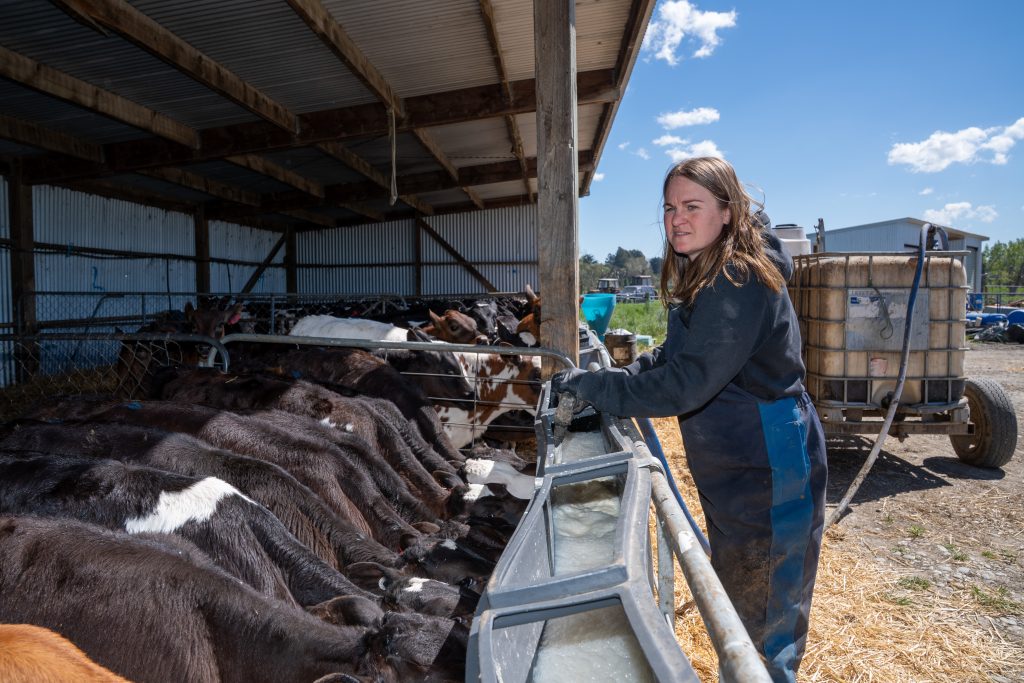
Jon and Birgit look to science-backed advances to achieve sustainability on their expanded property at Brydone in Southland.
“We’d been looking at the budget and trying to decide on whether to go with solar or rubber matting on the feed pad and that storm really made the decision for us.”
The setup includes 140 solar panels that produce close to 75kW of energy along with a 50kW inverter and 100kW hour battery. The system can supply about 80% of the farm’s daily electricity requirement with the battery able to provide enough energy for 2.5 hours of milking.
“The solar is giving us a mix of cost saving and resilience. We thought it would be about a 6.5-year payback period but it looks like it will be sooner than that,” Jon says.
Jon’s brought together numerous design features in the new 54-bail farm dairy including a sunken pit around the circumference of the platform to make cleaning easier, water lines plumbed into the handrail to minimise plumbing under the concrete, a wide, rubber matted exit area for cows and a curved race into the automatic drafting gate.
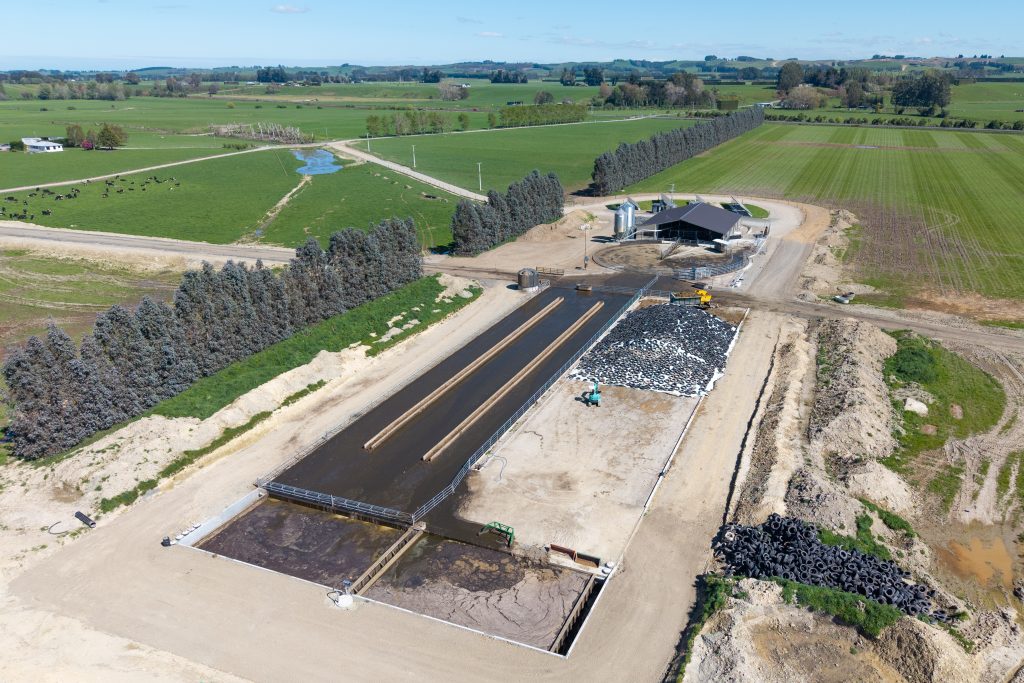
The feed pad uses flood wash and the effluent infrastructure has been future-proofed so it can accommodate a barn or expansion of the feed pad.
Jon and Birgit have invested in Halter this season. Along with the advantages they’ve found in pasture management with the virtual fencing, the system also enables them to time when they bring different groups of cows onto the feed pad.
“The information we’re getting out of it for animal health and mating is pretty impressive too,” Jon says.
Virtual fencing technology could also enable novel grazing approaches that may have environmental benefits. “I’d love to try some agri-forestry on farm and have 30-40m runs of trees. You’d be able to have strips of chicory, ryegrass and plantain for example and use Halter to manage the daily intake across each as well as manage the different species to make them more persistent,” Jon says.
While some farmers are motivated and willing to make changes to their systems to create better environmental outcomes, frustratingly, their good work can be undone by the “laggards,” he says.
During his Nuffield travels, Jon visited the Chesapeake Bay area in the United States where water quality issues had been turned around thanks to an approach that brought all sectors impacting water quality, science and regulatory bodies together.
“First of all, no one got a free pass – not farmers or any particular farming sector, not local body authorities or industry – and none of them had control over the science or management of regulations.
“When the science and extension was independent, it developed trust, and once you get that trust, everyone gets on board and you get quick, serious changes to the environment.”
New Zealand needs more independent science and extension, he says. His suggestion is for an academic institution such as Lincoln University to act as an “honest broker”, delivering independent science to test products or systems approaches for their efficacy.
“Then you need mandatory nutrient management plans with independent compliance checking. The regulations have to be sector neutral. What I saw in the US example was that it didn’t matter what you were farming or which district you were in, you had to stick to the same rules. They also had a unifying governing framework that went across political boundaries.
“That’s a stark contrast to what we have here. Just look at the differences between Southland and Otago and how you manage effluent.”
His report suggested better public cost sharing to make compliance for farmers economically viable.
“A funding timeline could be introduced where more funding is available early on. It’s a way to motivate people to get on and adopt technologies or change practices because if they are laggards then there’s less or no funding at all available to them.”
Catchment groups are already making effective differences to freshwater quality. By resourcing them with independent science and professional co-ordination they could do even more, he says.
Farm facts
Owners Jon and Birgit Pemberton
Location Brydone, Southland
Total area 255ha
Milking platform 220ha
Support area 20ha, including 5ha of wetland, with the balance used for silage. Stock are excluded.
Livestock 650 crossbred cows
Production 350,000kg MS target
Supplement 1t DM/cow (500kg palm kernel and 500kg pellets) plus 500kg DM/cow silage made on farm
Farm dairy 54-bail rotary, automatic cup removers, in-bail feeding, Allflex drafting gate
Infrastructure 350-cow concrete feed pad
Technology Halter, solar
Wintering Off farm
First published in CountryWide, Summer 2026-27, pages 41 to 50.