All seven major parties back catchment groups, but differ on how to fund them
All seven major political parties are committed to supporting farmer-led action to improve catchment and freshwater outcomes for New Zealand, a recent survey run by Catchment Communities Aotearoa (CCA).
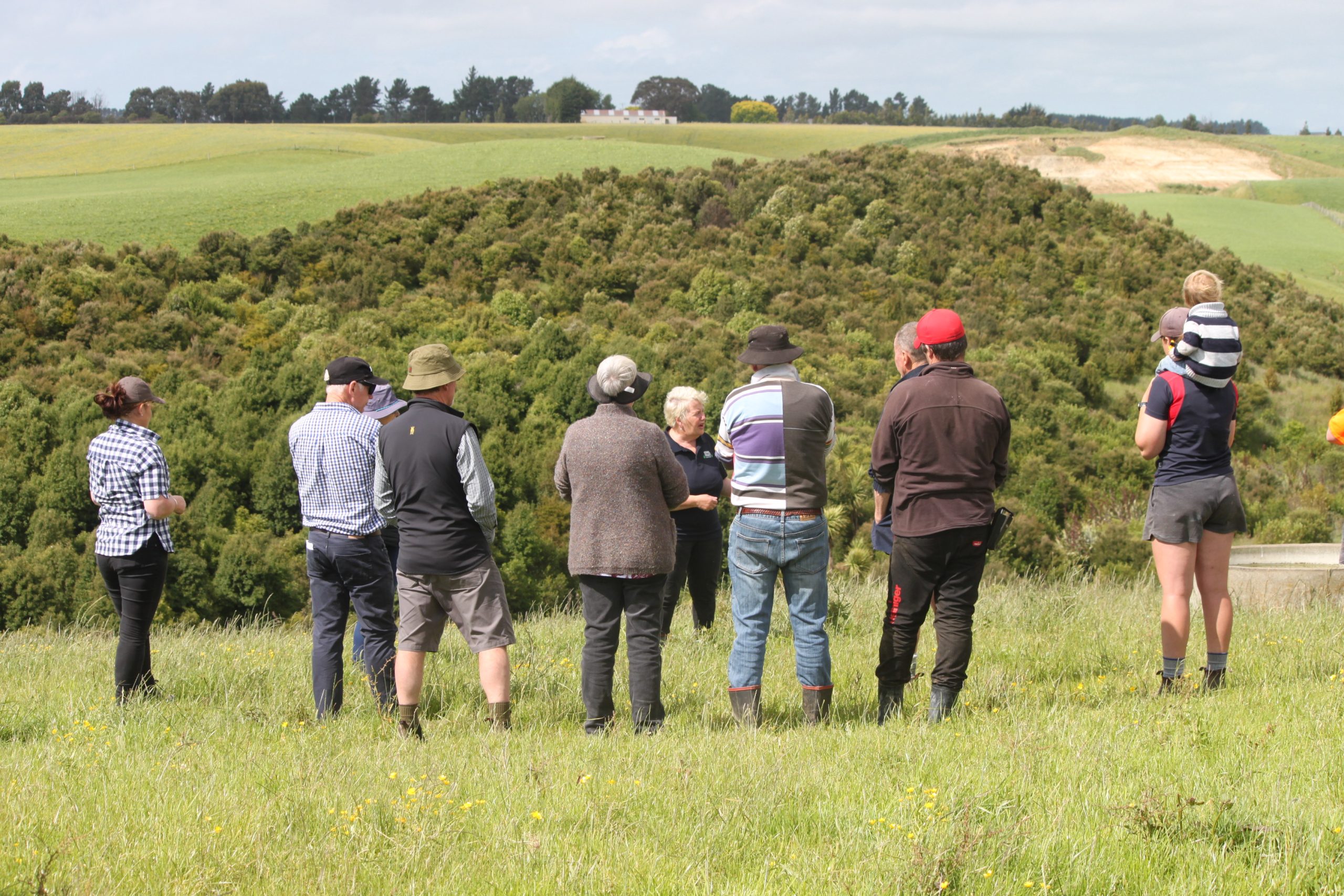
Rangitīkei Rivers Catchment Group on a field trip near Halcombe.
This article is part of CountryWide’s Catchment Groups special report, Summer 2026-27.
ALL SEVEN MAJOR POLITICAL parties are committed to supporting farmer-led action to improve catchment and freshwater outcomes for New Zealand, a recent survey run by Catchment Communities Aotearoa (CCA).
National would continue to support community-led activities, noting its Budget 2026 announcement to invest $40.5 million from the Ministry for Primary Industries (MPI) over four years for rural catchment groups and collectives.
Labour and NZ First both say they back catchment groups as an effective way to drive collective, ground-up action on environmental issues. NZ First wants to reinstate catchment boards to focus on active management of rivers, streams and flood protection, alongside catchment-level farm environment plans.
ACT is committed to ensuring funding remains at least at NZ$13.5 million a year for catchment groups. The Green Party supports strengthening the resilience of grassroots community initiatives like catchment groups and also acknowledges the improvements catchment groups have achieved so far.
The Opportunity Party said it would support more direct funding for riparian planting and wetland restoration work from a $500 million Nature-Based Solutions Fund accessible to catchment groups and other organisations to reduce emissions, restore biodiversity and make communities more resilient to the impacts of climate change.
Te Pāti Māori offered a vision of a new resource management system that it says would empower catchment groups, whānau, hapū and iwi to lead community solutions to water restoration.
When asked how each party’s freshwater, biodiversity and resource management policies affect the daily work of catchment groups, National, NZ First and ACT all committed to making rules and guidance clearer and more practical to support ground-led actions.
NZ First, ACT, the Opportunity Party and the Green Party all favoured establishing biodiversity credits that incentivise farm owners to protect and improve habitats. Biodiversity credits represent measured, reported and independently verified nature conservation outcomes that the buyer funds when they purchase them. They are increasingly being used worldwide for nature-related business sustainability reporting while providing much-needed funding for conservationists to look after nature.
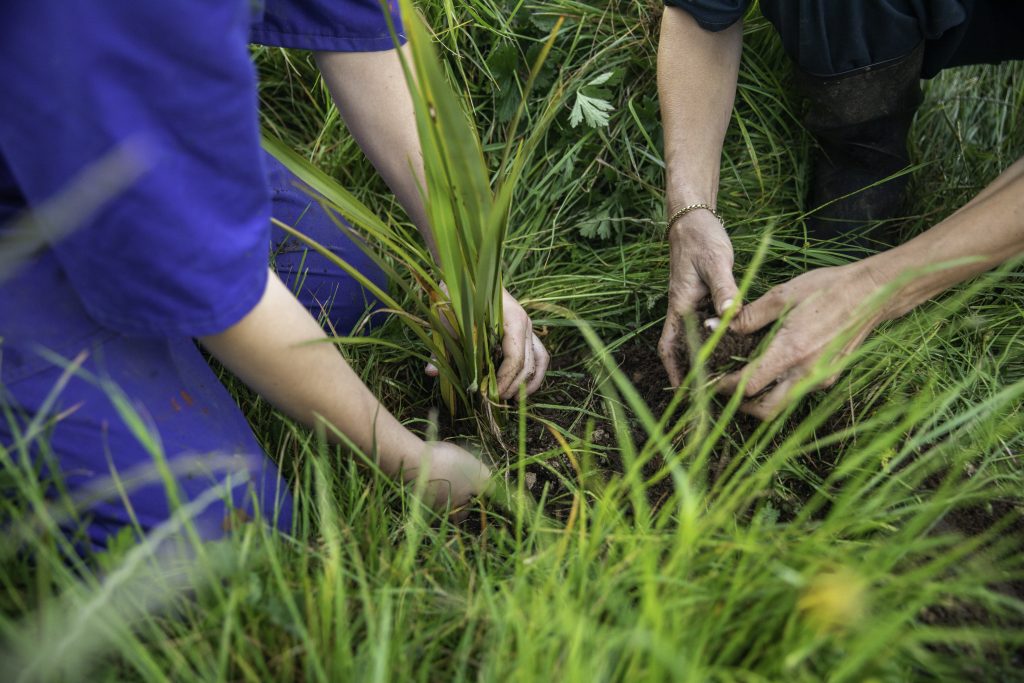
The Opportunity Party also sees scope for new private partnership opportunities and more options to incentivise and support landowners who want to retire land, for example for wetland restoration or carbon sequestration.
Most of the parties support the local catchment group model, rather than a top-down approach, for identifying and dealing with specific environmental challenges. National says local groups will have an important role in setting priorities and helping communities deliver results and, along with most of the other parties, sees the government playing more of a supporting role than leading local activities.
On the question of each party’s preference for funding mechanism, there were some stark differences between the responses.
Labour’s response was based on its record of investment. When it was last in government, from 2020-23, it invested $40 million in catchment groups, MPI extension services and its Jobs for Nature scheme. National says it has already asked MPI to work with catchment groups on longer-term funding arrangements, including for New Zealand Landcare Trust.
ACT and NZ First also support a move to longer-term funding for groups. NZ First favours embedding resources into regional catchment management and re-established catchment boards so they are not relying on short-term central government grants to continue their work.
The question of balancing agriculture sector productivity against improving environmental outcomes drew some lengthy and positive responses from most of the political parties, apart from Te Pāti Māori and Labour, which offered no response.
National acknowledged that healthy land and water is essential for a strong primary sector and said farmers need the confidence to invest and produce while still caring for rivers and native species. Its approach is to set clear environmental limits, remove unnecessary costs and back community-led improvements.
NZ First believes pragmatic environmental preservation is economically sound too. It wants to incentivise science-based mitigation strategies such as low-methane genetics and fund water storage and harvesting infrastructure so primary producers thrive while improving catchment health.
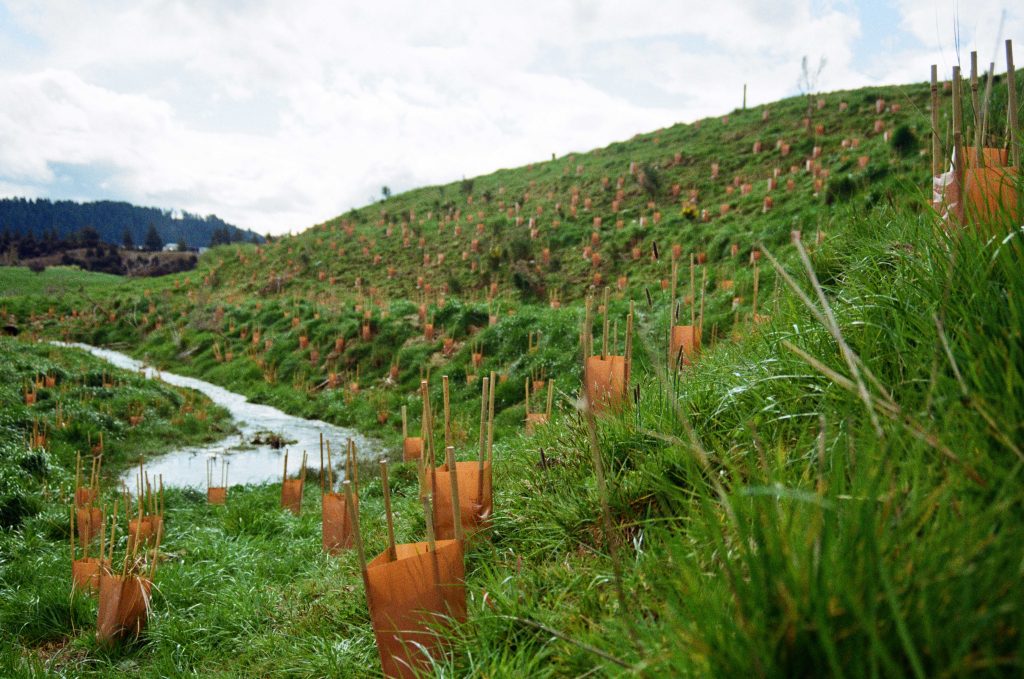
ACT has a similar take on balancing productivity and environmental outcomes. It wants to empower farmers to continue to deliver strong agricultural performance, as they have for the past 20 years, while enhancing the environment through catchment-focused actions.
The Green Party would increase support for farmers to transition to more sustainable forms of agricultural production through unspecified finance mechanisms and a biodiversity credits scheme that supports landowners to undertake restoration and protection work.
It also seeks to take action on reducing stocking rates on a catchment basis to address the impacts of agriculture and improve the health of rivers and drinking water sources, and reduce climate pollution.
The Opportunity Party’s response was a wide-ranging set of policies aimed at helping farmers develop more diversified, high-value and nature-positive businesses, through promoting innovation across the research and farming sectors.
Can a collective voice co-ordinate catchment funding?
Funders and policymakers work at a national scale. Catchment groups work in a single catchment, and each tells a different local story. That gap was the case for Catchment Communities Aotearoa (CCA) to be established, the collective voice for catchment communities nationally. CCA is working with MPI and MCERT towards a future funding model suitable for all parties.
Members recently elected Hawke’s Bay farmer Brent Paterson as chair, taking over from Ben Ensor in July. Brent founded the Mangaone Catchment Group about eight years ago and led its 2023-24 transition into the Kaweka Community Catchment Collective, where he is now a farmer member. Long-term funding security sits at the top of Brent’s agenda.
CCA’s primary focus is sustainable base operational funding for its members, and Brent says that now comes down to three things: securing MCERT’s additional $4.5 million beyond this year, transparency in how government funding is allocated to groups, and timeliness, meaning early clarity on what’s available and a move to multi-year commitments.
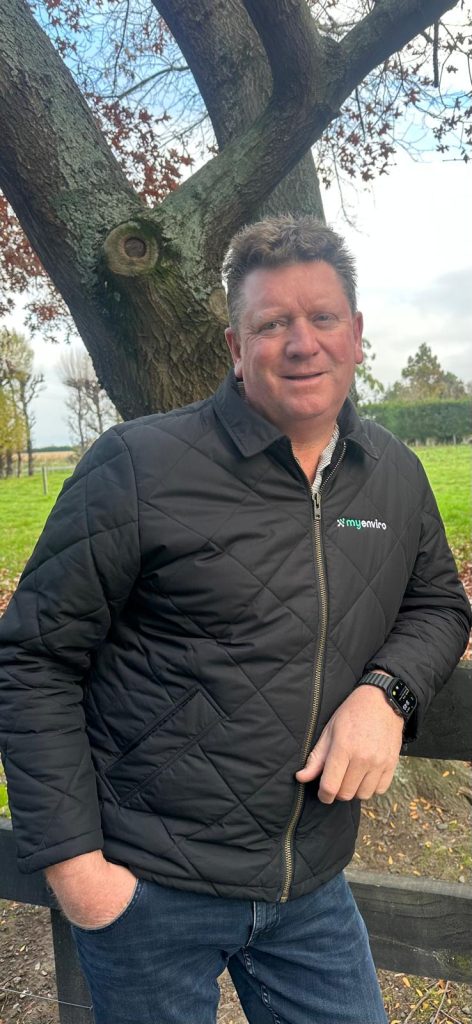
With money limited, Brent says, groups have to show they use it efficiently and deliver clear value for it.
The government funding for catchment groups of just over $40 million over the next four years, announced in Budget 2026, helps to cover the operating expenses and employee costs for many groups, but specific project work often requires additional funding.
Beyond base funding, Brent says the next job is securing sustainable project funding. That means looking past government to corporates and to philanthropists here and offshore, and also testing whether carbon and biodiversity credits can fund genuine nature additionality.
“Catchment groups are the obvious movement to deliver that work on the ground. They’re already organised, farmer-led and trusted in their communities.”
“It’s why we’re building that NZ Inc story about the return on investment from catchment group outcomes, so the value is captured and the story is owned at scale which puts our members in a stronger position to advocate for more funding in the future.
“It is crystal clear that we need a national strategy to support catchment groups and we are leading the drive for this to be co-developed with us. We can help with that by amplifying the voice of our members’ 13 million hectares in Wellington. That’s our space,” Brent says.
What would a ‘framework-led’ system look like?
Catchment groups now carry far more than anyone planned. They started out as neighbours sitting down together to do the ‘right thing’, but the structures to support them haven’t been built at a fast enough pace. Many hold public and private funding, employ staff, sign contracts and answer to compliance duties. That load was the starting point for Di Roadley’s report, The Craft of Setting the Table Well, written under the Kellogg Rural Leadership Programme (Kellogg 55).
Without sound structures, Di’s research found that decision-making drifts, volunteers become overloaded and communities may disengage altogether.
The deeper risk is what the report calls ‘representation drift’. This is when decisions slowly move away from grassroots members until the group’s legitimacy wears thin. A catchment group that no longer speaks for the farmers around it has lost the very thing that made it worth funding.
“The framework provides the structure, but governors provide the judgement,” says Di.
Her answer is not more rules for their own sake. It is a governance framework designed to be shared, adapted and lived in. The report’s recommendation is a strong national framework that provides “the bones” for each catchment group. She says that Catchment Communities Aotearoa has the first job by supplying the national framework, plus training and resources. A shared baseline means a new group does not reinvent governance from scratch, and a struggling one has something solid to lean on.
“Provide the operating framework that all groups can tailor to their local purpose,” says Di.
Governors come next. They adapt the framework locally, set a clear purpose and build capability around the table. The framework hands them scaffolds, guardrails and shared operating discipline. What it cannot hand them is judgement about their own catchment, their own farmers and their own trade-offs. Local landowners then activating it by showing up, taking part and backing emerging leaders is what stops a framework becoming paperwork.
However, she says the government must enable it, with multi-year funding and reporting that does not drain volunteers. Short funding cycles and heavy reporting are exactly the pressures that push groups towards drift.
Framework-led, she explains, is not meant to be top-down. The structure is built to be tailored and it only works if the people at each level do their part. The national body (CCA) sets the baseline, governors apply judgement, members take part and the government funds the work with patience.
Also in the Catchment Groups special report: Catchment groups need funding that outlasts the grant round · Catchment groups on the way forward: Hurunui, Southland and Wānaka · Bayleys Country becomes a Champion Partner of Catchment Communities Aotearoa
First published in CountryWide, Summer 2026-27, pages 60 to 63.