From a Portacom to the supermarket: how Karen McGrath built Southern Alp Sprouts
Canterbury grower Karen McGrath has spent almost three decades building Southern Alp Sprouts, the family business she and husband Jason run near Christchurch, into the South Island’s main sprout supplier to supermarkets and food service. After winning the 2026 NZI Rural Women Business Love of the Land award, she hopes it will finally bring recognition to an overlooked corner of horticulture.
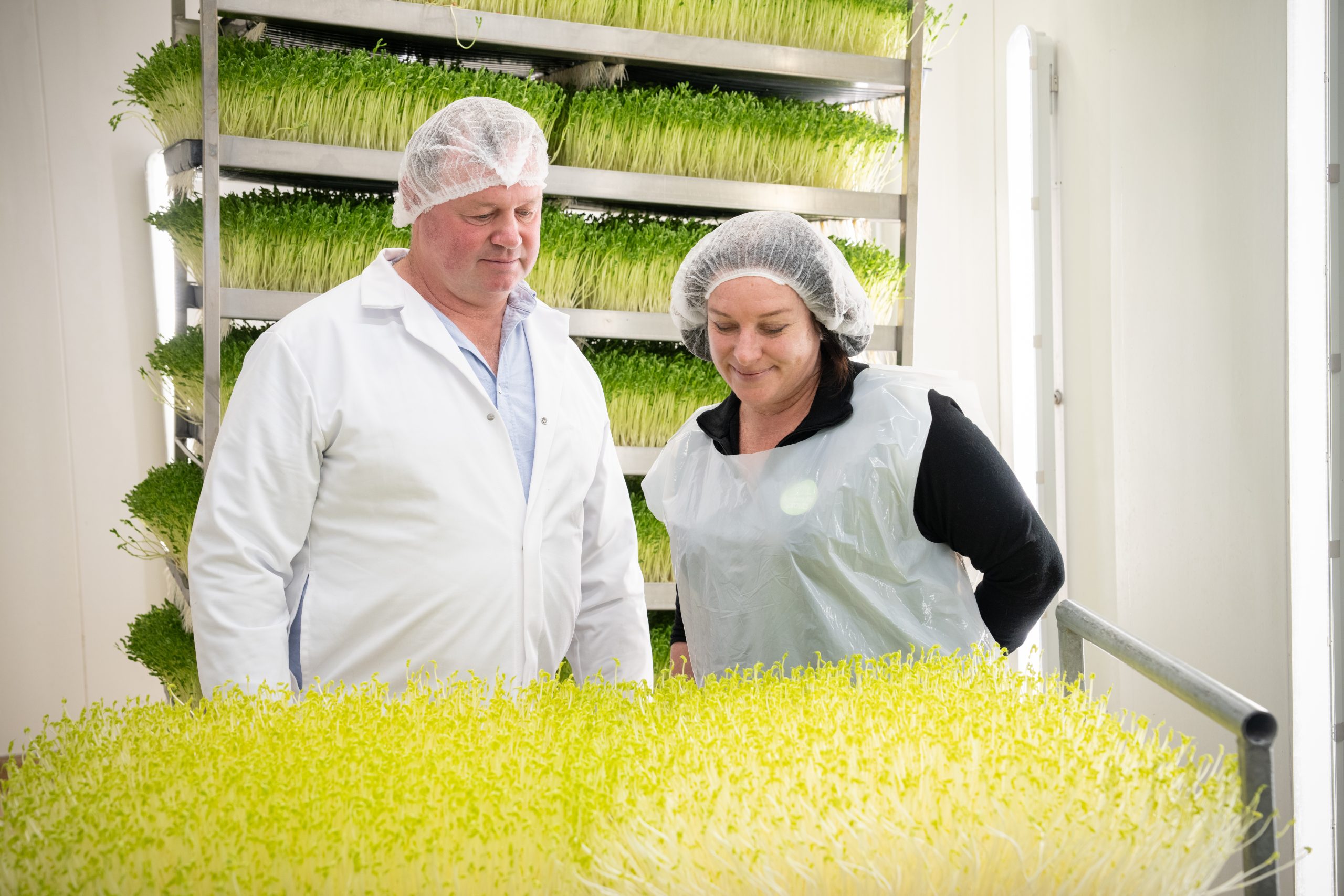
Karen and Jason McGrath’s Southern Alp Sprouts is the main South Island supplier of sprouts to supermarkets and food service.
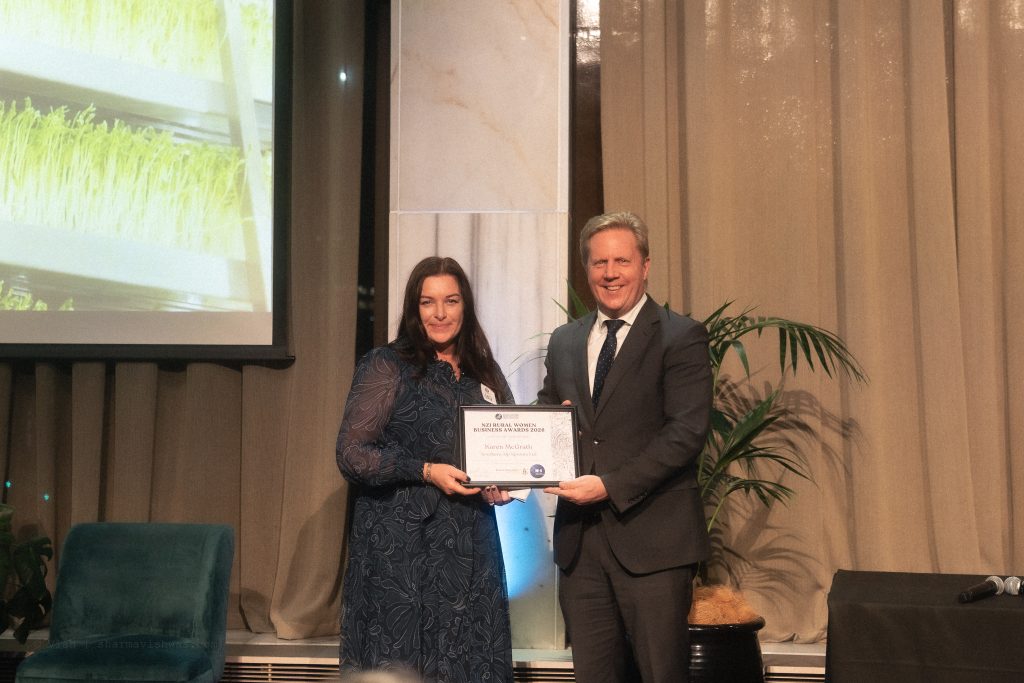
CANTERBURY SPROUT GROWER KAREN McGrath hopes winning the 2026 NZI Rural Women Business Awards Love of the Land category for her service to horticulture will shine a light on a sometimes-forgotten part of New Zealand’s food production sector.
“It was so lovely to have that recognition after almost three decades, because sprouts have had no recognition in New Zealand. It’s about public awareness and how good they are for you,” she says.
Karen and husband Jason McGrath’s Southern Alp Sprouts is based on the outskirts of Christchurch and is the main South Island supplier to both supermarket chains and food service businesses.
The business started in a Portacom on their lifestyle block near Springfield, a small rural town about 45 minutes inland from Christchurch.
“I used to work at Agriseeds (now Barenbrug) so I knew about horticulture and my parents loved gardening as well so I just had a feel for it. I just thought I’d start experimenting because I wanted to do something from home,” Karen recalls.
“Jase was the mechanic at the Springfield garage and he’s very clever. He can just build anything, he’s so amazing. This business wouldn’t be what it is without him.”
Their initial set-up was pretty rudimentary, Karen says, and included growing sprouts in trays, but as they got the hang of it, they also found there was consumer demand, so Karen upskilled her business capabilities with a management course.
“They gave me a mentor and he knew a sprout grower in Australia so we flew over and went to see him and his operations. He actually said, ‘It’ll make you go mad. Just go home, shut it down,’ because it is very demanding.
“But we were like, ‘No, no, no, we can make this work,’ so we went home and really got into it.”
Building the business
They concentrated on keeping the quality high and the customers happy, working with MG New Zealand Fresh Produce Group and supplying smaller local businesses. In 2006, they started construction of a 900m² purpose-built facility and in 2008 they successfully tendered to become suppliers to Foodstuffs South Island. “We just did it all ourselves; we’ve had no outside help, no partners, so it was a lot.”
Initially, they commuted from Springfield, but with four daughters, including twins, under 10, that was difficult to sustain, so they built a house near the sprout plant and moved closer to town. Their daughters have now grown up but Karen and Jason’s lives are no less busy, with 6am starts every day and not much time off.
“If we go on holiday, we often have to come back if we get text alerts about a breakdown, because there’s water and machines moving all the time. Jason can fix anything but it’s Murphy’s Law – if he goes hunting or whatever, there’ll be a breakdown and I’m trying to fix it with instructions over the phone.”
But for most of the time, 24 hours a day, every day, the plant runs smoothly, with 10 staff growing, harvesting and packing alfalfa, broccoli, onion, pea tendril, radish, mung bean, crunchy combo and snow pea sprouts.
“The sprouts come out of the harvest at 27˚C and [the harvest] needs to be below 5˚C to be accepted by supermarkets. That’s why we start so early.”
They harvest, pack, chill, dispatch and deliver 20,000 to 30,000 units a week.
Lessons from Japan
Karen is the Australasian representative on the International Sprout Growers Association board. As part of that, she travelled to a conference in Japan and took the opportunity to see how the industry operated there before they built their own plant.
“They are so far ahead of us with all the automation and everything, so we scoped out how we wanted to lay everything out and we basically drew this up to be the most efficient.”
While Jason was able to do much of the work himself, they imported specialised equipment from the United States and China to grow the sprouts round the clock, with each variety having different requirements.
The McGraths have done a lot of tweaking to their system to make sure that the sprouts are as tender as they can be.
“The water is 22˚C coming in so they’re not shocked, the floor is heated, there’s positive air, they have their light, their dark, everything’s just optimal for them. That’s taken a lot of working out, a lot of our own IP too,” Karen says, adding with a laugh, “We’ve had so many fails, but, you know, that makes you stronger.”
Tiny but mighty
Named winner of the Love of the Land award this year, Karen hopes the profile of sprouts as part of the country’s food producers will rise, pointing to two important factors.
The first is their high nutritional value.
“Sprouts are just so nutrient dense. For example, broccoli sprouts are about 40 times more potent than mature broccoli. In our industry, they’re called tiny but mighty. They contain all of the fibre, protein, vitamins and minerals that your body needs.
“It’s so healthy and that’s what gets me up every day producing fresh food for people. And it’s just so easy, like you just eat them straight out of a punnet. They say 50 grams is the ultimate for the day, which is nothing.”
The other factor is their contribution to New Zealand’s food security, with their operation not subject to the whims of nature that other producers sometimes suffer from.
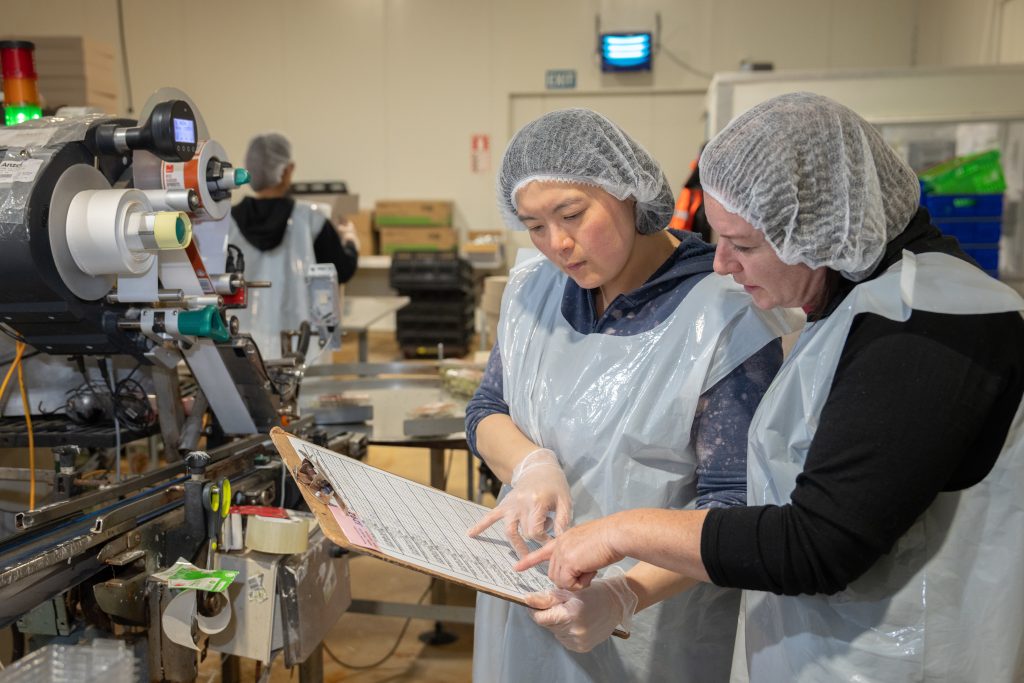
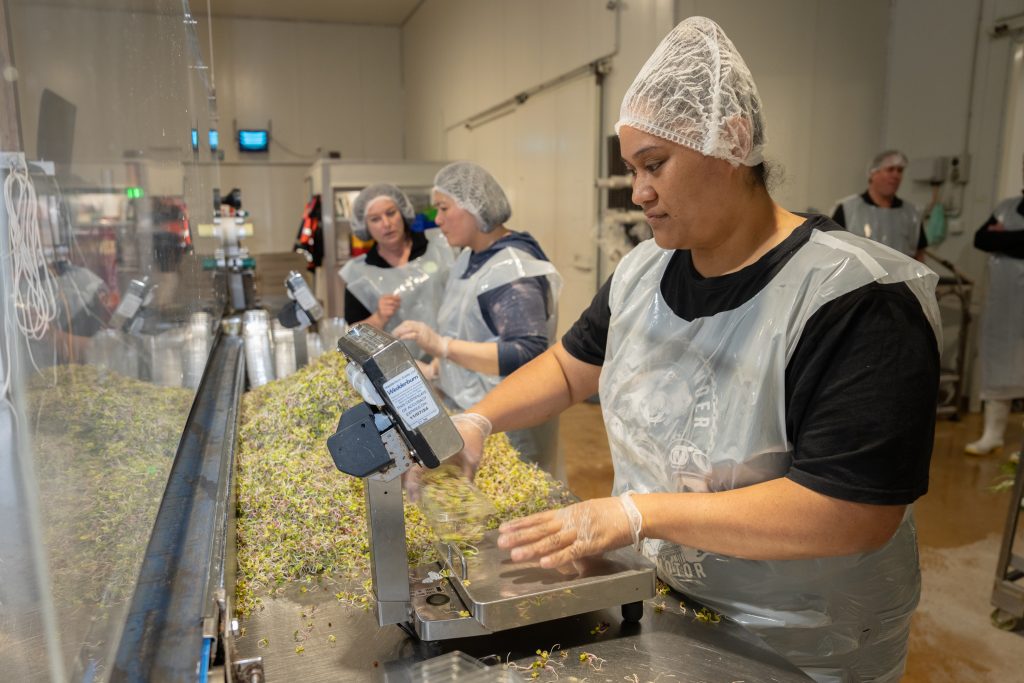
The Southern Alp Sprouts plant runs smoothly with 10 staff growing, harvesting and packing.
“I just don’t know how farmers have coped through all the natural disasters, like losing all their crops. We are just so lucky that we have everything controlled here. And it’s so consistent.”
A big sustainable circle
They aim to make the business environmentally sustainable, working to create what Karen calls a “big sustainable circle”. They use water from their own bore which is UV treated before use and rigorously tested at every stage of production.
They use solar energy on the roof to heat floors and water, their packaging is recyclable and they use locally produced seed, seed brokers, packaging and services wherever possible.
Wastewater is filtered and used to irrigate their land where they finish cattle which are fed on the 5t of green waste the sprout operation produces weekly. Most of the cattle are sent to Silver Fern Farms but one is kept each year for the freezer.
“It’s like pure protein that they’re getting and the meat is just to die for, it’s just so tender and delicious.”
Karen says she felt a little out of her element at the business award event at Parliament and was surprised to be presented her prize by Minister of Agriculture Todd McClay. But she did have her speech ready.
“I look forward to continuing to work alongside my dedicated team to ensure the sprout sector remains strong, resilient and well-positioned for future generations,” she says.
“I would like to dedicate this award to my husband, my four incredible daughters, my team at Southern Alp Sprouts and to all the women who came before us, forging a path in this industry and helping make opportunities like this possible.”
First published in CountryWide, Summer 2026-27, pages 51 to 55.