Dual-purpose Merinos drive performance
Muller Station has won the Marlborough Farmer of the Year title. It’s not just off the back of their highly profitable sheep, but
for creating a pasture powerhouse out of hieracium- and rabbit-infested country. With Steve Satterthwaite at the helm for a half-century, Muller has taken up the best of the new and safeguards the cherished high-country traditions of the past. Words Jo Grigg, Photos Jim Tannock.

Muller Station profitability is streets ahead of comparable farms running Merinos and would impress even dyed-in-the-wool meat farmers.
Any farm, large or small, would be hard-pressed to match Muller Station’s 2023 low costs (56% of gross) and earnings of $178/sheep stock unit (su). Station owner Steve Satterthwaite says success is directly related to the capacity of their dual-purpose Merinos to rear 1.3 lambs and clip a valuable 6.5kg fleece.
“I would like to see more properties have a go at Merinos, especially as breed improvements means they are more resilient to footrot and worms.”
In typical humble fashion he fails to mention the competent management that has made it happen. With 38,800ha, mountains up to 2100m and no large posse of cowboys, it’s a hell of a job for a team of five.
Visitors to Muller Station for the Westpac + OsGro Seed Marlborough Farmer of the Year field day in November saw the high standard of buildings, pastures and stock first hand. A big part of the sheep income is from lambs that stay on the farm December to December, growing out to produce a $160 meat carcase and $55 of wool.
While these Merino lambs are on the farm longer than a meat lamb, the wool clip of the mother combined with her lamb gives a total package that compares more than favourably with crossbreds, and it’s on far harder country, Steve says.
“Our four selection pillars are conformation, wool quality, quantity and carcase traits, then worms and footrot.” – Alice Satterthwaite, Muller Station
“No speciality crops, no supplements and these lambs are not top of the food chain.”
Cash surplus is healthy, with an impressive 5% return on capital (three-year average). Earnings before interest, tax, rent and wages of management (EMITRm) in 2023 was $62/su.
The effective 15,000ha runs 1.6 su/ha. Of this, only 6000ha are what you’d call improved, with a touch of fertiliser every few years and a history of over-sowing. The farm surplus of $78/effective hectare might be labelled as low compared to a down-country block but add in scale and suddenly there is over a million-dollar surplus. What really puts it into perspective is that the average high-country station (B+LNZ Economic Service Class 1) made a measly $6/ha surplus in 2023.
Muller’s above-average income is coupled with lower-than-average costs, almost $20/ha less on expenses, compared to other stations. Working expenses averaged 57% of gross (2021 to 2023).
A typical Muller sheep brought in $74 more in meat and wool gross income/su than the Class 1 average sheep in 2023. The business averaged $171/sheep su over three years and it’s been consistently good, not swinging.
Cattle income at $102/su in 2023 was on par with Class 1 stations. It all adds up to a Gross Farm Income of $126/su (three-year average) with a peak of $222/ha
in 2023. The Marlborough competition is not judged solely on financial performance but it’s a standout feature and contributed to Muller winning the coveted title.
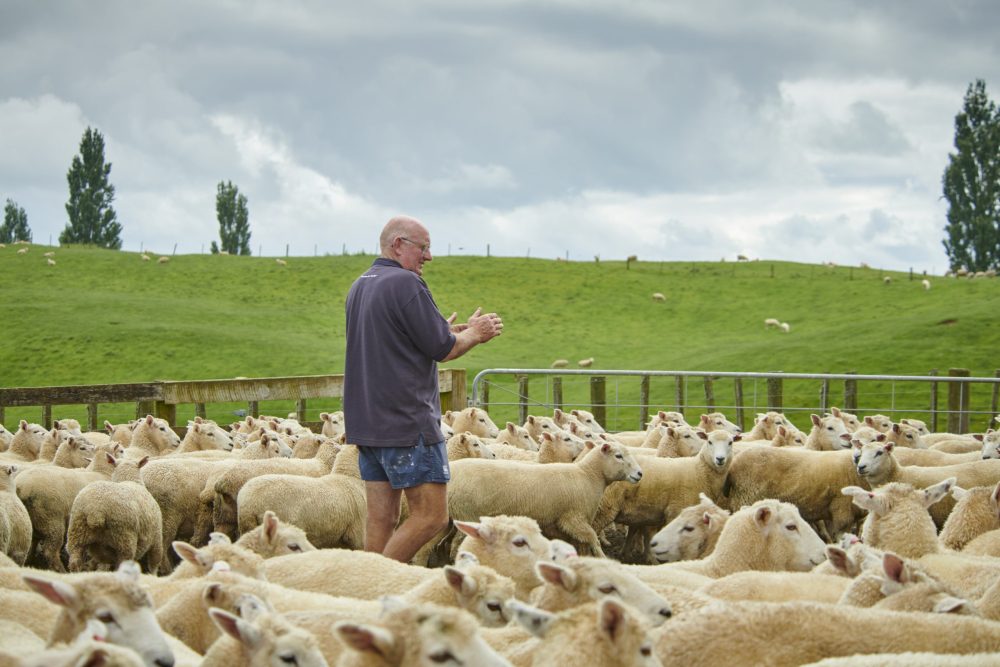
Almost 7000 breeding ewes and 6000 mixed-sex hogget progeny are taken through winter. Despite the high altitude, commercial stock are not fed supplements in winter. The high percentage of young sheep is balanced with 2300 cattle. This includes 700 rising two-year cattle. The herd is Angus and 40% are mated to a Charolais bull for hybrid vigour.
“Cows are critical for pasture control, especially in winter,” Steve says.
Steve would like to run more beef cows but, when the TB status “can return to zero in a flash”, numbers need to be low so cattle can be finished to prime weights. Most trading cattle are sent to Greta Peaks, the Satterthwaite’s finishing property in North Canterbury. This stands alone financially and is run by Steve’s daughter Julia and her husband Gerard.
A recent change has been to reduce mating cycles from three to two. Ben Satterthwaite, head shepherd, says cows are selected on muscle fat, moderate frame, moderate milking ability and, in his words, “a big arse”.
R2 cows are not put to the bull.
StockCare data, provided by Farmer of the Year judge Pete Anderson, showed flock ewes (including two tooths) scanned 169% and tailed 138% in 2022. This was above or matching the top 25% of Merino properties in StockCare. Lamb wastage was 16%.
Anderson said rotational grazing had been key to pasture recovery and making the ground less desirable for rabbits and weed incursions. Getting all finishing stock off the property as soon as possible and prioritising capital stock “stands out among high-country farms”.
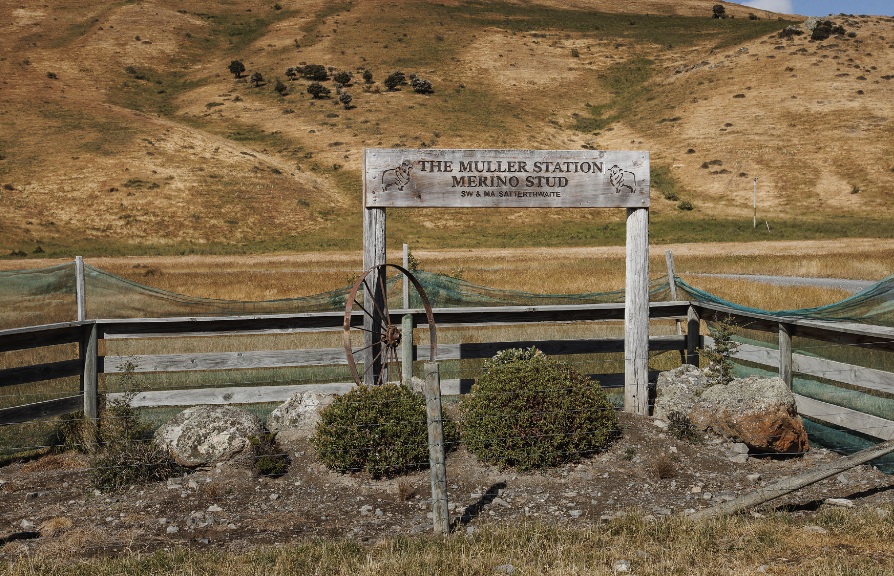
In 2006 the Satterthwaites imported two stud Merino rams from Australia and have continued to import rams and use artificial breeding to drive the Muller Stud direction. The 400 stud ewes produce around 100 rams for sale annually.
Steve and Mary’s daughter Alice says ewes are selected for shape then for highly aligned, well-nourished fibre on a free-flowing skin. Micron sits at 18.5.
“Our four selection pillars are conformation, wool quality, quantity and carcase traits, then worms and footrot.”
Alice says ewes were flushed in April on the developed platform and, even in the drought, only 4.5% were dry from two cycles of mating.
Ben says the call was made to delay tupping a week due to the drought. This year a Merino with strong carcase traits will be used as a terminal sire, instead of a South Dorset.
“It means they can clip a more valuable Merino fleece before they are sold as a lamb, and they don’t start cutting their teeth until December,” Alice says. “It’s added huge value.”
Shearing is the highlight of the year. The shearing gang stays for two weeks at a time. Steve’s wife Mary Satterthwaite has been classing the clip for 20 years and works closely with the New Zealand Merino Company to meet the station’s Icebreaker contract specifications. Vegetable matter must be less than 1.5%.
Mary classes to a close micron range of between 18.6 and 18.7. About 85% of the entire fleece is included in the contracted wool, Steve says. “The contract has a 10-year revolving time frame and, at the moment is around five dollars ahead of the commodity market.
“Our contract with Icebreaker is outstanding, as it guarantees 30% of the annual income for the station. I’m a real fan of contracts for the way they create trust.”
Half-century at Muller
Steve Satterthwaite wasn’t raised at Muller Station but his name is synonymous with the property.
His youth was spent at his parents’ farm at Broomfield, near Amberley, and it wasn’t until he was 13 that he first laid eyes on it, when the family bought Muller Station in 1965.
“I had to wait five years before I started as the cowboy, in 1971, straight out of school.”
In his twenties Steve spent a year ranching in South America, which included a property running 170,000 Merinos.
“I followed an aeroplane full of Canterbury-sourced Corriedale rams and ewes to South America, with letters of introduction to the studs purchasing the genetics.
“The South American Corriedale was founded almost entirely on Canterbury genetics.”
In 1978 he returned to the Muller as head shepherd and worked alongside Barry Bensemann, who was manager from 1965 to 1980. Steve took over management from him.
“I think not being born to this way of life helped me break the mould of traditional high-country farming.”
By this he means he sought help and new ideas. He engaged veterinarian Pete Anderson and agronomists Ron Clare, Alan Rose and Richard Hunter. In the 1970s they set up trial plots to test the impacts and results of seeding rates and species.
“Ten kilograms of clovers and three kilograms of cocksfoot was the original brew and it became the lynchpin of the development.”
Steve is the first to say it’s about the team at the station, not just him. The field day was a chance to reflect on the challenges thrown at the pastoral operation and it’s quite a list. Rabbits, hieracium, broom, TB in cattle, drought and now wind-blown seed from upwind wilding conifers.
Not one to roll over, Steve, together with Mary, has made weed and pest control a cornerstone of his 54-year farming career. In the 1980s, he took a Land Development Encouragement Loan to fund over-sowing and top-dressing to lift fertility and compete with hieracium. The flatweed loved the bare earth created by rabbits. Lifting fertility and giving it grass competition really helped, although some of the steeper, wind-exposed rocky faces are still laced with hieracium.
“Top-dressing transformed 6000ha of the valley floor and low hill and set us up economically,” Steve says.
The annual rabbit bill is still “enormous”, being a large chunk of the $200,000 annual weed/pest cost.
Steve describes the illegal introduction of RCD to kill rabbits, in 1997, as a lifesaver and “desperation from a forced hand”.
“A highlight of my farming years was seeing thousands of rabbits dying from the virus and the environmental rehabilitation has been nothing short of miraculous.”
Despite the challenges, Steve says the Muller has healthy country and the scale to allow spelling and rotational grazing. This builds winter feed, reducing the reliance on supplements. From 1965 to 2024, Muller has gone from producing 45 to 75 tonnes (t) of wool, quadrupled sheep meat to 133t and dramatically lifted beef production from 10 to 175t.
Adding to business resilience has been the purchase of Greta Peaks in North Canterbury. The 300ha of finishing country is used to finish R2 cattle and surplus Merino hoggets.
Being two hours from Blenheim and the same from Hanmer Springs means input costs are high. Lime costs more to transport than it does to buy. In 2023, Muller spent $13/su on fertiliser which was the highest cost, followed by shearing at $12.85/su. The best country receives 140kg/ha of Sulphur Super every three years. The pH levels on developed country are 5 to 6 and Olsen P ranges from 15 to 30. Organic sulphur can be limiting. The only crop sown is 30ha of ryecorn, grown for calves, plus 40ha of lucerne.
The higher ‘native’ country is not grazed in spring, allowing seed on the plants to set. All blocks are allowed to set seed at least once every five years. This management is formalised in an Integrated Farm Management Plan, developed with ecologist David Norton. Norton was called on by Steve to help them understand a 100-page report on the biodiversity and he’s helped them work plant and animal protection into the wider farm management plan. While 8000ha is not grazed, it still gets weed and pest investment.
“But locking up land from stock is not the answer, as ungulates and weeds come in,” Norton says.
The 280 field-day visitors saw the scale of the Muller first hand, taking a three-hour return trip north-west into the Acheron country and the headwaters of the stream that goes on to join the Clarence River. Looking at the map, the tour only skirted the edge of the Muller’s vast landholding to the north. The Shingly and Castle blocks speak of high bluffs and another world. Lying south of the homestead is the winter country of 6000ha.
Good dogs, good shepherds
Muller Station has a deep vein of old-school practices running through it. Perhaps surprisingly, it’s Steve and Mary’s son Ben and daughter Alice that especially value the old ways.
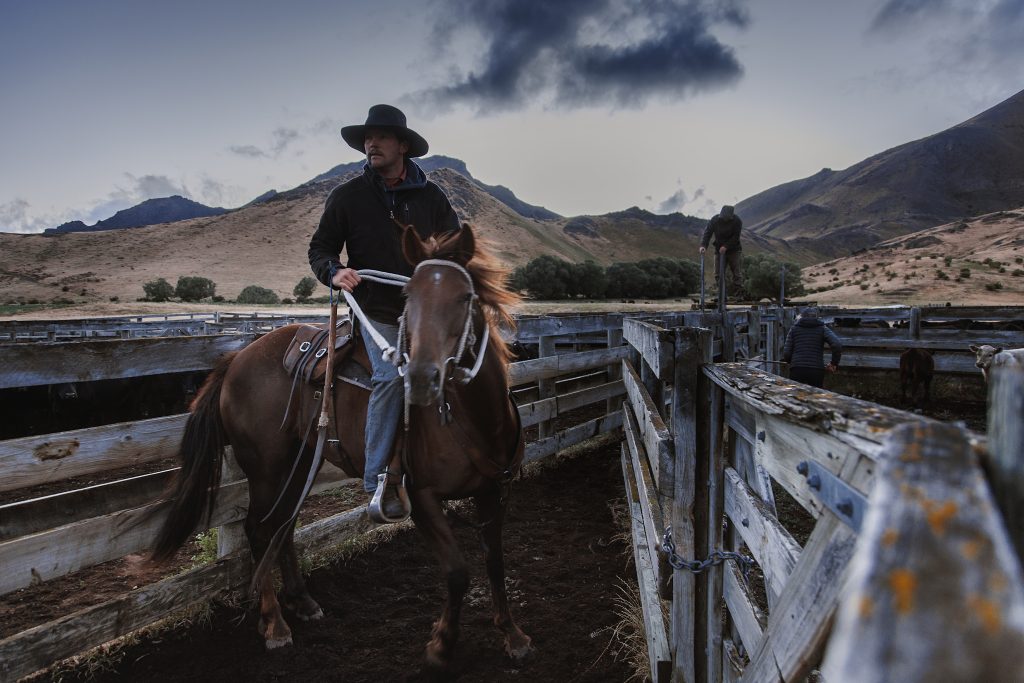
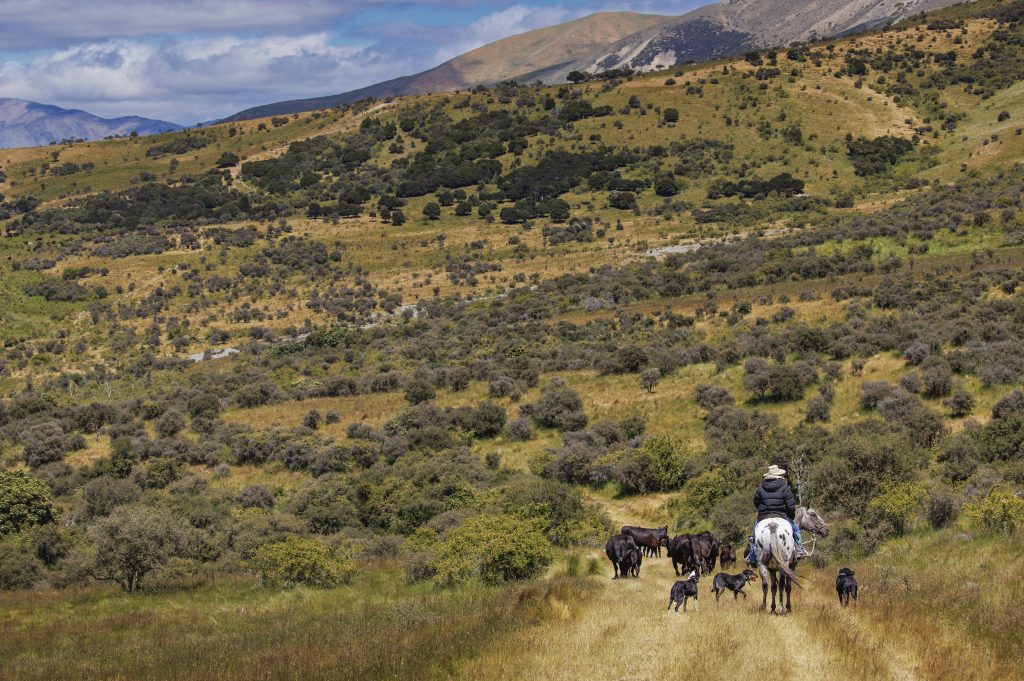
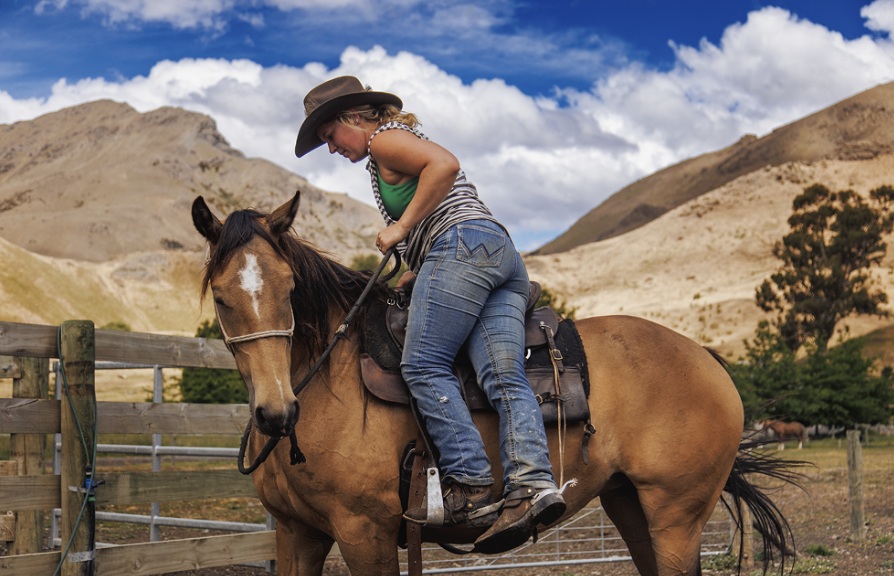
Speaking at the field day, Ben says pasture is measured by eye and often off a horse. Horses are used for mustering and to campdraft.
“We can see udder faults more easily on horseback. Some of the old ways, like using horses, are dying and we want to preserve those.”
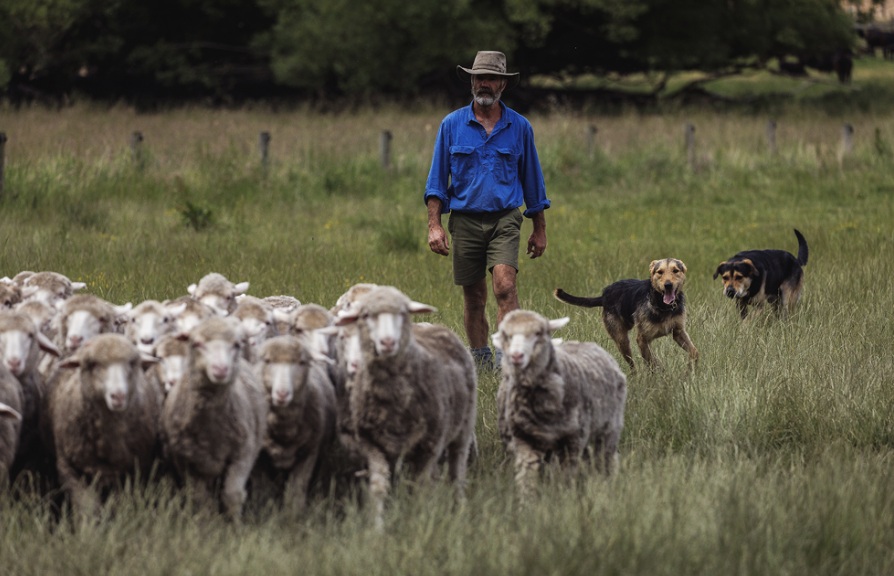
The horse team is based on St James and Gisborne breeding lines. A recent addition is a Queensland stallion (Australian stockhorse/quarter horse) to add agility and instinct for cattle work. Steve says good shepherds and good dogs are crucial to profitability. He encourages shepherds to learn this skill of power of observation, looking at feed differences on both shady and sunny aspects.
“Some of the old ways, like using horses, are dying and we want to preserve those.” – Ben Satterthwaite, Muller Station
Ben has a clear understanding of required pasture covers and how to visually assess a block. He walks the blocks, observing and planning the next stock shift.
Ben has been working on achieving his PPL aircraft rating and he and Alice have plans to expand the horse breeding operation. Ben has been through one of the driest periods for the upper Awatere Valley, making for a challenging home-coming.
Alice has her own business shoeing and starting young horses. She says the horse breeding programme is a real enjoyment for her and time will tell if it becomes a main income stream. The judges’ report noted her strengths in breeding Merinos after working on two studs in Australia.
Alice had three years on the station working as stock manager. Ben has been head shepherd since 2023. Steve describes this process as “growing into it”.
Feedback from judge Richard Borrell, Westpac, was that a strength is that all members of the family on the station are actively involved in running it.
“There is a place for both Alice and Ben and it will be up to them to work out the future. Key to success is a commitment by the older generation to the process, rules around communication and an impetus to make decisions and move on.”
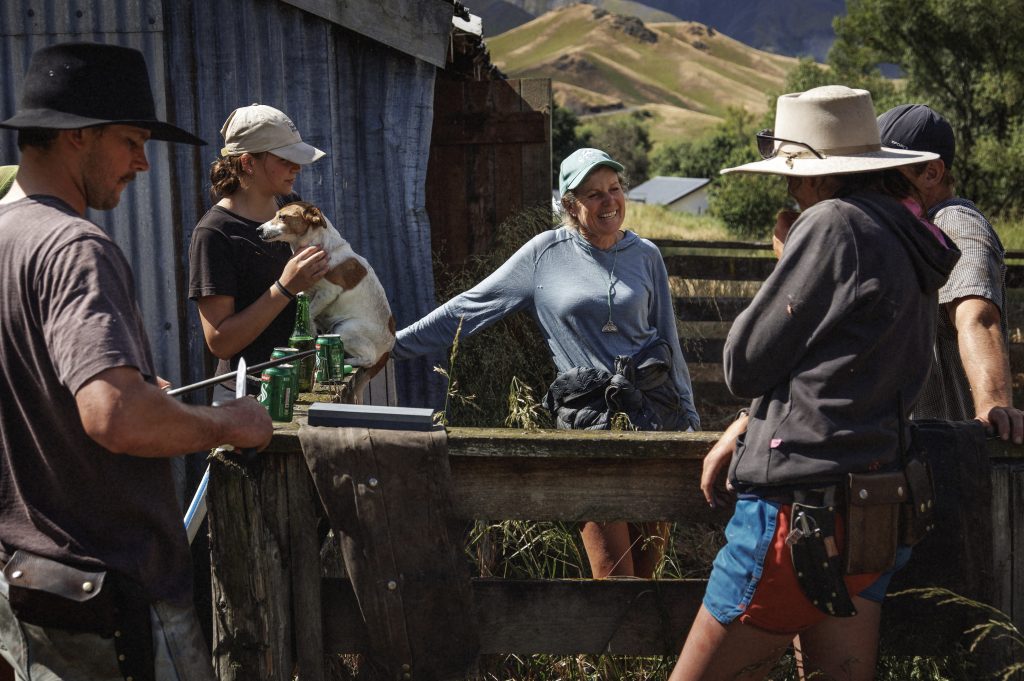
Mary is the Health and Safety officer and ensures food supplies, accommodation and social activities are top rate. Ben says they try to foster a team culture and employ people who can handle isolation and spending the weekends on the station. Mary cooks dinner for everyone at the homestead nearly every night and chats are about weekend shenanigans, not always work. March is the month to “go walkabout”, a horse trek or tramp.
Graham Brown, former accountant, is involved in quarterly meetings as mentor and has been huge in formalising succession planning, Steve says. Number one in the plan is enjoyment, followed by providing for the family and being inter-generational. Being a top 10% performer was a goal (yes, that’s been achieved).
Alice and Ben attend and there is a formal management structure in place. Areas of responsibility have been identified for each of them, to minimise competition and conflict, and three children from a previous marriage have been part of preliminary arrangements. A family succession plan is actively under way. A framework to settle non-farming family was created and some land sold to do this.
Graham says the threats to the business are reliance on Steve as a key person, regulations and presence of the public road through the property. He listed the positives as very high stock production, $12.75/kg greasy wool and a 107% lambing percentage (five-year average).
Emotions wild
Wind-blown wilding conifers is a tricky problem and for Steve Satterthwaite, an emotional one. He’s spent four million dollars on weed and pest control over his lifetime but said his pastoral lease land could be swamped in 20 years.
“With these uncontrolled wilding trees on neighbouring land now blowing seed over to us, what am I saddling the next generation with?”
Steve and Mary’s attitude towards weeds is non-negotiable. They budget control, even in a deficit year. There have been successes. Broom invaded the Awatere River braids from the Molesworth homestead in the 1960s, but is now almost eliminated.
Now Muller faces an invasion by air. A continuous flow of knee-high trees are popping up in their Acheron and Saxton tussock valleys, from what is undoubtedly the worst area of wilding conifers in New Zealand, the Branch/Leatham at the head of the neighbouring valley. These contorta, Douglas fir and pines were planted by the Forest Service in the 1960s to 1980s to control erosion and are now 50,000ha of rampant invaders. Steve is on a local trust attempting to get the government to address the problem.
“The Crown has to take moral and fiscal responsibility for a problem created by themselves, on their own land, which is now spreading to others.”