Improving and retaining long term value for wool
Farmer-owned Wools of New Zealand has launched an innovative new way to let consumers choose their wool carpet that seeks to cut out the middle margin for wool carpet to better compete with the price and scale offered by synthetic carpet manufacturers. Words Patricia Thompson.
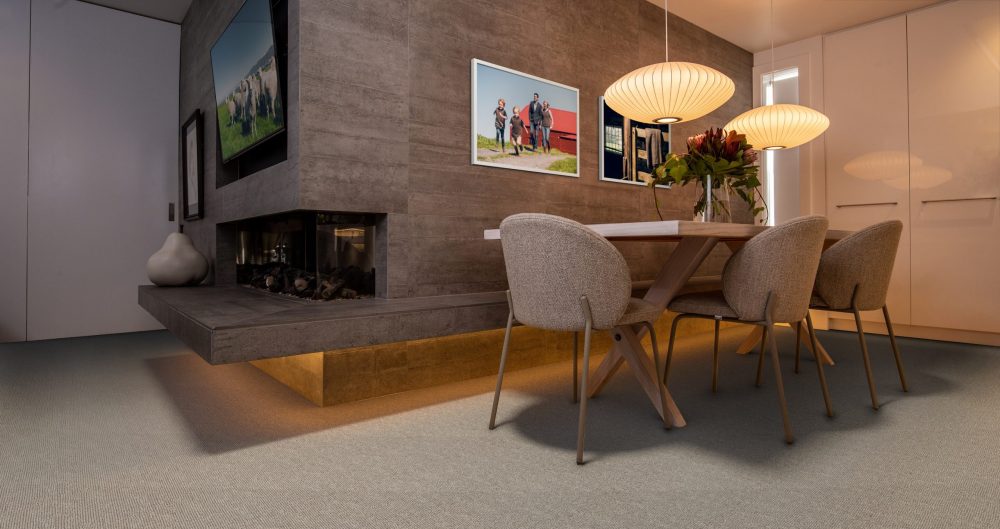
Through a new online service on the Laneve website, farmer-owned Wools of New Zealand is assisting consumers through the full wool carpet journey, from sampling and selection to measuring, purchasing and installation.
Consumers can browse the range, order samples to their door and use an online estimator to receive an indicative supply-and-installation quote.
When they are ready to proceed, customers can book a free in-home visit from a Laneve installer who can confirm measurements, answer questions and provide a formal quote the same day.
“To the best of our knowledge, no other carpet supplier in the world is doing this,” says Wools of New Zealand chief executive John McWhirter. “Wools of New Zealand branded carpet will still be available through retailers and our new brand Station Collective will be available exclusively through the Carters Livspace group.”
Wools of New Zealand launched its branded New Zealand wool carpet range in 2021, with carpets manufactured offshore. By cutting out the middle margin, the company says it can better compete with the price and scale offered by synthetic carpet manufacturers.
“In the normal model, farmers supply exporters or spinners, spinners supply manufacturers, manufacturers sell to retailers and retailers sell to the consumer. We cut out those middle steps, take farmers’ wool, contract manufacturers to make wool carpet and sell directly to retail or, through Laneve, straight to the consumer.
“That means the consumer gets a better product and the farmer gets a better price for wool. It’s a win-win for the beginning and end of the market.”
John said farmer feedback was one of the inspirations for the Laneve service. “Farmers tell us that when they go to retail carpet stores, they find the focus is often on selling nylon carpets. We believe this is a problem, so we started trials to see how we would go selling direct to the consumer,” says John. “This also gives us the opportunity to market directly to consumers to sell the story of wool and the features and benefits over synthetic fibres.”
With New Zealand strong wool prices rebounding over the past year and delivering positive results, John says wool growers have reason to be optimistic. However, he says there is still work to do to create long term stable and profitable prices and continue building value. “We’re 100% wool producer-owned and our purpose is to make wool valuable for consumers, customers and growers.”
He says if you make the product valuable to all parties, then it becomes a sustainable industry because consumers will pay the appropriate price for it. “Everything we do is targeted at improving wool’s value proposition. We trade wool globally to get the best value for farmers and we have forward-integrated into consumer products so we can capture value at the point of transaction between producers and consumers.”
He explains that the reason for suppressed prices was an oversupply of strong wool and insufficient demand. Wools of New Zealand had a goal of bringing supply and demand back into equilibrium. “When you do that, global customers have to start thinking about forward supply. We are certainly not the only factor in increased prices but we have contributed to it.”
John says sustaining and growing prices will depend on how willing farmers are to consider forward contracting their wool to lock in their profits and deliver stable supply volumes and prices to mills.
“It’s critical for farmers to understand the importance of forward contracts and stable pricing in creating long-term profitability.” – John McWhirter, Wools of New Zealand
Wools of New Zealand has focused on setting up the infrastructure to do this, enabling the company to contract forward with global customers. “It’s critical for farmers to understand the importance of forward contracts and stable pricing in creating long-term profitability.
“It’s the same for wool spinners and carpet manufacturers. Now we have equilibrium, wool prices have risen and manufacturers want to shore up supply. Current prices for New Zealand wool are about US$4/kg, compared with about US$2/kg for Chinese wool.
He says while prices can become volatile, if they rise too fast, manufacturers may look for alternative raw materials or use blends to reduce material costs. “The important thing is to build trusted relationships with customers, understand what they can afford and contract wool forward so manufacturers have continuity of stable prices.
“We know what our customers can afford, because mills around the world are telling us what they can pay, and from Europe to China the prices are largely the same.”
John encourages contracting wool forward to give their customers certainty of supply and price, confidence and trust. With that, he says wool prices can be sustainable over time and keep moving up. “We need to lock in the gains made and build on that.”