More informed, timely decisions made with EID
Electronic identification (EID) tagging of individual sheep is the next game changer for New Zealand sheep farming’s productivity and ultimately profitability. Words Tony Leggett. Photos Brad Hanson.
Without individual animal identification, sheep farmers usually become more focused on what the worst-performing 30% of their flock need rather than the top 30%.
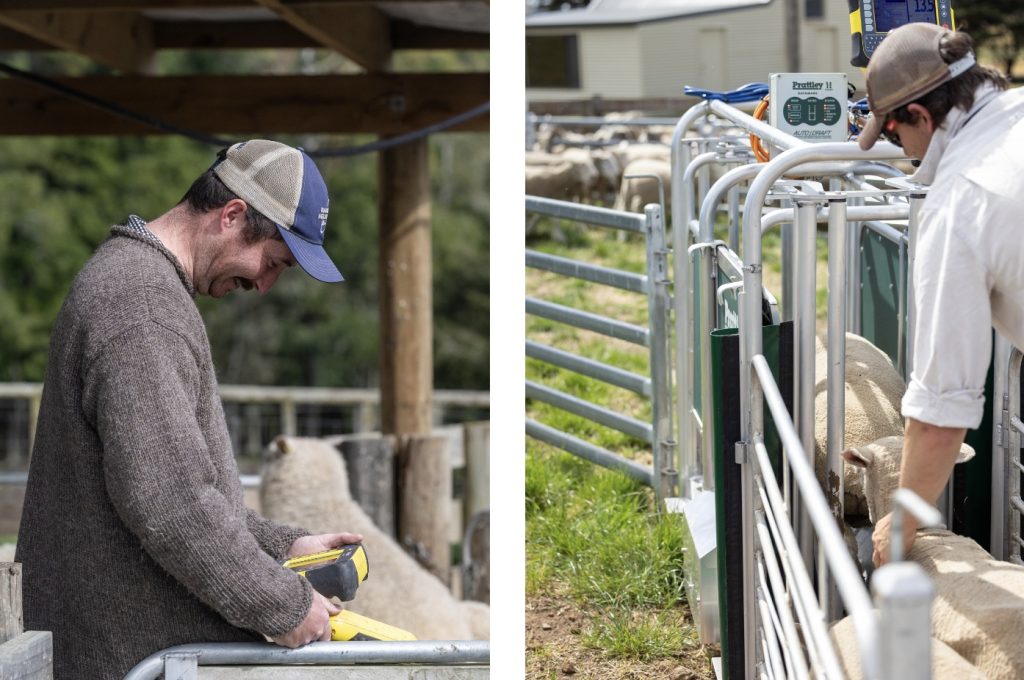
Farm systems consultant Andrew Bendall, says identifying individual sheep in a flock using a microchip-enabled ear tag is a game changer for farmers because it allows them to capture and store data easily, then analyse and apply it so they can make more informed, timely decisions.
“In a recorded flock, we can see which sheep are performing. But, unfortunately, a lot of our top genetics in a commercial flock are probably in our B mobs and we just don’t know it,” he says.
“Without some recording, genetic gain is more hit and miss, because we can’t see what is actually working for us.”
Electronic identification (EID) tagging an early selection of ewe lamb replacements provides the potential for key performance traits such as weight gain, body condition score or worm tolerance to be incorporated into a ranking ahead of a final cull.
Being able to prioritise feed to better performing lambs or ewes is another big opportunity, Andrew says.
“There’s no room for passengers which are still eating 600-700kg of feed and more importantly, expensive winter feed, and not contributing enough for it. If we can identify those and cull them, it’s more feed at critical times of year into the animals that will give you the return.” – Andrew Bendall, Bendall Consulting
“I often see farms that don’t have a total feed issue, but they have a feed timing issue. With more data on each sheep in a mob, they can be sorted up so the right stock are getting fed well at the right time, and we get some efficiency improvements from that.”
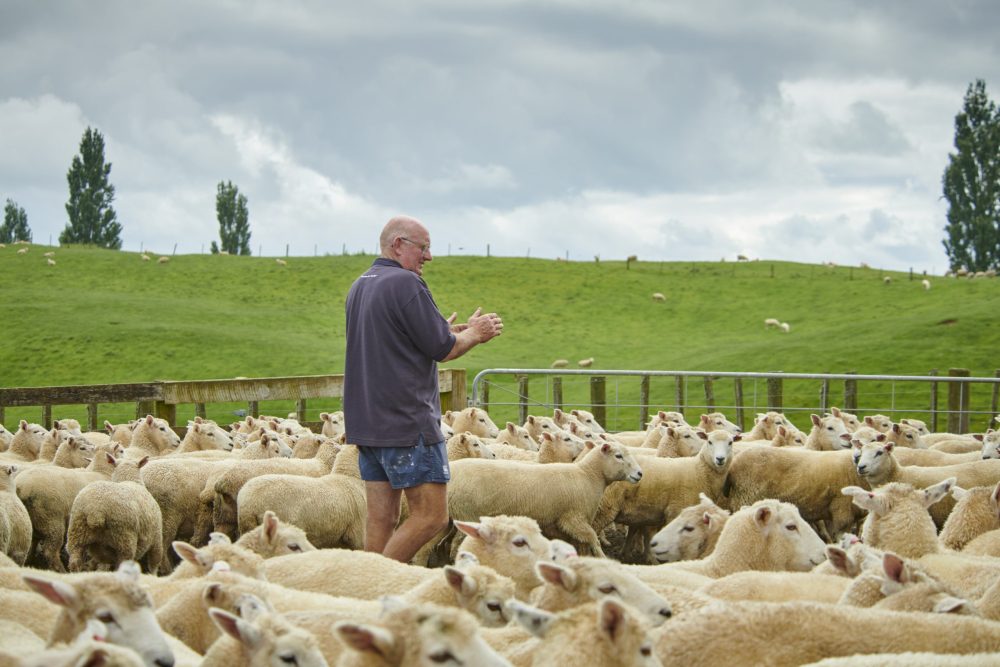
He’s calling for a shift in thinking among farmers away from mob averages to a more evidence-based approach to flock management.
Examples include finding out which ewes are not prone to bearings in spite of being well fed all year, or that don’t get daggy or hit with flystrike, and rear twins or better every year almost regardless of their feed intake or weather.
“Those sheep are there in every flock, we just have to identify them!”
He suggests one option to start with EID tags is by tagging ewe lambs or ewe hoggets and trying to focus on a small number of traits such as growth rate each time they are passing through the yards.
To highlight the value of regular growth rate data, Andrew says Beef + Lamb Western North Island Hub Farm owner Bevan Proffit, EID tagged and weighed all his ewe lambs at docking and recorded other data against each lamb, including age of dam, cycle they mated, paddock size and paddocks each group of dams were set stocked in.
Andrew says he was able to sift through the data and found that at weaning time, there was a 19kg range from the heaviest to lightest lamb within each paddock mob.
At ewe hogget selection in March, when they had been weighed a few times over the previous few months, Bevan was able to select replacements to carry through based on more than just a weight on the day.
For instance, a ewe lamb that was perhaps 3kg behind the average for the mob, but was born in a 180ha hill block out of a two tooth which mated in the second cycle, might be retained as a replacement.
Andrew says the EID tags also helped Bevan discover massive variation in weight gain post weaning.
“The data Bevan has from the first month after weaning shows those ewe lambs grew at 180g/day, then 150g/day in the second month, which is still great for hill country, but in the third month it crashed to just 29g/day.
“Overall, on average, they put on 12kg in three months after weaning, which you’d say is okay for hill country. But why did they hit the wall in that third month and only do 29g/day?
“Getting that early indication of things going wrong is helpful and so is getting an early indication of top performers too,” he says.
Collecting weight gain data in lambs to make more informed drench interval decisions is another opportunity that comes with individual animal identification.
Andrew says it really takes two or three years of data recording using EID before the trends and comparative power of the information really unfold for flock owners.
He is convinced farmers must accept they will be under increasing pressure to produce more from fewer animals in the future.
“So there’s no room for passengers which are still eating 600-700kg of feed and more importantly, expensive winter feed, and not contributing enough for it. If we can identify those and cull them, it’s more feed at critical times of year into the animals that will give you the return.”
Identifying ewes that exhibit consistent body condition scores (BCS) throughout the year is a big opportunity.
“Imagine the effect of being able to identify the top 30% for consistent BCS, so they go to a better-quality ram that is more targeted on the traits needed, and removing under performers early so you don’t carry passengers,” he asks.
“Having passengers is costly on the top performers. How good could our top performers be if they were fed more fully?”
There is plenty of research that supports higher ewe and lamb survival when ewes are maintained at BCS 3-plus throughout the year.
“I acknowledge there are seasonal variations and that is often blamed for changes in BCS, but there are always ewes turning up in good condition regardless; The problem is you just don’t know who they are without EID.”
At the risk of encouraging ‘data overload’, Andrew urges flock owners to collect as much information as they can in the first year of life for each sheep, because that will add more depth to decisions made later in the life of the sheep.
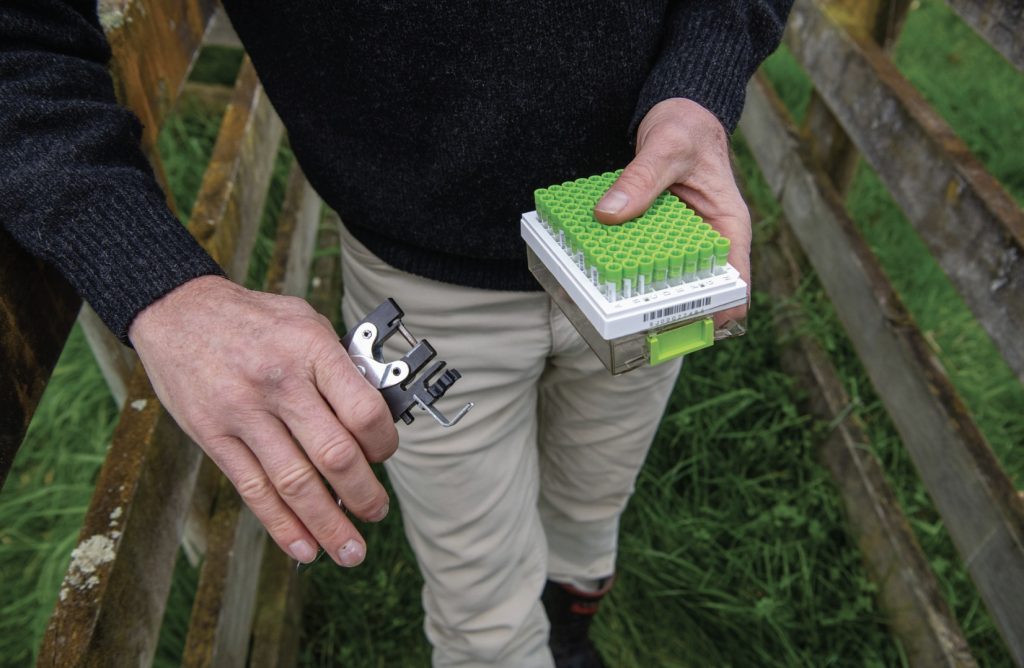
To highlight what is possible from commercial ewe flocks, Andrew says a commercial sheep farm which is using a DNA-parentage product to assign each lamb’s sire and dam, has found a 60kg variation in weight of lamb weaned per ewe mated between the top and bottom performers in the flock.
“I guess the metric we’re really after is weight of lamb weaned per kg of ewe mated – that’s the holy grail. I know we’re not going to get it from EID alone, but just finding out the ewes that rear multiple lambs and still come back in in good condition is so useful.”
When considering the $1.70-$2 cost of adding EID tags and some of the drafting and scanning technologies now available, Andrew says it’s worth considering the cost of some of the more traditional farm practices, such as
ewe scanning.
“If we’re scanning to find 2% dries, then could that $1.50/sheep scanning cost go on something else? If you’re already at 180-190%, you’re looking at less than 15% singles so you could just feed them as though they are twins and save the scanning cost. I’m not advocating farmers stop scanning. I’m just suggesting farmers consider the spend and make a call on it.”
It is the same for drenching and dagging costs. Removing two or three drenches or one or two dagging tasks each year would cover the upfront cost for the EID tags.
Andrew says he’s surprised by the relatively slow uptake of EID among commercial sheep flock owners.
“I ask myself that question a lot, especially when EID is such a ‘no-brainer’.”
The reluctance to embrace EID is likely to be a result of several different factors including cost, the risks that come from being early adopters, and fears the support and guidance is not available yet to help with setting up data analysis reports.
“Farmers are pretty conservative and will often put up with something, even though it has a financial cost, versus going into something that is unknown, even though EID delivers the clarity you need to make more informed choices or decisions,” he says.
He’s also aware of the risk of “data collection overload” where farmers collect too much data, or data they don’t need to collect, and find it is too overwhelming.
“It is tempting once you get started to collect too much data, so we need to find a balance of what is effective data to collect, don’t collect just for sake of it, use it to make decisions.
“There is a different approach required to get the most out of EID. It just gives us the opportunity to control more of what we do as farmers or meet market expectations around traceability,” he says.
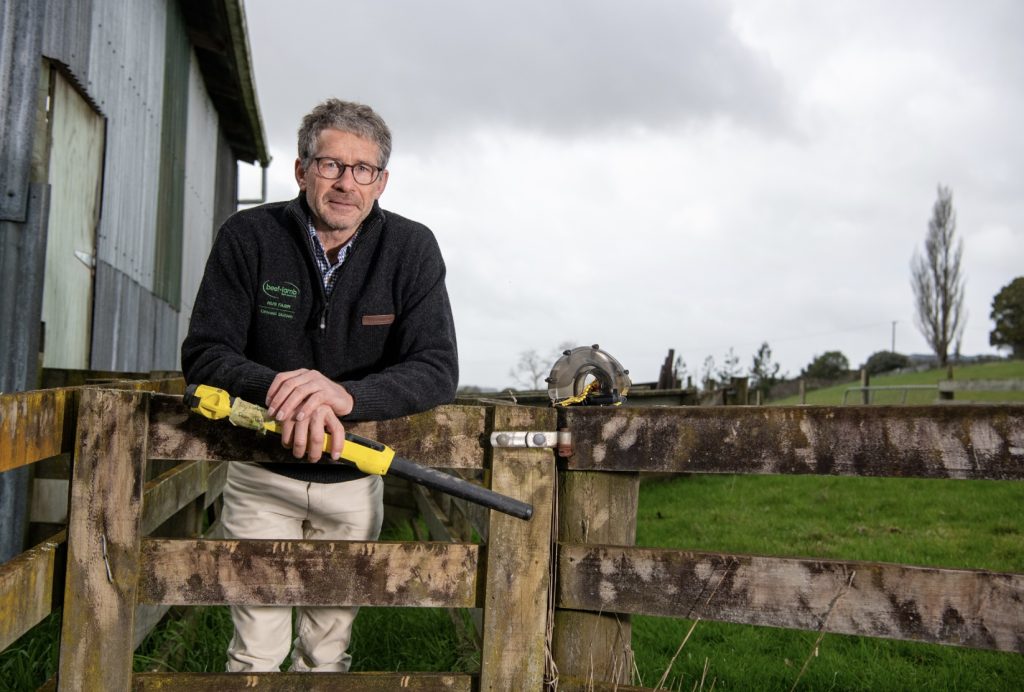
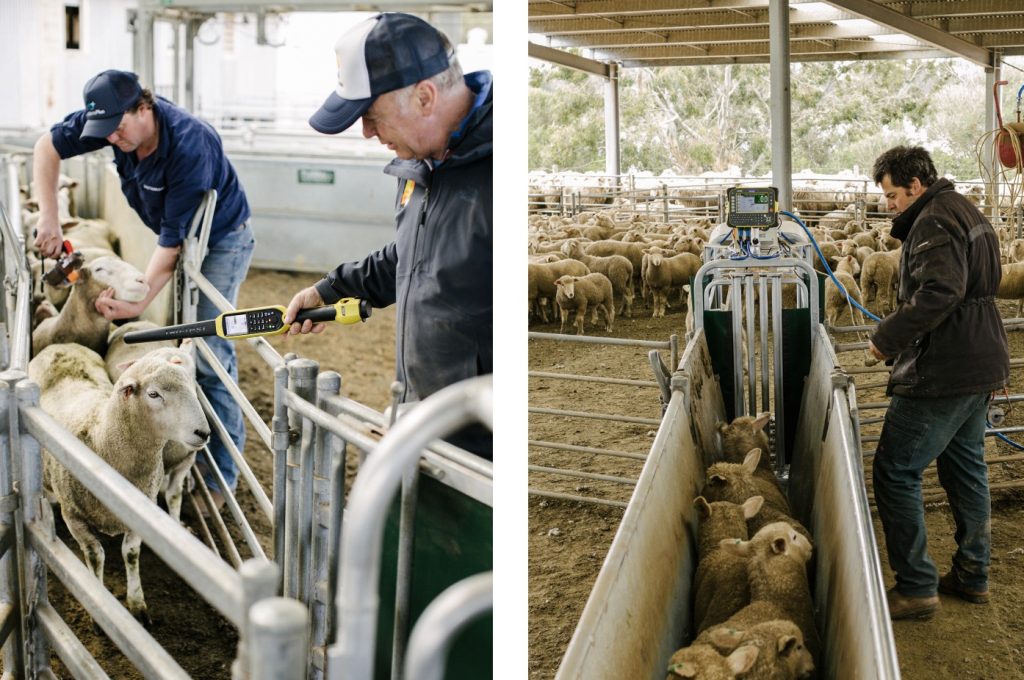
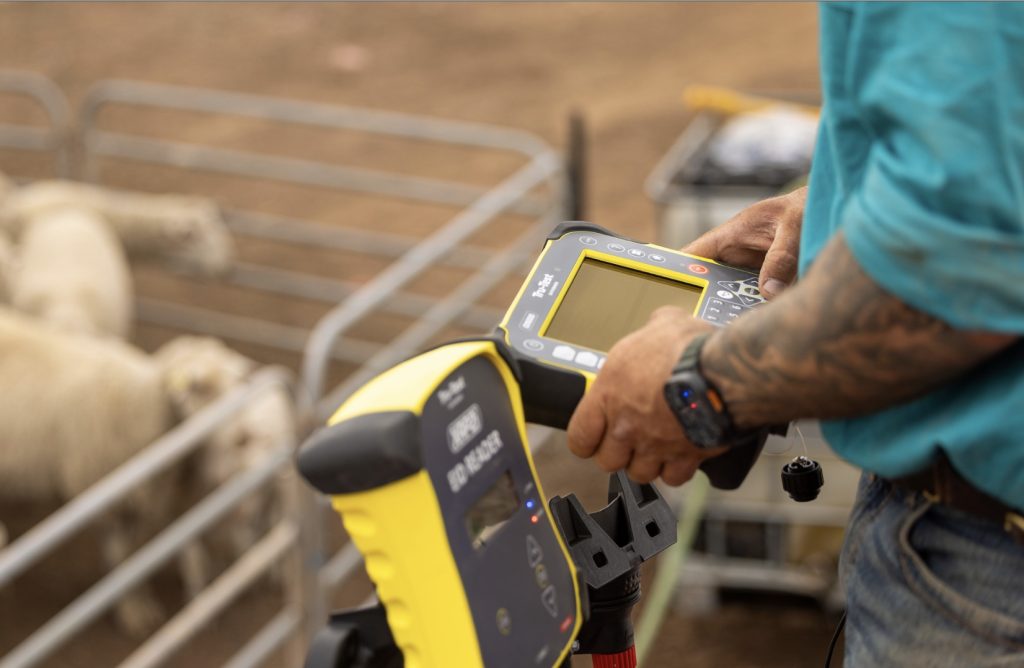
Farmers can start with a wand reader to scan and record faults or weight data. They don’t necessarily need auto weighing and drafting technology, but it helps to maximise the value from EID.
What data to collect
- Weights – as sheep pass through yards for treatments
- Obvious visual faults – dag scores, wool flaws
- Fertility performances – scanning, paddock details, survival
- Body condition scores – 3-5 times a year
That information makes the creation of an A and B mob an easy task, with the A mob containing only condition score 3 ewes that scan with twins or better.
Turning data and the decisions made from the data into value comes from deciding which sheep are retained or culled, feed prioritising to A mob ewes and using fewer top-quality rams for replacements from the A mob ewes.
“You can even use the EID data to create a replacement ewe hogget ranking where a farmer puts a value on each trait they want to prioritise to achieve their breeding objectives, such as BCS or scanning percentage, or weight gain, or whatever a farmer wants to measure and act on.”
Good yard design is critical for farmers intending to weigh large numbers of stock regularly. Small tweaks can often shave a few seconds off the task of weighing an animal and if stock run at a constant speed, weighing more than 500 per hour is considered a good benchmark to aim for.
Andrew says if good yard design can save one person in the yards each time, then the investment decision becomes an easier one to make.
He expects to see an increase in cloud-based applications developed for managing data and creating reports or dashboards which take the pressure off farmers or staff to do any manual analysis.
Andrew says farmers must not be complacent about the rising demand for full traceability from consumers across the globe.
“Believe it or not, lamb margins will tighten again, and it will become more important than ever for farmers to provide proof of what we are doing, so EID is going to help us there.”
Early adopter on the EID journey
Building a flock that performs under pressure from worms was a primary driver for Rangitikei farm manager Harry Prebble to put EID tags into his ewe lamb replacements earlier this year. He’s been closely monitoring weight gains under extended drench intervals to build a more detailed picture of each sheep’s growth potential under pressure from internal parasites.
Farm owner, local veterinarian Martin Walshe, says the ultimate goal is to identify those lambs that are born as twins or triplets and continue growing over the summer to achieve the cut-off weight needed by ewe hogget selection time later in the year. “Without individual identification tags, you just lose those sheep along the way,” Martin says.
The 1200ha hill country property is just west of Hunterville and winters 4300 ewes and 1200-1300 ewe replacements and up to 1000 cattle.
Harry says he and Martin had discussed the move into EID tags for a few months before agreeing to spend nearly $2500 on them to put into the flock’s ewe lamb replacements in March this year. “We’re only just starting, but every time we do something, we learn something from it. It’s trial and error, but you’re always learning from that,” Harry says.
One of the interesting insights already gained over the past few months is the surprising variability in the weight gain for individual animals within the mob.
He’s found the weights vary much more than he expected which he puts down to a variety of factors, including time off-feed, weather leading into the weigh session, mob sizes and management.
In one case, a mob he weighed mid-winter had been in an exposed paddock over a particularly cold weekend and they had not put on any weight since the previous run over the scales. “I was testing drench intervals and I thought I’d gone too far with it because they had either lost a bit of weight or just stalled at the previous weight.
“So I just turned them out into a fresh paddock because they were due a shift and 10 days later weighed them again and they had returned back to normal growth rates,” he says.
Regardless of the variance in weight gain, Harry says the tail enders in the mob are always in that group at weighing time. Having EID tags means he is looking at individual sheep in the mob rather than a mob average.
Harry is considering how artificial intelligence might be helpful to sort data and create draft files based on a range of criteria that he and Walshe want to prioritise.
He says there is limited technical support available for helping commercial sheep farmers set up their data storage and produce reports that rank animals for several traits. He enjoys new technology and is happy to investigate how to set up his own way to handle the data.
“I hope to build more of a system where we weigh on consistent dates and add other traits like scanning data to build a deeper profile on each animal and create a replacement maternal breeding value for our system, where all traits are ranked and sorted.
“Then we will try to rank them in order and because worms are big for us, we want to rank them for weight gain over that challenging worm period,” he says.
Harry says he is still building trust in the data and his weigh scales, and he is still considering what the key weigh dates need to be so it is a manageable task that doesn’t become a burden for him and his two staff.
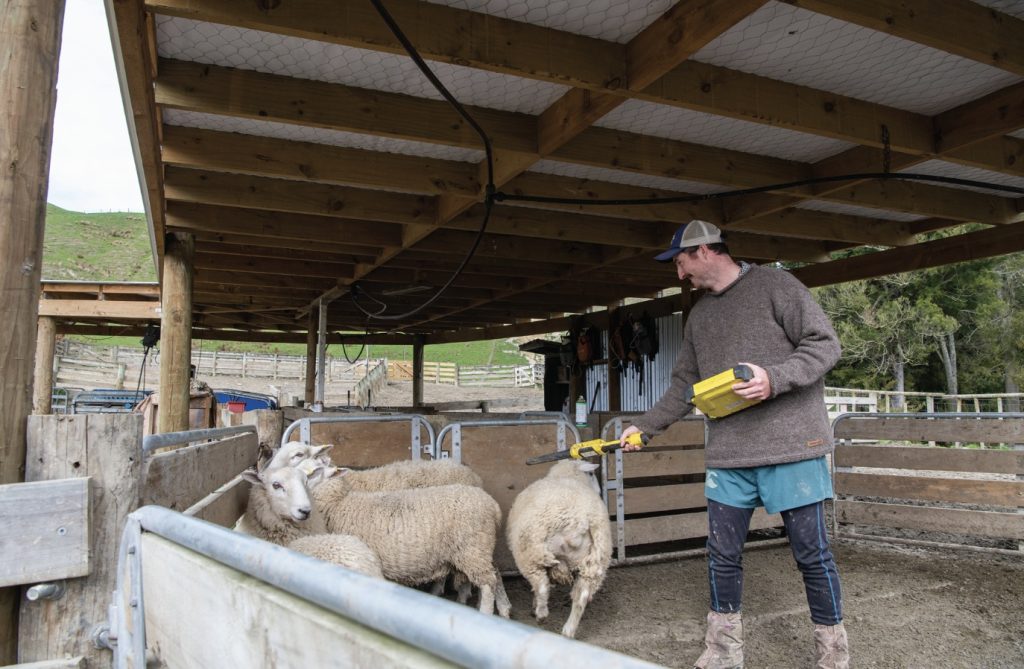
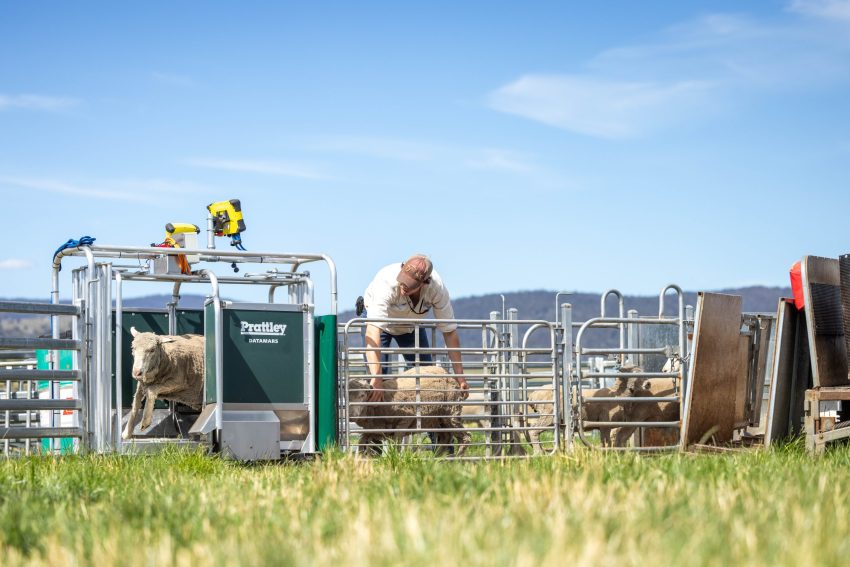
The property’s main sheep yards already had an auto-weighing and drafting system installed so they only had to purchase a panel reader for the side of the weigh crate to read the tag as each sheep comes through and link it back to the reader to match to the weight. “We may need to upgrade our monitor to a bigger unit in the future, but it’s fine for us at this stage with EID tags.”
They already had their own wand reader and Harry has plans to use that more in the future to record tag numbers of sheep with obvious faults while they are in the race, and for use at scanning time to capture lamb potential data as ewes or ewe hoggets leave the scanning box.
The wand could also be placed on the end of the drafting race to scan one line as they run through, saving a lot of time.
He says any system developed has to be simple so it minimises the impact on stock and reduces the effect of changing external factors, such as weather, stress or feed quality.
Incorporating data collection with other tasks and avoiding the temptation to collect data that is never used are two early learnings for Harry. “In our case, we tagged our ewe lambs a month after weaning when they were being yarded for a couple of animal health treatments. We had to be very careful with only weighing for a few hours as the longer it takes, the back of the mob empties out and that can have a big effect on the results.”
In the future, he is also keen to explore whether it is possible to create a smaller, but better performing A flock which is mated to elite maternal rams for replacements, so more ewes than now can go to terminal sires to capitalise on hybrid vigour in their progeny.