What does the market want?
New Zealand is renowned for producing safe, nutritious food with ethical farming practices. This special report explores how food and fashion brands are meeting changing customer demands and our farmers’ efforts to match the evolving requirements with evidence. Words Anne Lee & Sarah Perriam-Lampp.

The challenge with any global consumer trend is that science and marketing may be at loggerheads on definition, however suppliers are eager to capitalise on these trends.
How New Zealand farmers produce food and fibre is world class, but how we articulate the credible difference in a competitive global marketplace is another. For a country uniquely endowed with an established agricultural production system that favours this trend, are we set up to gain a compelling foothold? How are our major suppliers working with farmers to compete in a world of smart, digital supply chains who now want evidence of production rather than a story.
North American retailers such as Whole Foods and Dorothy Lane, UK based supermarkets Sainsbury’s and Waitrose and European fashion houses are actively seeking deeper credibility and traceability to ensure their own brands’ legitimacy. They see embedding procurement from regenerative sources as their strategy in a greenwashed world – but the debate is still alive and well on how much ‘regenerative’ is already greenwashed.
Our markets vs feeding the world
The science community points out that regenerative has its place for a smaller high end portion of food and fibre production with a 2020 study published in the Frontiers for Sustainable Food Systems finding that regenerative ranching in the US would require up to 2.5 times more land than conventional beef production. That means to produce the same amount of meat that the US consumes now from regenerative farming practices, the “footprint of animal agriculture” would have to increase substantially or the US drastically reduce its meat consumption.
“There’s no way to make regenerative agriculture work across the whole food system, at least not if Americans and others in Global North countries continue to eat the same amount of meat,” says Rattan Lal, distinguished professor of soil science at Ohio State University in an article on Sentient.
The question in the debate always remains – what are New Zealand’s aspirations? To fix the world’s total food demand or lean into our higher value from less volume strategy? If the latter, then what is driving the demand of the top end of town?
Vogue magazine recently published an article “Why Regenerative Farming Is the Latest Wellness Travel Trend.”
Luxury‑travel consumers today are seeking more than just opulent accommodation: they want deeper meaning, connection and restoration. According to the article, travellers are increasingly drawn to working‑farms and regenerative estates precisely because they represent a respite from over‑stimulated “screen‑saturated” lives.
This shift is supported by strong market signals: agritourism is growing around 12 % annually and is projected to reach US $14.5 billion by 2029. At the same time, the global wellness tourism market
– driven by demands for outdoor time, healthy cuisine and tranquility – is moving toward US $1.35 trillion by 2028.
The luxury angle is clear: estates front‑load refined hospitality (Michelin meals, architectural elegance, spa‑level comfort) but ground it in “living soil, working farm” experiences. As one estate manager puts it: “People are recognising that the basic principles of Mother Nature are what truly nourish us, and the definition of luxury within the hospitality world has shifted with it; now the emphasis is on well‑being, environmental awareness and a slower pace.”
The high end is propelled by affluent consumers who link luxury not just to material indulgence but to authenticity, regeneration and wellness. They want the experience of place, of ethical sourcing, of reconnecting with nature.
In this special report we will examine where Fonterra, NZ Merino and Atkin’s Ranch are at as they continue to lean into the consumer demand for ‘regeneratively’ sourced food and fibre evolving in their key markets – North America, Europe and Southeast Asia. They have seen it move from a “nice-to-have” toward a baseline expectation, especially among premium and health‑conscious consumers.
We explore what third‑party verification they are using to prove practice not just provenance and how they are bringing their farmer suppliers on the journey.
Dairy’s regenerative direction
The majority of customers for New Zealand dairy aren’t the consumers wandering the aisles in supermarkets around the globe. Getting a direct line to what they want and what they’re willing to pay for can be difficult.
Instead, it’s the global heavy weights of the food industry who, by and large, stand in the supply chain as the direct customers of our dairy processors and they’re the ones sending the clearest and loudest demand messages.
They’ve committed themselves to some lofty sustainability goals – greenhouse gas (GHG) emissions at net zero by 2050 as an example with Nestlé and Mars, and shifting farmer suppliers to regenerative farming practices. Globally, milk and dairy ingredients are Nestlé’s biggest raw material by volume and they have a procurement goal to source 50% of key ingredients from farms using regenerative agriculture practices by 2030. The company surpassed its interim goal of 20% by 2025, reaching 21.3% in 2024 from more than 150,000 farmers in 25 countries.
While Nestlé has withdrawn from the international Dairy Methane Action Alliance, it remains committed to its GHG reduction goals and, like other global players, is investing heavily in a variety of programmes.
In many cases, company requirements for reporting of Scope Three emissions (emissions embedded in product inputs) has likely brought a level of urgency to document sustainability progress. But the rise of sustainability as a key strategic platform has been steadily growing over recent decades and, for key players, is now a major pillar of business as usual.
Some, like Fonterra, Nestlé, MARS, Lactalis and Synlait have signed up to the Sustainable Agriculture Initiative Platform which includes more than 190 member companies and organisations ranging from farmer cooperatives, processors, manufacturers, retailers and traders.
Its vision is “a sustainable, thriving and resilient agricultural sector that protects the earth’s resources, human rights and animal welfare”. Its purpose is “to harness the collaborative power of its members to accelerate the widespread adoption of sustainable agriculture practices and the transformation to sustainable food systems”.
Members have recognised that, by working together through “pre-competitive” collaboration, they can come up with frameworks that will give credible and achievable outcomes for farmers, animals and the environment. Importantly, it also reduces the need for each company to reinvent the wheel, come up with its own definitions and create auditing and reporting stress for all in the supply chain.
The SAI Platform defines regenerative agriculture as an outcome-based farming approach that protects and improves soil health, biodiversity, climate and water resources while supporting farming business development with the premise to improve, or at a minimum, maintain farmer livelihoods.
Its regenerative agriculture framework is segmented into four impact areas – water, soil, biodiversity and climate.
It is up to individual companies to define the details of their regenerative programmes but the aim is to measure, report and verify that farming practices are on a path of improving the four impact areas.
As part of the SAI Platform, Nestlé has been heavily involved in developing the SAI Platform Regenerating Together Framework and bases its own policies on it.
The company has farmer suppliers from diverse regions running equally diverse farm systems, so agroecological practices need to be adapted to the local context.
Its framework lists 17 farm practices as regenerative:
Cover crops, diversified crop rotations, mulching and crop residue cover, minimum tillage, use of organic fertilisers, integrated nutrient management, irrigation technology, riparian buffers, intercropping, agroforestry and silvo-pastoral systems, hedgerows and green buffers, integrated pest management and bio controls, precision farming, manure storage and processes, herd management and integrated pasture management and grazing strategies.
Farmer suppliers will be at various stages along the continuum of using the practices, but a deeper dive into what’s expected via the company’s website indicates that New Zealand dairying would already meet many of the expectations.
Farm environment plans, nutrient budgets, riparian planting, effluent management, rotational grazing and pasture-based systems, along with the inclusion of pasture species such as clover and plantain as well as a variety of fodder crops, sit squarely within the parameters.
Nestlé to financially support the transition
Globally the company is spending $2.61 billion over five years to scale the adoption of regenerative practices across key agricultural supply chains, a Nestlé spokesperson told CountryWide.
Nestlé’s willingness to invest in research and build understanding of farming practices in New Zealand, as well as provide premium payments, should give some comfort, as should the SAI Platform’s inclusion of at least maintaining farm profitability as a factor in its framework.
“Through localised pilot programmes in crops such as coffee, cocoa and dairy, Nestlé is testing and scaling practices like cover cropping, intercropping, reduced tillage and improved manure management – all designed to enhance soil health, boost biodiversity and lower GHG emissions,” the spokesperson said. Nestlé’s Institute of Agricultural Sciences leads the company’s research into a variety of science-based agricultural solutions and assesses their potential for reducing the environmental footprint of key agricultural raw materials such as coffee and dairy.
“The institute works in collaboration with external partners to bring the most promising approaches and solutions to farmers, enabling us to contribute to their transition to regenerative practices with scalable and impactful applications,” the spokesperson said.
“Nestlé recently formed a global partnership with the World Farmers’ Organisation (WFO), representing more than a billion farmers worldwide, to co-develop resilient food systems, support farming communities, promote awareness and adoption of regenerative agriculture and advocate for policies that place farmers at the centre of climate solutions,” they said.
It is reaching right back to the start of the supply chain and dipping deeply into its own coffers to directly incentivise farmers with payment premiums, support research into realistic solutions on emissions reductions and fund planting programmes and on-farm tools for emission reductions.
“Through localised pilot programmes in crops such as coffee, cocoa and dairy, Nestlé is testing and scaling practices like cover cropping, intercropping, reduced tillage and improved manure management – all designed to enhance soil health, boost biodiversity and lower GHG emissions,” – Nestlé, spokesperson
In a joint initiative with Fonterra and Dairy Trust Taranaki, it has invested to develop New Zealand’s first commercially viable Net Zero dairy farm. The project aims to reduce emissions intensity by 30% by the 2026 – 27 season, from a 2021-22 baseline and has a 10-year ambition to become net zero. The Taranaki farm is one of more than 100 partnership farms the company is investing in globally.
How Fonterra is incentivising its farmers
This season, Fonterra’s Co-operative Difference programme is providing a pathway for premium payments to come directly to farmers from global customers, incentivising farmer suppliers to produce milk with the credentials the market wants. A customer incentive payment is being fully funded by Mars and Nestlé, with customers also funding on-farm solutions or tools to help improve
onfarm efficiency.
In December 2023, Fonterra CEO, Miles Hurrell, welcomed Nestlé’s continued support of farmers who are making continuous improvement with on-farm sustainability. Fonterra’s Co-operative Difference programme was set up in 2019 and the data farmers are providing on their operations is helping the co-operative unlock value for sustainability practices being undertaken by suppliers.
“We are delighted to work in partnership with Nestlé to recognise the Co-op’s farmers who are at the forefront of industry best practice,” says Miles.
Fonterra’s Director of On Farm Excellence, Chris Appleby, says while the programme’s core focus pillars have remained the same, the way payments are structured has changed.
“The important point though is that the co-op is able to leverage off the work farmers are already doing to produce emissions efficient milk on pasture-based systems using sustainable farming practices,” he says.
This season, farmers who achieve any level of the Co-operative Difference are eligible for up to $1500 of customer funding for tools and services that support them in making further on farm improvements. Based on last season’s achievement levels, 90% of farmers will be eligible this season.
Farmers who achieve the Co-operative Difference and have one of the lowest emissions footprints – about 30% lower than the average farm – will be eligible for a customer-funded incentive of 10 – 25 cents/ kg milksolids (MS). This season the emissions intensity level for this payment will be below or equal to 710kg CO2e/tonne fat and protein corrected milk (FPCM). t’s estimated between 300 – 350 farms will be eligible for this payment.
“Our starting point is to ask what value can we already unlock from the great work farmers are already doing – the uniqueness of New Zealand farming and our dairy farm systems.” – Chris Appleby, Fonterra
There is also a new Co-operative Difference payment, introduced by Fonterra, where farmers who meet the criteria for the Emissions Excellence achievement under ‘Te Puku’ will receive a further payment of between 1-5c/kg MS. Based on last season’s data, it’s estimated about 5000 farms will be eligible for this payment.
The programme has three levels:
- Te Pūtake or the start of the journey – where farmers can unlock 7c/kg MS by completing seven actions. Once farmers meet Te Pūtake, they can gain access to the new Customer Incentives, based on eligibility criteria for each.
- Te Puku or the middle – up to 8c/kg MS available (3c/kg MS for milk quality excellence and 1-5c/kg MS for emissions excellence funded by the co-operative through the milk price. For the 2025/26 season, emissions below 901kg CO2e/tonne FPCM will earn the emissions excellence payment). Te Tihi is the third level or the peak, where farmers are recognised for high milk quality (no payment but public recognition).
The on-farm solutions are available to farmers completing any of the three levels. They include funding towards native planting by customer Premier Nutrition and a Waikato and Southland pilot using EcoPond technology to cut emissions from effluent ponds, funded by Mars and Nestlé.
There’s also funding to go towards on-farm solutions to improve efficiency such as Aimer, Pasture.io., Trev, FarmIQ, LIC and CRV for a fourth herd test, Johne’s disease testing, genomic testing, sexed semen straws and BVD testing of replacement calves, as well as planting funding.
“Our starting point is to ask what value can we unlock from the great work farmers are already doing – the uniqueness of New Zealand farming and our dairy farm systems. It gives us a great starting point and it’s our competitive advantage,” Chris says.
Collecting farmer data, such as the information used to inform the Farm Insights Reports (see “Insights from farm data show emission cutting opportunities” – page 92), allows the co-operative to go to its customers and show them what farmers are achieving. That’s then unlocking value that customers are willing to pay for because they too can use the information to explain the sustainability attributes to their customers.
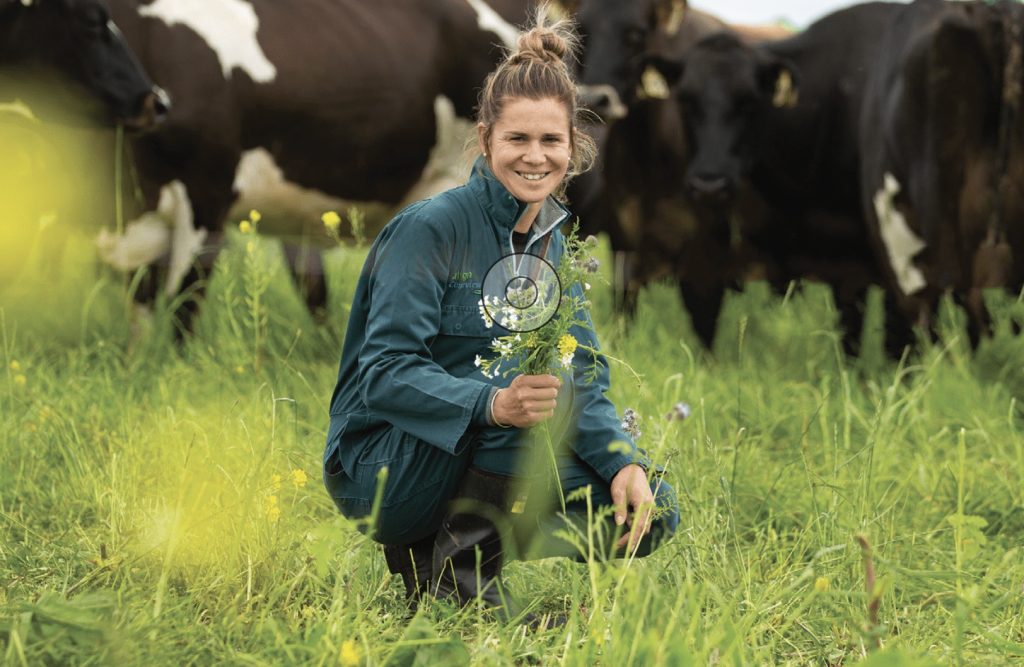
New Zealand’s first regenerative-certified yoghurt
Gaining regenerative agriculture certification has been an important step for Align Farms and the Align Food Group in taking its branded yoghurt to market.
Align Farms chief executive Rhys Roberts says the Re Yoghurt brand launched in March and was the culmination of a five-year journey to create a vertically integrated product from paddock to plate.
Align Farms owns six dairy farms in Canterbury, milking 4,500 cows, and three dairy support farms.
In 2019 its 296ha dairy farm, Clareview, near Ashburton, made the shift to regenerative agriculture across a portion of the farm and the team began exploring multi-species pasture mixes and a fertiliser regime that targeted soil parameters rather than focusing on feeding plants.
Throughout the transition Align has been open with the progress it’s made and shared what it’s learned with other curious farmers, holding fieldays and posting information on its website.
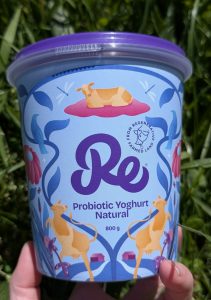 Rhys says the family-owned business always had vertical integration as a goal and they, together with other shareholders, set up Align Foods to take wholemilk, produced by the cows on the regeneratively run area at Clareview, to market as yoghurt. Initially that was through the purchase of Cyclops yoghurt, but this year they launched the regeneratively branded product, selling it through Woolworths and Foodstuffs in supermarkets across the North and South Islands.
“Regenerative agriculture certification was seen as a must,” Rhys says.
“We needed to be able to prove to customers that the product is what we say it is. Milk that comes from a farm where regenerative practices are adhered to.
“It was also strategic because we wanted to beat potential competitors to market,” he says.
Verifying regenerative
It takes time to gain certification. Working with the Savory Institute early in their regenerative journey to understand the practices they should implement and then monitoring changes meant they could get on the pathway to the Institute’s Ecological Outcome Verification (EOV).
EOV is the verification programme behind the Land to Market labelling that’s displayed on the Re Yoghurt pottles.
“People get hung up on the definition of regenerative agriculture but I think it boils down to something fairly simple when you compare it with other farming practices.
“Organic farming’s main focus is protecting the produce. Regenerative farming’s main focus is protecting the soil and conventional farming is having an equal focus on people, planet and profit.
“It’s not to say there’s not an intersection between regenerative and conventional – conventional farmers want to protect their soils too and regenerative farmers want to be profitable – it’s about where their main focus is,” he says.
The certification process differs from many other approaches in that it assesses the outcomes rather than the farming practices themselves.
“It also fits nicely with the concept that regenerative agriculture is about continuous improvement,” Rhys says.
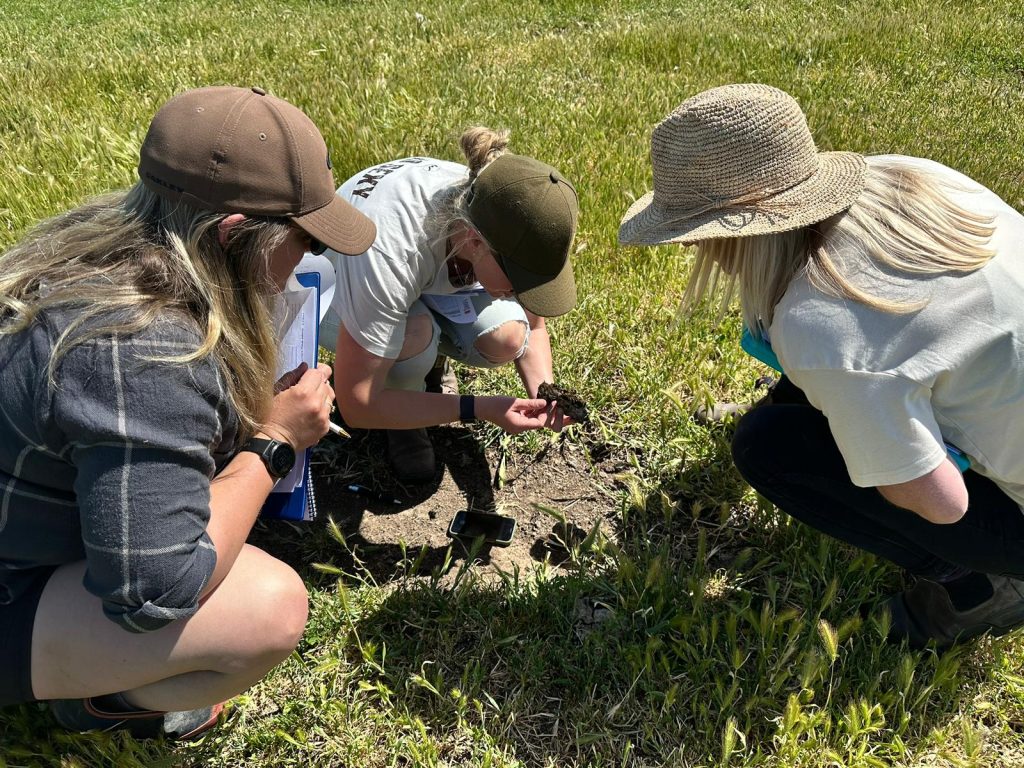
Each year an accredited verifier assesses the same plot within a paddock using specific monitoring protocols, evaluating soil health indicators and applying an ecological score for each one.
The sum of each score gives an Ecological Health Index (EHI) score. To gain or maintain certification the EHI must be improving each year.
The indicators include assessments of live canopy abundance, micro-fauna, litter abundance, litter decomposition, dung decomposition, water erosion, wind erosion and bare soil as well as pasture species. Biodiversity and water infiltration are also assessed along with several other factors.
The overall EHI must be lifted but individual metrics could decline some years.
As well as the regenerative certification through Land to Market, Re Yoghurt also has Certified Humane accreditation for the handling and rearing of animals. Practices on the farm are assessed as well as the manufacturing process to ensure only milk from the certified area goes into the yoghurt products.
Rhys says they’ve also been working with SPCA on having certification for dairy farms.
Understanding what customers want and what they value has been an important part of launching the new brand with market research. They have gone direct to potential consumers by surveying and interviewing urban and rural New Zealanders.
“We know there are consumers in New Zealand who value the regenerative aspect. They’re more likely to be urban based but consumers also put value on other aspects – the fact it’s made from whole milk, that there’s a single, short supply chain and that milk is single origin.”
Market demanding certification
Savory Institute’s Land to Market is the world’s first outcomes-based verified regenerative sourcing accreditation with over 1000 verified products and more than 100 member brands from more than 6 million acres measured globally.
The founder of Holistic Management and the Savory Institute, Allan Savory, dedicated his life’s work to understanding and reversing the rapid degradation of land and wildlife afflicting his Rhodesian homeland. There has often been criticism of Savory’s grazing management approach for lack of scientific evidence supporting its claims that it can reverse desertification and climate change. Critics argue that Savory’s claims are based on anecdotal evidence, not peer-reviewed studies, and that the method overestimates carbon sequestration potential while underestimating the impact of methane emissions from a large number of livestock.
All the while, conscious consumers globally are in search of farmers who are proving to be regenerating their land regardless. This is driving the likes of UGG, Timberland, Vans, The North Face and New Balance who all use Land to Market as their verified regenerative sourcing solution for raw materials, such as meat, dairy, leather and wool.
Becks Smith of The Whole Story, is a Savory Hub and does the EOV monitoring with farmers.
“What I like about it is it doesn’t tell you how to farm, but it measures the outcomes of the practices on the land.” – Becks Smith, The Whole Story
“What I like about it is it doesn’t tell you how to farm, but it measures the outcomes of the practices on the land.”
She explains that instead of dictating farming methods, the framework offers scientifically robust insights through comparison with region-specific reference land bases, accounting for natural variation of seasonality, geography and climate.
“A really big part about this monitoring system is actually doing it with the farmers so they can learn to read their own land,” Becks explains. She says the hands-on approach means benefits extend far beyond earning market premiums.
“The real value is in being able to realise the inherent value behind the farm gate of how increasing ecosystem health, healthier soils, healthier water cycling and increased biodiversity results in being more drought tolerant, more grass growth, healthier animals. That’s the real value within your farming system rather than just premiums in the market.”
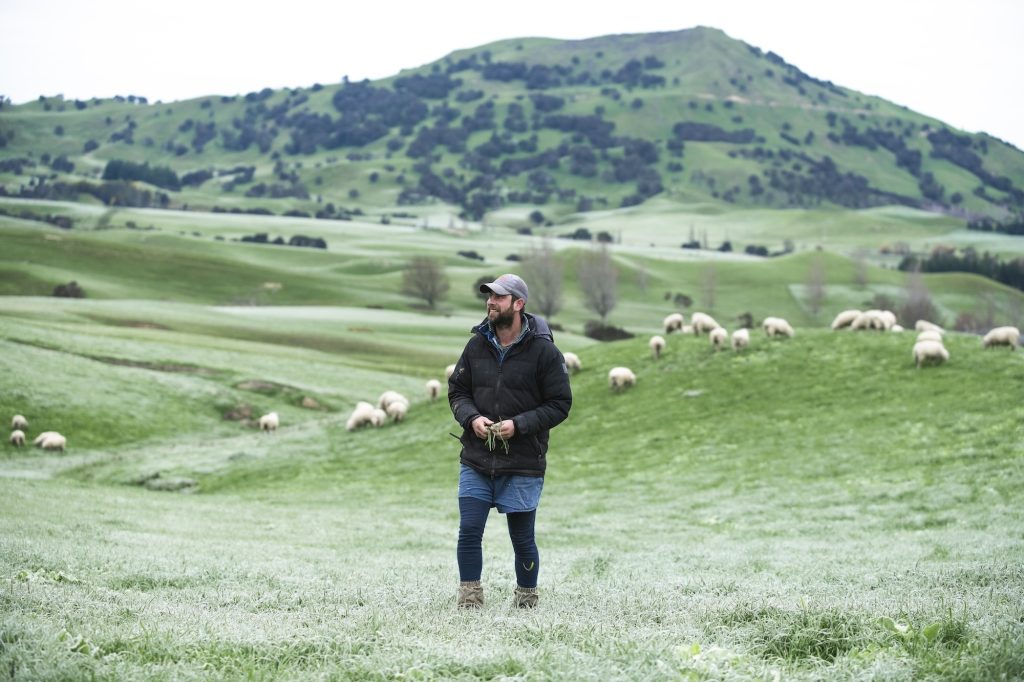
Atkins Ranch: an early adopter of Savory’s ‘EOV’
Atkins Ranch has long been heralded as a forward-thinker in the New Zealand meat industry, setting benchmarks in animal welfare, traceability, and more recently regenerative certified lamb.
Rather than mandating changes, the company pursued an approach grounded in incentives and genuine partnership. Market rewards are clear – regenerative-branded has achieved premiums up to 15% above schedule, for its farmer suppliers. Their sustainability journey spans decades and illustrates how proactive adaptation and authentic farmer engagement can create meaningful market differentiation.
As CEO Pat Maher recounts, the company’s journey began in the early 1990s, back when it was known as Lean Meats. “In the early 90s, we were the first company in New Zealand to take on the antibiotic-free claim at a request from our North American supermarket client, Whole Foods,” explains Pat.
The momentum gained and by 2016 Atkins Ranch became one of New Zealand’s first lamb exporters to achieve Non-GMO Project verification. That same year, they pursued animal welfare certification through the Global Animal Partnership (GAP).
These efforts were genuinely responsive to evolving consumer values, particularly in crucial export markets. “We moved pretty quickly to continue to de-commoditise our lamb,” says Pat.
He stresses that transitioning to more stringent sustainability standards on farm would not have been possible without Atkins Ranch’s supply base of dedicated lamb producers that played a pivotal role.
“We’ve got quite a tight supply base of farmers that are really happy to put up with the stuff that we throw at them! They’ve always been able to say ‘Hey, we’ll give it a crack, and if it pays off, great’.”
By leveraging early partnerships, Atkins Ranch secured notable returns on by-products like sheepskins, ensuring farmers saw direct economic rewards from the transition. Pat says you need to make change financially attractive to farmers. With base premiums hovering around 70 cents per kilo in recent years (often translating to $14 to $15 a head), plus additional rewards for meeting specific standards, the company made the economics of change difficult to ignore even as compliance requirements grew more rigorous.
As the demand grew for sustainability claims to be regenerative, Atkins Ranch faced a crucial decision about what framework resonated with international consumers and best fit New Zealand’s unique farming systems. After thoughtful evaluation, the company adopted Land to Market, which uses the Ecological Outcome Verification (EOV) protocol.
“We take a market-back approach. We try to understand what the market wants rather than what our farmers in New Zealand want because farmers will change if you pay more,” Pat explains.
At the time, the two leading claims relevant to Atkins Ranch markets were ROC (organic regenerative) and Land to Market. However, New Zealand’s farming styles made organic certification a “really
hard” fit, so Land to Market, with its robust third-party auditing and collaborative network, became the clear choice.
“We take a market-back approach. We try to understand what the market wants rather than what our farmers in New Zealand want because farmers will change if you pay more. – Pat Maher, CEO, Atkins Ranch
“I’ve always liked the idea of having a third party accreditation because then it’s at arm’s length, particularly for the American market. I think that really resonates with the consumer,” Pat says, reflecting a growing consumer skepticism of self-accreditation claims.
As for what lies ahead, Pat believes the customer journey is entering a new phase defined by transparency, premiumisation and compelling stories. “The beauty of the regenerative side of things is that it’s outcome-driven. It empowers the farmer to look at their own system and the outputs that are coming out,” he says.
But the path isn’t without its nuances. He expresses skepticism about a carbon-only focus that a lot of international brands have had tunnel vision on. Pat views biodiversity and holistic outcomes as the future for both storytelling and a tangible, authentic environmental benefit.
Ultimately Pat hopes that Atkins Ranch’s market-driven approach serves as a template for the industry. “My key KPI is to get as much money in the farmer’s pocket as possible, rather than shareholders,” he concludes.
NZ Merino’s own regenerative certification
Transparency, premiumisation, marketing and connection has been the cornerstone for NZ Merino’s long history with defining value through contracts with fine wool growers.
Amidst global concerns about authenticity in sustainability, Dave Maslen, Chief Customer Officer at New Zealand Merino, says brands can no longer rely on vague or unverified claims about their environmental and ethical standards.
“It’s not just mounting pressure from consumers, it’s also from regulators, both pushing to gain and keep market access,” says Dave.
Dave explains that international markets are legislating against misleading “green claims,” which is where the demand for thorough verification and transparency is being driven from.
Through New Zealand Merino’s evolution of its practice based standard (ZQ), to the impact focused successor, ZQRX, Dave says it’s crucial to have rigorous third-party audits if you want to maintain credibility in your own framework.
“True credibility means that every claim must be defensible, data-driven, and continuously scrutinised to remain in the game of a trusted source of truth.”
The market’s refusal to source wool from properties that used mulesing practices due to animal welfare concerns drove the introduction of the ZQ programme in 2007 by New Zealand Merino. They also recognised through their direct relationship with fashion brands long-term contracts could incentivise growers to not only phase out harmful practices but to adopt more environmentally focused production systems.
Launched in 2020, ZQRX was introduced as a next-generation sustainability programme, building upon the foundations established by the ZQ standard after the challenges of an audit-based system which struggled to account for the diversity and nuance of real-world farming practices.
“ZQRX is an “impact-based” framework which empowers growers to measure, document, and continually improve their performance across 15 sustainability indicators.”
Dave explains that while farmers may be feeling the heavy burden of on farm compliance, every stage in the supply chain has a rigorous amount of auditing that would make farmers’ eyes water.
“Whether you’re a fashion house, a spinner, a knitter, a weaver manufacturer, you’ve got manuals that are phone books thick of compliance that you need to comply to.”
He says that audits are happening every week in factories and at ports driven by a wave of compliance requirements that span the entire supply chain. The point Dave is trying to highlight is not just about the source of the demand for evidence but in how partners across the value chain like New Zealand Merino must provide transparent data in an easy and trusted format.
To engage and incentivise farmers, the apparel brands such as icebreaker, Smartwool, Rodd & Gunn and Barkers visit farms to provide regular direct interactions. NZ Merino negotiates forward contracts that offer pricing stability, helping growers to focus on quality and sustainability without being subject to commodity price swings.
“True credibility means that every claim must be defensible, data-driven, and continuously scrutinised to remain in the game of a trusted source of truth.” – Dave Maslen, Chief Customer Officer New Zealand Merino
“It means growers aren’t left guessing about market expectations. They hear directly from the brands on what’s required to lift outcomes for financial premiums. What we’re actually seeing is that just meeting environmental standards doesn’t attract a premium anymore.”
Dave explains that the wool story now is about demonstrating farming practice that don’t extract from the environment like synthetics do, but regenerates the environment through responsible farming.
“Our job is about understanding what it is the market’s continually asking for, communicating that to growers, and stitching these connections together to make both sides see what tools are available to drive change so both brand and growers alike can create and capture value from what they’re doing.”