The fifth quarter are farmers paid for this?
Northland farmer, Geoff Crawford, asks why farmers are not benefitting from an increase in export value for beef co-products within livestock prices. Words Sarah Perriam-Lampp.

 In a unique position to draw comparisons between dairy’s extraction of value from milk, Northland farmer, Geoff Crawford, releases his recent Kelloggs report in an aim to find more value to the farmer in the fifth quarter of the cattle beast.
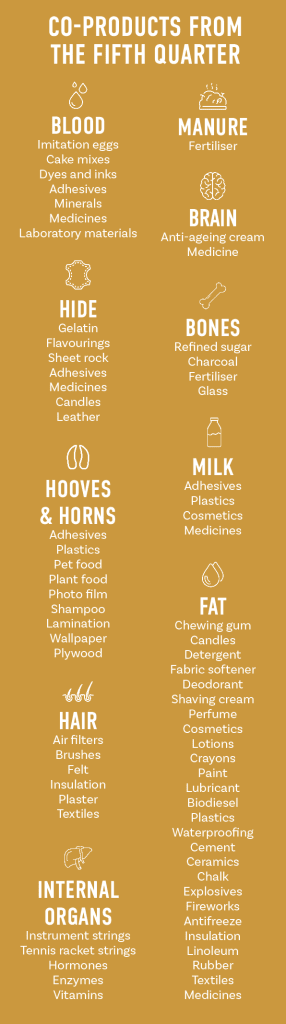
The “fifth quarter” includes everything beyond the primary cuts – hides, offal, blood, bones, tendons, and a host of other co-products that are processed into food, pharmaceuticals, nutraceuticals, petfood and industrial products.
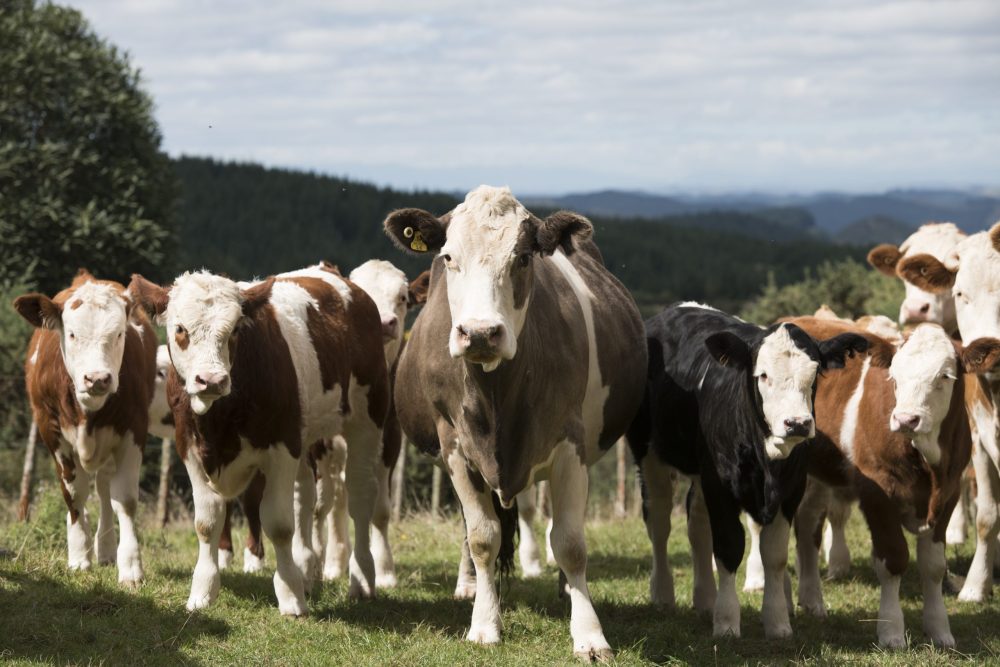
Geoff farms about 1,400 cows across seven farms, in total running approximately 2,500 head. He has long suspected that a significant slice of the value from each animal is disappearing before it ever reaches the farm gate.
Most economic gains from co-products are realised downstream by processors, who handle their extraction, refinement and marketing. His argument is that farmers often receive little financial benefit from them due to the current supply chain structure and centralised processing practices.
“When you sell an animal, say, 400 kg liveweight, nearly 200 kg of that is not paid to the farmer when it goes to the abattoir. That is significant,” says Geoff.
Geoff states that co-products sometimes exceed the price of prime red meat, so it’s vital for processors to maximise their value to strengthen overall margins, which in turn, supports the entire industry.
“Farmers ultimately benefit when co-product value increases, which enables more competitive livestock prices.”
Geoff set out to put some numbers around what this might actually be worth.
His example is $9/kg for a bull in a good year and making US$14.50/kg (NZ$29/kg) ground beef in the US market – a considerable margin he says on processing and exporting an animal despite the additional value derived from the co‑products.
“This raises serious questions about fairness and long‑term viability,” says Geoff. “They’re a lot better off killing and exporting the animal than we are farming it for its lifetime.”
One of the strongest themes in Geoff’s work is the secrecy of the total co‑product values. Meat companies and processors, he says, keep the details close to their chest. He interviewed many of them as well as Meat Industry Association and Forsyth Barr for his report.
“Farmers ultimately benefit when co-product value increases, which enables more competitive livestock prices.” – Geoff Crawford, Northland farmer and 2025 Kellogg’s scholar
Geoff found that detailed information is hard to obtain. He estimates that co‑products are worth about $2 billion to the New Zealand economy – roughly the size of the wine industry – yet farmers have no clear visibility of where that money goes or what share, if any, is reflected back to them.
The Meat Industry Association of New Zealand notes in Geoff’s report that much value is lost when materials are simply exported in raw form. Innovation and branding, especially in sustainable, high-value product segments, can keep more profit within New Zealand.
A recurring theme throughout the interviews is the critical importance of innovation, collaboration and value maximisation within the co-products sector of New Zealand’s red meat industry, which was discussed in a panel at the 2025 Red Meat Sector Conference.
However, realising this potential requires a shift from the traditional focus on primary meat cuts to a more holistic approach, one that includes advanced processing, transparent value sharing, and joint ventures to reduce environmental impacts and ensure equitable returns to producers and farmers.
Looking ahead, Geoff believes the next generation of farmers will be much less tolerant of opaque systems and only relying on a capital‑gain‑only farming business model.
He argues that farmers should demand a full investigation into co‑product values and explore mechanisms for farmer and outside investment in added‑value processing – potentially through “beef shares” or similar structures that sit alongside, but distinct from, the traditional meat companies.
For Geoff, his passion for this topic is about ensuring New Zealand’s red meat sector remains competitive, profitable and financially attractive to the people who matter most in the supply chain: the farmers themselves.