Rewriting the future of hill country
By retiring unproductive land and using Halter to manage intensive bull beef on hard hills, a Waikato family has transformed their farm's profitability. Words Sarah Perriam-Lampp, Photos Jay French.
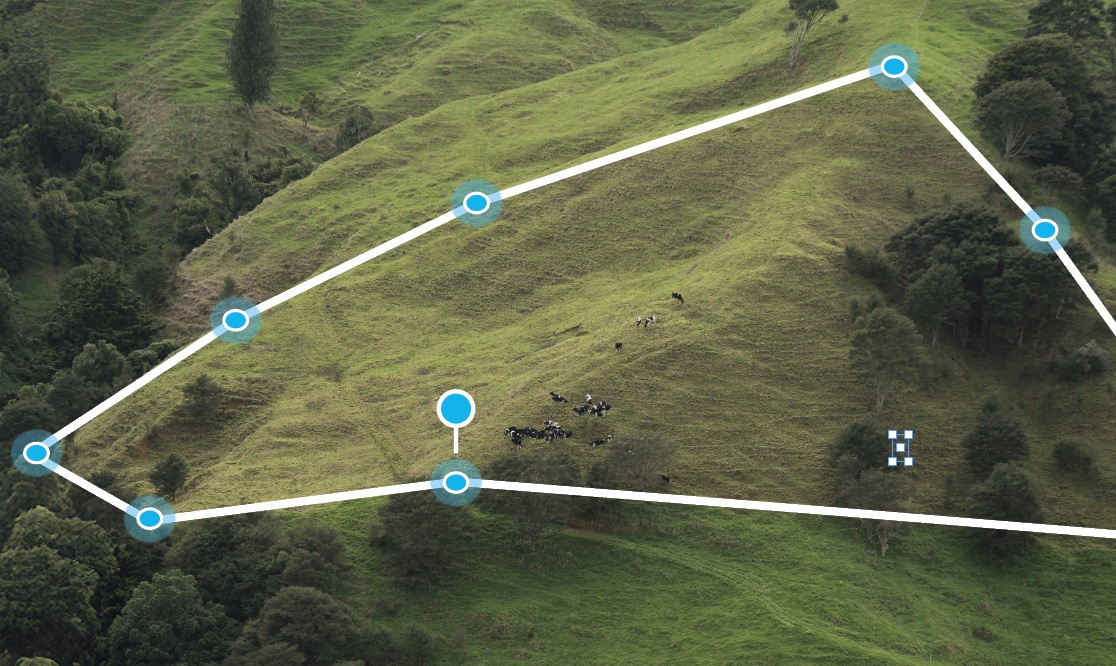
Like many hard hill country, predominantly sheep farms, with significant debt, the Sherlocks, farming in North West Waikato, were under real pressure 18 months ago. Jon Sherlock and his wife, Fiona, were asking whether they should scale back farming and look for off-farm income. Today, they’re signing a sale and purchase agreement for another property to extend their bull system.
When they looked at their family’s 660 ha, third-generation hill country farm, the blunt numbers of a financially challenging traditional breeding ewe system forced them to make a hard call on their identity as farmers.
“We’re sheep farmers. We had 75-85% sheep. That was our core business for the last three generations,” shared Jon. Moving away from that, felt, in Jon’s words, “confronting.”
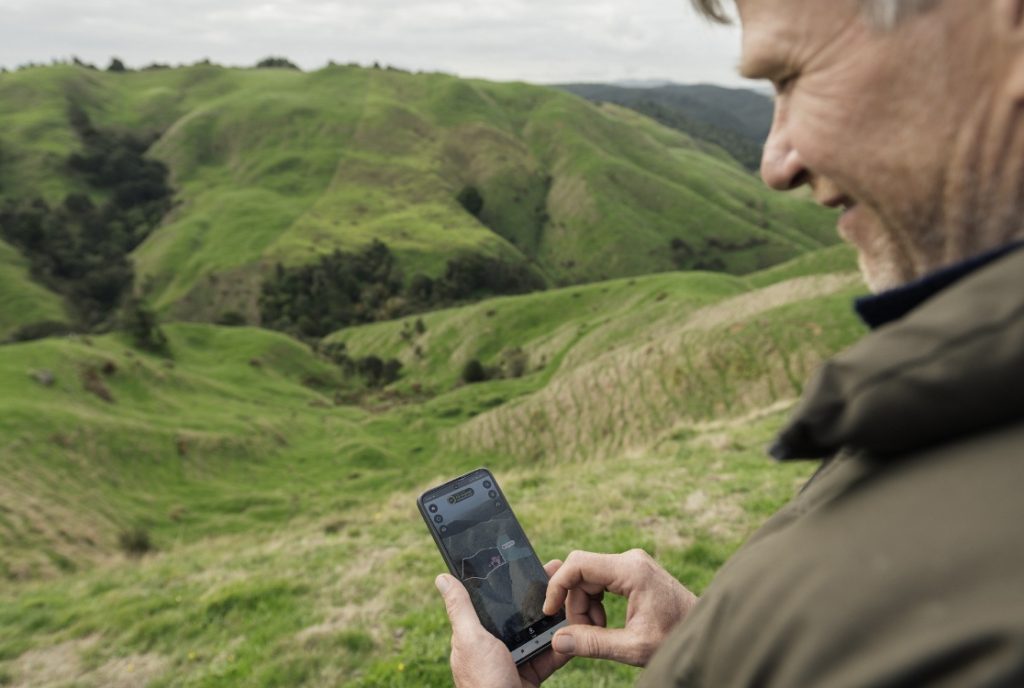
“We were in a bad place, but we had to pull our heads out of our arse to have a good hard look at what other options there were,” shares Jon. “We had to do something because we were burning equity quite quickly and were pretty worried about what we were going to be leaving for the fourth generation.”
Their looming financial crisis allowed them to create a blueprint for other farmers looking to retire unprofitable country and intensify their farm system.
Instead of an easier option, to sell to forestry, they looked at the most economic land use and two options emerged:
- They couldn’t ignore the returns from carbon forestry of the steepest 150 ha Class 7 country (x 4 return over 30 years)
- Intensive controlled grazing systems with cattle on the better hill country (x 2 return).
Their goal became to retire 30% of the farm to protect waterways and sensitive critical source areas as well as enhance biodiversity. Then the focus became how to intensively farm the remaining 70% with an aim to double their return over 30 years.
They set about a trial to stock rising-one-year (R1) bulls on the remaining hard hill country. The trial was deliberately low tech and low cost – standards, string, KiwiTech gear, and careful planning of cells and rotations, before they committed to Halter.
“We just did a 17.5 ha trial, retiring 2.5 ha of streams on our traditional sheep and beef country, buying sixty
200 kg R1s on 1 May 2024 at 16.5 stock units (SU)/ha to sell the following January. It was pretty mind-blowing to us in terms of how well that went.”
By 17 December 2024, the cattle averaged 410 kg (avg 0.9 kg/day) 700 kg liveweight (LW)/ha (vs 335 kgLW NZ average for sheep and beef country according to Beef + Lamb New Zealand) and $2,500/ha gross farm income (GFI) (vs $1,000/ha for sheep and beef country).
“We had to do something because we were burning equity quite quickly and were pretty worried about what we were going to be leaving for the fourth generation.” Jon Sherlock, Waikato
“We more than doubled our production per hectare at 380 kg carcase weight (CW)/ha on hard hill country, and we more than doubled our GFI per hectare.”
To put the results in comparison:
Beef + Lamb NZ (B+LNZ) benchmark data (kgCW/ha)
- Hard hill: Top 20% = 150 kg/ha
- Hill country: Top 20% = 280 kg/ha
- Finishing: Top 20% = 410 kg/ha
“The top 20% of hard hill country farms were doing 150 kgCW/ha. We were biting at the heels of a finishing farm in the northern North Island.”
Scaling up the trial
That single 20 ha experiment reframed the farm in Jon’s mind and gave him the confidence to proceed with moving his hill country into bull beef finishing country.
“This ‘toe in the water’ made us view our land completely differently and envisage a strong future. It really did restore our farming mojo.”
He ran the numbers and logistics of expanding to hundreds of hectares and 1,600 bulls, but the current way of shifting breaks with reels and standards started to look not just inefficient, but unsafe and unsustainable for staff.
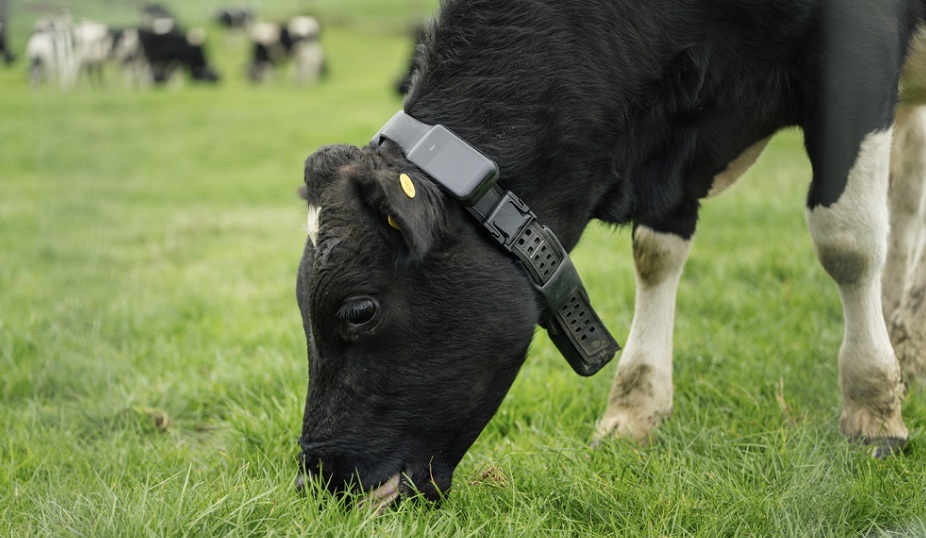
Halter then became more than an “interesting technology” for Jon. It became an “essential enabler” for scaling up.
There was no need to physically reach every gully or steep face for shifts, with daily moves possible at the press of a button. Automation replaces huge chunks of repetitive labour and is much safer for handling of bulls on hill country.
Rotational grazing on steroids
Jon says virtual fencing technology can take grazing management on hills to a whole new level, but a farmer’s mindset to a whole system change is the limiting factor.
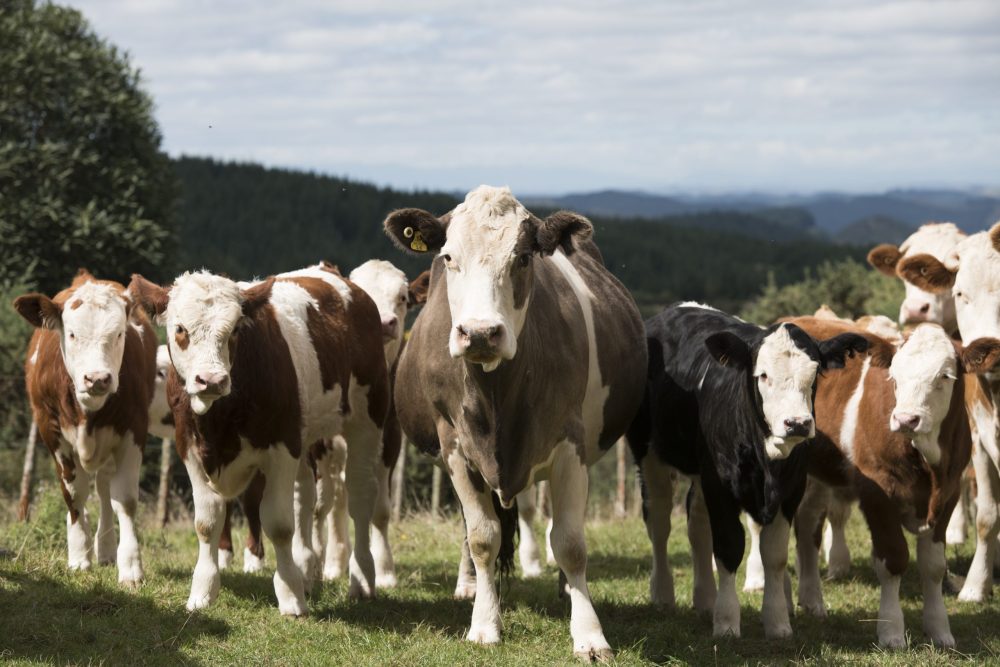
His design focused on breaking the farm into seven mobs (avg mob size 55) with 18 SU/ha. They do once-a-day shifts, 90-day rounds in winter. Bulls were never left too long in any one area.
“You watch them from the kitchen table move across the hill when you drop the break and they naturally just wander across.”
For Jon, this has also reshaped how he thinks about pasture and animal performance. Rather than chasing kg of drymatter alone, he’s focusing on growing and utilising high-quality feed that converts into meat, not wasted roughage. The systemisation of grazing smaller cells with longer rotations and very high levels of control has transformed pasture utilisation.
“I thought I knew about pasture management, but now I just know so much more. We can have a lower cover and those boys still do really well, because the quality is just so much better.”
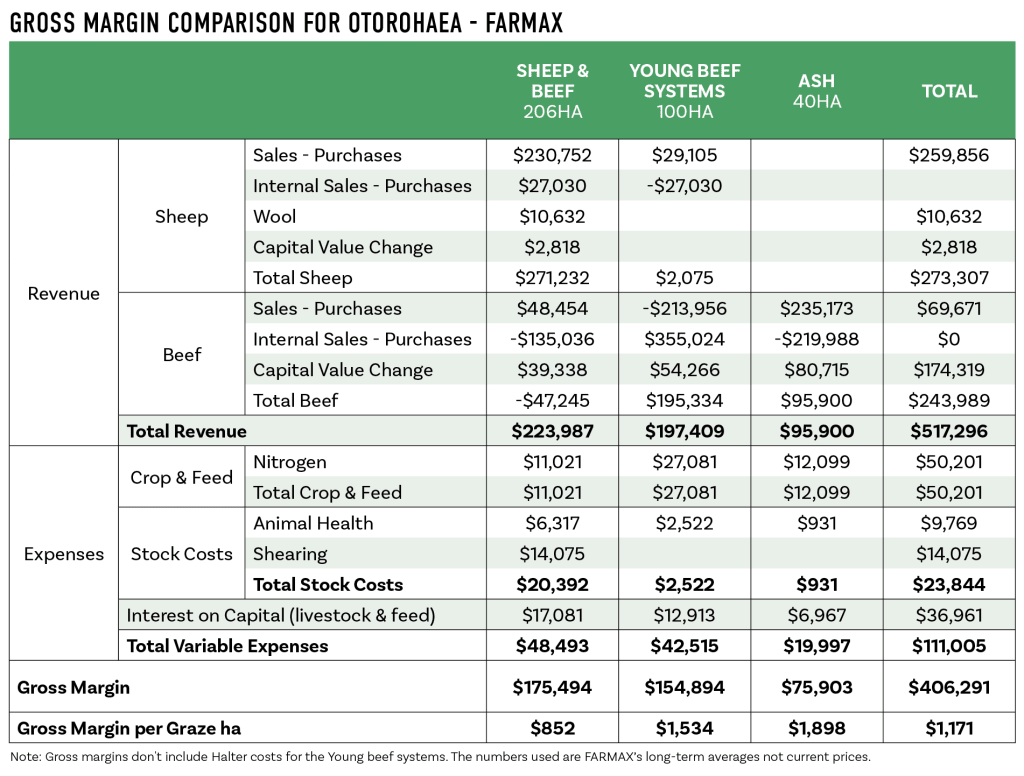
Using FARMAX to model the new system, Jon discovered that the controlled grazing and higher stocking rates were effectively pushing total drymatter grown per hectare up, even though the climate and soils hadn’t changed.
“We’re suddenly growing more grass, and it’s higher quality, and that’s why we’re able to carry more – and still not compromise per head performance that much.”
Instead of set-stocking or loosely managed rotations, Jon is now harvesting a far greater proportion of what he grows, while still maintaining pasture quality.
“We’re eating a much higher proportion of grass. I think we’ve at least gone up probably 50% in terms of utilisation, which is, again, mind blowing.”
By tightening up rotations and matching stocking rate much more precisely to growth, Jon has effectively turned rough hill country into a much more productive engine.
“Our uplift in drymatter grown and utilised hasn’t come from fertiliser spikes or irrigation – it’s come from control, discipline and technology that lets me execute the grazing plan every single day.”
How the hills handle intensive bull beef
One of the biggest scepticisms Jon hears is that heavy animals, farmed intensively on hill country, must do plenty of soil damage and degrade water quality.
His own assumptions were the same – until the farm became a case study in an AgResearch project comparing traditional farming systems versus his Halter-enabled systems in two neighbouring catchments.
They did visual assessments (bank stability, cover, evidence of stock presence) and, with cattle excluded from waterways and wet spots, there was less bank damage from the better stream margins which led to lower risk of sediment loss from erosion into waterways.
Early stream health assessments in their protected sub-catchment showed from the summer before they started with Halter, to the spring of 2025, 93% of their streams were getting a score of one – the best. They are looking forward to the full water quality data coming back.
Jon also explains how his level of nervousness around environmental regulation has gone, as he is now sitting on so much data to prove his environmental improvements.
“I feel like we’re 50 years ahead of the regulation in one summer with Halter.”
The system has already been stress-tested by climate volatility. They had the wettest winter and spring that they had ever had followed by the driest summer on their records. Jon says he likes that he can move mobs early in response to rain without having to physically get there.
“I can skip any areas that I want to that have been damaged, and so let them recoup by just drawing a Halter break around them.”
How the numbers stack up
At the start, Jon measured success in terms of GFI per hectare. But as the system matured, Jon started comparing gross margins:
- Traditional sheep and beef: $852/ha gross margin (The Sherlock’s earlier scenario)
- Young Beef System under Halter: $1,534/ha gross margin (and will be higher as cattle and sheep margins lifted since projections done in June 2025)
- Flatter “Ash” soil country for two-year-old cattle without Halter: $1,898/ha gross margin
His figures show FARMAX long-term average pricing to be more reflective of a system change regardless of commodity cycles. He says now this makes hill country farming far more sustainable for his family’s future.
“We more than doubled our production per ha at 380 kg carcase weight per ha on hard hill country, and we more than doubled our GFI per ha.” – Jon Sherlock, Waikato
“Is Halter cheap? No. But on the hills, it’s a no-brainer for me when you see the uplift in gross margin. The labour savings are how we pay for a big chunk of Halter.”
He has farmers say to him that $80,000 a year is a lot of fencing. And he thinks they’re discounting the value of the labour and how automation impacts the cost of change in staff.
His own journey – from a “dark place” and burning equity, to doubling production per hectare and buying more land – is proof that retiring unprofitable country and intensifying the right land with smart tech isn’t theory. It’s happening now.
“By putting up some virtual fences, we’ve effectively changed our country into the productive capacity of a finishing farm. That’s totally game changing.”