Kicking goals
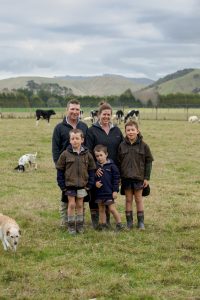
Body condition score is the biggest driver at Simon and Katie Falloon’s Tiraumea farm, Waipuke, with a high performing ewe flock of exceptionally fertile ewes underpinning outstanding financial performance to take out this year’s Keinzley Agvet Wairarapa Sheep & Beef Farm Business of the Year. Words Rebecca Greaves Photos Photos for Jean.

Listen to the podcast:
An innovative equity partnership model has helped Wairarapa couple Simon and Katie Falloon achieve their dream of skin in the game and a foot in the door with land ownership, capped off by a win in this year’s prestigious Keinzley Agvet Wairarapa Sheep & Beef Farm Business of the Year.
Their ability to work as a team, to weather the knock backs and keep striving towards their goal paid off with the purchase of Waipuke in 2022, showing an inspirational pathway to farm ownership for the industry.
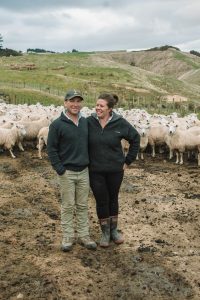
Farm ownership didn’t happen by accident, it was the result of years of well-defined goals and countless hours spent crunching the numbers, making plans, getting creative and picking the brains of their peers, mentors and trusted team. The end goal was always the same, but the pathway to get there evolved as they progressed through the industry, from shepherding through to managing and then leasing.
The couple worked hard to create a reputation for great management and top production and performance, to ensure they were an attractive prospect for any joint ventures. They also built a cash business that gave them the capital to actually do it. Their field day showcased what is possible when you dream big, put your mind to achieving it, and execute.
They put their success down to a shared vision, an incredibly supportive network and determination to carve a pathway in the industry. Each step has been a challenge and not always a win, but a valuable experience.
Facilitator, Ed Harrison of BakerAg, said it was an inspirational story of growth, underpinned by good old fashioned stockmanship and impressive sheep performance. The business was robust enough to weather tough times, and the couple demonstrated the true meaning of teamwork with their mantra – we’ll be right, we’ll do it together.
Growth pathway
Both Wairarapa born and bred, Simon grew up with a passion for farming that has never wavered. Having ‘snagged’ Katie as his wife, she was easily convinced that this was the life for them both. Sharing the farming lifestyle with their young children, Jock, 11, Rupert, 9, and Hugo, 5, is something they love, and is a big driver for the couple. Simon started out shepherding for Wairere, Palliser Ridge, David Woodhouse and then Andy Falloon at Nga Rata. His focus was learning, building a team of dogs and proving his capabilities.
In 2012 he began managing Tawatia, a 700ha property in Alfredton, for Andy. During this time, they began exploring pathways for growth in the industry, with a strong desire to be autonomous, and have some skin in the game. The focus was on building a reputation for solid management and good performance. “We started approaching people, neighbours, ringing people looking for opportunities. The ‘nos’ were never personal, we never took it personally, we moved on and kept going. We would drop off CVs saying who we were and what we wanted to do,” Simon explains.
When Tawatia was sold and subdivided in 2017 they got an opportunity to lease part of it (350ha) from the new owners, Euan and Nicole Percy. “It was a seamless transition, I knew the farm, it was just smaller scale. Andy (Falloon) was awesome and allowed us to have the pick of the ewes, so we had a good base flock,” Simon says.
They came to an agreement with the Percys that any capital expenditure, like subdivision, was mutually agreed and tacked on to the lease, a win for both parties. In the five years they spent leasing they built an impressive cash business, Simon working off-farm doing an AI run and Katie rearing calves while the kids were little. Simon was able to generate an extra $15,000/year in six weeks doing the AI run, and he enjoyed seeing the different way dairy farmers operated, and picking their brains. Tawatia was well set up for calf rearing, with sheds and covered yards, so input costs were low. “It was a great way to get into some cheap cattle and use our skills to propel our business forward in that time.”
In 2020 they purchased a rental property in town (which they still own) and by 2021 they were ready to look for their first step into land ownership, with an equity partnership the likely best option.
“We had good timing, and that allowed us the capital to invest in Waipuke. We averaged $114 buy on the ewes and exit at $220, so we had good growth and cash returns while we were leasing.”
Ready to take the next step, they needed to find the right people and the right opportunity. Potential parties came and went, but by the end of 2021 they had assembled a group of like-minded people who were looking for the same outcome, and enjoyed each other’s company. Then it was a matter of finding the right property – Waipuke ticked all the boxes and they successfully purchased the farm.
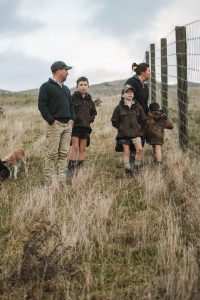
Simon and Katie farm as equity managers of Waipuke Farming Ltd, which owns all the land, stock and plant. The business has seven parties invested, with no majority shareholding within the group.
There is a well-defined shareholders agreement that set the rules of play for all, and an initial seven-year timeframe for the business was agreed upon. The Falloons prepare a monthly report for shareholders, operating on a ‘no surprises’ approach.
In terms of governance, there is a board of seven directors, including independent director, Sean Stafford of MCI & Associates, who helped put the equity partnership together. Each investment party is represented on the board, and Katie is one of the directors.
Quarterly meetings are held to review business and discuss and action major matters.
Sean Stafford spoke, explaining the couple first approached him about their idea at a field day, just like this one. “That’s the power of the network. I encourage you to talk to people around you and see where the opportunities are,” he said.
“This group has been brought together on the basis of a non-majority shareholding. Lots of people seems to scare people, but this model is a lot safer. If no one is a majority with numbers then there’s the potential to take out a non-compatible shareholder. This is a great model – the challenge is communication and accountability,” he explained.
Once the group was assembled, they looked at three different properties, losing a couple of tenders to forestry. It took time to find the right property, competing with forestry was frustrating and caused some angst, but ultimately, they were able to achieve an excellent outcome with the purchase of Waipuke.
“The process allowed us to develop a group of people who were all aligned in their thinking. Everything happens for a reason, and we were able to establish a clear vision and set of objectives.”
Sean said the shareholders agreement was a very important document, setting out roles and responsibilities. A business plan was developed for how to make decisions and ultimately, agreement reached on how they would get ‘divorced’ at the end. “It’s about making a commitment to each other for a period of time. In my view, seven to 10 years gives everyone confidence.”
He identified four critical pillars for a good equity partnership: ensuring high performing people are invested in and running the business, securing a high-quality asset (ideally one that doesn’t have too many issues), investors with low to moderate levels of debt, and bringing together good buggers who are well informed about what they are investing in.
Sean said the couple were exceptional equity managers, delivering a high level of accountability and reporting to shareholders and giving them confidence the right decisions are being made. “All shareholders benefit if the business is successful. Simon has the skills out there on the farm, but he’s working with a partner (Katie) who is very strong as far as business administration and running a tidy compliant ship goes.”
Shareholder Nigel Wrenn also spoke, saying his motivation was to help a young couple into a farm, and to have an investment that would generate a return. “I had farmed for 50 years and sold that farm, as my offspring were not interested in farming. Sean offered me the opportunity to join this equity partnership … I didn’t know any of these people, but we sat down around the table and called a spade-a-spade. The results are here today with Simon and Katie. I will give you high praise. You can have the flashiest car, but if you don’t put petrol in it, it won’t go. You have done the job and you have got
the results.”
For Simon and Katie, the biggest risk is partners leaving, and that’s a big motivator for them to deliver in terms of performance, to mitigate that risk. “Seven years is not necessarily the end, we would like to stay here, but it may mean we need to attract new investment,” Simon says.
There is opportunity for the couple to grow their equity through purchasing more shares. “I think everyone in this group is forward thinking. Personally, Simon and I would like to see some growth and scale up, but also maintain this as a high performing business. There are options for diversification going forward. If the right opportunity came up, we would discuss it at the meetings,” Katie says.
Fundamentally, Waipuke is a dividend paying business, but the shareholders have realistic expectations, all have farming backgrounds and understand the ups and downs that come with farming. Simon receives a fair market-based manager’s wage, as well as dividends.
High performance
Waipuke was an exceptionally well-developed property when they took over the reins, and tribute was paid to previous owner, Rachelle Richardson, who still works on the farm in a casual role. Infrastructure is a strength, meaning stock handling and movement is efficient thanks to a central laneway. Waipuke has an excellent fertiliser history, and Olsen P levels north of 20-25, which means in a tight year they have been able to be strategic about where they apply fertiliser this year, without risking production.
Judge, Geordie McCallum, said the property itself, and the livestock, represented some high-class assets. “They chose this farm for that reason, they paid for it and they backed themselves. They make it look easy. They acknowledge what they have taken on and credit to Rachelle, your lifetime legacy can be showed off.”
The 2500 breeding flock of ewes was purchased from Rachelle and Simon describes them as highly fertile and outstanding mothers. The ram, a lamb supreme white face terminal sire, goes out to 1000 terminal ewes on March 20, with lambing starting August 18. The 1500 A ewes are mated to a Coopworth and Simon pulled the ram date forward to April 1 this year, giving him the ability to slow them down a bit earlier and mob them up.
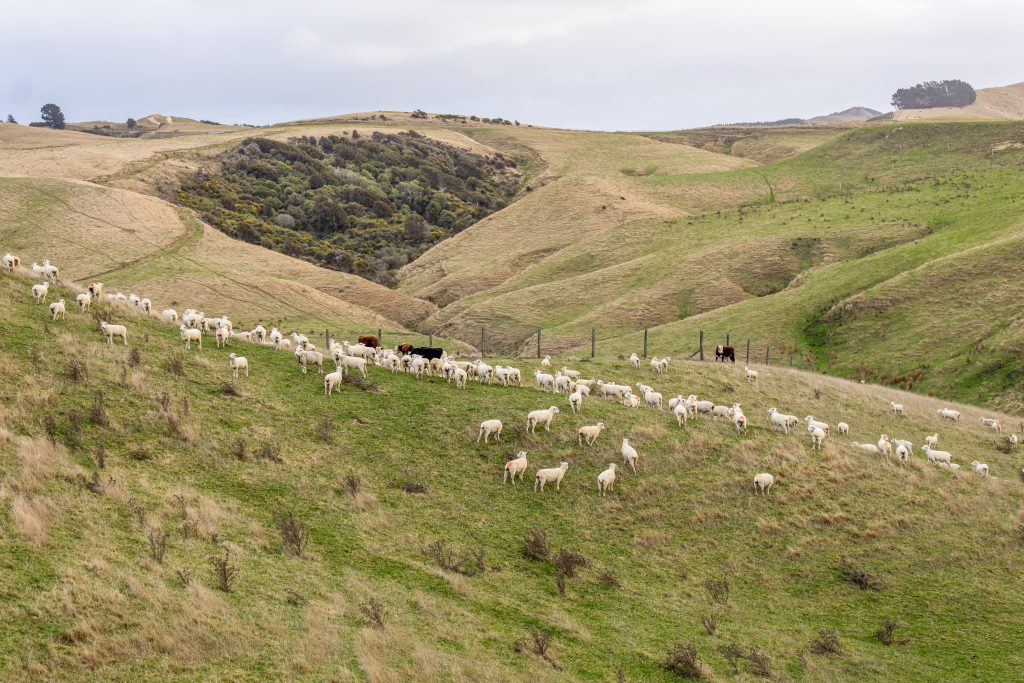
Body condition score is the biggest driver at Waipuke and the highly fertile ewe flock scanned 213% in 2022 and 2023, docking 158% in 2022 and 170% in 2023. Hoggets scanned 139% and docked 91% in 2022 and scanned 132% and docked 80% (they hit bad weather at lambing) in 2023.
The high scanning percentage includes 25% triplets, which doesn’t faze Simon, who has seen the excellent mothering ability of the ewes. Six weeks prior to set stocking he removes triplet ewes and they get some extra TLC.
“In 2022 we had wet and snow events through lambing, a pretty good test of the genetics. It was impressive to see. Last year the weather was favourable, we set-stocked on good covers and the ewes were in good nick. We had good weather over lambing and they lambed 170%.”
“Align yourself with good people, get good mentors and talk to them often. Ask questions. Just be relentless, the noes are not bad – you will come across them – but just keep going.”
His goal is always to get ewes up to tupping weight early (by the end of January) as a buffer. He regularly body condition scores ewes, at least four times a year, more in a tough year. Any tail end ewes are taken off and taken care of.
One thing he has tried, with success, is a Vitamin D injection to combat bearings. Simon has been happy with the results and plans to use it every year. A mineral drench is also given about five weeks pre-lamb to help reduce bearings. “I don’t have any data but we have had good results. It’s something we have done for years – I’m too scared not to do it now.”
Lambs are finished to 19-20kg CW throughout the season and 15-20ha of summer crop helps them achieve target weights. They carry about 1000 trade lambs through winter, which builds flexibility into the system. If things get tight feed wise, they can pull the level and sell trade lambs, reducing their overall stocking rate by about 20%.
The majority of the trade lambs are gone by mid-August, which creates room for lambing ewes and allows them to save up 50ha for bulls to go on to once they have finished on the kale.They operate a six-month shearing policy, shearing ewes in late December/early January and again in mid to late June.
Lambs are shorn in early February while hoggets are shorn in late August and then as two-tooths in March.
They supply wool to ELCO Direct and are signed up with the Bremworth Wool Growers Club. “We are one of 20 farms in the initial group, and wool that makes spec will go into New Zealand wool carpet. It gives us a better return at the farm gate and we have a minimum price for in spec wool. It’s a real opportunity for us to try to cover some of the increasing costs of shearing,” Katie says.
Guy Martin, of Livestock Conformation, was used by Rachelle to help class and cull the ewe flock and Simon has continued to use his services. “Any issues we do have, cast ewes or bearings, we have in the B flock – that was enough to convince me. Anything that has lambing trouble or marginal feet also goes in the B flock.”
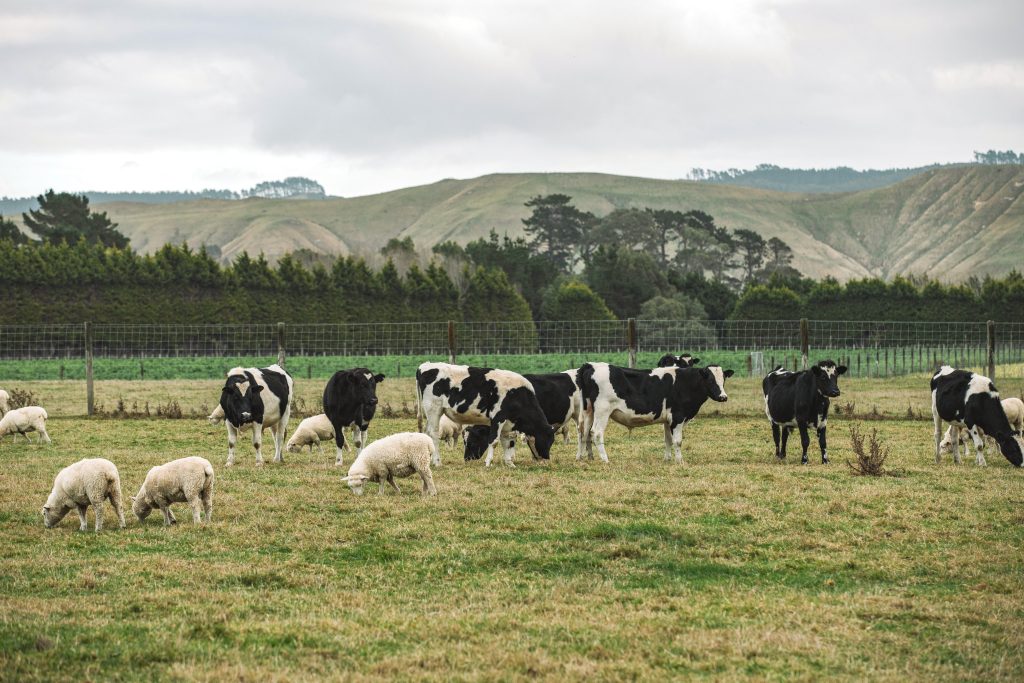
There are no beef cows on Waipuke, instead they operate a bull finishing system and it’s the buy-in price where they make their margin, not the exit price, due to their ability to buy early. They buy yearling bulls in Spring (October) and Simon tries to buy as early as possible, grow them like stink before Christmas and then use them as a working animal. He’s not fussy on breed, if it has nuts and moos, he’ll consider it, but just by dominance in the market, most of the bulls are Friesian.
Bulls come on at an average of 270-300kg liveweight (LW) and Simon works on a per head buy-in price of $1000. Purchasing the yearlings at this time fits their feed curve well, and helps them keep control of the feed.
They start killing the following October/November and keep killing right through. This year, as the dry made its presence felt and weight gain slowed, he made the decision to exit early and store some bulls in January/February. Bulls are usually killed at an average of 620kg (LW), averaging about 310kg CW.
This year’s margin of $720 is better than last year because the buy-in price was cheaper.
Simon does use the bulls for cleanup, though he admits you can’t push them the way you can push a cow, and the ewes do the majority of the heavy lifting. Through winter 50-60 medium R2 bulls will rotate round amongst the ewes. “The rest, we put wires up and polish up areas. We don’t push the bulls really hard as far as cleanup goes, but they do do a job.”
About 100 bulls are 60-day break fed on kale in July/August. A deer unit on the farm, which is not currently being utilised, represents an option for future diversification.
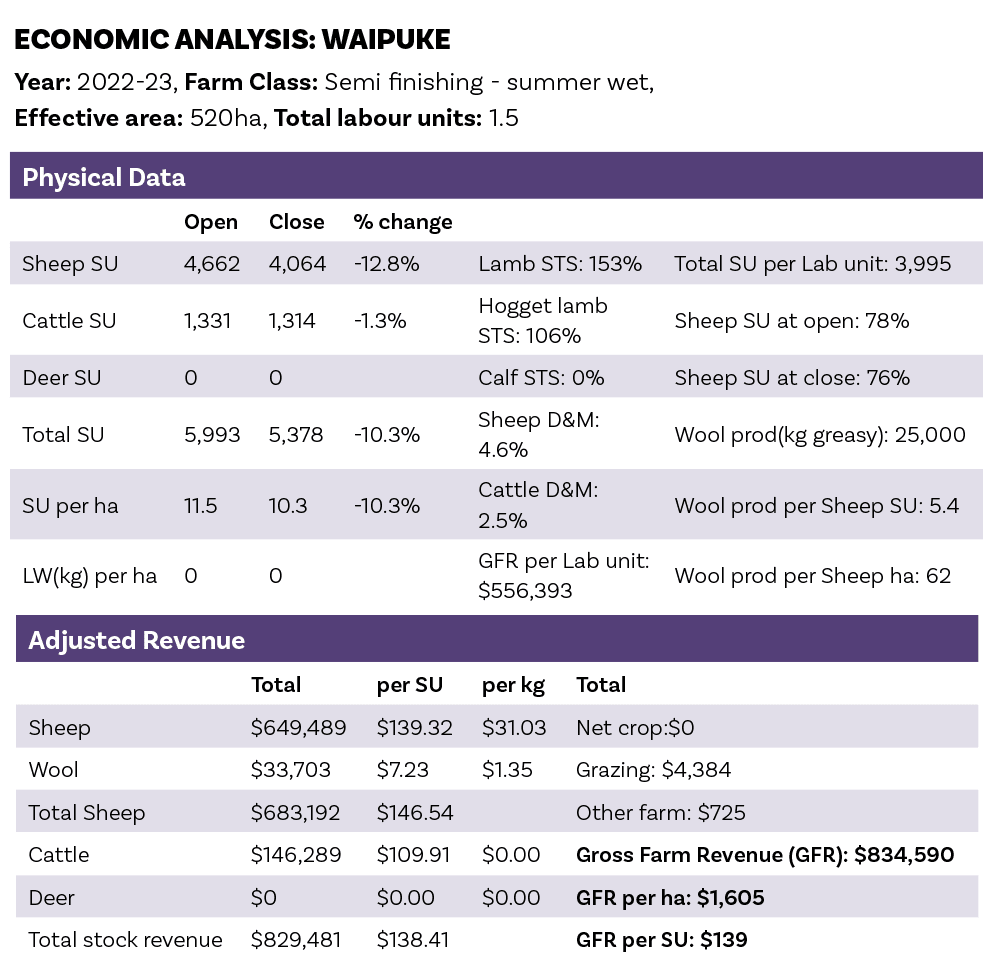
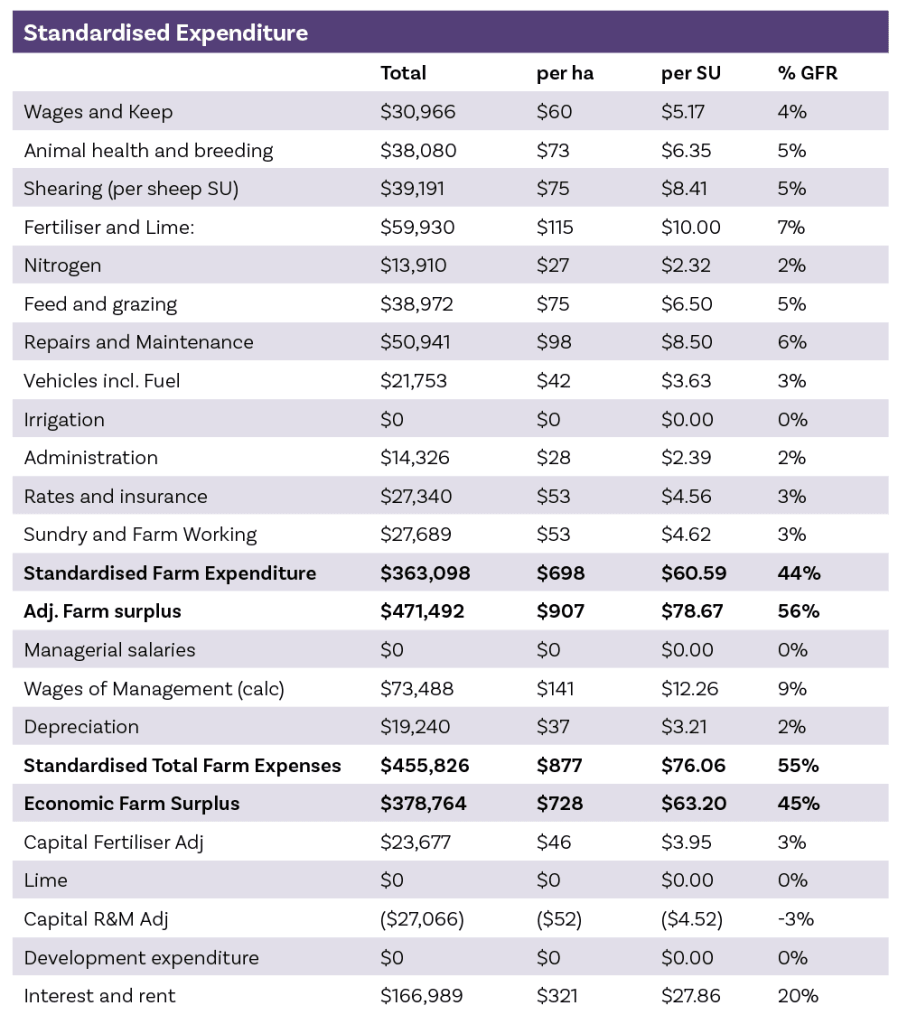
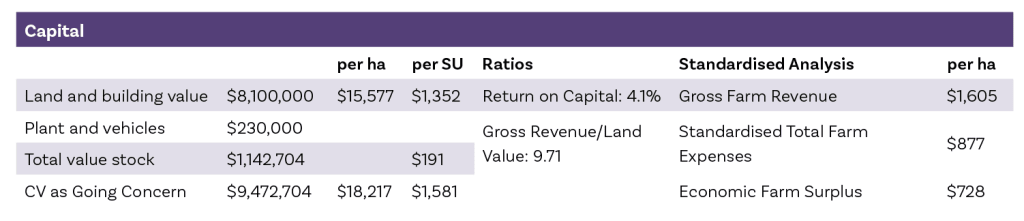
Ed Harrison said the business generated outstanding physical production, putting financial performance right up there, comfortably in the top 25% of the BakerAg Financial Analysis Benchmarking (FAB). A high stocking rate of 11.5 stock units (SU) per hectare and labour efficiency, along with Simon’s frugal nature, spending money to make money, meant the business generated a standardised Gross Farm Revenue (GFR) of $1605/ha and an Economic Farm Surplus (EFS) of $728/ha for the 2022-23 financial year.
As a young couple who have achieved their ultimate goal of their name on a gate, Simon had some advice for the next generation who hope to follow in their footsteps.
“Align yourself with good people, get good mentors and talk to them often. Ask questions. Just be relentless, the noes are not bad – you will come across them – but just keep going.”
Farm Facts
- Waipuke Farming Ltd
- Simon and Katie Falloon
- Equity partnership
- Location: Tiraumea, Wairarapa
- Size: 540 hectares (520ha effective)
- Subdivision: 61 hill paddocks (6.5ha average), 39 flat paddocks (3ha average)
- Contour: 124ha flat to rolling country, 396ha medium to steep hill country
- Soils: Mudstone, sandstone, silt loam
- Climate: Moderate, characterised by reliable spring growth and rainfall, prevailing wind from westerly quarter
- Annual rainfall: 1200ml
STOCK
Sheep
- 2500 Tumeke (Carthew) breeding ewe flock
- 1000 ewes mated to a terminal sire; 1500 ewes mated to a maternal sire
- 700-800 hoggets mated to the ram
- Finish lambs to 19-20kg carcase weight throughout the season
- Carry about 1000 trade lambs through winter
Cattle
- Bull finishing system
- Buy in 240 yearling bulls in spring/summer
- Kill as two-year-old the following spring/summer
Simon and Katie’s Non-Negotiables
- Regular condition scoring of ewes (3-4 times/year)
- Prioritise tail end ewes
- Ewe lambs prioritised from early March
- Ride around the whole farm every 10-14 days
- Condition is king. No money in skinny stock
- Mineral drench ewes/hoggets pre-lamb
- Grow out ewe hoggets to potential to ensure maximum lifetime production
- Review and update budget regularly
- Trust your instincts