Is it time for wool to have a helping hand?
Strong wool has clawed its way out of the trough with pricing reaching record highs. The question facing growers now is whether they are willing to pay to keep it there and who else should chip in? Words Sarah Perriam-Lampp.
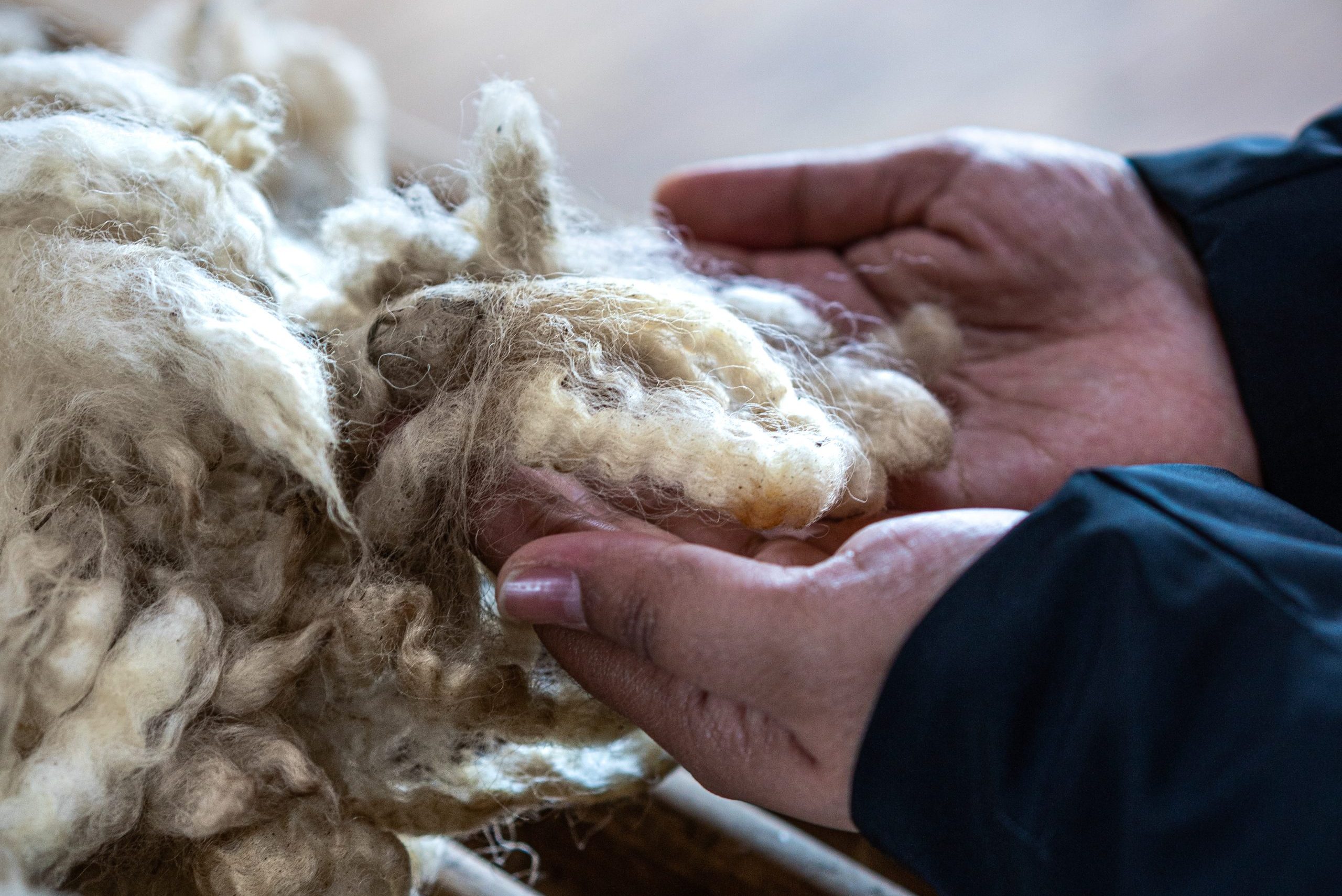
Wool has been synonymous with New Zealand since the early settlers brought sheep here 200 years ago. It remains one of New Zealand’s most recognisable fibres. As the world’s third largest grower, New Zealand produces around 115,000 tonnes of greasy wool a year, equating to around ten percent of global production.
Once our single most important export, it’s now a much smaller industry but with significant potential in the growing market for high-value sustainable products. The bulk of the clip is strong wool, traditionally associated with carpets and rugs, but its natural durability, insulation and acoustic properties are opening doors into a wider range of products, from building materials to technical textiles and even innovative uses of the core proteins.
To revitalise the once vital commodity more than 20 years after farmers voted to disband the New Zealand Wool Board, and 16 years after the levy funding wool research ended, an industry group is now working on a proposal for a new industry and grower funding model. It is being suggested to be funded through a mix of grower levy, industry and government money.
The wool sector has spent much of the past decade under pressure from synthetic fibres, a declining national flock and fragmented leadership at a sector level. Prices have staged a significant recovery in the past 12 months, although they eased through winter.
Wool: the comeback kid
With growing demand for natural and renewable fibres and products, commercial companies have continued to push ahead; developing new products, building more valuable customer relationships and improving efficiency. But behind that commercial activity sit common needs that are hard for any one business to fund alone.
Not long ago, prices did not cover the cost of shearing. Fusca’s Strong Wool Indicator averaged about 347.4c/kg in early August 2025 and climbed to a peak of 714.2c/kg in June 2026. At the last wool auction before print, on the 27th August 2026, it was 602c/kg with good clearance from Australian buyers entering the strong wool market due to supply constraints.
“Tighter supply is expected to support the market although price volatility is likely to continue.” – Dave Burridge, national auction manager, PGG Wrightson Wool
PGG Wrightson Wool national auction manager Dave Burridge says exporters have struggled to secure new sales following the elevated buying levels seen at the end of the season in June, “while many overseas buyers are waiting for prices to stabilise before re-entering the market.
“Although the market has eased considerably, the underlying fundamentals of reduced wool supply remain unchanged. As pre-lamb shearing volumes have eased, tighter supply is expected to support the market, although price volatility is likely to continue.”
Good momentum for wool
Activity is visible across the supply chain. Wools of New Zealand has continued to develop carpet programmes that contract supply from their farmer suppliers. Zentera has secured direct fibre supply contracts with brands around the world that value their certification programmes, PGG Wrightson has improved sales and logistics efficiencies, while WoolWorks has invested in large-scale low carbon scouring operations and wider sector initiatives. Government procurement settings are also giving more weight to wool products.
At the same time, research and product development are extending wool’s reach into acoustic panels, insulation, erosion and sediment-control products, furniture fill and textiles, filtration, and higher-value materials that draw on its natural structure and performance.
Interest from innovators exploring other applications that move wool beyond a commodity fibre and into uses where its strength, breathability, fire resistance and biodegradability can be valued more fully is increasing.
Wool Source, in conjunction with funding from the Wool Research Organisation of New Zealand (WRONZ) and the New Zealand Government through the Primary Sector Growth Fund, is spearheading a new plant in Christchurch to produce scale volumes of wool-derived particles, powders and pigments for high-value market applications such as personal care products, printing inks and films and 3D printing.
Keraplast’s functional keratin ingredients are sold into personal care, nutraceutical, and wound care markets around the world.
The scale of the Indian opportunity
Associate Agriculture Minister Mark Patterson who holds the wool delegation, says the industry is in recovery mode and has staged a “remarkable comeback”.
“I’ve made some bold statements previously that it was going to be the comeback story of the primary sector and it’s showing signs that it could well be,” Mark says.
Mark travelled to India to attend Bharat Tex, the country’s largest textile trade fair which attracts more than 7,000 buyers and showcases 20,000 products. It is only the second time New Zealand has had a presence at the event.
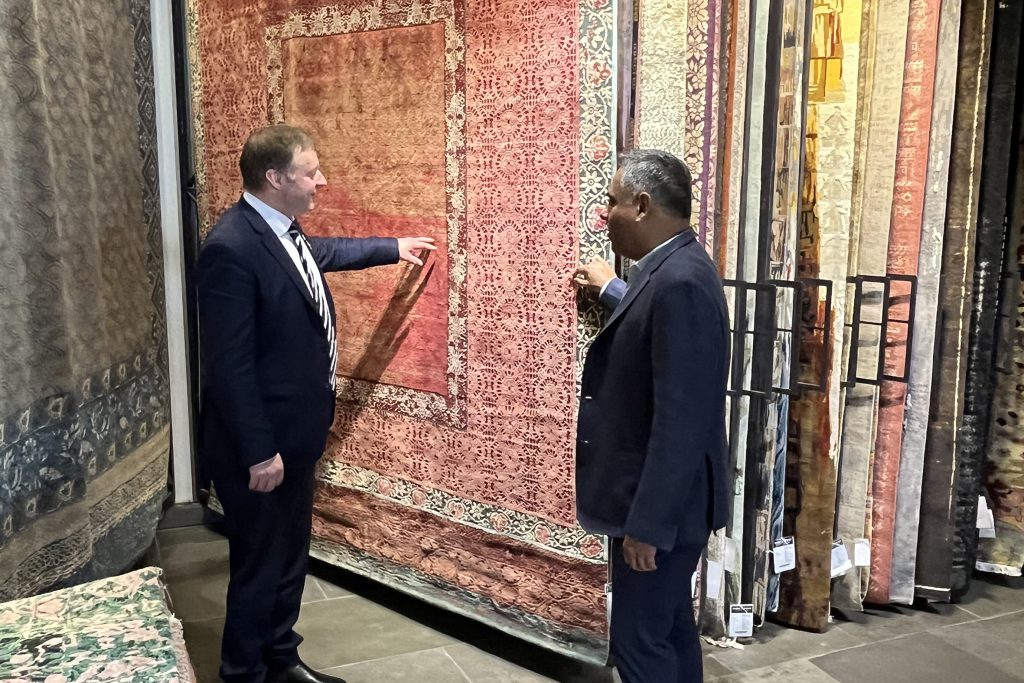
The trip included a visit to the Indian Parliament, which features New Zealand wool carpet hand-knotted by about 900 craftspeople.
India is New Zealand’s second-largest market for strong wool, with exports worth NZ$83 million in the 12 months to June. China remains the largest, at NZ$286 million in the same period. Mark says the real opportunity lies in what India calls its National Fibre Mission, which focuses on the five Fs: farm to fibre to factory to fashion to foreign exchange. Essentially, it aims to triple an already “really huge” textile industry.
“It’s a major strategic drive by the government and New Zealand wool is uniquely well placed to be a core ingredient.”
The tariff removal is useful, he says, but “also the price of wool goes up and down on that on a weekly basis, so it’s not to be dismissive of it”.
“The fundamentals are strong, but a lack of coordinated and sustained effort and investment means we haven’t adapted quickly enough to evolving consumer and market needs… we have to make it easy for the sector to innovate, specify, promote and sell wool fibre and products.”– Ross McIsaac, New Zealand Wool Collective
Trade deals are one thing, but industry leadership and investment are needed
A focus of Mark’s term has been trying to re-establish industry leadership. Part of that is extending Wool Impact’s funding, with the organisation tasked with industry leadership and developing an enduring sector model, finding commercial opportunities, and adding value to New Zealand’s strong wool. It needs to transition from a government-backed model to one funded primarily by growers and industry.
A cross-sector group between Campaign for Wool New Zealand, Wool Impact, the Wool Research Organisation of New Zealand and Beef + Lamb New Zealand (B+LNZ), are working on a new model for the strong wool sector. Independently chaired by former Fonterra chairman John Monaghan, it is formulating a plan for what a modern, fit-for-purpose industry body looks like.
So is it time to bring back a wool levy?
Mark says the key is who is going to pay and what the mechanism is. At this stage, the group is looking at a hybrid, partly funded by a wool levy, industry and perhaps some government investment. “We’re just working through the scope. What it does, what it doesn’t do and who pays.”
Also to be resolved is how the long term model is structured – its own autonomous organisation or maintain a dedicated focus for wool within a broader organisation such as Beef + Lamb NZ.