Fertiliser targets larvae on pasture
A new liquid fertiliser with the ability to deliver a knockout blow to larvae on pasture could soon be the latest tool in the fight against drench resistance on New Zealand farms. Words Rebecca Greaves.
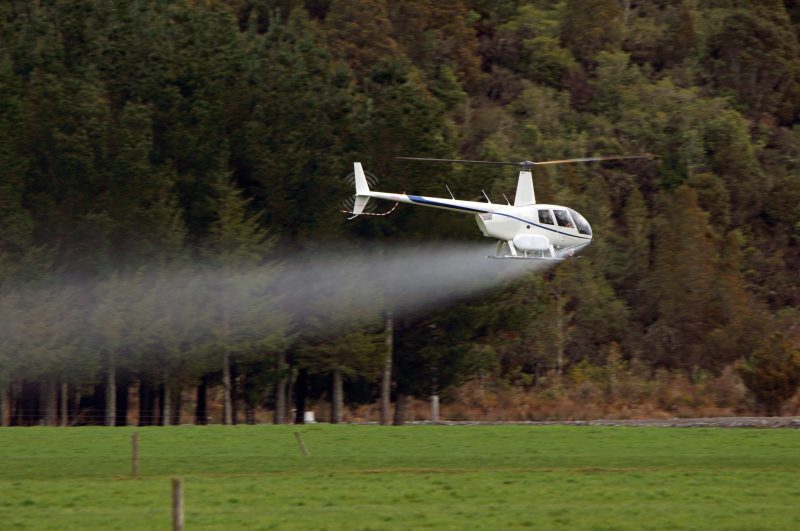
The innovation team at Ballance Agri-Nutrients are working with the Bioeconomy Science Institute to develop a novel nitrogen-based liquid pasture application that is showing promising results in reducing the number of parasites on pasture.
Presenting at the Beef + Lamb New Zealand AgInnovation conference, Ballance Agri-Nutrients Innovation Leader Stuart Kay told attendees the application had two main benefits, firstly an increase in feed but perhaps more importantly, the potential to reduce reliance on drenches at the same time, providing a new weapon in the arsenal for farmers grappling with parasite challenges. Stuart described it as “one of the most exciting technologies I have had the chance to be involved with,” paying tribute to Warwick Catto, Alec MacStuart and the late Dave Leathwick, who first mulled over the idea of targeting parasite larvae using existing fertilisers back in 2013.
“We know drench resistance is a big problem, probably the biggest animal health problem the sector is facing. This is not a silver bullet but it can be used as part of a system to help combat the problem. We’ve shown it can work in the lab, in tunnel houses and in the field, now we are trying to turn the science into a product.”
Over the past 13 years, Ballance has been developing and testing a spray-on nitrogen-based pasture application designed to break the parasite life cycle on pasture.
The on-farm trials looked at whether a novel application could reduce animals’ exposure to parasite larvae, increase pasture cover at critical times and improve ewe and lamb resilience so farms rely less on repeated drenching.
Promising early trial work on an intensive Southland sheep farm showed greater pasture availability during key animal growth windows, improved liveweight outcomes and more animals reaching target weights at weaning.
These trials showed a novel solution could reduce worm larvae by up to 80%, lift ewe and lamb liveweights 5% and 6% higher respectively, or add an extra $90 per hectare in value to the bottom line (using $5.50/kilogram carcass weight).
“We don’t want to downplay the importance of things like the Wormwise programme, drenches and farm management practices. What we hope we are offering is another tool,” Stuart explained.
While drenches target the parasite in the animal, this product targets pasture, killing at the L3 stage when the parasite climbs up the grass and the animal then eats it. “We are hitting the parasites at a different stage of the life cycle.”
The product would be fertiliser, but registered as a pesticide for the control of parasites, he said.
“It’s an additive to existing controls, a tool that can be integrated into farming systems. It’s a knockdown that is applied and it kills what is there. There is potentially a period of efficacy but it is not long-term so another knockdown could be needed.”
An example of somewhere the targeted use of the product could be beneficial was quarantine paddocks.
“It’s an additive to existing controls, a tool that can be integrated into farming systems. It’s a knockdown that is applied and it kills what is there.” – Stuart Kay, Ballance Agri-Nutrients
Stuart said it had been shown to be effective on triple drench resistance parasites and effective against multiple parasitic species, and they believed it could aid in prolonging the effectiveness of drenches.
While it killed the unwanted parasites, he said it did not have any negative impact on soil beneficials.
The product must be registered under the Agricultural Compounds and Veterinary Medicines (ACVM) Act. They hope to carry out the required registration trials in spring and, if they are successful in obtaining the necessary data then, Stuart believes a product could be brought to market in 12 to 18 months.
“Essentially, it is a liquid, spray on, targeted knockdown that also gives you the nitrogen benefit.”
This research is part of the Future Ready Farms programme – a partnership with MPI through the Sustainable Food and Fibre Futures fund (now the Primary Sector Growth Fund).