Developing a legacy
A former World War I soldier’s ballot block is now a self-sufficient off-grid farm for a Tasman family. Story and photos by Annabelle Latz.

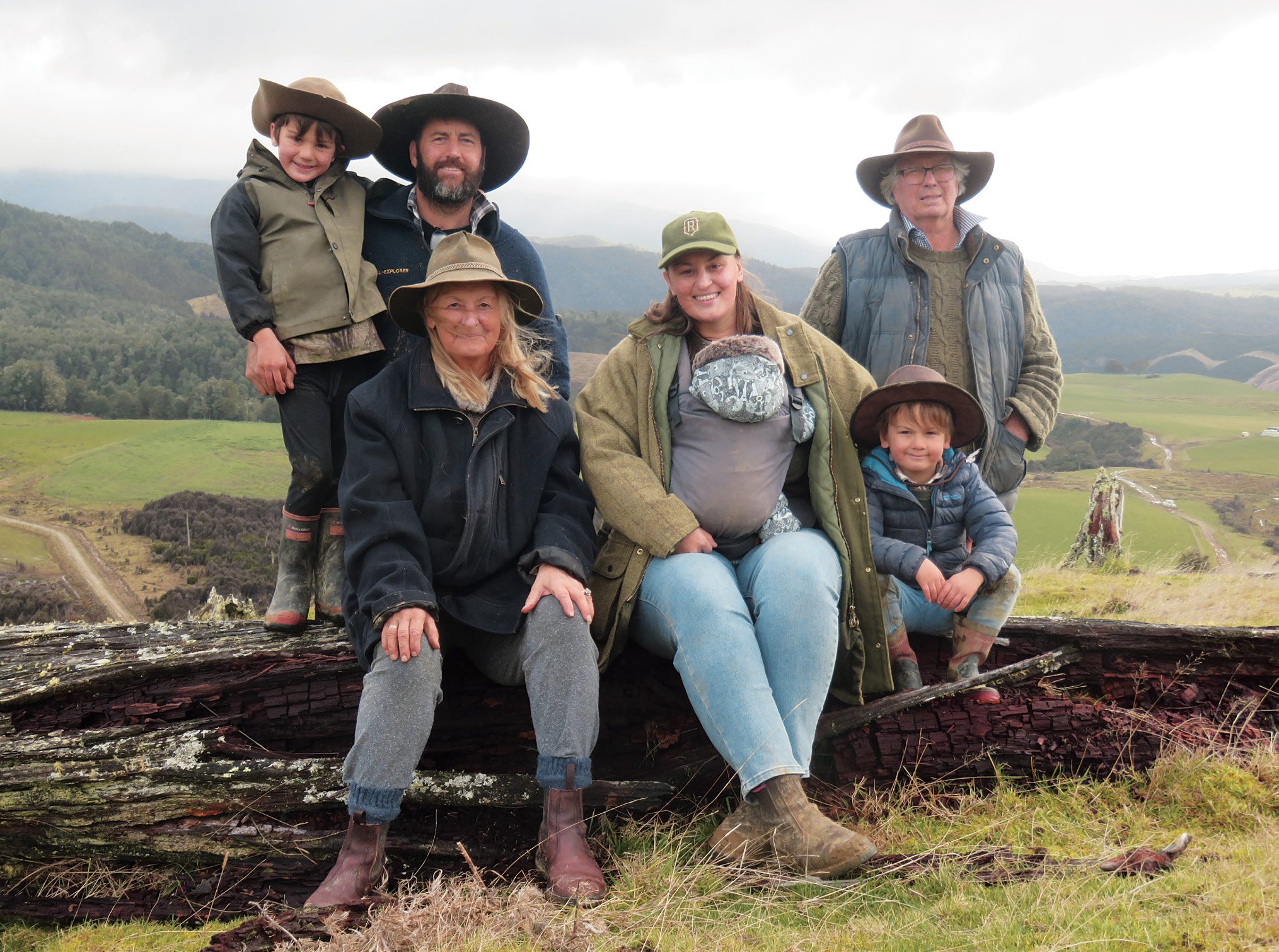
It was an open gate policy for stock at Springers Block when Greg and Dansy Coppell bought it in 2018.
They re-fenced the farm using old vineyard posts, and what started out as a cost-saver and an awareness of the environment has turned into a secondary business called Repost.
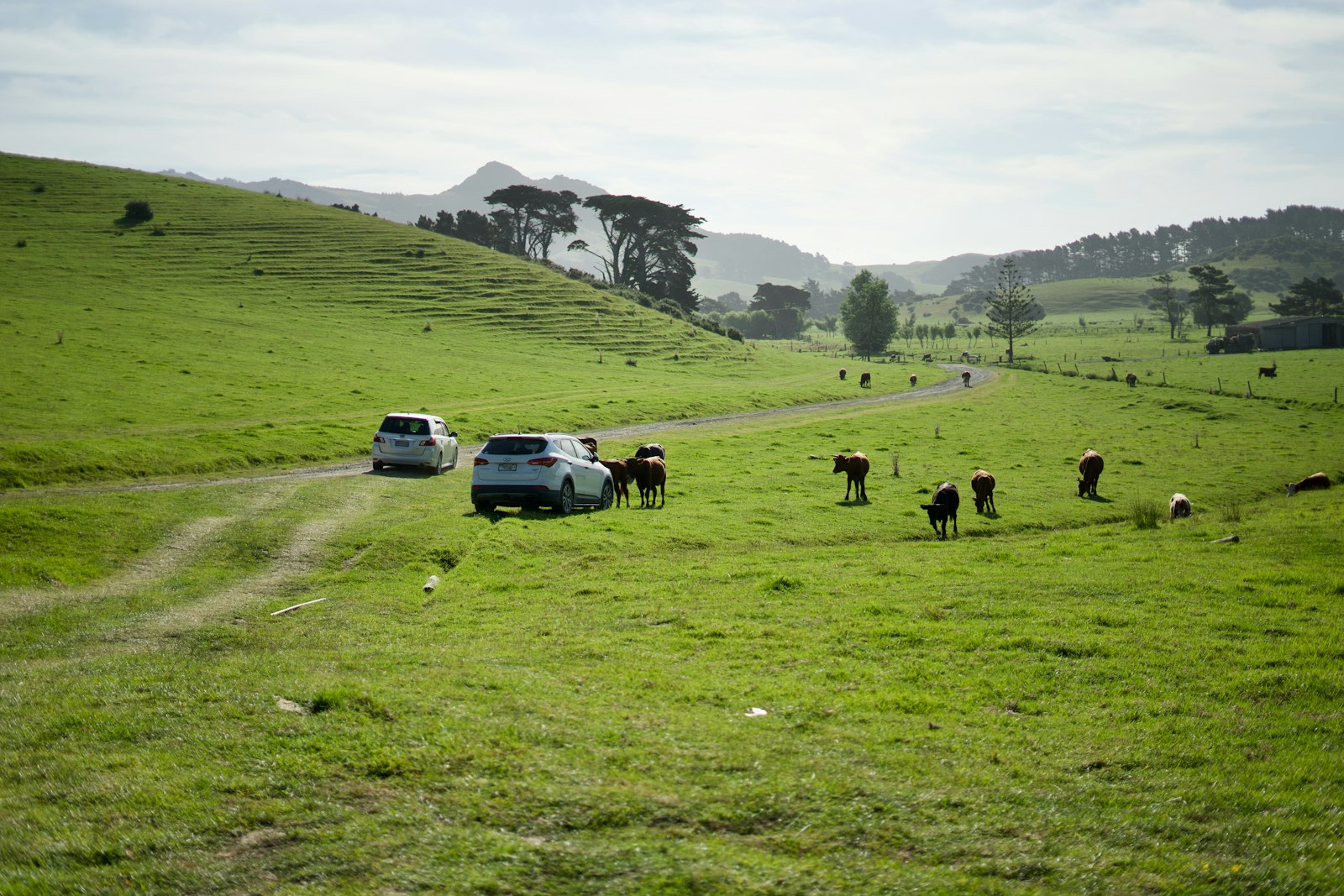
Springers Block is nestled in the Howard Valley, borders Nelson Lakes National Park and neighbours Kahurangi National Park, and is just a few minutes from Saint Arnaud on the western side.
The 499-hectare farm popped up about the right time, they were seeking that place of space and adventure to raise a family in, Fergus their second son just four days old when they settled. The purchase was a lucky one, as theirs wasn’t the highest offer.
“The previous owners liked that we had a big vision for the place, and they didn’t want it to end up as forestry like many neighbouring properties,” Dansy, 36, says. She’s from a Devonshire farming family, and her mum Suzie migrated to New Zealand 2021 and now lives and works part time on the farm and helps with their three children – Freddie, 7, Fergus, 5, and Bonnie, five months.
Greg, 38, was raised on dairy farms in Tasman, before the family went sheep farming in Marlborough’s Ure Valley in the early 1990s.
His dad Allan, 70, is their farm manager and mentor, officially taking the role five years ago, commuting from his home of nearby Motueka most days.
Greg bought Allan an electric ute for the daily commute to save the fuel bill, and as long as he recharges at each end of the trip, he gets to where he needs to go. There is a bedroom dedicated for him at Springers Block when he decides to stay the night.
“Dad turns up almost every day, even on his days off, he just loves it,” Greg says.
After decades of farming, Allan’s wife Heather still enjoys and supports farm life, but prefers their one-acre home these days.
“I’m Grandmother to 11 grandchildren, and run a ‘Retired Gardeners Group’ with over 200 members, Allan and I love being busy. It keeps us young,” she says.
Before the move to Springers Block, Greg and Dansy had been living in Christchurch after the earthquake in 2011, Greg, putting his building trade to good use. Dansy worked in communications.
They moved to Tasman’s Mapua in 2016 and still own the house, living there part time when Greg enjoys catching a ride to the farm with his dad. Mapua is where Freddie and Fergus go to school; they’re closer to services, and Greg is closer to Nelson and Blenheim for Repost, and he still has his own building company.
Off the grid
Springers Block is off the grid, hydro and solar-powered, and they’ve developed and manage their own water systems which are all gravity-fed.
They’re self-sufficient too. Thanks to gravity they’ve built a hydro system operated by a jet unit, which is articulated to service the farm and the house. There’s not a pump on the place.
“With a bit of height, you can do just about anything,” Greg says.
They’ve also installed 20 solar panels on the shearing shed.
Springers Block is lightly stocked and they take a hands-off approach, effectively the farm survives well with Allan popping over each day, the young family as much as possible, and Greg’s nephew Seth during school holidays.
When they first saw the farm, Greg and Dansy assessed what prices were doing, and figured this would be their last shot at buying a farm.
“We were stretched to the hilt, and I was freaking out. But it’s been so good for the family.”
Productivity would only happen by radically subdividing the paddocks and improving pasture. A large capital investment was required to improve business performance quickly, the return wouldn’t be for some years.
It was a large cost for a small operation, but they knew the roll-on effect was worth it.
“Good fencing would minimise stock losses, improve stock condition, increase farm productivity, improve sustainable production, and improve the financial reports,” Greg says.
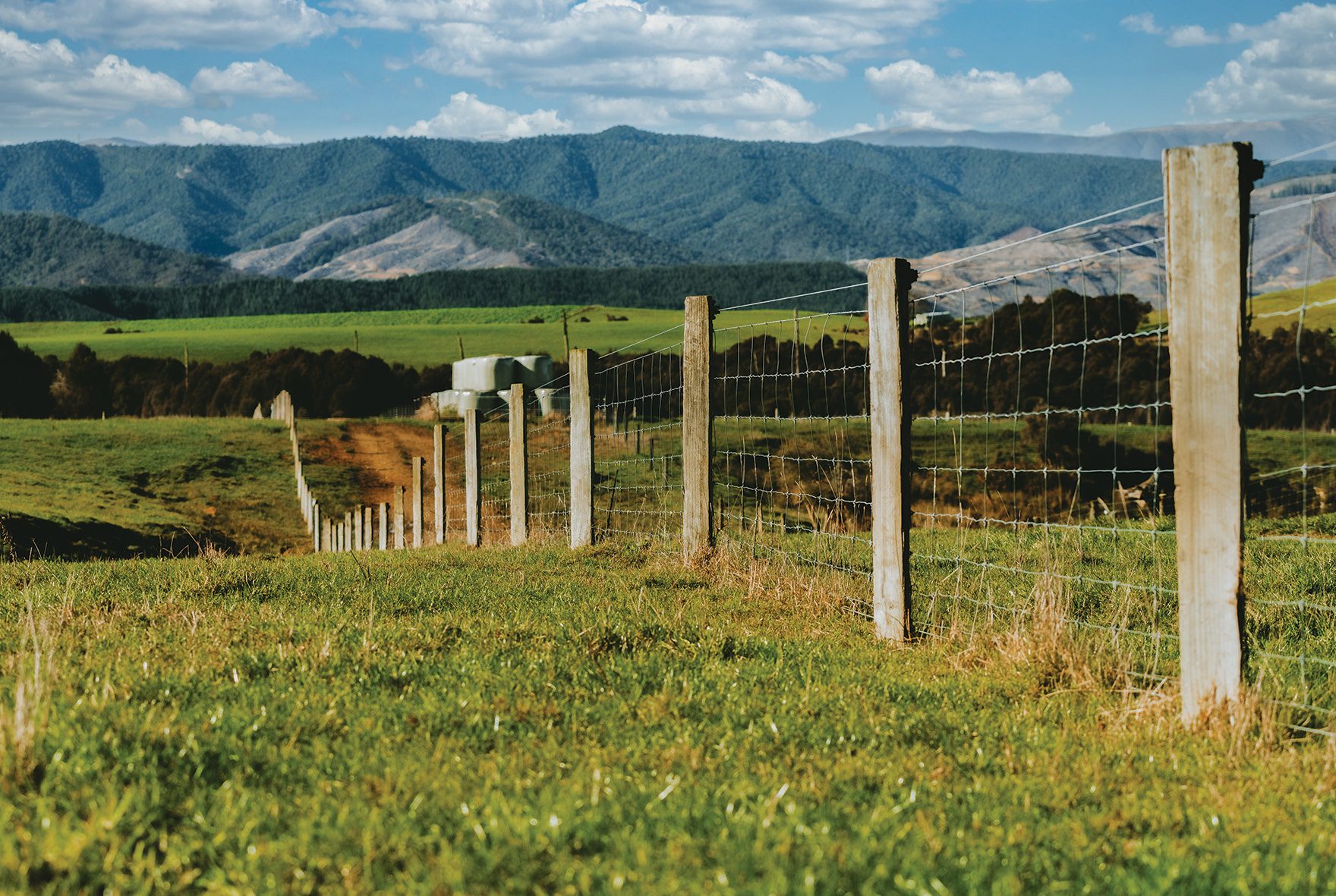
Springers Block used to be 15 large paddocks, only eight held stock. The boundary fence was bush, and no gates swung.
On a shoestring budget, they approached vineyards in Marlborough to collect unwanted posts. De-nailing, making half rounds, and repointing meant new fence posts for Springers Block. Since 2019 they’ve put in 4.5km of laneways and 30km of fencing has subdivided the farm into 3.5ha or 4ha paddocks.
Allan had used old vineyard posts for fencing the previous three family farms.
“Growing up, dad would give us lolly bags or Coca-Colas if we pulled clips and nails out of recycled fence posts, the parts that got in the way of the wire installations,” Greg recalls.
Their accountant told them they were mad to be developing two businesses at the same time.
“But it forces us to keep our heads down, which is what we feel we want to do at this age to build a legacy for our kids,” Greg says.
The farm is a mix of productive flats and hill country, sitting 600 metres ASL. Fertile Gladstone soil means it’s summer-safe, and there’s 30ha of stoney river flats. The farm includes 40ha of regenerating land and 110ha of beech forest.
Visually with its contours, Springers Block is a stunner, broom and gorse-free thanks to the good management of Lindsey Barber from Tasman District Council, creating a big time and cost saver and leaving plenty of opportunity for the regenerating and virgin beech forests to thrive.
Much of the Tasman Region is pine forest now, the farming industry is a small one. Wilding pines do pop up on their farm which they manage themselves.
Rainfall sits at 1400mm, the alpine environment means lows of minus 10C in winter. The farm is a breeding unit of sheep and beef capital stock. They farm 1000 MA Perendale ewes and 200 lambing hoggets. Scanning used to sit at 110%, but they’re now up to 160% with the ewes and 115% with the hoggets. They’re all put to terminal sires, from Mt Guardian.
“The improved scanning results are thanks to the smaller 3.5ha paddocks for lambing, growing better grass, and better shelter,” Greg says.
The orphaned lambs are reared by Suzie and helpful neighbours.
A 20% loss is factored in most years due to weather, but this number is reducing.
Greg admits the 100 MA Angus cows plus replacements, are not being replaced quite fast enough.
“Our cows do it hard, they are treated like queens for five months, but then it’s out to the hill country at weaning.”
They pay as much attention to detail as they can when stock are in the yards, but opportunities are missed for improving performance.
With Greg being off farm a lot, they would prefer to run predominately cattle but the heavier ground means numbers are limited.
They’ve regrassed 70ha which means spring “comes earlier” although they have pushed back lambing and calving dates to catch the better weather and maximise feed.
Lambing and calving starts around September 25.
“We were finding a feed pinch in late September. Now we have a better chance to maintain covers over the set stocking period,” Greg says.
After lambing and calving, once lambs are tailed and mobbed up, the cattle are shed off into the stock set ewes.
They finish 40% of the lambs off the ewe for the January market, the remainder are held until April or May to catch the vineyard lamb market in Marlborough. They buy in minimum 33kg replacement ewe lambs in January and February.
During that same period calves are weaned, with the steer calves sold in May. All heifers are wintered.
Bulls go out around December 15, the rams about April 29.
From June to September they break feed grass (6ha) rape (10ha) and turnips (6ha) supplemented with grass balage (200 bales total).
Continuing with Angus
Some stock came with the farm.
“We have carried on the Angus breeding line, black cattle are always in demand. They perform well up here and are pushed hard for a few months to stick to hill blocks.”
The mixed line of ewes have now been culled, and with the great help of neighbour Aaron Eaton at neighbouring Rainbow Station, they now have a much better line of quality Perendale and Romney Perendale.
“In hindsight we should have started from scratch. These sheep are well-suited to the climate – once we have them trained to respect the electric fence,” Greg says.
The farm breaks even, thanks to improved pasture, good winter feed and improved paddocks, all meaning better shelter and easier stock management.
The five-year goal is to increase sheep numbers by 500 ewes, and finish all cattle.
The weekly juggle of different houses and streams of employment means the farm is hands-off. Setting onfarm targets has not yet been a focus. For now they accept what they end up with, grateful they now have good soil, pasture and animal health to produce high quality animals.
“We have worked hard to get this balance, as in those first years it wasn’t the case,” Greg says, feeling very lucky for the hands-on family and friend support.
Allan lives by “use it or lose it,” and is happy to be there in ‘semi-retirement’ onfarm. “But I do what I can to give him time off, regularly telling him to let us know when he wants to retire,” Greg says.
Once the paddock sizes were manageable, the focus was shifted to what was in the ground. Cropping is part of the redevelopment plan, then they’ll roll into a predominant grass-fed system. They’ve been discing old pasture into rape crop for winter grazing, then drilling seed for grass in late spring into permanent pasture on a five-year rotation.
Rape works well because they can sow it once the lambs have gone, and it goes well in wet conditions. The mix of grass gives an extra boost.
During their first season of winter cropping, they trialled cultivation versus direct drilling, as they knew the ground was tight and heavily thatched. The results were clear, direct drilling rape only yielded 1.5 tonnes (t)/ha, compared to 7t/ha when it was worked into the ground.
They disc, rotor spike, and apply 5t/ha of lime, then power harrow and seed, before spreading targeted fertiliser on the paddock (51N, 45P, 50K, 2S, 20M) and light roll.
Depending on how the crop is progressing, they apply 100kg of N after six weeks, and consistently produce 6-8t/ha of rape. “We have continued testing, and boosted fertility. We now apply maintenance fertiliser of 50kg N in late autumn.”
Developing the hill blocks hasn’t started yet. It is their plan over the next two years depending on available funds and time availability to subdivide. They will need to add reticulated water and work on soil fertility, which will be assisted by a topdresser thanks to the construction of an airstrip which is at the development stage.
“Development is a legacy,” Greg says, adding that having a great relationship with the bank manager is a huge help.
All the work is done with their own machinery. They have a 140hp and a 120hp tractor, a 14t excavator, a HD41 dozer, Taege drill and various pieces of cultivation equipment.
Springers Block was allocated by the Government to Mr. Springer after World War I through a ballot, a 400ha block back then which he farmed with sheep when wool was valuable and the size was reasonable. The previous owner to the Coppells added another 100ha.
Riverbank erosion is a significant issue from the nearby Buller River which they border, large rainfall events in the Howard Valley being mainly to blame.
“Environmental restraints for river access and funding has proved river bank maintenance difficult.”
Feral pigs were in massive numbers when they arrived in 2018, 400 were culled in the first year, using thermal imaging on a lot of them.
“It was a chore, we’d be going out every night.”
Electric bottom wires at 180mm on the back side of their bush boundary fence has broken the back of the problem, and they keep on top of deer numbers by filling the freezer regularly. Possum traps around the farm help too.
“The pigs had rooted up half the farm, so damage to pasture quality was terrible, they were causing incredible damage across the farm.”
Needless to say, Springers Block has had its difficulties, and Greg and Dansy have been well aware of the sacrifice on their young family at times.
“We’d say to other couples in a position like us to make sure you have a strong foundation, and a shared long-term vision,” Greg says.
Business-wise, thinking outside the box is a must, as both onfarm and off-farm income may be required, so constantly talking, dodging, learning and adapting is important.
“Lastly, don’t do it all yourself, no one person has all skills.”
Recreation spots on the doorstep means it’s never far to go to have a bit of downtime, as a family they hope to get out to explore the tracks and huts in the National Parks, and Greg’s goal is to get back into his alpine hunting a bit more, which he used to do plenty of.
Employing more onfarm staff is a goal, as they’re reminded too often that time with kids goes quickly.
Before they bought Springers Block, they knew that financially they could make far better returns from other ventures.
“Springers Block is a lifestyle. We are so lucky for this privilege, we love it.”
Fencing a sustainable future
Success only takes one good idea and a lot of hard work.
When Allan Coppell was using old vineyard posts to fence his farm up the Ure Valley in Marlborough in the 1980s, the region had 3000 hectares of grapes. Today there’s more than
35,000ha, and vines are still going in the ground. Repost began in 2020, on the back of Allan’s son Greg and his wife Dansy Coppell fencing their farm Springers Block near St Arnaud in the Tasman region, in 2019.
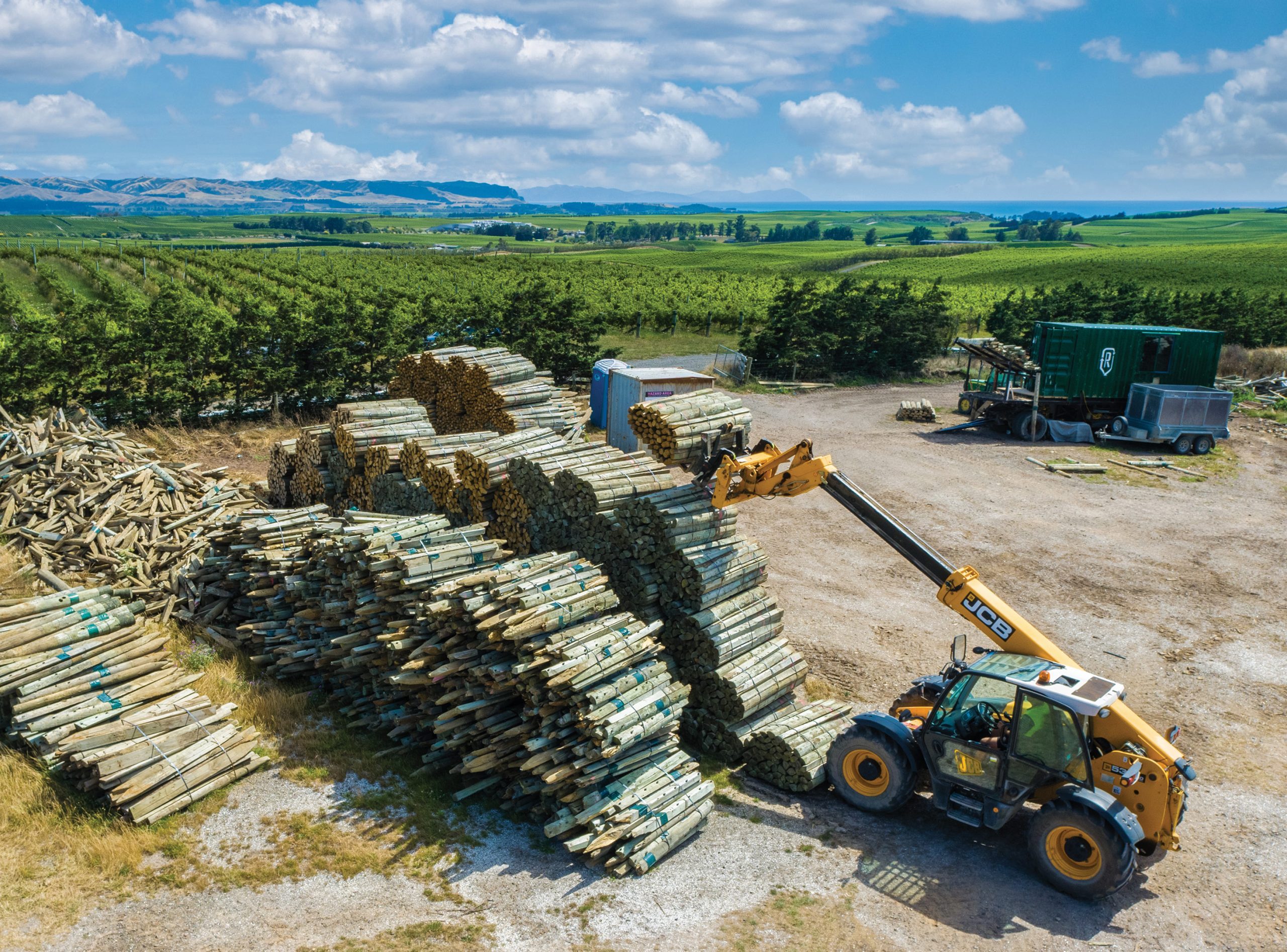
It’s a business dedicated to recycling and repurposing vineyard posts into fence posts for farmers, including meeting government legislative change for wetland and waterways. It is also a sustainable option for redeveloping vineyards. To date, farmers nationwide have fenced 3530km of fence lines, from Southland to Northland, using Repost’s product, meaning a saving of more than 4375 tonnes of vineyard posts from landfill.
The 14 nails and clips have stayed on each post at Springers Block, but during lockdown in 2020 when thoughts progressed towards a business venture for Greg and his viticulturist friend in Marlborough, Stu Dudley, minds were set on how to remove them.
Greg expresses gratitude towards Allan for the success of Repost, it was his dad’s initial design that created their first hydraulic nail puller.
“Dad’s generation didn’t have engineers, specialists, and YouTube to learn things at their fingertips the way we do now. They were Jack of all trades,” Greg says.
The first nail puller was an old tractor engine which pulled one nail at a time, family and friends would help with this job too.
They’re now on their fourth design of the hydraulic nail and clamp puller.
The 14-gauge nails and the technical screws are separated from the insulators when they’re removed from each post, and the Coppells are building a shredder now so these items can all then be melted down and reused, an answer to the weekly 1000L tote tank.
Repost is also a nod to Dansy’s late dad Colin Brunton, a successful businessman with one sound piece of advice, “It just takes one good idea and a lot of hard work,” Dansy recalls.
Finding and retaining good reliable staff to meet the target of processing 800 posts per team per day to keep the overheads running, was and is a challenge. Covid, and Marlborough having a reasonably transient wine industry workforce are the main reasons.
There are now 14 Repost employees, including Greg, Dansy and Stu. Two teams of three workers in Marlborough, and one in Hawke’s Bay. Crews work on vineyards, charging a landfill fee which helps cover travel and plant costs, an exchange the industry is happy with as it would have had to pay to dump the posts anyway.
About 25 million timber vineyard posts are dotted over an estimated 35,000ha of Marlborough.
A large vineyard can smash 8000 posts in one vineyard during the year, mostly at harvest by machinery. Annually across New Zealand about 600,000 plus posts are broken.
“We’re confident we’ll have product for many years to come,” Greg says.
They’ve been working alongside Rural Support Trust, Lions Club and Federated Farmers to provide truck and trailers of posts for the North Island cyclone-hit farms, greatly helped by the newly established Hawke’s Bay base.
“The clean-up is going to be a long process and access to our recycled fence posts will allow rebuild at a lower cost,” Greg says, with many orders on the books.
New products are on the horizon too. They are designing a new portable rip saw machine to make battens, pickets, stakes and stay blocks.
Australia and America have showed interest in the hydraulic nail puller, while corporates in the United Kingdom like Tesco who need information around winery suppliers’ sustainable practices, think Repost aligns well.
Dansy works behind the scenes. Good business has been a case of keeping their heads down, and they’re always re-tuning. Operations manager Liam Garlick sums up how they all feel, he sees only positivity, from their focus on sustainability to a quality product.
“Because of this, Repost feels more like a purpose than a job to me.”
Greg says you can’t buy better publicity than one farmer’s experience to another, farmers seeing the posts first-hand.
“It’s exactly how we wanted it.”
The Coppells feel very lucky the Marlborough wine industry has rallied behind them, equally glad to find a solution for their CCA-treated post waste issue.
Repost posts start at $3.25 (ex GST) and provide ½ and ¼ rounds, 1.6 and 1.8 metres, pointed or un-pointed. Battens will start at $1.50.
They meet the H4 CCA treatment NZ specifications.
Farm manager and mentor
Allan Coppell has pushed pause on his retirement.
The 70-year-old was approached by his son Greg five years ago, offered a manager role alongside him at Springers Block.
Allan has taught Greg much of what he knows when it comes to making a living off the land, and he was happy to put some of it into practice himself.
Learning farming way before spreadsheets and data analysis, Allan’s eye and gut remains the barometer for farm performance.
“It’s just about growing grass at the right time, managing grass, and working around weather,” he says.
Farming is all about working with the season.
“I don’t do too much measuring with the grass, I go by eye. If I get a break in the weather I’ll see how the animals grazed it. I sort of work like that, I do.”
Allan was born and raised on a dairy farm around Motupipi, Golden Bay, just outside of Takaka. He and his wife Heather’s two sons and three daughters made up the fourth generation at Motupipi School.
In 1976 their 161-hectare hill block was milking 50 cows and running 700 ewes. It was hard to make ends meet with modernising times.
The economic solution came in 1983. Allan became an owner driver for TNL’s Takaka base, to make ends meet.
Greg remembers his dad walking out the door at 1am, five days a week, the torch light going down the corridor.
In 1987 the family moved up the Tutaki Valley on the West Coast near Murchison. Trying to develop a dairy farm in the era of high interest rates proved too difficult, four years later they sold.
Allan took this opportunity to try his hand at dry stock farming, an interest since his teenage years.
The family of seven moved to the Ure Valley in Marlborough, to the 1200ha Peggioh Station.
The idea was to grow wool, farming 1000 merino wethers and 1200 half bred ewes, with 60 beef cows on the side.
“It was always a struggle, but the lifestyle was great,” Allan says, reflecting on the timing of their move when the bottom fell out of cattle, the district was suffering drought, and the interest rates were still far from friendly, although they had dropped to 10% from previously being 17%.
Daily farm life was manageable because as a family they did everything themselves, apart from the shearing. The 8km of good hilly tracks on the farm kept them and the dogs fit.
The Coppells managed to stay onfarm by Allan’s wife Heather working nearby as a teacher, and Allan selling the farm’s manuka firewood in bulk into Nelson, and guiding hunting.
“Times were tough, and being resourceful and resilient were characteristics of all rural communities.”
Needing to do some fencing but with no spare cash, Allan looked around Marlborough for some vineyard posts. In the 1990s with only 3000ha of grapes there were a few on offer, they might have cost about a dollar.
Eleven years later, they moved to a 20ha lifestyle block in Upper Moutere, and at the age of 53 Allan switched to driving milk tankers for Fonterra for a decade. During those years, Allan’s passion for breeding sheep dogs never waned, an interest that began in his teens. He was a member of Takaka Trial Club, taking days off school to go with his grandfather.
With six or seven dogs at a time, Allan ended up with seven generations, all huntaways.
“They were more of a handy type, you could head and hunt with them. You don’t really get those sort of dogs anymore.”
He would train and sell pups, and for many years he was a familiar face at the National Dog Trials, competing in the zig-zag and straight hunt, reflecting his regular wins and solid performances at local and regional dog trials.
His favourite dog was Bess a few generations ago, with the best stock sense and a great temperament. Her picture is now framed and hangs on the wall with a few other favourites.
“On Springers Block I bought in dogs of good breeding and have had two litters since.”
Allan likes the stock work, working with dogs, and fencing.
“You can see the benefit in all of that.”
For now, Allan will keep plodding on in all seasons.
“At the moment it fills every day in, and I feel pride being back where I belong, on farm. Come the end of winter I might take the odd day off though.”
And he has plenty of praise for the next generation of farmers coming through.
“There are lots of young people who have a grip on things, the future looks pretty good in their hands.”
FARM FACTS
Springers Block: 499ha, 350ha effective
225kg/ha meat and fibre
$628.57/ha gross income
$517.57/ha operating costs
$111.00/ha EBIT
Operating costs will reduce once they do less development.
Repost has been named a finalist for the Gallagher Innovative Farming Award at the Beef + Lamb NZ Awards. The winner will be announced on October 19, 2023.