Bringing the Tech to Merino for 35 years
If you follow good genetic principles, you make good progress. Words Dr Mark Ferguson.
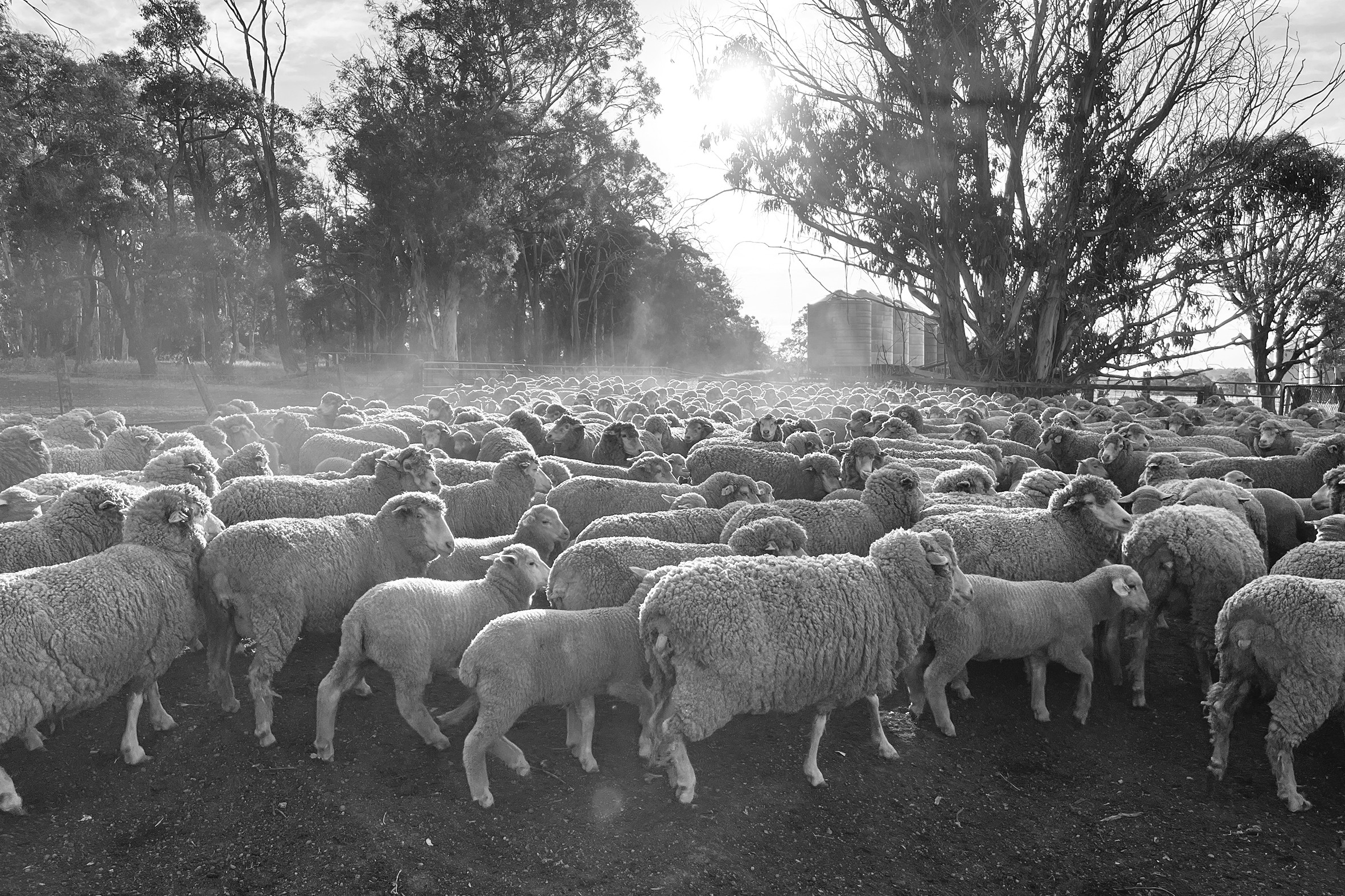
If you follow good genetic principles, you make good progress”. This statement from Ian Robertson, Stud Manager at Merinotech WA for 35 years, sums up the reason Merinotech WA came into existence and why it has been so successful.
Merinotech WA was formed in 1988 with seven ram breeders and around 100 commercial farmers providing the seed capital to start the company. These farmers from the Great Southern region in Western Australia wanted to make the most of the science of quantitative genetics.
If you have ever been to Western Australia, you’ll know it’s a long way from anywhere and through a combination of desert and sea is one of the more isolated areas in the world. If you’ve ever met a Western Australian, you’ll know that they quite enjoy this fact and are a fiercely independent mob. This combination of isolation and independence inspires an innovative culture and a can-do attitude that can create great things, like Merinotech WA.
“We started with a whole list of traits we wanted to improve and as we improved these, we discovered others we wanted to work on.” – Ian Robertson
The group was founded on science and assembled the best scientists to help formulate the selection plan. Together they designed a structure that still exists today, a central nucleus with intensive measurement and recording, and ram breeding centres that multiply the genes and distribute rams to members. Forming the nucleus involved selecting ewes from the seven ram breeding flocks with only a few genetic additions over the ensuing 34 years. The data collection plan set at that point has been stringently followed since. Every lamb born has been caught at birth, weighed, tagged and scored for a few traits, marking the start of a journey for that lamb that will see it measured or assessed for 80 individual things before a decision is made as to its fate.
The group has ensured that selection takes place under high stocking rates to mimic the commercial scenario the genetics will ultimately be farmed under. They have also ensured that every sheep in the flock gets assessed for every trait, even the obvious culls, to make sure the most accurate information possible is produced.
Through the ups and downs of commodity price cycles, Merinotech WA has served as a constant source of genetic gain for its members. When the group formed, they were told that if they did it right, they could achieve a 2.2 % gain each year and that is what they have done. As Ian puts it, “genetics works, it tells you what you’ll do, so if you do it properly, that’s what happens”.
Over time, the influence of these innovators has grown beyond the Western Australian farmers who get access to these industry-leading genetics. Perhaps the greatest legacy of the group is the influence they have had on the wider industry. Since its inception, the group has had a philosophy of openness. The volumes of data collected by the group are regularly made available to students and researchers. They have also made their sire teams available to the industry through semen sales.
The top 50 Merinotech WA sires have over 23,000 progeny in the Sheep Genetics database alone, which doesn’t include the many progeny in commercial flocks that were never entered into the database. The number of animals impacted would quickly get into the millions if you traced the Merinotech genetics through the flocks on Australian and New Zealand farms.
The success of the group has a lot to do with the people involved and their selfless attitude to breeding. There have been a lot of individuals involved but Ian Robertson and Bill Webb are worthy of being singled out as two lynchpins of the greater group. Ian was the Stud Manager from inception through until the end of 2023 and Bill has been the chair since taking over the reins from Rob Young, the founding chair, in 2005 and continues today. Their tireless attention to detail and process is directly linked to the group’s success. “We’ve been careful about keeping an eye on the consequences of selection and some of the negative correlations between traits that we are chasing” explains Bill.
Of course, over a 35-year period you would expect some changes. “We started with a whole list of traits we wanted to improve and as we improved these, we discovered others we wanted to work on” says Ian. Initially, there was a heavy focus on staple strength however, to ensure they had all of the important traits covered, in 2001 the group sat down again with a group of experts and designed the Merinotech index. This index had 10 production or health traits included in it and there were an additional 10 visual traits that were being scored and incorporated. Ian estimates that about 40% of the selection pressure was placed on visually assessed things like conformation, doability, wool quality and pigment.
With Ian Robertson retiring as stud manager the nucleus is now managed by Dr Amy Lockwood and colleagues at neXtgen Agri and is still overseen by the Merinotech WA board, ably led by Bill Webb.
- Dr Mark Ferguson is the CEO at neXtgen Agri International.