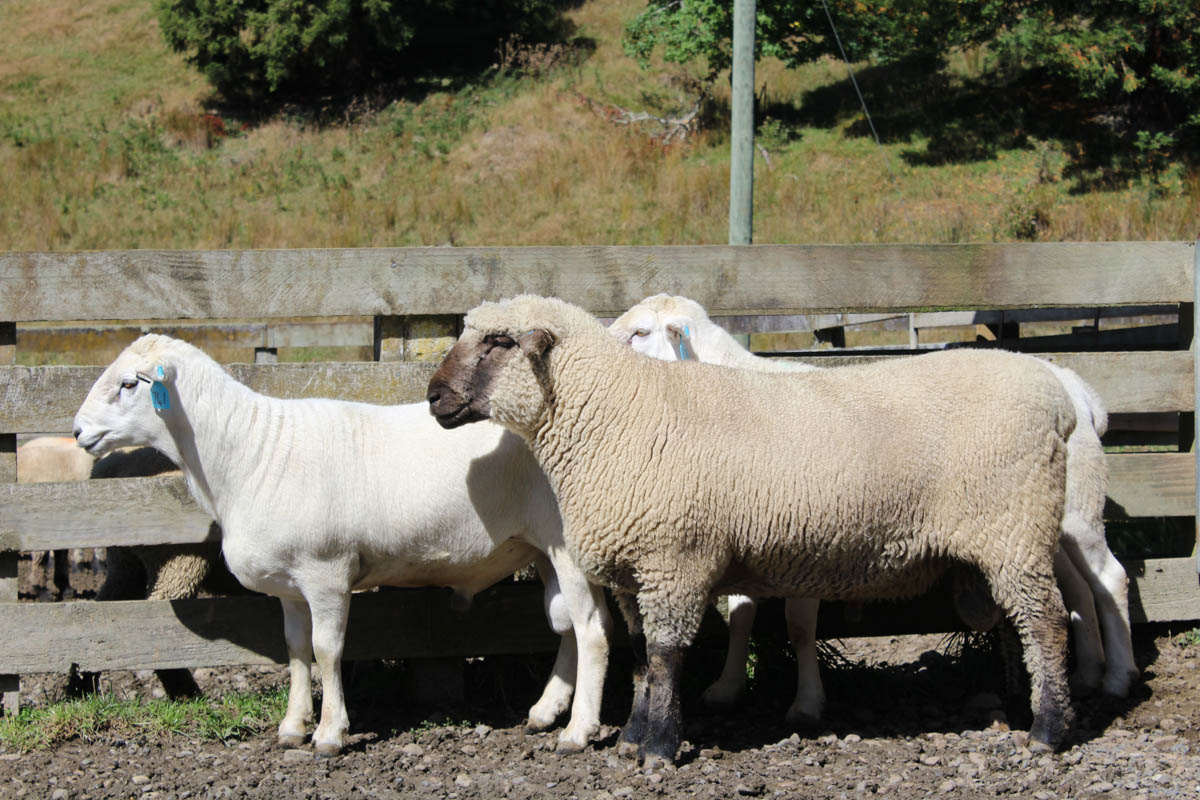
I read the tea leaves a while ago and started shearing some of my own sheep, it was about controlling my costs and being able to allow for other spending. I now tell myself that it is good for fitness, while simultaneously limping in and out of the woolshed. But this year it’s helping to keep us in the black with the budget.
It only took a quick tally over a coffee to find that I’ve shorn 20,000 animals in the last five years. If I had ever done my 200, that would’ve only been 100 days in the shed. But I have never done more than 180, mainly because I’m not a shearer, I always have something else to do, so I never have enough in.
Shearing by yourself is a great time to spend thinking about life: like how you probably should have gone and been a plumber that gets to paid to deal with shit and can enjoy a Christmas beach holiday. I have developed some of my greatest theories, plans and dreams in life while looking at my feet.
It’s here, while planning mating, that I recognise something. I’ve got a problem. I like buying rams.
While I’ll never be short my ram paddock looks like the sheep version of a petting zoo. It’s a very non-traditional selection, a smorgasbord of genetics, new and old.
I have Romney – the animals that I have always seen as bad at nothing, except their limited IQ, but can it really be considered dual purpose now that the economics of shearing and wool have become a cost.
A Cheviot – they have the sheep version of small man syndrome, attitude and velocity. A mouthguard would be a good choice of PPE when handling.
A Southdown – that has good length, bad feet, nice terminal lambs but both it and its progeny have wool that appears to be attached with super glue.
A Beltex – a very recent addition, it’s short, ugly with a little tail, very thick little nugget. But after shearing the lambs he left, I reckon you would have an easier time shearing a Tasmanian devil.
In stark contrast, Dorset Downs – that I proudly breed and sell, the largest boned of all, but I have never come across another animal that likes to stubbornly stand sideways in the entrance of a drafting race more.
Not to mention some Coopworth/Texel, Kelso terminal composites, The Gullies Low Input composite, a Wiltshire, a Border Liester and some Kaahu Whites. I told you, an absolute smorgasbord.
The Romney genetics are still there as the major portion of the national ewe flock, but things are changing.
What do the terms maternal and terminal, dual purpose, pure bred, stud, composite, easy-care mean? What proportion of rams now sold to farmers are composite?
I’m in a constant search for system adjustments. Changes in lambing dates, the proportion of terminal lambs, the use and development of a shedding mob, shearing dates, it’s a continuous process.
I guess I’ll keep buying rams, because I keep looking for an answer that is going to suit the farm and my family’s stage in life.
I know the perfect animal doesn’t exist; I have judged enough sheep to know there is always something to improve on. Nature gives with one hand while taking away with the other.
But don’t continue as you are because you are scared to make a mistake if you try.
I don’t know if the shedders-Wiltshires-hair sheep are the answer going forward. But for every 150 more shedding sheep I have, I get to spend an extra day with my family, maybe one Christmas I’ll spend a day at a beach on a surf board and not a shearing board.
Just a thought.