
A return to deer
Getting deer back inside the many deer-fenced blocks on the country’s sheep-beef farms is a major priority for Taihape deer farmer Mark McCoard. Tony Leggett asks the recently elected chairman of the New Zealand Deer Farmers Association how it will happen. Photos Brad Hanson.

Listen to the podcast:
Hundreds of deer blocks across the country are stocked with sheep and cattle, and Mark McCoard wants to change that. He feels the time is right for another surge in farmed deer numbers as key markets for venison reset to pre-Covid levels and confidence returns to the sector right along the value chain from farms to consumers.
He’s hoping to connect members of the New Zealand Deer Farmers Association (NZDFA) with sheep-beef farmers who are interested in reconsidering deer again so they can provide support and information to help make the switch.
Farmed deer numbers have dropped by nearly 60% since the heydays of the early 2000s when venison schedules were significantly higher than for lamb and beef, and velvet prices peaked at up to $300/kg for top grades, almost three times the current level.
Numbers behind wire peaked at more than 1.75 million head, before a steady decline each year to less than 750,000 head at the last Statistics NZ census in 2023. As farmed deer numbers dropped, there was also a big shift from venison to the more specialist option of velvet production.
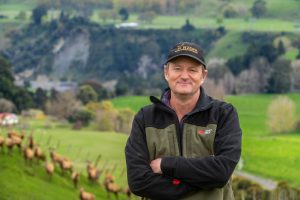
McCoard says his focus is on encouraging sheep-beef farmers back to venison farming, either breeding-finishing or breeding for the sale of weaners, because it will be quicker, easier and less expensive to make the transition than for velvet production. “You might need to tidy up the old deer shed but you don’t need a big yard area and it should be a lower-cost option and easier to achieve than going for velvet. Velvet operations require much more specialist infrastructure to meet the new export requirements.”
Two other game-changing events – a surge in sheep performance and the global Covid pandemic – also contributed hugely to the shift out of farming deer. “Big improvements in sheep genetics were starting to show up in the early 2000s. Lambing percentages typically went from 110% to 140% and even the best deer herds struggled to keep pace with that sort of gain.
“At the same time, the premium for venison over lamb at the farm gate closed up and a lot of farmers just decided they should simplify their farming business and concentrate on sheep and beef. So, the deer went.”
“The beauty of having more area in deer fence is we don’t necessarily have to run deer behind it. But it gives us the option to run the deer through it if we want to.” – Mark McCoard,
Taihape deer farmer
When the pandemic decimated the food service sector, venison prices were impacted more than lamb and beef, and went into freefall.
McCoard says markets for venison have now recovered thanks to the superb efforts of all the country’s exporters and Deer Industry New Zealand staff, who have been working on rebuilding demand and developing new markets.
“It’s (venison price) still not high enough yet because just like every other sector, onfarm costs have gone up by 40% in the past three years. But there are promising industry initiatives underway that are looking to increase the prices paid to deer farmers.”
When lamb and mutton prices surged higher in China soon after the pandemic lockdowns ended, even more deer farmers left the industry.
Those deer farmers with top performing herds were saying they were still ahead, McCoard says, but a lot of average or below average operations fell victim to the lure of simplifying operations. “You don’t get the natural increase percentages with deer that you do in sheep, and although calving rates are up around 90% now, ewes are lambing up around 140% and higher now and that has had a big impact.”
McCoard says the premium for venison over lamb at the farm gate has helped to balance out the lower reproductive performance of deer.
Challenges with getting competent staff to handle deer has not been a major influence on farmers exiting deer but McCoard says the successful Next Generation programme run by the NZDFA is vital to encourage young famers into the sector.
“I think insulating yourself from drench resistance and diversifying income streams is really quite valuable.” – Mark McCoard, Taihape deer farmer
He wants to encourage more livestock agents, financiers and advisors to experience deer farming so they build their understanding of the sector. He is also promoting the benefits deer farming brings in the diversification of income and as an integration species to help stem the rise of drench resistance, particularly in sheep flocks and in lamb finishing systems. Deer offer a good option for farmers looking to integrate different species into their livestock systems as a major tool to overcome drench resistance. “Deer are not immune to drench resistance, it’s there, but integrating the species works well.
“At home for example, I can usually shut half my deer block down and tighten up my velvet stags after velvet comes off, and that opens up the opportunity to finish lambs in there over the summer. It’s like having a crop and once the lambs are gone, I shut it up and save autumn feed, which is used for velvet stags through the winter,” he says. Breeding hinds can also be used in other ways to help reduce the larval challenge for grazing lambs. “I think insulating yourself from drench resistance and diversifying income streams is really quite valuable.”
McCoard says it is almost impossible to quantify the deer-fenced area on sheep-beef farms that is no longer running deer.
Some has probably been planted in pine trees or lost to urban sprawl. Other areas may have been lost in the recent manuka honey boom.
He also expects that some provinces of the country will return to more deer farming than others. Southland and South Canterbury have growing conditions and a diverse terrain that suit farming deer better than other provinces, but he would like to see other regions rebuild their numbers. “Word of mouth is likely to have a big influence on any decision a farmer makes to return to deer farming. We’ve got an active and well-connected network of 16 branches and members keen to talk anytime.”
“That’s where I think deer farming offers a lot. They are not immune to drench resistance, but integrating them into an existing sheep and beef operation gives farmers another species to break the resistance process and reduce worm burdens.” – Mark McCoard, Taihape deer farmer
Inquiry is building, McCoard says. Much of the early interest is centred on the costs involved, where they might source the breeding hinds and sire genetics, and the likely returns they can expect.
A farm consultant well versed in deer farming systems has been approached to model various venison-focused farm systems to provide extra detail. “Rather than just compare deer breeding and venison production against a sheep and cattle operation, we’re keen to see how the model can incorporate the effects of an integrated multi-species system,” he says. “We need to have up to date information to encourage farmers to consider deer again. Time is of the essence to deliver the benchmarking data and modelling in the year ahead to capture the increased interest.”
Given last year’s nosedive in lamb and mutton prices, McCoard says the returns from deer farming should stack up nicely, especially when its other benefits such as lower labour and the alternative drench resistance solution are included.
Deer farmers have always been good at helping each other, something McCoard says stems from the pioneering nature of deer farming in NZ, and the support offered by the NZDFA branch network is a massive bonus.
“The financials will get people interested and most will be selling stock to buy deer, so the capital outlay should be okay.
“I’m saying they don’t have to go the whole hog; they can transition back to deer because the beauty of getting deer fence up is you can run whatever you like behind it,” he says.
Low-cost focus for deer operation
Keeping costs low is a feature of Mark and Louise McCoard’s deer and sheep-beef operation on 245 hectares in the Kawhatau Valley, 23km south-east of Taihape, Rangitikei. Half the property is flat-to-rolling and half is medium-to-steep. It lies between 350 metres and 600m above sea level and features a mixture of heavy clay alluvial soils and ash. There are 40 paddocks.
It’s a challenging environment to farm in with 1000-1200mm annual rainfall, regular summer droughts and wet winters, often with snowfalls.
They run three species of livestock – a mob of 200 velvet stags on 50ha of deer-fenced area, 1000 mixed age ewes all mated to terminal sires, 300 ewe hogget replacements and up to 100 heifers bought in for finishing each year.
Replacement stags for the velvet herd are bought in as two-year-olds from a nearby breeder who has been supplying them to the McCoards for many years from his velvet-focused breeding herd.
In 2023, the herd averaged 6.5kg/head of velvet, including regrowth, boosted by not having any yearling stags.
After six to seven seasons on the hill country at the McCoards, they are sold in store condition to another velvet producer who farms on much easier country and gets another two to four years of velvet production from them.
His biggest challenge is feeding the stags if spring is late arriving, which can have a big impact on weight of velvet produced. “Our system is different to most other velvet producing herds because we try to avoid any hard feeding and use autumn-saved pasture to feed the deer after the roar when their feed demand really soars,” he says. “But once I’ve cut their regrowth, they can be tightened up and that opens up space in the deer paddocks for lamb finishing.
“The majority of our lambs are gone by March, so by late February I start closing up paddocks to save for the deer over the winter months. That autumn-saved pasture means I can usually avoid any feeding of the deer over the winter, which keeps my costs down and reduces the damage to paddocks and tracks as well. Our easier country here is quite heavy and the hills are fairly steep for feeding out baleage or grain too, so this approach works well for my farm.”
No hard feeding and no need for machinery to do it helps keep costs to a minimum for the total farm business. “We could probably double the number of velvet stags if we were prepared to hard feed during the seasonal pinch points, but I’m focused on what the property is best suited to and the net return to the farm business so that’s why we stick with no extra feeding and using autumn-saved pasture instead.”
He has calculated the net return from his velvet mob is about $150/stock unit, about twice that achieved from his high-performance ewe flock.
When profits allow it, the McCoards will expand the area fenced for deer to provide the option of tweaking numbers to suit. Recent damage from storms will curtail his immediate expansion plans. “The beauty of having more area in deer fence is we don’t necessarily have to run deer behind it. But it gives us the option to run the deer through it if we want to.” McCoard says even though the past two summers have been wetter than normal, it’s not uncommon for the Taihape region, particularly the eastern side where they farm, to become dry or drought declared by mid-summer, making the deer unit a valuable additional finishing block for his lambs.
“We have planted forage crops in the past, and may return to that in the future, but I really treat the deer block as a crop for lambs. The stags are great at grooming up the clover ready for the lambs to come through and finishing lambs among hinds can provide the same benefit in favourable growing seasons,” he says.
Their 1000 ewes are all mated to terminal sire Suftex rams. Replacements are bought in each year, initially as ewe hoggets but, in the future, McCoard says he will consider buying in two-tooths.
He’s very conscious of the threat of drench resistance and follows a strict quarantine drench policy when the stock arrives on the farm. They are drenched with one of the new active ingredient products, and not let out of their yard area until the following day to lessen the risk of them dropping resistant worms on to pasture. “That’s where I think deer farming offers a lot. They are not immune to drench resistance, but integrating them into an existing sheep and beef operation gives farmers another species to break the resistance process and reduce worm burdens.”
Maximising the size of his weaning draft is a big priority to reduce feed demand and also lessen the risk of resistance emerging in vulnerable young lambs. Everything is shorn pre-Christmas.
Their heifer finishing operation is based on buying them in as yearlings or more likely at rising 18-months in the autumn and slaughtering them 12-15 months later. “They are effectively my cows so they are put to work at times to get feed under control and create finishing feed for lambs.”
Lack of long-term sector strategy a big concern
Deer farming is driven by several factors and is not immune to the same issues impacting the entire agriculture sector.
“So much of what is happening in farming at present is driven by government legislation. Forestry and carbon farming is grabbing our breeding and some finishing country, and urban sprawl is grabbing some or our best finishing country too,” farmer Mark McCoard says.
In his role as the chairman of the NZ Deer Farmers Association, he is concerned about the longer-term impacts on the country and sees no agreed strategy on how the country will grow enough food and pay its bills, and deal with the damage being done to rural communities, if the land continues to be lost from farming livestock.
McCoard says he is frustrated by the calls for greater leadership and collaboration across the sector when some groups put their own needs ahead of the overall agreed position on critical policy settings.
“It’s a bit like saying, yes, we will collaborate, but then adding, as long as it benefits my patch the most. The risk is that we lose trust in the process and each other.”
He feels the focus by governments on single metrics for agricultural greenhouse gas emissions and freshwater quality settings lacks balance and commonsense.
“I think we just need to get some balance for what is right for New Zealand first. Everyone is promising methane mitigation tools will be here soon, but in the meantime we’ve got more and more trees being planted, and that could be changed by the government resetting its (Paris Accord) targets.”
He accepts the softening of the focus on emissions by the Coalition Government will give farmers more breathing space, but meantime, more land is being lost from livestock farming.


