What’s the Beef?
Over 1.8 million non-replacement calves are produced annually and processed at 4-7 days old in New Zealand. Matt Iremonger’s 2023 Nuffield report looks at the opportunity for beef on dairy to shift the value chain from dysfunctional to functional.
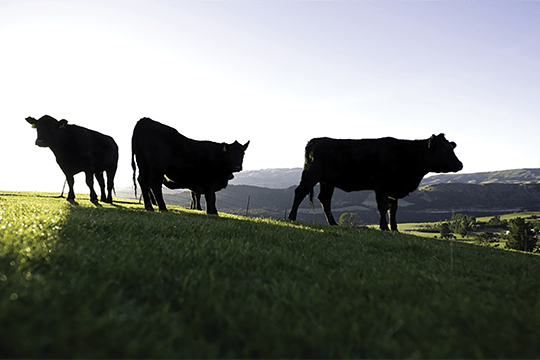
O ver four million calves are produced from the dairy herd in New Zealand every year, some are either retained for herd replacements, or are raised and finished on dry stock farms. However, approximately 1.8 million non-replacement or bobby calves are slaughtered annually at 4-7 days of age. This is an underutilised resource; can we do more with the production of these surplus calves?
The opportunity for beef on dairy is to shift the value chain from dysfunctional to functional. If the end product has a greater value, and that value can be captured, then financial participation and therefore functionality increases for all activities involved in creating, rearing, growing, processing, marketing, and delivering a beef product to the end consumer from the dairy industry.
Financial effectiveness and capturing value is the fundamental aspect throughout any value chain, facilitating the flow of resources, transactions, and incentives at each stage.
Unless there is more money for the end product of non-replacement calves, the value chain will continue to focus on cost minimisation of the calf as a by-product of milk production.
First, we need to examine the beef industry. Why do New Zealand beef producers not receive the same product value compared to other producers in international markets?
New Zealand beef doesn’t have consistent:
- Performance = eating experience.
- Supply = they can’t get it when they want it.
- Grading = our competitors have a simple system that has brand awareness.
Also, we need to acknowledge that the majority of the consumers don’t want grass fed, and a lot of the reason for that is the lack of consistency of eating experience and flavour.
For all of these reasons New Zealand beef producers are discounted. The often-low price of New Zealand beef limits the economics of beef on dairy value chain. This limits enthusiasm and economic stimulus, and, in fact, is a disincentive for participation in the value chain.
Money saves the bobby calf, but to realise more value with the consumer a successful beef on dairy value chain requires several key changes that contribute to delivering a product that has a higher value to the consumer, and increased effectiveness and efficiency.
By shifting from a production driven to a consumer demanded beef on dairy value chain there is a prospect to enhance value and provide an opportunity for beef on dairy and the non-replacement dairy calf.
How do we improve the value chain …
- Understand the Customer Needs: Grain fed is often a customer preference, especially in Asia markets. Short fed grain finished beef could be an opportunity to align the value chain activities with customer requirements. Grain fed also creates products that deliver value and meet customer demands of product consistency and reliable supply effectively.
- Improve Integration and Coordination of Farming Systems: This involves seamless communication, collaboration, and synchronization of activities to ensure smooth flow and timely delivery of products or services, dairy farms, rearers growers and finishers.
- Efficiency and Cost Optimisation: Using genetics designed to minimise costs and maximise efficiency at every stage of beef production optimises resource utilisation to achieve production cost advantages.
- Sustainability: The opportunity to communicate and validate existing environmental, social, and governance (ESG) factors of a low carbon beef sales platform to deliver value to the consumer.
- Technology: Meat grading is critical to improve value, give visibility and confidence of product quality and consistency of eating experience for the consumer.
- Continuous Improvement and Innovation: Marketing and branding of beef on dairy needs to continuously seek ways to introduce new digital transaction functions, and data analysis to optimise processes, and innovate across all stages of the value chain.
What are the opportunities for dairy beef?
Globally it’s referred to as Beef on Dairy, as that’s the focus for producers, a genuine beef focus, not simply a by-product of dairy systems, but a complementary income stream.
Pasture-based dairy farming is New Zealand’s single largest agricultural sector and earns approximately 25% of New Zealand’s total export receipts. Over four million calves are produced from the dairy herd in New Zealand every year, with nearly two million non-replacement or bobby calves being slaughtered annually at 4-7 days of age, which has increased public concern over social licence. The beef industry is New Zealand’s third most important pastoral industry in terms of export revenues, with 40% of that volume coming from the dairy sector of culled cows and slaughtered bobby calves.
The “burning bridge” that pushes farmers to make the decision to integrate beef on dairy as a primary catalyst for adoption and for developing targeted strategies to promote uptake of beef on dairy practices should be independently financially driven and not regulated by the processor.
With increasing emphasis on sustainability and environmental stewardship dairy farmers have already implemented practices aimed at reducing environmental impacts. Sustainable farming practices are increasingly important for ensuring long-term consumer acceptance.
“We need to acknowledge that the majority of the consumers don’t want grass fed, and a lot of the reason for that is the lack of consistency of eating experience and flavour.” – Matt Iremonger
New Zealand is a small country that is geographically isolated, and has opportunities to improve our communication and engagement to unlock the understanding of the work that has and continues to be done throughout the value chain improving “sustainability”, and adjust to consumer and customers’ needs.
The sustainability opportunity that New Zealand has is to utilise the advantages that pastoral agriculture provides, but needs to continue improvement and demonstrate, as well as validate, soil health, water quality and carbon utilisation and sequestration.
The unique point of difference New Zealand has for beef on dairy production is low carbon and pasture raised, something that few producers globally can compete with. The beef sector’s opportunity is to turn the non-replacement/bobby calf into a sustainability advantage.
“The unique point of difference New Zealand has for beef on dairy production is low carbon and pasture raised, something that few producers globally can compete with.” – Matt Iremonger
Consumer education and engagement will play a crucial role in shaping the future of beef farming in New Zealand. Farmers will need to communicate transparently, engage with consumers, and build trust through storytelling, education, and advocacy efforts to promote the benefits of beef on dairy and address consumer concerns around sustainability and quality. The beef market, like any agricultural commodity market, can be subject to significant price fluctuations due to factors such as supply and demand dynamics, weather conditions, trade policies, and consumer preferences.
Achieving consistent beef quality and meeting market specifications can be challenging, particularly for pasture-based beef production. Variability in factors such as genetics, nutrition, management practices, and processing methods can affect beef quality attributes such as tenderness, marbling, flavour, and consistency, which may impact market acceptance and consumer satisfaction.
Beef producers may also face competition from alternative protein sources and need to communicate, educate, innovate and adapt to changing market dynamics.
Despite potential challenges, beef on dairy farming in New Zealand is poised for growth and innovation. With increasing consumer demand for high-quality, sustainably produced protein, there are opportunities for beef on dairy farmers to capitalise on niche markets, differentiate their products, and expand export opportunities.
The financial consideration around consumer acceptance and social licence provides an opportunity to consider the potential for increased profitability through diversification of income streams, capturing additional value from beef production, as a compelling economic incentive for dairy farmers to embrace beef on dairy.
The future of beef on dairy farming in New Zealand will be characterised by the integration of technology-driven solutions and sustainability initiatives. Farmers will leverage precision farming technologies and genomic selection to optimise productivity and enhance sustainability credentials.
Genetics will play a fundamental role in enhancing beef on dairy performance. Implementing strategic breeding programmes, leveraging genomic technologies, and prioritising traits that align with market demand and production goals, dairy farmers can optimise beef on dairy performance and maximise the profitability and sustainability of their operations.
Appropriate feed strategies tailored to the nutritional needs and growth requirements of beef-cross calves, will allow farmers to optimise performance, promote marbling and meat quality, and therefore maximise profitability.
Economic tools such as commodity insurance products, futures and options, among others, provide valuable insights and decision-making support for stakeholders across the beef industry value chain, from producers and processors to retailers and consumers.
Beef on dairy represents an opportunity for dairy farmers in New Zealand to improve their sustainability credentials. As the industry continues to evolve, the integration of beef production into dairy farming operations is likely to play an increasingly important role in shaping the future of social licence for New Zealand’s dairy industry.
“Sustainable farming practices are increasingly important for ensuring long-term consumer acceptance.” – Matt Iremonger
Collaboration among stakeholders, including farmers, industry organisations, research institutions, and government agencies, will be essential for driving innovation and addressing common challenges in beef farming. Knowledge sharing, information exchange, and collaborative research initiatives will facilitate continuous improvement and best practice adoption across the sector.
Beef farmers in New Zealand will need to adapt to evolving market dynamics, consumer preferences, and regulatory requirements. Farmers need to position themselves to respond effectively to changing market demands and maintain competitiveness in the global marketplace. This requires engagement and forming of relationships.
New Zealand has an opportunity to demonstrate leadership in sustainable beef from dairy farms and by embracing this New Zealand can showcase its commitment to responsible agriculture on the world stage with beef produced from dairy.
Strategies for Stakeholders
- Embrace technology, by investing in precision farming technologies and genomic selection to enhance productivity and efficiency on beef farms.
- Explore value-added market opportunities such as meat grading, grain fed, premium cuts and sustainability branded lines to diversify revenue streams and capture value.
- Educate consumers, policymakers, and the broader community about the benefits of beef farming, including its contribution to sustainable agriculture, rural development, food security and human health.
- Foster collaboration among stakeholders, including farmers, researchers, policymakers, and consumers, to share knowledge, exchange ideas, and address common challenges in beef farming.
- Advocate for policies and regulations that support the growth and sustainability of beef farming, including incentives from the farmer cooperatives and processors, research funding, and market access opportunities.
- Commit to improving relationships in market. Invest in significant physical red meat industry representation that builds, grows and promotes beef opportunities with a focus on understanding consumer and customer needs to drive the New Zealand producers and processors decision making.