The power of the sun
Harnessing the power of the sun offers the chance for drystock farmers to diversify their operations. Federated Farmers Senior Policy Advisor Jesse Brennan’s 2024 Kellogg Report Cultivating the sun – challenges and opportunities of solar farming for drystock farm diversification explores the opportunity.
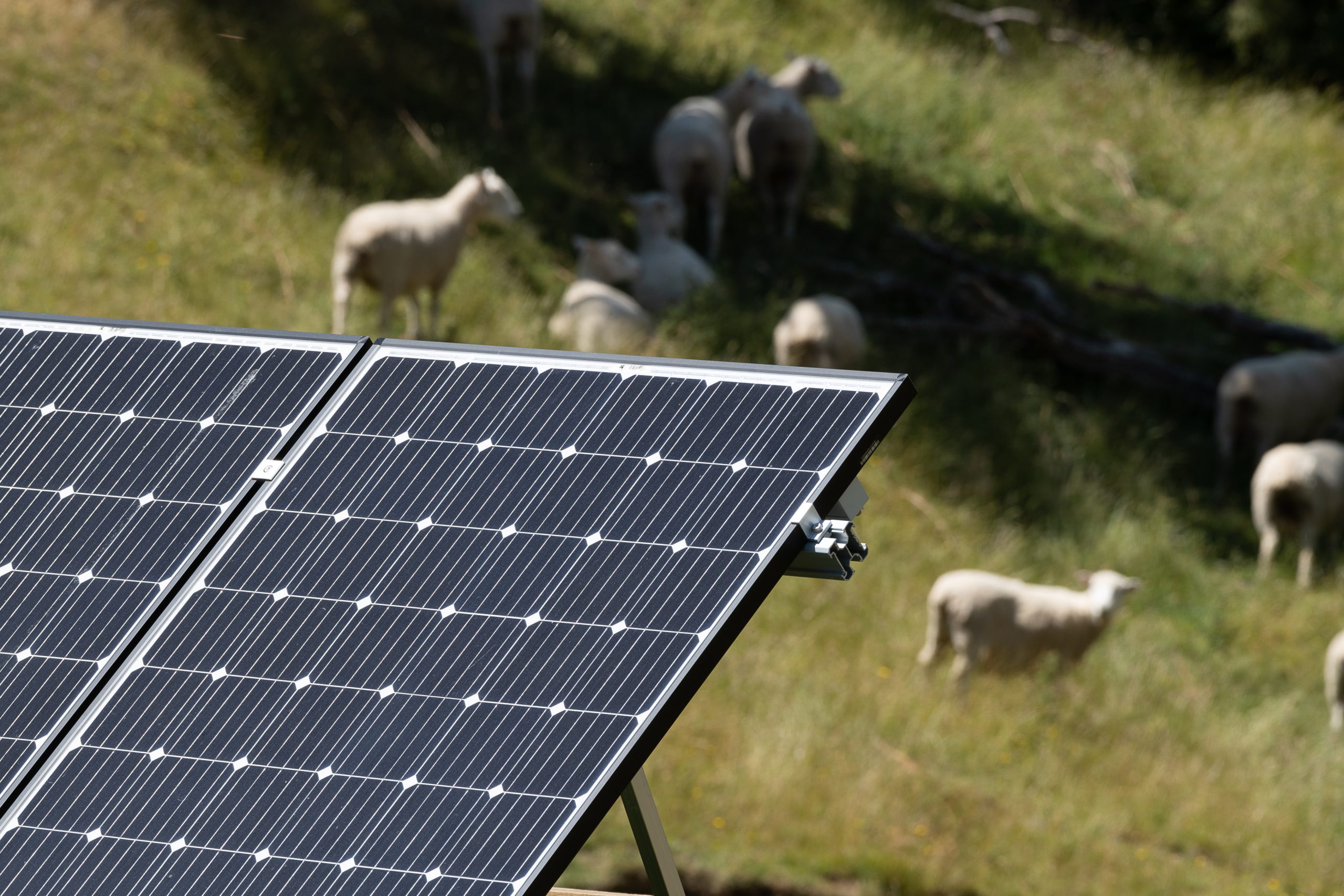
 As Aotearoa New Zealand works toward achieving its climate goals, solar energy is emerging as a viable diversification strategy for drystock farmers. With open rural landscapes and abundant sunlight, the country is well positioned to develop solar farms. In particular, agrivoltaics, where solar panels are integrated with farming.
Agrivoltaics offer a dual benefit: producing renewable energy while enhancing land productivity. As solar energy is expected to contribute 6% of the country’s electricity by 2035, it aligns well with New Zealand’s ambition to reduce emissions and transition to a greener economy.
For those focused on farming sheep, beef and deer, solar could become a crucial financial lifeline, especially as farm profitability continues to face challenges. However, while solar farming offers numerous opportunities, it also presents significant challenges.
Challenges: Costs, Knowledge Gaps and Land-Use Conflicts
The financial barriers to solar farming are substantial. Initial setup costs for solar farms can range from $600,000 to $1.5 million per hectare, a significant investment for any farm, particularly for those with limited capital.
While the long-term potential for financial returns is considerable – lease agreements with solar developers can offer fixed annual payments of between $2,000 and $6,000 per hectare, many farmers remain wary of the upfront costs and the complexity of integrating solar systems with their existing operations.
There are also challenges related to grid infrastructure. New Zealand’s national electricity grid is not yet fully optimised for widespread solar adoption. Connecting solar farms to the grid is expensive, with estimates suggesting that a standard connection can cost up to $25 million.
As solar energy generation tends to peak during the day and dip at night, the need for investment in battery storage solutions is also critical to manage fluctuations in supply and demand.
Opportunities: Financial Stability and Long-Term Benefits
Despite the financial and regulatory hurdles, solar farming offers substantial opportunities. For farmers in areas with suitable land, the integration of solar farming into their operations can provide a new and reliable income stream.
Lease agreements with solar developers allow farmers to generate income without bearing the costs of installation or maintenance. Solar projects typically offer a return on investment (ROI) of 10–12%, with payback periods ranging from six to 12 years.
The revenue potential from solar farming can be particularly attractive to farmers struggling with the declining profitability of traditional farming practices. With fixed annual payments, farmers can use the income from solar leases to fund further investments in their operations or as a supplement to income from grazing livestock. In fact, agrivoltaics can provide financial stability by allowing for dual land use, where grazing and energy production can coexist on the same land.
Moreover, the long-term benefits of solar farming are not limited to financial returns. As the technology for recycling solar panels continues to evolve, farmers may benefit from future market opportunities in panel recycling, which could generate additional income as the panels reach the end of their useful life in 30 years.
Community Support and Public Perception
While solar farming is seen as a promising opportunity for rural communities, public perceptions are mixed. There is general support for solar, especially when it’s combined with agricultural practices like agrivoltaics. Communities are generally in favour of renewable energy, particularly when it leads to local employment and economic development. However, concerns about visual impacts and land-use conflicts persist, especially in areas where farmland is highly valued.
Misconceptions about the compatibility of solar and agriculture also remain prevalent, and local education efforts are crucial in dispelling these myths. Demonstrating the benefits of agrivoltaics, such as the potential for solar panels to provide shade for livestock, improve pasture quality, and reduce heat stress for animals could help foster wider acceptance of solar farms in rural areas. Additionally, ensuring that solar farms are well designed, with appropriate spacing and landscaping, can help mitigate concerns about visual impacts on the rural landscape.
Regulatory and Environmental Considerations
The regulatory landscape in New Zealand presents challenges for solar farm development due to conflicts between renewable energy goals and agricultural land preservation. The Resource Management Act (RMA) supports renewable energy but also protects productive agricultural land, creating tension for farmers.
The National Policy Statement on Highly Productive Land (NPS-HPL) restricts land use for farming, limiting solar development on high-value agricultural land. While the National Policy Statement for Renewable Electricity Generation (NPS-REG) promotes solar growth, it often clashes with policies protecting agricultural land. Balancing these interests remains a complex issue.
Agrivoltaics, however, offers a potential solution to this conflict. By integrating solar panels with grazing or other forms of farming, it is possible to generate renewable energy without sacrificing valuable agricultural land. This dual land-use approach could allow farmers to contribute to New Zealand’s renewable energy goals while maintaining their agricultural productivity.
One environmental consideration yet to be fully explored is the impact of solar farms on local ecosystems. Potential issues like vegetation clearance, microclimate changes, and impacts on biodiversity need to be better understood. However, early research suggests that well-designed solar farms, with appropriate plantings and spacing, can mitigate negative environmental impacts such as heat islands or soil erosion.
The Path Forward
Solar farming presents a complex but promising opportunity for drystock farmers in New Zealand. While there are significant challenges, such as high initial costs, grid infrastructure limitations, and regulatory constraints, there are also clear benefits. Solar farming can provide financial stability, support New Zealand’s renewable energy transition, and offer a new way to use agricultural land. For farmers in areas with suitable land and infrastructure, solar farming could serve as a vital diversification strategy.
“Agrivoltaics can provide financial stability by allowing for dual land use, where grazing and energy production can coexist on the same land.” – Jesse Brennan, Kellogg Report
To fully realise the potential of solar farming, collaboration between farmers, solar developers, local communities, and government agencies is essential. Policymakers must update regulations to accommodate the growing interest in agrivoltaics, while ensuring that land-use decisions balance renewable energy generation with the protection of agricultural land. Additionally, investment in research and local data will be crucial to understanding the unique challenges and opportunities that solar farming presents in the context of New Zealand’s farming environment.
In conclusion, solar farming could be a game changer for drystock farmers in New Zealand, but its success will depend on overcoming financial, regulatory, and community challenges.
With the right investments and partnerships, it could provide a path to a more sustainable and financially stable future for farmers across the country.