
Virtual fencing

Special Episode – Halter: Driving Profit, Efficiency and Sustainability
This special episode of CountryWide explores the first independent evaluation of Halter’s virtual fencing and herding technology, now used on more than 600,000 dairy and beef cows across New Zealand, the United States and Australia. An AgFirst and Transform Agri study of ten high-performing dairy farms shows clear gains in pasture utilisation, labour efficiency, animal performance and environmental outcomes.
Sarah Perriam-Lampp speaks with James Allen from AgFirst, Julian Gaffney from Transform Agri and Halter’s Head of Corporate Farming, Steve Crowhurst, to unpack the findings, including an average 13 percent lift in farm profit before tax and how top operators are using the system.
Episode 74 – Leveraging technology from horseback
From data-driven decision making to environmental monitoring and compliance, Richard and Annabelle Subtil have reaped the rewards of lucrative supply contracts by being able to prove any claim by using technology while maintaining traditional high-country values.
In this episode, Sarah Perriam-Lampp talks with Richard Subtil from Omarama Station about how full mobile coverage is unlocking and boosting efficiency and compliance in the high country with technology. But Richard stresses that even with virtual fencing, EID tags and connected irrigation systems, it is so important to ensure traditional stockmanship remains at the core of farming.
Unlocking beef returns from the top down
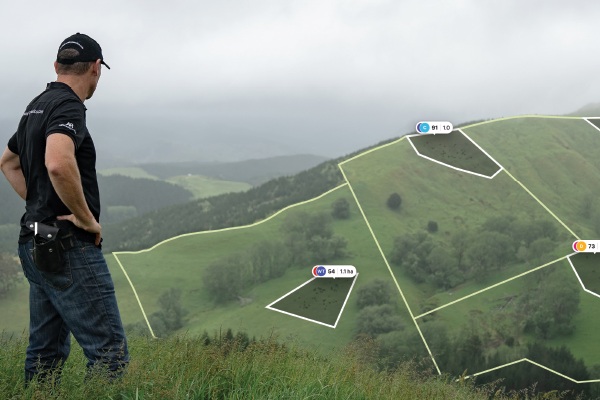
Virtual fencing technology is showing the returns of daily rotational grazing on steep, hill country beef farms.
Words by Sarah Perriam-Lampp Photos by Michael Lahood.

A speed dating guide to the latest Journal of New Zealand Grasslands
Held in November 2023 in Rotorua, the NZ Grasslands Association was the place to hear about the research comprised in their 85th journal. For those who couldn’t make it, Joanna Grigg provides a speed-dating style summary of some of the papers and key findings. These are peer reviewed and come from the very best of our country’s pastoral researchers.