Survival of the Fittest
Legacy structures are proving to be a major headache for the meat processing sector and the farmers supplying it with livestock. Words Tony Leggett.
Listen to the podcast:
Processing livestock is heavy in fixed assets, especially the large sheepmeat plants built a generation ago to cater for a starkly different kill profile to the one delivered today by the nation’s farmers.
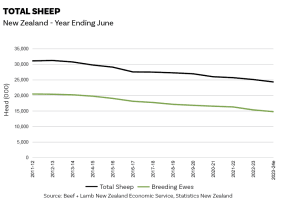
When you overlay New Zealand’s still declining sheep flock, static beef numbers, high inflation, the tough labour market and a global recession, the outcomes for farmers and meat companies range from fair to catastrophic. The season to September 30 this year is delivering another mixed bag of results for the companies and a massive dip in farmgate prices for farmers.
Last August, just as most sheep farmers were firing up their lamb docking irons, the global economic slowdown smashed through consumer confidence like a wrecking ball in almost every key sheepmeat market for New Zealand product. Thankfully, beef returns were not hit so hard.
Within a few weeks, sheepmeat export prices crashed by about 25%. Beef prices dropped by close to 10% from their post-Covid boosted levels.
Consumer demand from China, previously NZ’s number one meat destination, weakened to the point where Chinese authorities stopped publishing the data. Unemployment, particularly among young Chinese, spiraled up. A year later, the Chinese dragon is still struggling to grow at anywhere near pre-Covid levels.
“I am confident of a return to profitability in our 2024 year and I’m confident we can operate without the need to raise more capital or add to core debt.” – Dan Boulton, Silver Fern Farms, chief executive
Meat Industry Association (MIA) figures released in late May show that China slipped off its perch as NZ’s biggest meat importer by value for the first time in several years, with exports for April 2024 down a whopping 37% on the same month the previous year. Fortunately, NZ’s traditional export destinations for meat have remained solid in these tough times and free trade agreements are helping too.
Adding to NZ’s woes last spring was the situation unfolding across the Tasman. Fearing a significant El Nino-fired drought, farmers in Australia dumped stock, pushing massive volumes of cheap mutton and lamb into export markets. Putting further downward pressure on prices, and it’s still the case today.
Farmgate prices for NZ farmers followed the downturn offshore. Lamb schedules broke back through the $6/kg mark in late May this year, a far cry from two seasons earlier when the published lamb schedule prices all started with an ‘8’ by mid-year. Beef returns have stuttered along at around $6/kg for most of the season before moving up in June on the back of improving demand from the United States for grinding beef.
Proactive rural accountants were quick to jump in with advice to clients about ‘red ink’ appearing on annual accounts for the year to June 30 this year. Bankers have also been flat out extending overdraft facilities and opening up term debt if equity positions are not over-stretched.
Beef + Lamb New Zealand’s mid-season update released in March this year forecast full-year farm profit for sheep-beef farmers to drop by 54% on the previous year. That’s on top of a 29% drop the year before.
It is no longer enough to be a ‘good farmer’ to get through in the black, with farmgate prices falling so low and inflation hitting farm input costs. Even some of the best red meat farmers have had to confront significant operating losses for the year.
It doesn’t end there.
New Zealand’s largest sheepmeat processor-exporter Alliance Group felt the full brunt of the massive drop in sheepmeat market prices. It posted a $97.8 million loss before tax for the year to September 30, 2023, a whopping $214.1m turnaround from the previous year’s record profit of $116.3m.
In spite of a significant operating loss to December 2023 of $36.4m before tax, Silver Fern Farms (SFF) new chief executive officer Dan Boulton told shareholders and suppliers at the company’s annual meeting in early April he was confident its branded product strategy was still the right direction. New chair Anna Nelson matched Boulton’s enthusiasm for its Plate to Pasture marketing strategy in her opening update to suppliers in late April.
Branded product programmes, which aim to extract premiums, are often touted as the way forward but building volume is clearly time-consuming and comes with higher risks.
Boulton said the SFF result would have been close to breakeven if not for the impact of Cyclone Gabrielle and the final chunk of spending on a software upgrade, costing the company a total of $30m. Storm damage at its Dargaville and Napier sites was massive. Staff at Dargaville had to resort to jack-hammers to remove carcases from flooded freezers. “I am confident of a return to profitability in our 2024 year and I’m confident we can operate without the need to raise more capital or add to core debt,” the upbeat chief executive told shareholders.
Like most operators in the meat industry, SFF deferred spending on some projects but Boulton said the company’s investment in marketing and brands was delivering value over commodity market prices and would differentiate SFF from its competitors.
ANZCO posted a strong profit before tax of $60.9m, boosted by a one-off injection of funding to deal with Mycoplasma bovis at its Canterbury feedlot and profit from its investment in a healthcare product company in Australia. Media-shy AFFCO rarely discusses its performance in public, but its low-cost operating model must have cushioned some of the impact of weak demand from offshore customers.
News that Whanganui-based Waimarie Meats, a relative newcomer to meat processing and exporting, was placed in liquidation in April shows the smaller second-tier operators have also felt the pinch.
So, where to from here?
Country-Wide posed a range of questions to several current and former meat company board members and executives. It was heartening to hear one insider say there was more collaboration between meat companies now than in the past. “Of course, the Commerce Commission is always watching for signs of anti-competitive behaviour, but there is good dialogue at an appropriate level between many of the companies,” he said. “There is some co-ordination in shipping and some of the companies are working together more in what we call the fifth quarter – byproducts, skins and hides.”
And, offshore, there are good examples of companies working together to market meat through co-owned companies like the NZ Lamb Company in the United States.
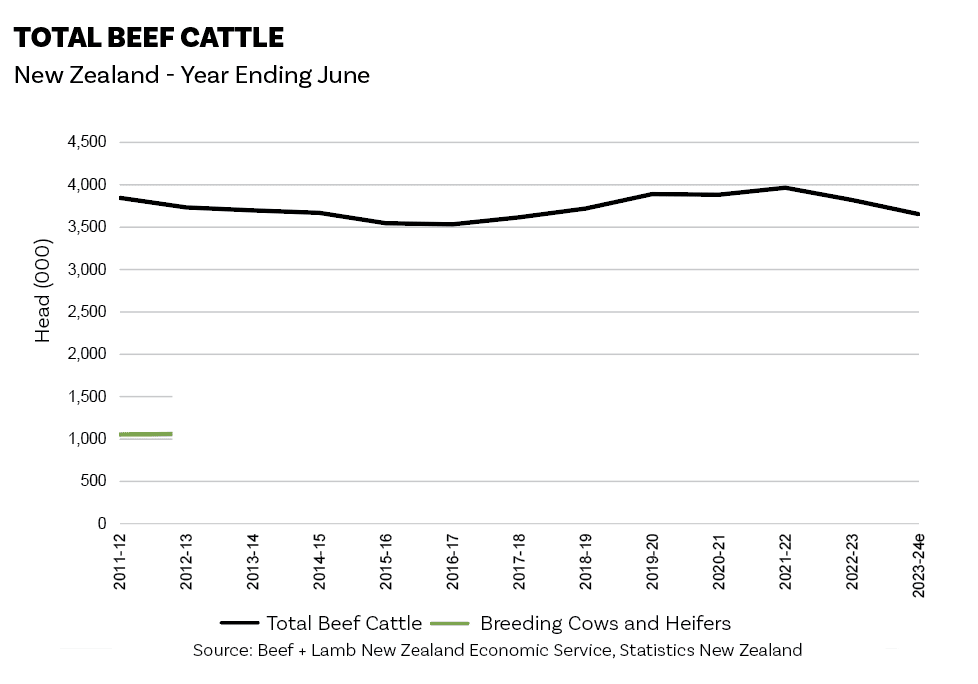 When asked about ‘right-sizing’ the processing capacity to handle fewer lambs and cattle in the future, the cost of plant closures was often the first response. Several said everyone looks to the big players to shut plants, but the cost in redundancy and site remediation is massive.
When SFF closed its Fairton plant, the rumoured cost at the time was $15-$20m in redundancies. Unionism is deeply entrenched in the meat industry and workers are well represented when it comes to any challenge to their employment conditions. Another solution suggested was toll processing, where one company processes stock for another on a per head or per kg basis. But it is not a quick fix in spite of the obvious benefits in transport and processing efficiency from volume and labour perspectives.
The reality is that each company gains certification for its plants to export meat and by-products. That certification is complex and costly to achieve.
An even larger barrier to toll processing is the complexity of cuts and packaging required by companies to provide product in the desired form for their customers. The logistical challenge of packaging and further processing to different cut specifications for multiple exporters would be unworkable at scale.
Branded product programmes, which aim to extract premiums, are often touted as the way forward but building volume is clearly time-consuming and comes with higher risks. After 12 years of building its Plate to Pasture programme, only 12% of Silver Fern Farms’ total production sells in branded form to consumers.
 Executives from other companies hastily pointed to their own branded product programmes, but they were equally quick to say a lot of a lamb or beef carcase fits most efficiently into the ingredient market. One insider went as far as suggesting the meat industry should be mindful of dairy giant Fonterra’s recent decision to sell its brands and focus on ingredient supply.
“No meat company will ever have enough money to succeed with a fully branded programme. You need to be a Nestle-sized company to have the ability to create a successful branded product at volume for consumers.”
Negotiating shorter payment terms so the gap between paying farmers for livestock and receiving payment for the meat has become a big area of focus for meat companies. Alliance Group chairman Mark Wynne specifically mentioned the quicker payment time negotiated with Grand Farms, its primary customer in China, as a major win for the co-operative earlier in the year.
The legacy issue for many farmers is they want their stock killed without delay, when it suits them, so committing to a firm contract to supply stock to an enforceable delivery schedule has been a slow build for meat companies.
One insider with 30 years of experience in the sector said the meat industry has to move from its decades-long focus on market share and speculating on meat inventory valuations, to a more strategic supply model. Farmers who sign contracts to supply his company were given a week’s flexibility in timing but were expected to meet their commitment 100% and ewe slaughter tallies were also directly linked to the number of lambs each farmer supplies as an extra incentive.
Many farmers challenge the use of ‘third-party’ suppliers who receive premiums over what is typically paid for supplying stock to companies. Meat companies often deny the use of third-party suppliers but the reality is different when numbers dwindle and plants need stock to get closer to break even throughput.
Investing in new processing technology is expensive and tough to maintain when profitability is lacking.
In short, there are no quick fixes to the see-sawing profitability for the meat sector. It will be a series of small steps rather than one or two game-changing moves that creates a steadier, more profitable future for those on each side of the farm gate.
Meanwhile, farmers are already adapting their farm systems to cope with the ‘new normal’.
Meat company field staff are reporting a noticeable surge in ewe lamb slaughter since May as farmers search for more cash and there is a lot of talk at farm discussion group days about reducing ewe numbers in favour of more cattle.
Strangely, the meat industry does not capture data on lamb sex at slaughter but if the trend continues, our national ewe flock will continue its downward trajectory.
The overall lamb kill is already more than 1.2 million ahead of the same point last season, suggesting a massive hole in throughput for the final two months of this season when procurement pressure will overshadow what in-market pricing is delivering at the farm gate.
As one insider said: “Survival of the fittest is what happens in business. Look at kiwifruit this past year, look at forestry, look at dairy. Meat is no different, farmers have to adapt and so do the companies that operate in the meat sector.”