Skin in the game
Pathways to farm ownership and, equally, farm succession planning have long been meaty issues the agricultural sector has battled to address. Landify is a new online platform that could be a game changer for those on both sides of the equation. Words Rebecca Greaves.
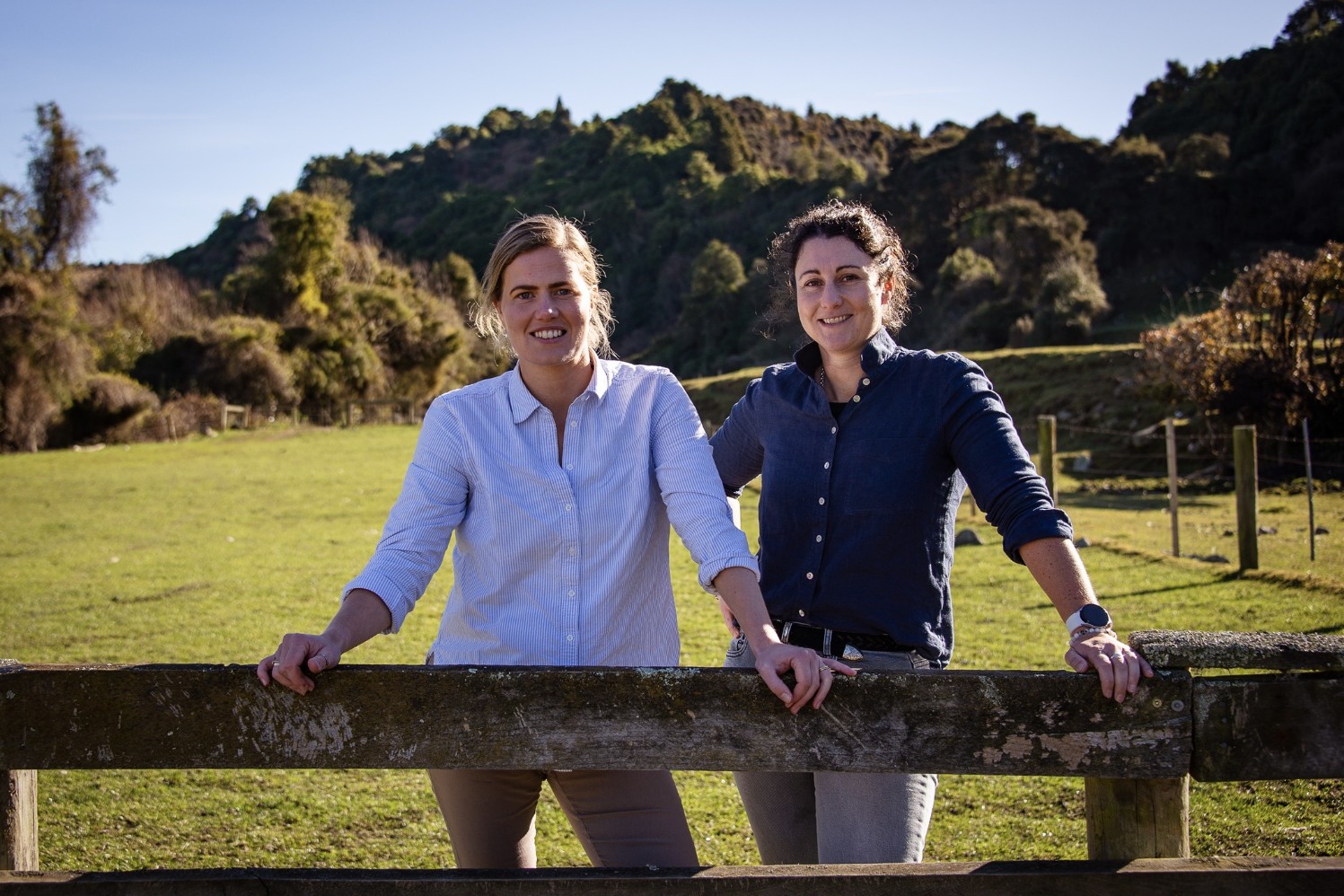
Long-time friends and Landify Co-Founders Sarah How and Tara Dwyer had often chewed the fat about their frustrations with the lack of options to address pathways to farm ownership. So, they did something about it.
Landify is a new secure and anonymous online platform to help people explore a range of farming partnership opportunities, from leasing to equity partnerships or share-farming and vendor finance.
“The purpose is to allow farmers at all stages, and investors, to explore what farming partnership possibilities are out there,” How explains.
Dwyer heads the advisory board, while How takes care of the day-to-day operations. The pair have been good friends since their Lincoln University days and put their heads together to tackle what they saw as a critical problem for the industry.
“Tara and her husband have gone down the farming road, they’re managing a sizeable farm in Middlemarch and had looked at equity partnership options, so they’ve been really engaged in this space.”
How herself has had a career in the research and development space, most recently working for DairyNZ. “For me, I love problem solving. This topic of pathways to farm ownership for the next generation, and farm succession, which is highly co-related, they’re a hard nut to crack. It’s bugged me for a long time and Tara and I were always talking about what needed to be done.
“We’ve lamented seeing farms come on the market and that the established players with strong balance sheets are the only ones in a position to purchase.”
“The strong message that comes through is the incumbents want to support the next generation, but they don’t know how to – short of subsidising someone else’s business at the expense of their own retirement or family.” – Sarah How, Landify
The friends worried that, if the trend persisted, the next generation of farmers would continue to be sidelined and opportunities for progression in the industry, if land ownership is a goal, would be further diminished.
How felt so passionately about the topic that she signed up for her MBA at the University of Canterbury to look at succession and asset transition in other industries. Her attention was captured by platform-based business models, using digital forums to bring people together. She wondered if a similar model could be used to break down barriers between farmers and investors.
With this idea in mind, How and Dwyer took the bull by the horns and built a crude, basic platform, which they tested in the market to see if it had merit. The response was positive enough to give them the confidence to pursue the idea, and in September 2024 they launched Landify.
“We made a semi-professional launch video, built the platform and launched it on social media three months ago and it went viral,” How says.
At the time of our interview in late November, they had over 900 people signed up and 32 paid listings. A paid listing is essentially someone dipping a toe in the market, usually anonymously, from younger farmers through to established farmers and investors.
While they hadn’t seen any deals made, yet, they had made a number of connections between people who were in the process of exploring partnership compatibility. “Marriages don’t happen overnight, but we’re really happy with the level of engagement.”
Farm ownership is something people can spend their whole life working towards, it represents hopes and dreams. But How says people have become disillusioned with their options. For her, success with Landify would mean established farmers have options to step back, beyond simply selling on the open market, and that the next generation of future farmers have a chance to get a foot in the door.
Over the years they have watched more and more family farms come to the market and heard stories from farmers who wanted to step away from the farm, but not necessarily sell up. “They want to take a step back in a way that meets their family’s needs. They might also want to give a young person an opportunity to go farming.”
People may have to walk a fine line between helping someone young in a way that’s not at the expense of their own retirement or family. Previously, there was no discreet way of exploring what options might be available to them. “The strong message that comes through is the incumbents want to support the next generation, but they don’t know how to – short of subsidising someone else’s business at the expense of their own retirement or family,” How says.
“That emotional connection to the land and the identity we share as ‘farmers’ is why young people aspire to own farms.” – Sarah How, Landify
She explains that one of the core problems they see when it comes to farm succession is that farming families tend to have most of their wealth tied up in the land, which is a highly illiquid asset. Partnership models provide some liquidity, giving families the opportunity to realise a portion of their wealth.
In some cases, the farmers know the time has come to step back, but they’re actually terrified of leaving the farm, or might like to stay living on the property. “That emotional connection to the land and the identity we share as ‘farmers’ is why young people aspire to own farms,” she says.
“If people are empowered and have the right tools to explore their options, that’s huge. We just want people to feel like they have options.”
HOW DOES IT WORK?
Landify is an online platform that allows people to discreetly list farming partnership opportunities, or what kind of farming partnership they are looking for.
‘Partnerships’ include anything from leasing, lease-to-buy arrangements, equity partnerships, share-farming, or vendor financing. It is free to sign up, receive a monthly update with new listings, and enquire about listings that catch your interest.
Users pay to make listings, which could include information such as their current situation, what options they are open to exploring, e.g. vendor financing, a time frame and where relevant, equity levels they hope an incoming party will bring to the table.
A listing is much like a Trade Me advertisement, except it’s not a concrete real estate opportunity, it’s more like inviting expressions of interest. While it’s free to receive the listing updates and enquire, if you want to actually be connected to a listing party or make a listing yourself, you’ll need to become a verified member by paying an annual subscription of $499.
To become a verified member, you’ll also be required to answer some questions describing your motivation, what you can bring to a partnership, what you would value in a partnership, your attitude to financial risk and list your mentors or advisors. By filling out the verification form online it will populate a Landify Bio. “It basically says who you are, where you want to go and why you want to go there,” How explains.
When a user enquires on a listing, a copy of their bio is shared with the party who made the listing. It’s then up to the listing party to decide who they want to make contact with to start a conversation – they needn’t disclose who they are before then.
Landify does not take commission from deals. It simply acts as a connection platform, like Trade Me.
“We’re just providing the technical infrastructure to connect. It’s like the job market. In years gone by you got a job based on who you knew and your informal networks. That was disrupted by online platforms like Trade Me and Seek. Farming partnerships still rely on informal networks, and Landify aims to disrupt that.”
And if you’re challenged by technology, never fear. How has already created listings for people over the phone, so you don’t even need to open a computer. “We’ve had so much feedback from people saying, I wish this had been around 20 years ago, this is what the industry needs, good on you.”
How says they wish to leverage from those experts in the field who are already out there to guide people through what a partnership might look like. She hopes they will act as a catalyst for the next generation of farmers coming through to surround themselves with the right people and get a plan on paper.
“It’s that old adage, a goal without a plan is only a dream. We’d like to make connections between good advisors and mentors, and the people who are going to go forward and be the future landowners of
this country.”