Ryegrasses can last
The next step for summer-strong perennial ryegrass that persists is now here with Maxsyn NEA12. Words Sarah Perriam-Lampp.

 After the culmination of more than 15 years of plant breeding, endophyte discovery and on-farm testing, Barenbrug’s latest perennial ryegrass, Maxsyn NEA12, is delivering stronger summer performance, improved insect control and greater persistence where farmers need it most.
For Barenbrug pasture specialist, Graham Kerr, a common farmer complaint is that ryegrasses don’t last.
Industry figures show Maxsyn is New Zealand’s top selling ryegrass so no stranger to a lot of farmers, but Graham says Barenbrug have improved it with endophyte technology with the power of a new NEA12 endophyte.
“Perennial ryegrass endophytes are naturally occurring fungi that live entirely inside the plant, delivering insect control and resilience,” explains Graham.
He says that Barenbrug has been “investigating about 40 different endophytes,” seeking the rare combinations that truly lift performance.
Graham likens the relationship between ryegrass and endophyte to a marriage. Some combinations thrive; others drag each other down.
“It’s exciting to achieve both more yield and more resilience with a real step up on insect control, making the plant stronger.” – Graham Kerr, pasture specialist, Barenbrug
Maxsyn has historically been paired with the NEA4 endophyte, but the breakthrough of NEA12, a different endophyte producing different protective compounds, formed an exceptionally compatible partnership with Maxsyn.
“We’ve had some endophytes and some ryegrasses that, when you put them together, you get a lot of decrease in yield and some do nothing,” he says.
“You do a whole lot of work and most of it never ends in anything. What we’re looking for is something really rare. Combining Maxsyn with NEA12,” he says, “They’ve found it.”
Stronger through Summer
Graham says Maxsyn has a ‘summer shine’, staying greener into the summer as other things brown off in a dry year.
“Summer is the main time we lose from multiple stresses that add together – heat, drought or moisture stress, insect pests and overgrazing. The biggest difference NEA12 endophyte makes is helping it through the summer.”
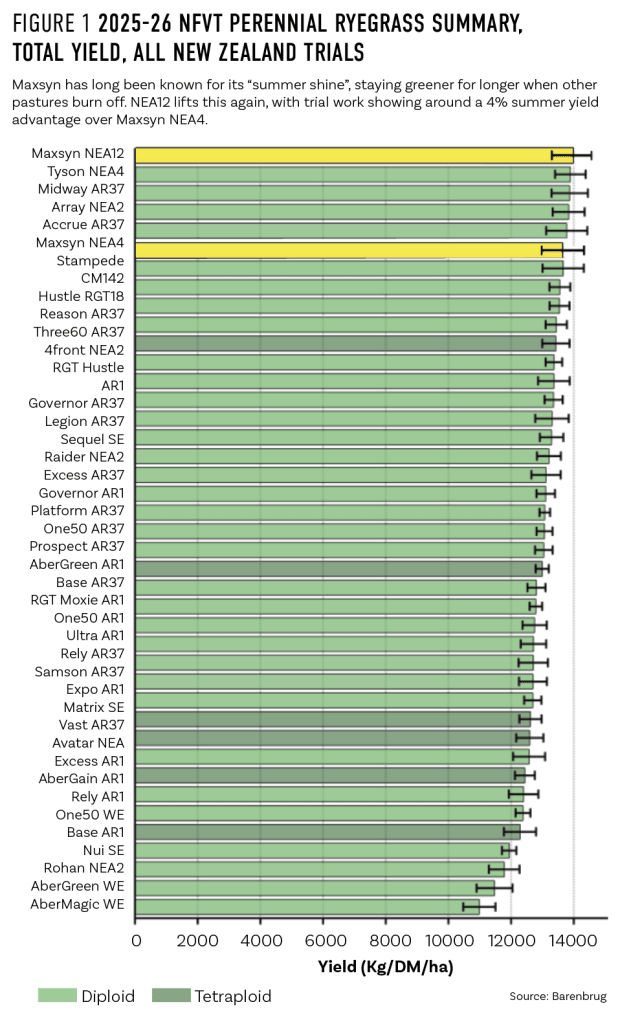
Barenbrug’s trial work shows a 4% yield advantage in summer for Maxsyn NEA12 compared with Maxsyn NEA4.
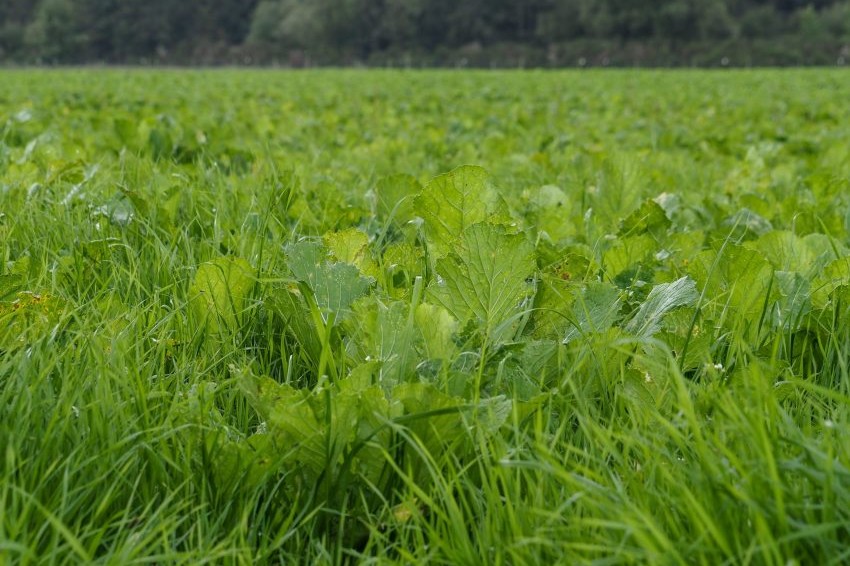
Beyond yield, farmers will notice visible differences in the paddock. With NEA12, Maxsyn has more tillers and a darker green colour, reflecting a stronger, healthier, more resilient plant.
Stepping up insect control
A key driver behind NEA12 is its enhanced insect control, particularly for pests that punish summer-dry pastures.
- NEA12 delivers:
- Better stem weevil control
- Improved root aphid control
- A level of Porina control
“It’s exciting to achieve both more yield and more resilience, with a real step up on insect control, making the plant stronger.”
Animal health and staggers risk
NEA12 is safe for dairy cows. The main consideration is sheep getting ryegrass staggers issues under particular grazing conditions.
“NEA4 has a very low risk of staggers but NEA12 has a bit greater staggers risk,” says Graham.
Graham says if your livestock are eating shorter, green, leafy pastures, you’re very unlikely to ever see staggers.
“Where we’ve had the issue is when we’ve got a rank pasture and we’re grazing the seed heads and the stem. It’s like grazing a hay crop.
“Those rank, stemmy pastures are not only poor for animal performance, they’re also where alkaloid levels are high and therefore staggers risk is highest.
“For us, Maxsyn NEA12 is a bit of a celebration of 15 years behind the scenes testing new endophytes, testing new grasses, and coming to the stage where we deliver it. We’ve got the data, we’ve got the confidence, we know it performs.”
Visit barenbrug.co.nz