Rethinking New Zealand’s Economic Future
New Zealand’s economy has long been anchored by two key pillars: agriculture and tourism. However, as the world changes, Carlos Bagrie, a 2024 Nuffield Scholar, explores how both sectors are facing natural limits to their growth.
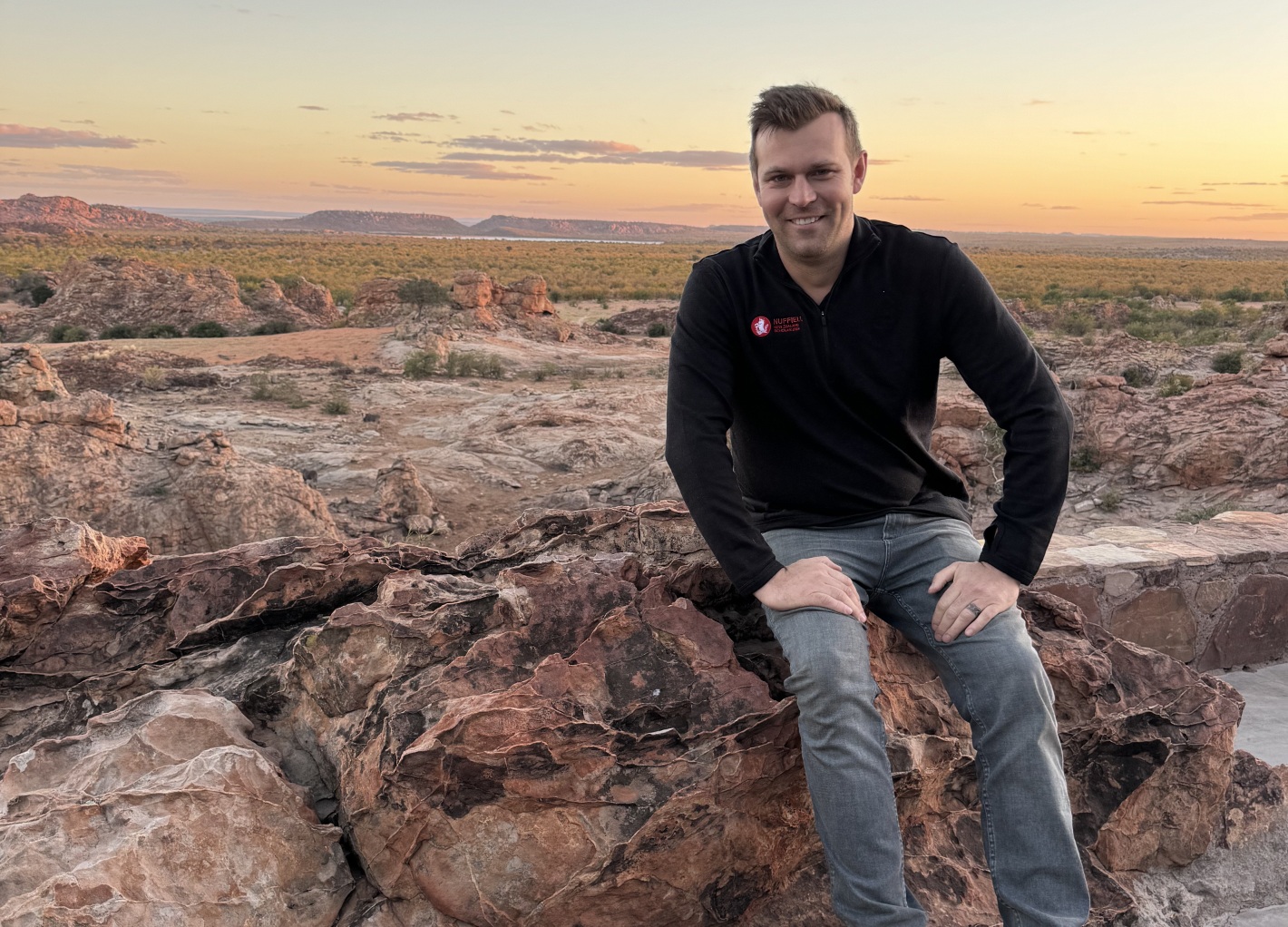
Carlos Bagrie spent his Nuffield Scholarship year concluding with his report Beyond the Farm Gate: Rethinking New Zealand’s Economic Future as a call to action for New Zealand to start planning for the next 25–50 years.
While agriculture is constrained by land availability, environmental regulations, and shifting trade dynamics, tourism (which is on his back door step in Queenstown), while strong, is volatile and limited by infrastructure and environmental challenges.
“Agriculture and tourism have carried us for decades, but their growth is no longer boundless,” Carlos says. “We need to ask ourselves: what industries will drive our economy forward into the future?”
Lessons from global agriculture
Carlos’ travels took him to countries like Brazil, the UK, and the Netherlands, where he observed vastly different approaches to agriculture. In Brazil, farming is treated as a limitless industry, with vast land expansion and high-intensity production driving exponential growth.
“Standing in an endless field in Brazil, I realised how it’s farming on steroids – everything is bigger, faster, and more ambitious,” Carlos recalls.
In contrast, the UK and the Netherlands, he says, are deliberately constraining farming. UK farmers are paid not to farm, shifting land into conservation under environmental policies, while the Netherlands focuses on high-value niches and supply-chain control rather than sheer production. Despite its small size, the Netherlands exports more food than Brazil by dominating logistics, processing, and distribution.
“New Zealand is far more like the UK and Netherlands than Brazil,” Carlos explains. “We don’t have millions of hectares waiting to be farmed, and our environmental policies mean expanding production comes with significant trade-offs. In fact, we’re losing farmland, not gaining it.”
Since 2017, over 260,000ha of sheep and beef pastoral land have been converted to forestry, and sheep numbers are at historic lows. At the same time, global trade policies are shifting, with the EU tightening environmental standards on imports and the UK’s free trade deals making New Zealand’s dairy and red meat exports less competitive. “China buys 40% of our dairy and 30% of our red meat, but this reliance on one major trading partner presents risks,” Carlos warns.
While New Zealand will always produce exceptional food, Carlos argues that future growth in agriculture is likely to be linear, not exponential. “We’re approaching the upper limits of what agriculture alone can provide as the backbone of our economy,” he says. “The question is: what comes next?”
The path forward: a national conversation
If agriculture and tourism are hitting natural limits, New Zealand must start planning for the next 25–50 years. Carlos’ report poses critical questions: Should we follow Ireland’s lead, using tax incentives to attract high-value industries like technology and finance? Should we invest in processing and logistics to retain more value from our agricultural exports? Could we position ourselves as a leader in renewable energy, digital innovation, or advanced manufacturing?
The report highlights the Netherlands as a model for supply-chain control. The Dutch dominate global food logistics, processing, and distribution, leveraging their geographic location and infrastructure to create value without relying on large-scale production. New Zealand, by contrast, often loses value to offshore processors and distributors.
“The Dutch don’t need to grow everything themselves to be a dominant global food player,” Carlos notes. “They’ve mastered the art of controlling the value chain. That’s something New Zealand could learn from.”
Balancing sustainability and productivity
Environmental policies are reshaping agriculture worldwide, and New Zealand is no exception. Land is being converted to forestry for carbon credits, livestock numbers are declining, and regulations on water use and emissions are tightening. While these measures are essential for sustainability, they also constrain production. Carlos warns that if policies push too far, they risk making farming unviable, as seen in the UK, where farmers are increasingly paid not to farm.
“The UK’s experience is a cautionary tale,” Carlos says. “Well-intentioned policies aimed at promoting sustainability can inadvertently undermine food production and push farmers out of agriculture altogether.”
He calls for a balanced approach to agricultural policy – one that supports innovation, efficiency, and market competitiveness while maintaining land for productive use. Future growth must come from value-added industries, technology adoption, and premium positioning in global markets, rather than simply limiting farming activities.
Beyond agriculture and tourism: what comes next?
If agriculture and tourism can no longer drive the level of economic growth New Zealand needs, Carlos suggests that we must identify a third pillar to complement these industries. He points to Ireland as an example of proactive economic diversification. By offering tax incentives and fostering a business-friendly environment, Ireland attracted global tech and finance companies, transforming its economy.
“Ireland didn’t wait for change to be forced upon them – they planned for it,” Carlos says. “New Zealand could do the same.”
Potential opportunities include renewable energy, advanced manufacturing, digital services, and agritech. However, Carlos emphasises that this shift requires deliberate planning and investment. “It’s not enough to hope for change – we need to actively shape our economic future.”
A call to action
Carlos wants to ensure his report is not seen as about abandoning agriculture and tourism, but about complementing them. These industries will remain vital to New Zealand’s economy, but relying solely on them leaves the country vulnerable to external shocks. The time to start planning for economic diversification is now.
He urges New Zealanders to engage in a national conversation about the country’s future. What industries should drive economic growth over the next 25–50 years? How can we ensure rural communities remain strong and resilient? What policies will attract global businesses and foster innovation? These are not easy questions, but ignoring them is not an option.
“Every prosperous economy has a core identity,” Carlos says. “Switzerland is known for banking and pharmaceuticals. Ireland has become a global hub for tech and finance. What should New Zealand’s economic identity be?”
New Zealand has the resources, talent, and stability to build a thriving, competitive economy. The challenge is to think beyond the farm gate and embrace the spirit of innovation and ambition that has defined our nation for generations.
Click here to listen to Carlos’ Nuffield interview on The Country-Wide Podcast.