Pick of the Patch
Bringing pumpkin seeds, pumpkin oil and pumpkin flour to the market is a labour of love, but this innovative Whanganui couple have jumped in head first with their Summer Hill Seeds business adding a third protein to their farming operation. Words Kate Coughlan, Photos Alanah Brown.

For several years Clare and Grant Adkins had admired, and closely watched, the pioneering efforts of a former neighbour who introduced Austrian hulless pumpkin seed crop to his family farm in the Marton district. Hulless pumpkins are not grown for their flesh but to be harvested for their seeds; for human consumption, or to be processed into oil and flour. When the opportunity arose for Grant and Clare to buy the pumpkin seed business, they took it, keen to add another protein harvest to their existing beef and sheep farming operation.
They converted one of the farm’s three-bay sheds to the requirements of the pumpkin operation by concreting the floor, installing a 100-plus-year-old Andrews & Beaven seed grader, a seed-washing machine, a gas-fired drying system, and creating packing areas.
With a client list and harvester, known unaffectionately as ‘The Beast’, they were ready to fit the requirements of this new pumpkin crop into an already busy farming schedule of lambing, calving, weaning, tailing, drafting and shearing.
Following a deluge of rain in late 2022, resulting in two attempts at sowing the seeds, by late January 2023 the crop was coming along nicely with plants covered in pumpkin buds. It was a joy to behold, and everything seemed aligned for a good inaugural harvest. Then the heavens opened again, this time for what became known as the Anniversary Day storm, followed days later by Cyclone Gabrielle. Though Whanganui was not in the direct path of either tropical depression, significant rain came on the back of an already wet season – officially New Zealand’s worst summer recorded. It filled creeks to overflowing and an unstoppable river of water headed straight across the pumpkin paddock. It didn’t ruin the entire eight-hectare crop, but it did drown five and a half hectares of it.
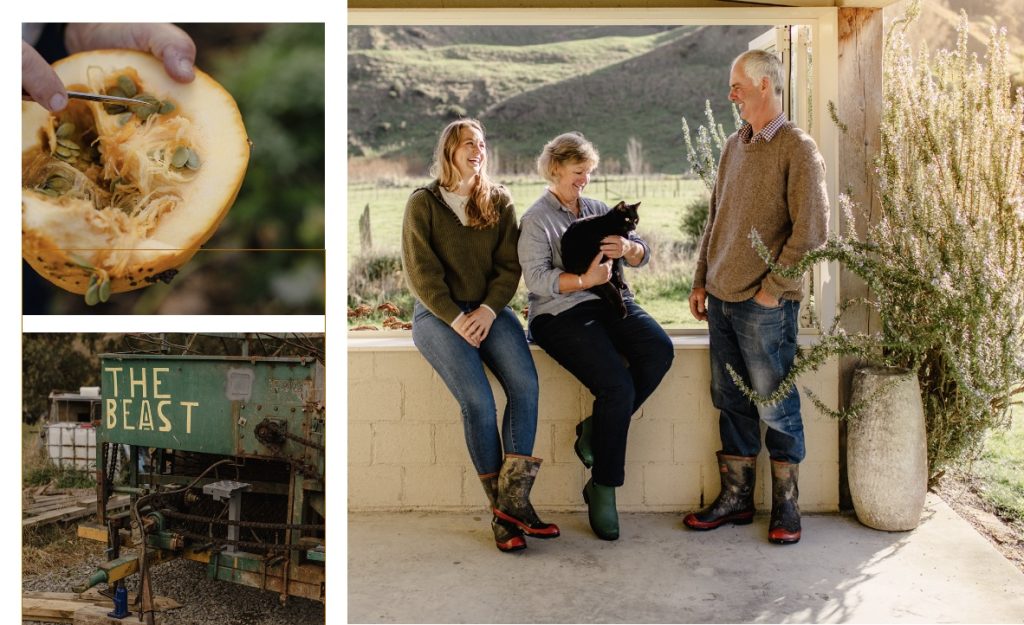
“That’s farming,” says Clare. “From the moment we put the seed in the ground, that first crop was a hell of a learning curve. With our second harvest, of autumn 2024, the pendulum had swung quite the other way and we had an amazingly successful crop,” says Clare. “The challenge was surviving the hard physical work required to get the crop out of the paddock, processed and ready to market. Grant admitted one day he”d rather be dagging lambs, and that”s the worst job in our farming calendar.”
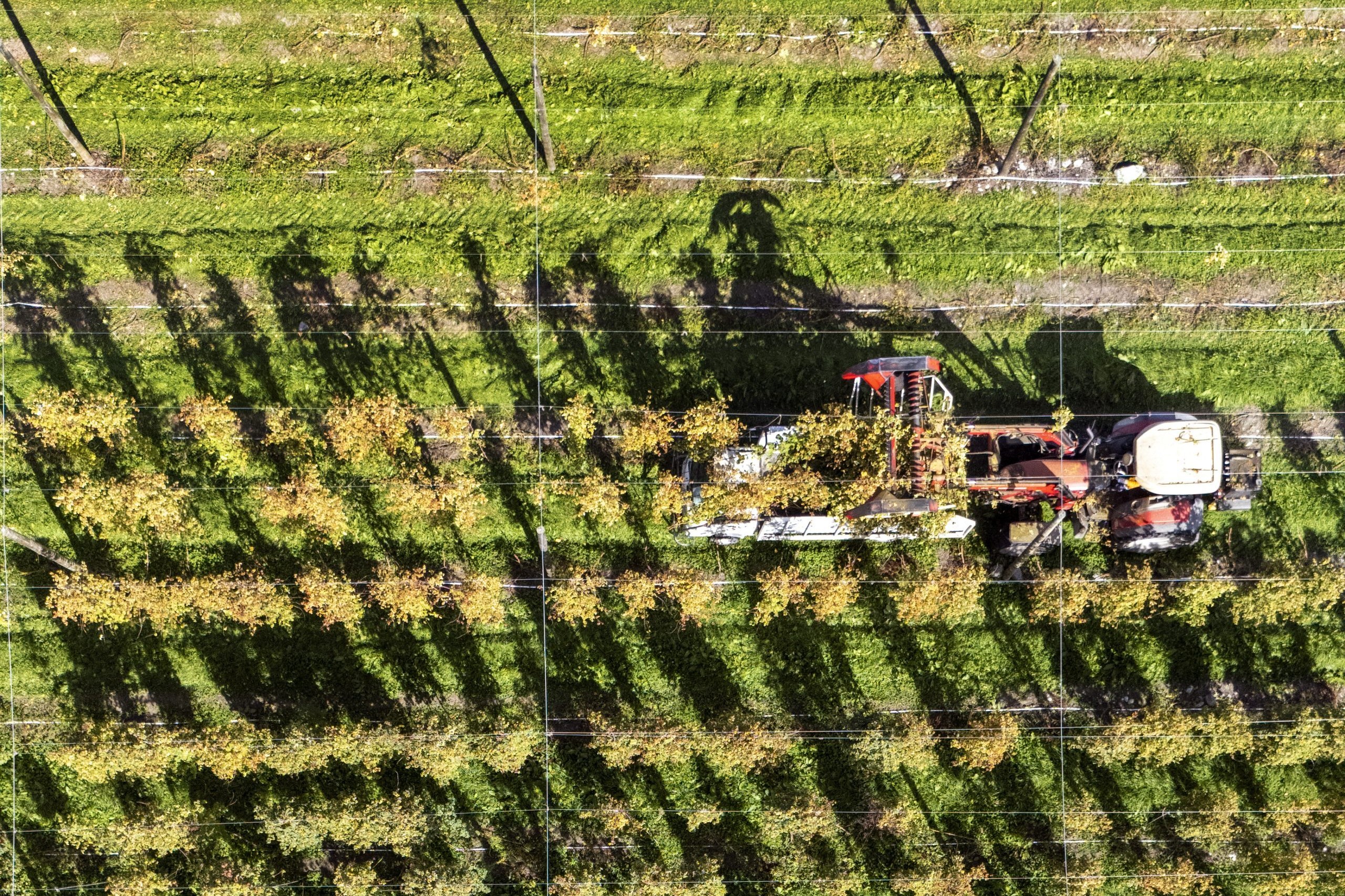
The dry warm summer of 2023–2024 saw 10 hectares of pumpkins ready to go under The Beast for harvest and each day, from the beginning of April until the end of May, the machine was towed across the pumpkin patch with its spiked roller feeding pumpkins into churning augers. These augers fill 100kg bins with sloshy wet seeds to be taken for washing, drying and grading. The shell and the flesh stay in the paddock and this is no loss as the flesh of Austrian hulless pumpkins is inedible to humans, though cows like it and it breaks down quickly into the soil.
With hindsight, Clare wonders if they were lucky their first crop was rather a washout. That small harvest gave them a chance to understand what was involved and learn the vagaries of the equipment such as The Beast and the seed grader.
Clare wonders how Grant kept all the balls in the air and is eternally grateful for the help they received; their daughter Annabelle came home for several months to help them through harvest, a neighbour did a month of tractor work, and a team of Fijian scrub cutters broke the back of the hand-hoeing.
As the hard work of harvest came to an end, Clare and Grant took stock. It had been a busy time, but they were overjoyed at the size of the harvest and the lovely taste and texture of the seeds and oil.
“Gone are my gardening days, and even housework,” laughs Clare. “At the end of the harvest, as we took stock, I felt about 100 years old yet with such positivity about the future. We love what we are doing. It is our baby and we want to be hands-on at this stage so we know every part of the process and every aspect of the business.”
AT A GLANCE
The Adkins’ farming operation
- 404 hectares inland from Whanganui, two-thirds in steep hill country
- 150 cattle
- 2,000 ewes
- 10 hectares of pumpkins sown
- 6 tonnes of dressed seed in 2024
Why pumpkin seeds?
“In Austria, where this particular seed originates, pumpkin seed oil is regarded and used in the same way as we use olive oil. It has characteristics of terroir and is judged with the same degree of competitiveness as olive oil is in other countries,” says Clare. “It is a special pumpkin variety and when the flesh is broken open the seeds are ready to be eaten, whereas the imported seeds have to be put through a mechanical or chemical process to release the seed from its hull.
“Our pumpkin seed oil has a low smoke point so is best used in dressings, over stir-fried vegetables or as a dip for bread. It has a lovely deep red colour. The flour, which is 52% protein and gluten-free can be used as a wheat flour substitute at a ratio of about one-third pumpkin seed flour to two-thirds wheat or a gluten-free flour. We use it in more rustic baking items such as scones, carrot cakes, muffins and chocolate zucchini cakes. And the seeds are delicious eaten straight out of the packet or roasted in tamari or soy.”