Performance above and below ground
Two Massey University PhD scholars, supported by the T.R. Ellett Agricultural Research Trust, are building a fuller picture of how New Zealand pasture systems work – one measuring what happens above the ground, the other what happens beneath it.Words Sarah Perriam-Lampp.
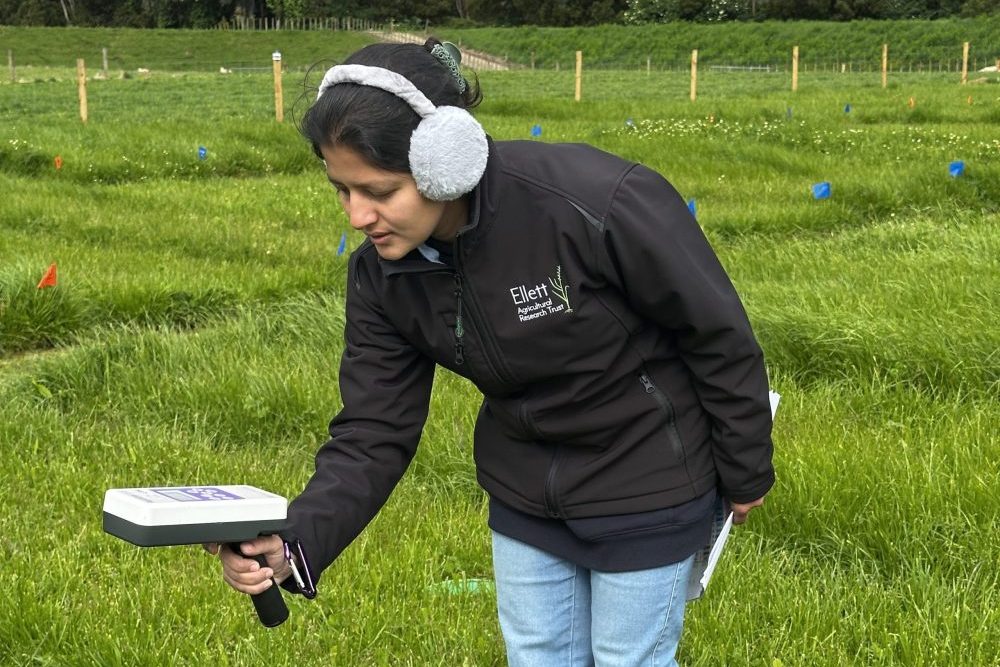
At Massey University, roots are being picked out of soil by hand, washed, then stored in bottles of water so they stay fresh long enough to scan. It is painstaking, unglamorous work, and it is answering a question most pasture research has left alone. Massey University PhD scholars, Pabodi Wijenayake and Charuka Chandrasekara, are working on the same pasture plant from opposite ends.
Pabodi and Charuka are supported by the T.R. Ellett Agricultural Research Trust and both work within the Whenua Haumanu programme, a seven-year research programme measuring the effects of contemporary and regenerative pastoral practices in New Zealand. Their projects are complementary by design. Charuka measures what happens above the ground. Pabodi measures what happens below it.
Pabodi is evaluating root growth and distribution in diverse and conventional pasture systems as she works towards her doctorate in Plant Science. “My project investigates how regenerative management practices influence root traits such as biomass, length, density and distribution, and how these affect soil health and ecosystem resilience,” she says. Roots drive nutrient uptake and pasture persistence, but they remain one of the least measured parts of a New Zealand pasture system.
The fieldwork is slow and physical. Soil cores are taken using ingrowth core tubes so the column stays intact and the layers are not mixed, which matters because roots from different depths have to be separated and measured accurately. Samples are washed at the Plant Growth Unit field laboratory, where roots are hand-picked from the remaining soil, held in labelled bottles of water, then scanned.
“Plant roots play a key role in farming but are often not given enough attention. By understanding how different farming methods affect roots, we can find better ways to improve soil health.” – Pabodi Wijenayake, Massey University
Alongside that destructive sampling, a specialist camera is inserted into minirhizotron (a non-destructive underground imaging system used by scientists to observe and monitor living plant roots in their natural soil environment) access tubes to photograph roots where they grow. Root development can then be tracked at different depths through the season without disturbing the soil, building a record over time rather than a single snapshot. The application is broad. A clearer picture of how management affects roots points to better soil health, more carbon stored in the soil and more efficient nutrient recycling, which Pabodi says is “especially helpful for making farming more sustainable and better prepared for climate change”.
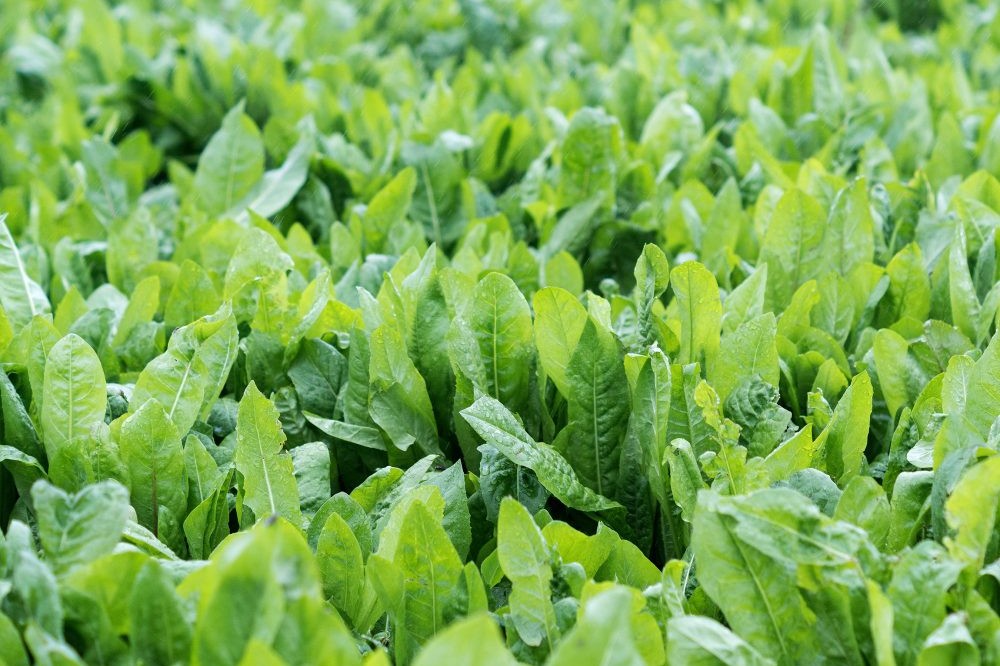
Charuka is working towards a doctorate in Plant Science. “I am focusing on understanding the morphological and physiological factors of diverse pasture species,” she says – the plant-level traits that determine how a mixed sward performs.
She uses several pieces of equipment to measure aspects of pasture growth, potentially giving farmers an additional means of evaluating and managing pasture systems more effectively.
The case for diverse pastures runs wider than drymatter.
They can reduce nitrogen leaching and greenhouse gas emissions and help hold a more continuous supply of forage through the year rather than concentrating growth into a narrow window.
Both scholars came to New Zealand from Sri Lanka. Pabodi’s interest grew out of plant biology, soil science and sustainable land use during her undergraduate study, deepened by research into soil and plant health at home.
Charuka came from an agricultural country that she says “has witnessed both the challenges and the potential of agriculture”. She was drawn here by the chance to work with New Zealand’s farming systems, which incorporate advanced technology, sustainable practices, and research-driven innovation.
Both intend to stay in the field. Pabodi hopes “to contribute to global efforts in promoting sustainable agriculture through research, policy development and extension”. Charuka wants to work as a researcher in dairy pasture management, focusing on sustainable production and improved livestock productivity”.
The Trust’s support extends beyond financial assistance, also providing workshops that help students communicate their research effectively with farmers and agricultural professionals, ensuring their work can make a practical difference on the ground.
Visit ellett.org.nz