More leaf, less stem
If you are wanting feed quality where it counts and an early maturity ahead of a dry summer, a new summer forage rape, bred for lamb and cattle finishing, could be the answer that lines up with your weaning schedule. Words Sarah Perriam-Lampp
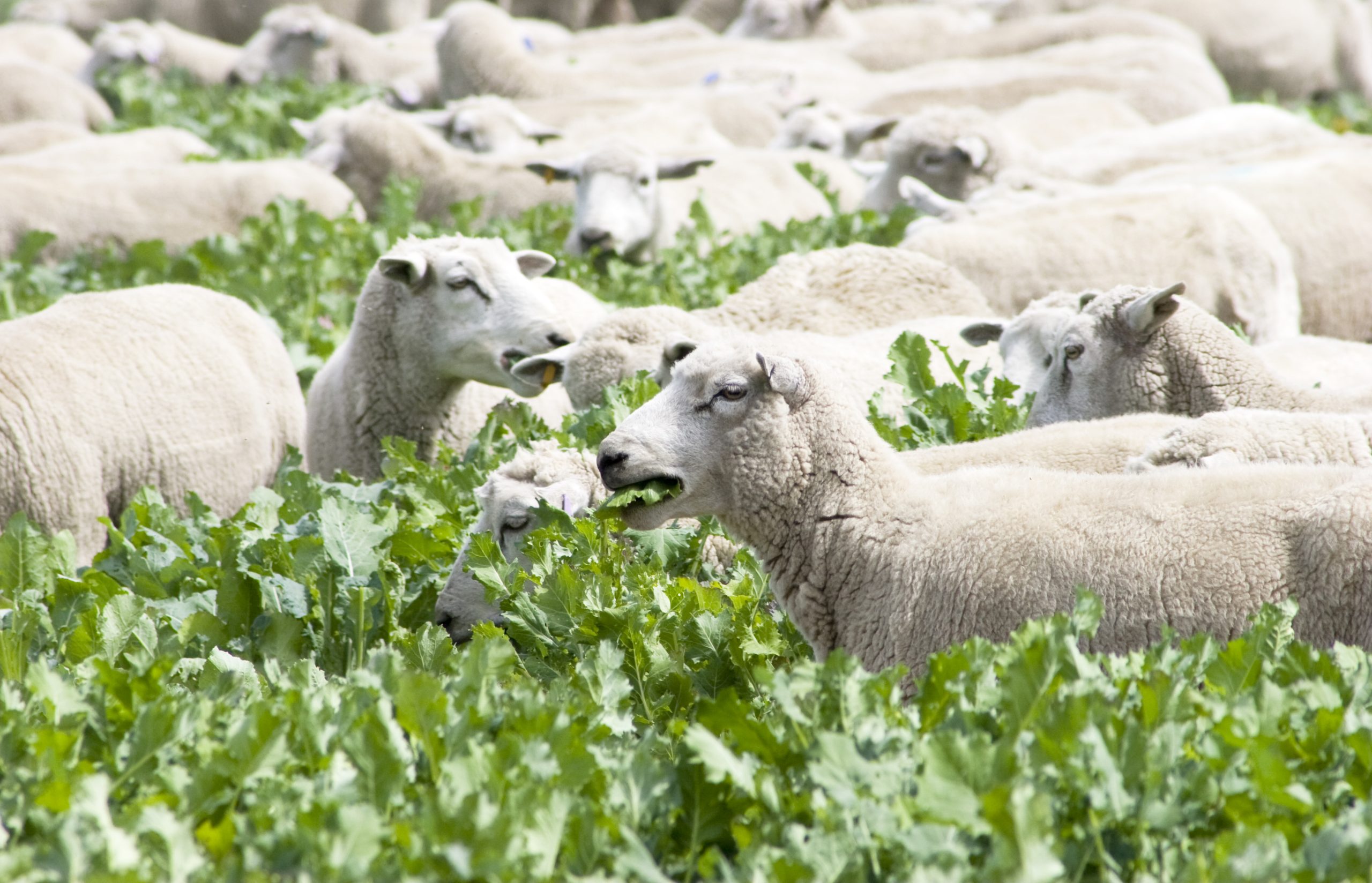
More than 15 years in the making, Reviva is the first release from Barenbrug’s brassica breeding programme – a summer rape bred here in New Zealand for hot, dry conditions. Just what sheep and beef farmers have been asking for.
“The thing about rape is it’s reliable. It handles the dry, the hot and the tough, and that’s why it’s one of the big feeds on the east coast.”
Barenbrug pasture specialist Graham Kerr says the company has sold and tested brassicas here for years but sourced most of its genetics offshore.
“Plant breeding is frustratingly slow if you do it thoroughly and brassicas are a difficult species to work with,” he says. “We’re excited. Reviva’s the first cab off the rank out of our own breeding programme, tested here for our own conditions.”
Balancing four traits
Graham says breeding starts by asking farmers what they need and then balancing traits, the same way a ram breeder might.”You might chase high fertility in a ram, but you’ve also got to chase conformation, mothering and hardiness on hill country. The job is balancing it all.”
Reliability and hardiness – The non-negotiable. Rape’s whole reputation is that it handles the dry, the hot and the tough, so anything new has to clear that bar first, and that’s a big part of why Graham says the testing took 15 years before going on the market.
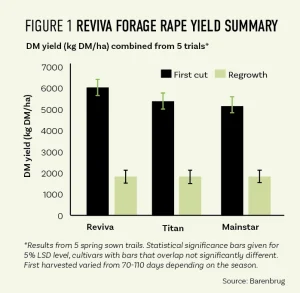
Yield – Reviva performed well in trials (see Figure 1), sitting very well against other top forage rapes. In his words, “It has been a very consistent performer”.
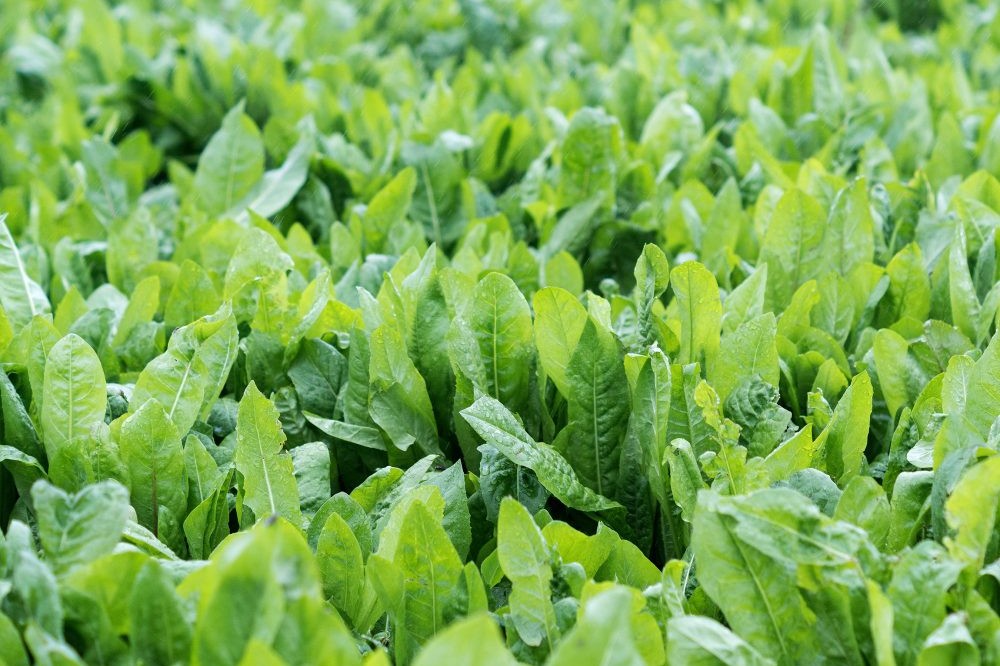
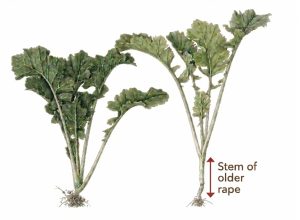
Feed quality via leafiness – Reviva shows its difference in the paddock. The stem in rape is fibrous and poor quality. More leaf is better for lamb growth, plus tidier grazing, better regrowth and less mess for the following crop or pasture.
Pest and disease tolerance – Resilience in the crop itself is also crucial, with Reviva having strong tolerance of fungal disease and resistance to aphids, which avoids pressure in a stressed crop during a hot summer.
The extra leaf coverage is the outstanding quality of Reviva. Graham says forage rapes vary widely in how much stem they carry, with some older lines carrying a lot or having been crossed with kales.
 “In rapes, stem is poorer quality and quite fibrous,” Graham says. “The leaf and the leaf petiole (the small stalk that connects a leaf blade to the main stem of a plant) are high quality, at more than 12MJ ME. If we want lambs to grow really well, we need that feed quality, and we don’t want stem.”
Less stem also means lambs graze the crop down more evenly, regrowth is tidier and a second grazing is easier. It pays off again at the other end, with fewer stems to work through when the paddock goes into the following crop.
“If we want lambs to grow really well, we need that feed quality, and we don’t want stem.” – Graham Kerr, Pasture specialist, Barenbrug
Sow to the date you need feed
Reviva is an early maturity rape, classed at 70-90 days, which puts an early October sowing in front of stock from mid-December.
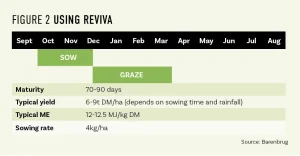 “Work out when you need the feed and subtract back,” Graham says. “If you’re weaning lambs at the beginning of December and you want rape available then, subtract 70 to 80 days and that’s your target planting day.”
Warm seasons with good rainfall bring maturity in at the early end of that range, cooler seasons at the tail. Graham states the usual discipline: control weeds and existing vegetation before you start, get soil fertility right and sow shallow into a consolidated seedbed. For pest control, he always recommends treated seed, but if pest numbers are high, insecticide too. For example, treated seed is fine where one or two springtail nip a seedling and die, but if 20 or 30 nip the seedling while they will all die the seedling is likely dead too. In this case, an insecticide spray is needed to reduce pest number, and the treated seed will handle the remainder.
Greasy cutworm is Graham’s key warning for this spring, following the worst season Barenbrug has seen last year which took out crops across many districts.
“The moths like to lay their eggs on bare soil, so cultivating a paddock draws them in from the surrounding pasture,” he says. “From the time you see that first cut damage, you might not have a crop 72 hours later.”
For more see barenbrug.co.nz/meet-reviva