Meat sector destined for private hands
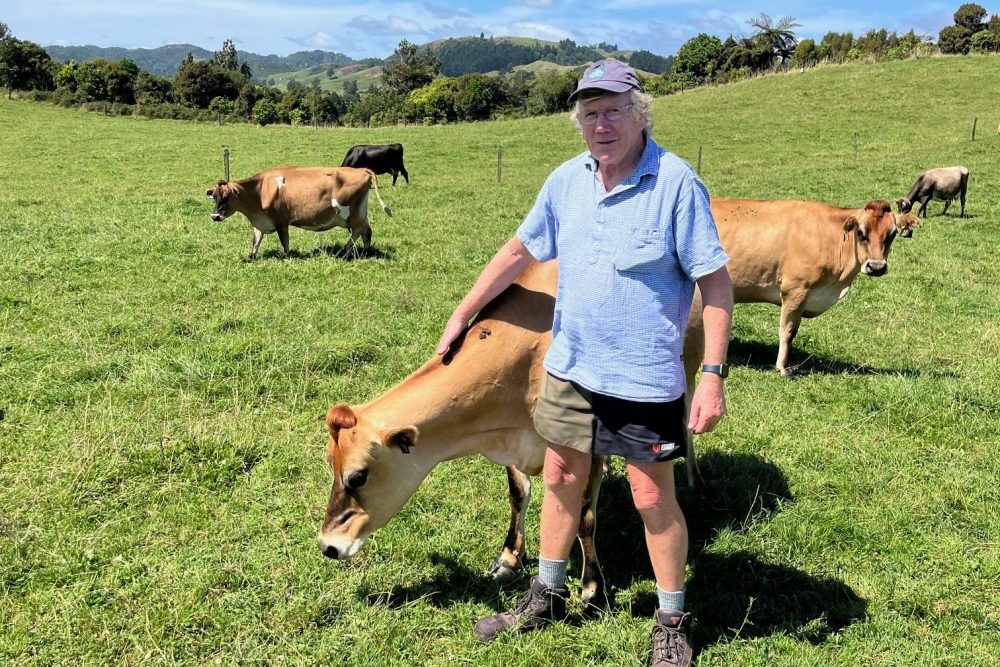
Southland farmer and former New Zealand Meat Board Chairman, Jeff Grant, says the days of farmer co-operatives dominating the meat industry in New Zealand are finished. Words Tony Leggett.
The nail in the coffin came late last year when Alliance shareholders voted overwhelmingly in favour of a takeover deal by Irish meat company, Dawn Meats.
Jeff got behind a last-minute bid to raise the $200 million-plus required to keep Alliance in farmer hands as a full co-operative. But in the end, it was too late to be taken seriously and 88% of farmer shareholders voted in support of the Dawn Meats deal.
He remains a believer in the co-operative model but says the combination of declining livestock numbers and plenty of slaughter capacity available from existing private companies leaves no room for a new farmer-owned business to gain a foothold.
“Most of the Alliance suppliers have probably forgotten why the original co-operative was formed back in the 1940s. It was to break the stranglehold the UK companies had on livestock for processing here in NZ,” he says.
“I don’t think the co-operative model is broken. I think a lot of the problems for Alliance stem from decisions made around the board table and those in the senior executive over the past few years.”
Grant and other suppliers are critical of Alliance’s heavy export focus on the Chinese market when competitors were diversifying away to other destinations.
Over-spending on new software that was supposed to help manage supply and not moving quickly enough to rationalise plant capacity were also factors in Alliance’s catastrophic shift in financial performance.
It posted a $73.6 million record profit before tax in its year to September 2022, but that was followed by massive losses totalling $193.7 million from its 2023 and 2024 years. Millions of dollars of farmer equity drained from the balance sheet and its bankers began to worry.
Jeff says Alliance’s heavy use of third-party traders, who were being paid significant premiums for stock, was also a bitter pill for loyal shareholders to swallow.
“They (Alliance) took the loyalty of their farmer shareholders for granted in my opinion, and they expected farmers to accept a less competitive schedule because it is a co-operative.
“It doesn’t matter what the structure is. What matters is how well it’s run.
“There are some excellent privately owned meat companies that are doing very well and so are their suppliers,” Jeff says.
Rural Communities Minister and Otago farmer, Mark Patterson, agrees that many Alliance shareholders were frustrated by Alliance’s use of third-party suppliers to fill widening gaps in throughput.
“If there is smoke and mirrors, it’s just corrosive for the relationship shareholders have with their co-operative,” Mark says.
“When Alliance was against the wall and had to go back to the same shareholders who were aggrieved, they really felt it. It felt like they hadn’t been interested in us for some time and now they needed us.”
To revive the financial performance and create comfort for its banking syndicate, Alliance’s board and chief executive launched a massive internal review of all aspects of the co-operative in the 18 months leading up to the eventual takeover by Dawn Meats.
An experienced farmer director, who served on the Alliance board for the year before the takeover was completed last December, says the transformation of the business by former chief executive Willie Wiese was “unbelievable”.
“I’ve never seen anything like it in all my years as a company or co-operative director. Willie led a massive overhaul of the entire business,” says Gray Baldwin, a Waikato dairy farm owner with decades of director experience in several large co-operatives and agribusinesses.
“What it shows is that even a co-operative can be transformed and still retain its co-operative principles.”
After two horror years of heavy losses, Alliance returned to profit in the year to September 2025, posting a $24.6 million net profit before tax.
“The lesson is that Willie showed what can be done in a co-operative when it really needs a reset. The problem for Alliance Group was it was too late to stop the need for outside capital.”
He says Willie negotiated strongly with Dawn Meats for the best deal possible for Alliance Group shareholders. At times, frustrations emerged during the negotiations with the new Irish investors, but the deal, which included a $40 million payment back to shareholders, was right for the time.
When he reflects on his brief time on the Alliance board, Gray says the co-operative failed to acknowledge the rapidly changing stock flow dynamics quickly enough. Gearing up its large processing plants in early 2025, with all the upfront costs for labour and operations in expectation of higher, drought-induced stock flows, ultimately cost the business dearly.
The closure of its Smithfield plant in 2024, at a cost of more than $50 million, signalled the board had recognised the need to reduce its slaughter capacity, but it was completed at a time when offshore markets weakened considerably and margins evaporated.
Gray says Alliance’s demise as a co-operative is an example of not being agile enough and ‘re-purposing’ its operations to reflect the evolving needs of shareholders.
In contrast, he says Livestock Improvement Corporation (LIC), of which he was a director from 2012 to 2022, has retained its big majority of the dairy genetics market and is continuing to evolve its business to include other services which its shareholders require to farm in a modern world.
“Repurposing of a co-op doesn’t have to be a big, visible, management and governance soul-searching exercise, and making profound announcements.”
LIC started by helping farmers get together to improve the genetic gain in their cow herds.
“There’s still plenty of that going on, but the real action is data. LIC makes a shed load more money now selling information services, software subscriptions, Genemark DNA, diagnostic lab services and most importantly, connections to its data.”
“They (Alliance) took the loyalty of their farmer shareholders for granted in my opinion, and they expected farmers to accept a less competitive schedule because it is a co-operative.” – Jeff Grant, Alliance Group supplier
“They’ve built an ecosystem like Xero which makes its money by charging a poultice for banks and accountancy firms to connect with the raw customer data.”
“LIC is one co-op that will definitely be around in 50 years.”
Gray favours strategy development between management and board directors, regardless of whether it is a co-operative or corporate.
“There will be plenty of people who say board directors shouldn’t be involved in strategy but I’ve always believed that senior management should be discussing strategy with board members too.
“The executive staff see the challenges every day, they are at the coal face of the business, meeting clients, selling products and getting feedback.”
Board members need to listen to what the executive team is saying, ask for recommendations and then agree on approving the strategy.
Too often, directors, particularly less experienced farmer directors, fail to make a call quickly enough and challenges can deepen because of that.
“Directors need to have the courage to back the executive team where the recommendations or changes make good sense and it’s been robustly debated.”
Gray says the fertiliser sector is another example of co-operatives pivoting from a total focus on what they were originally formed to do for shareholders.
Access to reliable supplies of superphosphate at competitive prices was the founding principle behind what is now New Zealand’s two dominant fertiliser co-operatives.
“Both developed from the amalgamation of several smaller regional based fertiliser co-operatives that formed in the sixties when fertiliser supplies were low and farmers were frustrated by lack of consistent supply,” Gray says.
“Supply was ‘it’ back in the sixties when the likes of BOP Fertiliser and Southfert were founded,” he says.
“Cockies couldn’t get superphosphate and they got annoyed about it, so they formed their own co-ops to get more certainty of supply.
“Now the whole world is awash with fertiliser, there is more competition for market share in NZ than ever, and all of a sudden it’s not about supply so much.”
However, Gray says both co-ops have broadened their services to meet the changing business dynamics. They offer advice on environmental compliance and both offer a range of other farm inputs like seed, agrichemicals, feeds and a big technology product range.
“Shareholders don’t care so much about slaughter capacity any longer. They have other priorities.” – Gray Baldwin, Former agribusiness director
It is a similar story in the meat industry where co-operatives grew out of frustration over lack of slaughter space to handle sheep during droughts.
“The meat co-ops were really a capacity play. But that’s changed big time now.
“Shareholders don’t care so much about slaughter capacity any longer. They have other priorities.”
Gray says the reason the two fertiliser co-operatives are still dominant in NZ is because of the large investments made in infrastructure to store fertiliser across the country.
“Of course, that was an investment the two co-ops made using farmers’ money. But now, their property portfolios are massive and that offers some protection against new competitors entering the market.”
“Fonterra is the same. It has a massive investment in stainless steel at strategic sites around the country. Ask any competitor trying to enter the dairy market about how much it costs to build a new site,” he says.