Long-term pasture persistence trial
A 10-year Lincoln University long-term pasture persistence trial (PPT), looking at different grass species, predominantly perennial ryegrass, is unique in its duration and ability to evaluate the performance of a range of grass cultivars.Words Sarah Perriam-Lampp.
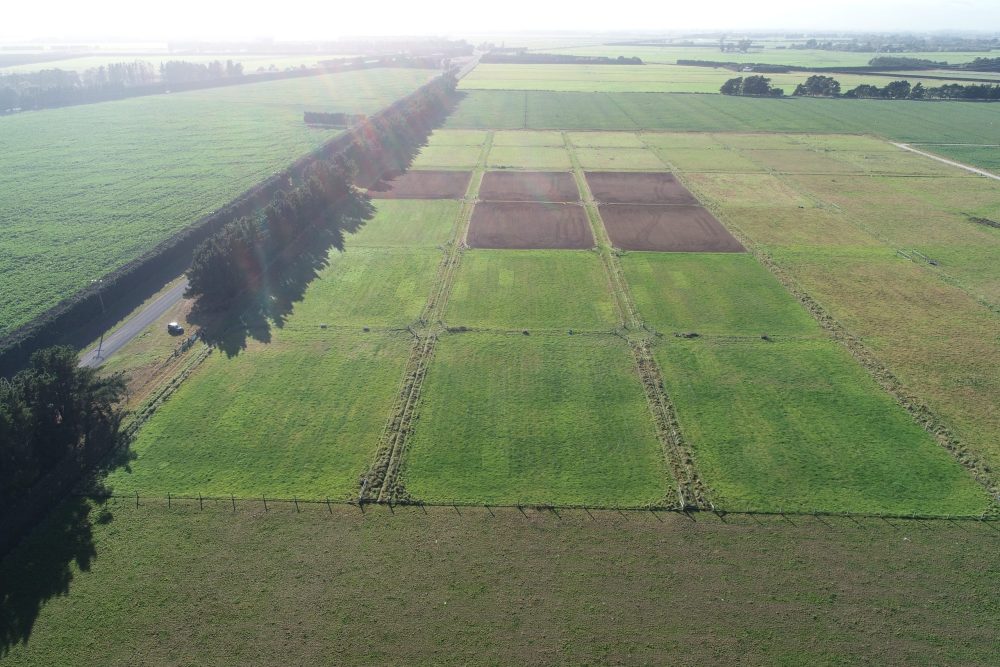
Lincoln University is home to a 10-year study looking at different grass species, predominantly perennial ryegrass. This long-term pasture persistence trial (LPPT) is unique in its duration and ability to evaluate the performance of a range of grass cultivars. The trial involves a series of sequential annual sowings, aimed at discovering which grass cultivar will stand the test of time and why. With a changing climate it is important that farmers understand what is affecting pasture persistence. Now in its eleventh year, the LPPT is unique in its duration and ability to evaluate the performance of a range of grass cultivars. The trial is a joint programme between Lincoln University and Bioeconomy Science Institute (formerly AgResearch) and received funding from the T.R. Ellett Agricultural Research Trust.
Lincoln University’s, Dr Tom Maxwell, is lead academic at the South Island Ashley Dene site in Canterbury. He is supported by Dr Gerald Cosgrove, recently retired Senior Scientist at AgResearch Grasslands in Palmerston North, who co-ordinated the pasture persistence program for the North and South Islands and maintains contact with the trial in his retirement. According to Tom, “Conclusions so far are that there is both a cultivar effect on persistence and an establishment year effect on persistence. The year in which a pasture was established (climatic conditions leading up to sowing and following sowing during pasture seedling establishment) has just as strong an effect on which cultivar is performing the best, and its subsequent persistence. Often, we are limited by time and funding, so to get 10 years of data to base our conclusions on, that is very powerful.”
This autumn, a 0.3 ha paddock will be sown with eight cultivars of perennial ryegrass, one of cocksfoot and one of tall fescue. This has been repeated annually since the trial began in 2015, all grown on the same farmlet. Measurements are taken twice-a-year. in spring and autumn, to evaluate what is happening. Specific persistence traits are measured, including dry matter production (yield), botanical composition, tiller density and basal cover, with a focus on the sown grass performance and botanical composition of the sward.
“It’s designed to look at the long-term performance of a spectrum of grass cultivars on the market,” Tom explains. “Each grass has a monoculture patch of 12 m x 4 m, all grown next to each other.” Originally, there was a sister trial in the North Island at a site at Ruakura, although this has unfortunately ended recently due to a change in land use, making the South Island site even more valuable. Both sites used the same design and cultivars, the difference being the South Island site is grazed by sheep, while dairy heifers grazed the Waikato site.
In his role, Tom organises and takes all measurements from the site, collecting and analysing the data with the help of Bachelor of Agricultural Science Honours students, most recently Emma Gordon and Kate Crawford, and Field Technician, Bela Jordan. Funding from the Ellett Trust has enabled Tom to pay for this help and also equipment to maintain the running and execution of the research, as well as preparing new paddocks and sowing the seed (the seed itself is gifted by industry).
“Often we are limited by time and funding, so to get 10 years of data to base our conclusions on is very powerful. – Dr Tom Maxwell, Lead academic, Lincoln University’s Ashley Dene site
“If we didn’t have the Trust funding we would not be able to collect the measurements needed to assess persistence, and I would need to find funding elsewhere.” To date, they have published four papers from the LPPT sites.
“The aspirational goal, the ultimate aim, is to provide a strategy for farmers to allow them to manage for persistence based on the evidence from this long-term trial.”
Emma and Kate’s work has shown that persistence is an outcome driven by the species shape and structure, establishment success and compatibility with regional conditions. Both students looked at the influence of increasing pasture age on pasture yield, botanical composition and tiller density, comparing persistence of pasture ranging from 6 months to 10 years old.
Emma’s study reinforced the suitability of cocksfoot (Savvy) for long-term persistence on stony Canterbury soils and highlighted the limited performance of tall fescue under these conditions. Kate’s study similarly found that cocksfoot performed the best of all cultivars while tall fescue demonstrated poor persistence.
Botanical composition and tiller density were key determinants of pasture persistence at different ages. The research provides information on species performance in Canterbury’s environment, the importance of establishment on pasture longevity and cultivar selection.
“The Trust is contributing to the acquisition and production of a long-term dataset, which is quite a unique thing. It will allow us to make much more nuanced and confident recommendations to manage for pasture persistence in the future.”
The trial is a joint programme between Lincoln University and Bioeconomy Science Institute (formerly AgResearch) and received funding from the T.R. Ellett Agricultural Research Trust ellett.org.nz/pasture-persistence-trial. To see the data sets from the trial visit ellett.org.nz/agyields-database.