Little habits build big equity
From employees to farm owners, a South Canterbury couple say their biggest return on investment has come from great relationships and a dedicated approach to what they call financial hygiene. Words Anne Lee, Photos Holly Lee.

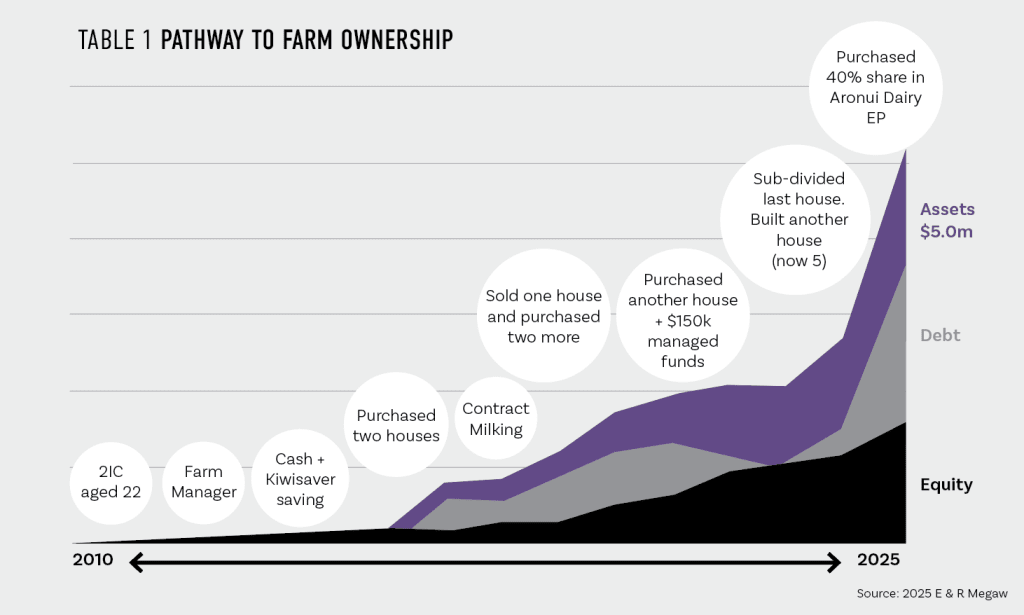
When Eldon and Roseanne Megaw put up a graph to explain their equity growth trajectory, they don’t just see the numbers. For them, the exponential rise on the graph tells a story. It reflects character development, resilience and lots of hard lessons. It speaks to diversification, efficiency, self-belief and their commitment to building good financial habits.But it reminds them too of the power of relationships, the people who have walked alongside them on their journey to farm ownership – the farm owners who gave them a chance as contract milkers and then as partners in farm ownership, the professional advisors and the friends and family who cheered them on, challenged their thinking and gave them moral support.
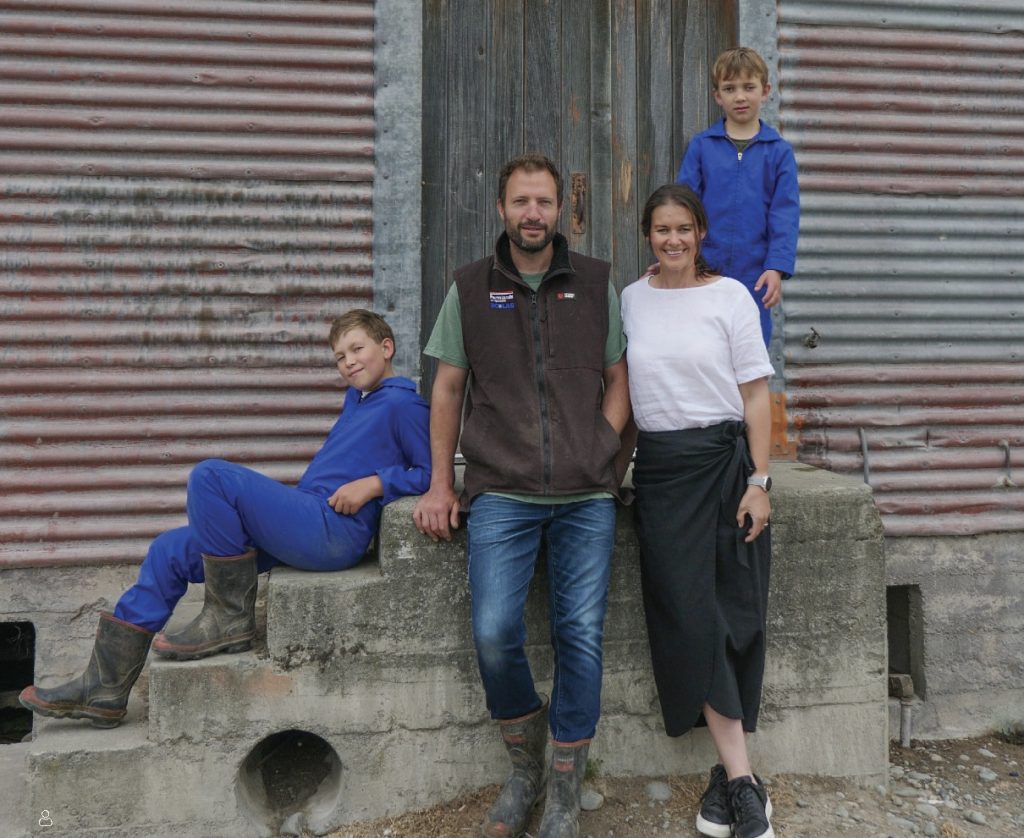
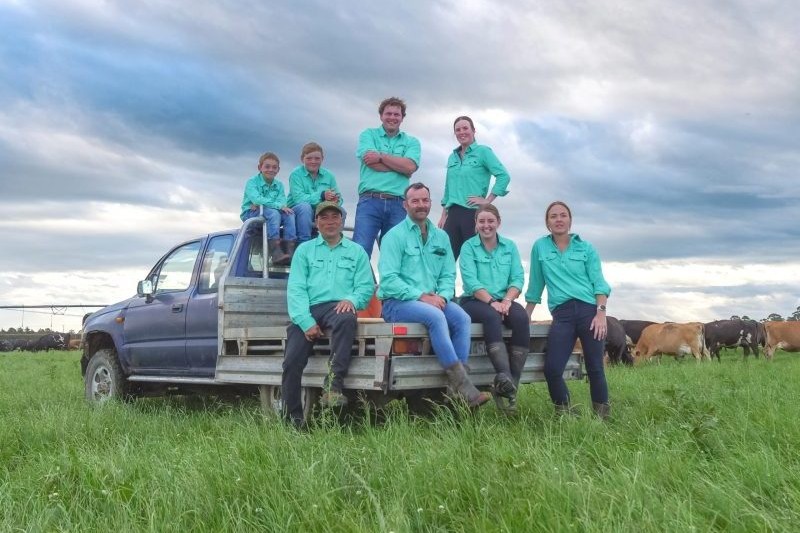
Over the past 15 years they’ve achieved year on year equity growth of 35% and last season they realised a major goal – becoming farm owners with a 37% equity stake in a 650-cow property directly across the road from the farm they’ve been contract milking for the past seven years.
The owners of that contract milking farm – Aaron and Frances Coles and Brendan and Katya Caird – went from employers to business partners with the purchase of the 650-cow, Aronui, at the coastal end of Rangitata Island, South Canterbury.
It was an opportunity Eldon and Rose didn’t expect but it was one they were primed for.
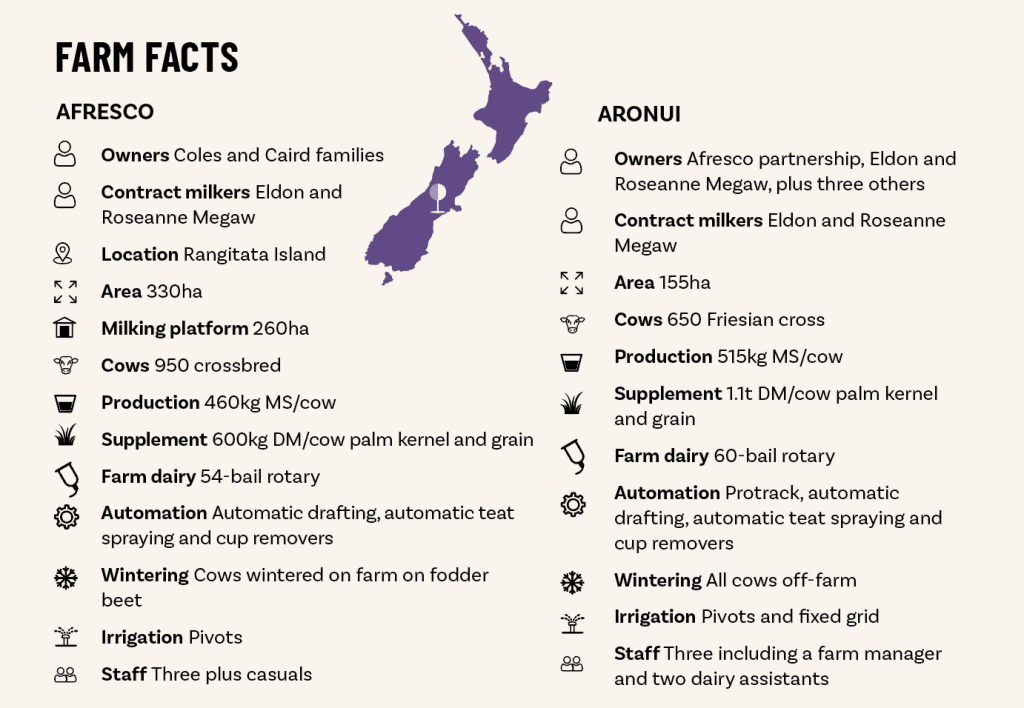
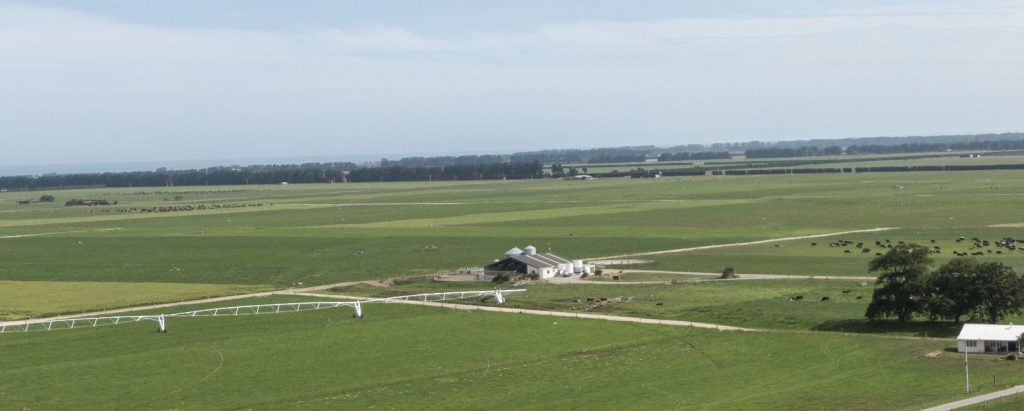
They contract milk Aronui farm for the equity partnership which also includes three other small-scale equity partners. They have continued their contract milking job on the neighbouring farm, Afresco, where they milk 950 cows.
“We’d always been savers and investors not borrowers, so we hadn’t had those conversations with the bank before and we were quite surprised to understand what was possible.” – Eldon Megaw, Canterbury
Contract milking is their main game, it’s what produces the cashflow that enables a continued upward trajectory in equity but it’s not the only game in town and it’s not where they started.
Eldon is a qualified builder and son of Southland dairy farmers Alistair and Josanne Megaw. Rose is a qualified teacher and also had a dairying childhood. Her parents Kevin and Diane Gardner were 50/50 sharemilkers in Eastern Bay of Plenty before they headed south.
It was after returning from overseas and meeting Rose that Eldon reconsidered dairy farming as an option and together they decided it offered the best vehicle to achieve their financial goals. After three years as a 2IC and then five years managing, which included two large-scale jobs, they made the step up to contract milking.
But their equity growth story isn’t confined to behind a farm gate. They had been good savers, putting away money from their dairy jobs. But they didn’t really know where to put their money to get it working for them.
It was a chance conversation with a friend who shared he had just bought a house that piqued their interest.
“We thought maybe that’s something we could do as well. Being an ex-builder, it appealed to us and in 2017 we ended up buying two houses in Christchurch – both low maintenance,” Eldon says.
The following year they started the South Canterbury contract milking job. At that stage the owners had two properties and the couple signed up to run both.
They had set aspirational financial goals and ensuring the positions had scale and could produce the cashflow they were aiming for was imperative.
They’d done plenty of homework as they looked at various contract milking opportunities and say it’s a must to ensure you fully understand the details of the contract.
“Get good advice and make sure the settings are right in terms of what costs you’re paying for. It’s not just about the top line rate you’re being paid per kilogram of milksolids (MS), it’s about the profit you’re making,” Rose says.
Diversification
The couple have continued to use property investment as the major channel for the proceeds from dairying. They’ve bought a mix of both low maintenance houses and homes that required a little work – properties they could easily add value to through renovation and landscaping. They’ve also subdivided sections and completed a new build on one in Ashburton, hiring a local builder and managing the project themselves.
They now have seven self-managed rental properties and use an app, MyRent, to track expenses, rents, manage bonds, schedule inspections, track the maintenance programmes and communicate with tenants.
“It’s all in one place and has made it a lot easier to scale up our property management,” Rose says.
They favour having a diversified portfolio of investments and have put money into managed funds, Kiwisaver and Crypto currency.
But at the heart of all this is their contract milking business.
“That’s what underpins it all and makes it possible to not only finance it but give us the flexibility to invest both inside and outside the farm gate – it’s really the driver of equity,” Rose says.
“Focus on growing wealth, not just farm ownership, even if that’s your ultimate goal, because getting to that goal may take some flexibility in terms of the pathway you take,” she says.
The pair had been thinking about what their next opportunity for equity growth could be when the farm across the road came up for sale. It was unexpected, but after a few conversations with their like-minded owners, the excitement grew, ideas turned into plans and they began the process of talking to the bank to see what they could bring to the table for an equity partnership.
“We thought we’d have to sell the houses to make it work but when we talked to the bank and we went through our assets and equity that wasn’t the case.
“We’d always been savers and investors not borrowers, so we hadn’t had those conversations with the bank before and we were quite surprised to understand what was possible.
“I’d definitely advise having those conversations early on so you know what they expect and what you’re able to do,” Eldon says.
Having partners who were experienced in setting up equity partnerships made the process of setting up agreements such as the shareholders agreement and exit plans easier. But it was the strong relationship they’d built up with their owners through the years of contract milking – knowing they were aligned when it came to personal values, that gave them confidence the partnership and investment was the right leap to take.
The couple talked about some of the key factors for success they’d learned in their progressions pathway and equity growth journey at last year’s South Island Dairy Event (SIDE).
“Initially we thought our presentation would be full of numbers and budgets but what’s really driven our equity growth has come down to a set of habits, mindset and what we call good financial hygiene,” Rose says.
“Habits determine your character. If you’re going to achieve excellence in big things, you develop the habit in little matters.” – Rose Megaw, Canterbury
Relationships
“Don’t underestimate the power of building your network and great relationships, the return on that investment can be in the millions,” Eldon says.
“I think the most practical way to do this is to really value the people you work for and work with. When you move on from a job, avoid burning bridges, keep in contact with your old employers and your old colleagues.
“How you conduct yourself in your current role, is how others assume you will conduct yourself with greater responsibility and opportunity. It’s about your reputation. So be someone that people want to bring along for the ride.
“Even as a farm assistant, I think you have a huge opportunity to set yourself up for success just by, for instance, how you look after your bike or the house you live in on-farm. It gives a potential equity partner, or someone who has a potential to help you grow equity, an idea of how you might look after a much bigger asset,” Rose says.
Mutual respect is a key part of a good relationship and as contract milkers they say you have to remember that while you should treat the farm as your own, it isn’t, and your owners have every right to make calls on how they want their farm run.
“Think for yourself but a bit of humility can go a long way too,” they say.
Efficiency and detail
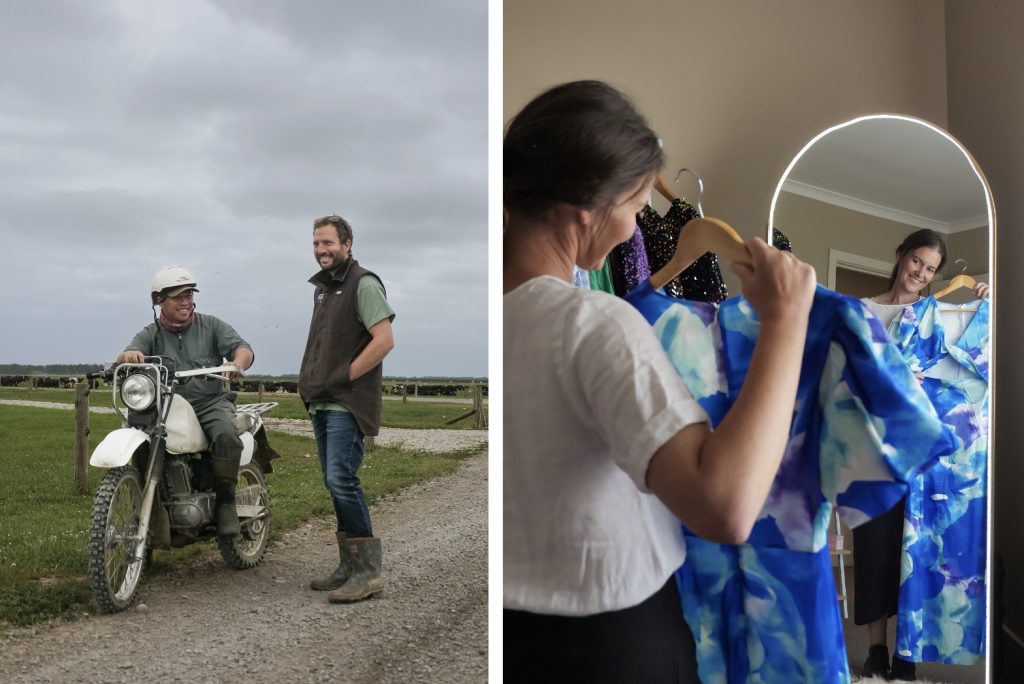
A quote by American basketball coach, John Wooden, “Little things make big things happen,” sums up the couple’s ethos perfectly.
It’s about realising that little things add up over time, whether that’s in planning the trip to town so you’re not heading there for one thing three times a week, or lining up a few jobs with the tractor so they can all be done in one hit.
“Utilise reps and vets who deliver products to the farm, as all these things save fuel, wear and tear on vehicles, time and money,” Eldon says.
“Those little things all add up. They become the holes in the bucket. It’s not about being so tight that you can’t enjoy life, but it’s just being mindful of them.
“Habits determine your character. If you’re going to achieve excellence in big things, you develop the habit in little matters. The character and the work ethic the disciplines build within you will pay in the future,” Rose says.
“But you have to work out what the important little things are so you’re not spending huge amounts of time on things that won’t actually move you forward,” she adds.
“Take time to research and look around for good deals and don’t be afraid to ask for a better price.
“Having a line-by-line focus on your contract milking budget is important, particularly in the first few years, but in time you’ll develop a good understanding of what each cost should be,” she says.
Eldon services all the motorbikes for instance, but they’ve established that’s a worthwhile use of his time given its flow on effects to how staff treat the bikes. It’s not just about saving on the servicing cost itself.
Maintenance schedules are one of the documents kept on Google Drive that staff have access to. They’re working documents and everyone knows where to find templates, plans and schedules.
“They know when their bike is due for a service for instance and drop it off here to me and once I’m finished I update the doc with what I’ve done,” Eldon says.
It’s that level of detail that ensures good communication and also builds a level of discipline too.
One of the documents is titled “The Megaw Dairies Way” and outlines the couple’s values and approaches to a range of on-farm activities so standards and expectations are clearly outlined.
“One of the things we love and want to do is lift up our people too. We have great relationships with the people who have helped us get here and we want to be able to do the same with others,” Rose says.
“To get to where you want to go, be stubborn about your goals, but flexible about your methods.” – Eldon Megaw, Canterbury
Flexibility and open mindedness
“To get to where you want to go, be stubborn about your goals, but flexible about your methods,” Eldon says.
For them. that’s meant being flexible about how they’ve grown their equity through a diversified off-farm portfolio of houses and investments.
You can progress in the dairy industry by investing outside of it, but understand what the upsides and downsides are.
“It’s vital that you choose those opportunities wisely. Choose things that allow you to keep focusing on your contract milking business because that’s what’s driving cashflow and enabling you to expand your wealth through other avenues,” Rose says.
They’ve looked for investments that have been hands-off, such as managed funds, or low input, such as low maintenance properties.
Self-belief and self-worth
“Upskill, learn and be open to feedback because that’s how you become even better,” the pair say.
“Invest in great advice but be clear about what you want from the person you’re seeking advice from and make sure both parties are on the same page,” Rose says.
“Believe in your skills and believe you’ll get there. Have patience, especially at the start when equity growth is slow, coming off a low base.
Motivational speaker and sales coach Zig Ziglar’s quote, “Success occurs when opportunity meets preparation,” is a great summary of the couple’s story, Rose says.
“It hasn’t been about luck and it hasn’t been about being handed everything on a silver platter – it’s been about people and it’s been about plugging up little holes in the bucket, taking care of that one percent and keeping an open mind so that when opportunity has come our way, even if it has looked slightly different to what we had envisioned, we’ve been ready to grab it with both hands and make the very best of it,” she says.
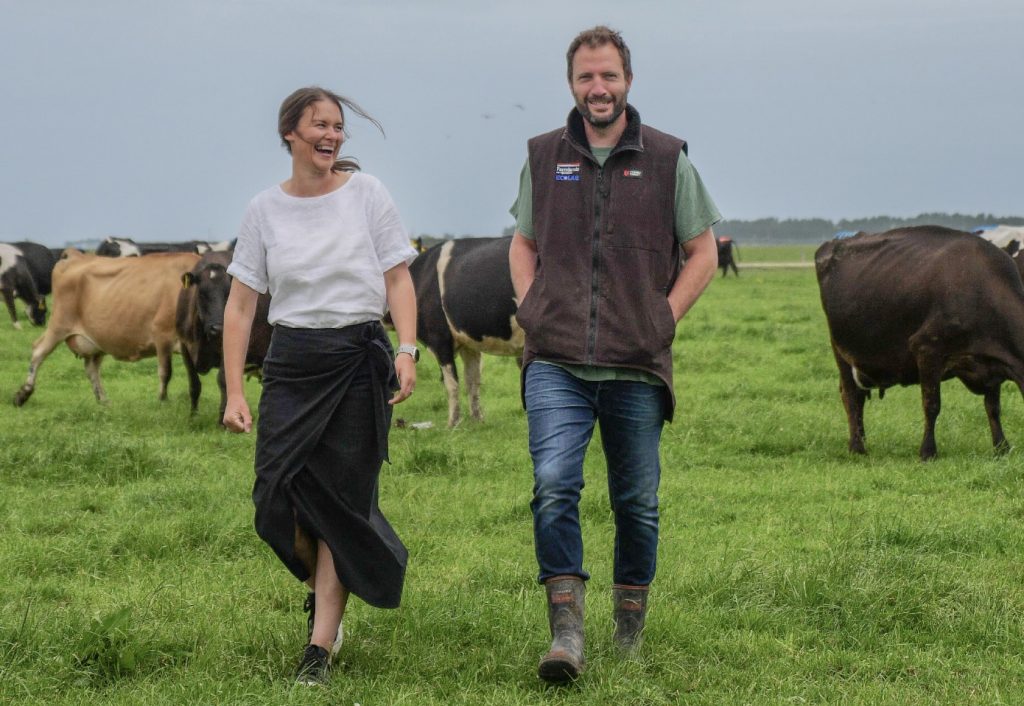
Eldon and Rose’s cornerstones for success
- Relationships
- Efficiency and detail
- Flexibility and open mindedness
- Self-belief and self-worth