In search of the holy grail
Tools available to farmers to help reduce Greenhouse Gas emissions are thin on the ground currently, but AgriZeroNZ is doubling down on its efforts to deliver the holy grail – a methane vaccine – with its recent investment in US start-up ArkeaBio. Words Rebecca Greaves.

Listen on the Country-Wide Podcast:
AgriZeroNZ is ramping up its efforts to deliver tools to help New Zealand farmers reduce emissions, with two significant investments in overseas companies chasing a methane vaccine and low emissions farm pasture.
A public-private joint venture, AgriZeroNZ aims to provide two to three widely available, affordable tools to help farmers across the primary sectors cut emissions by 30% by 2030.
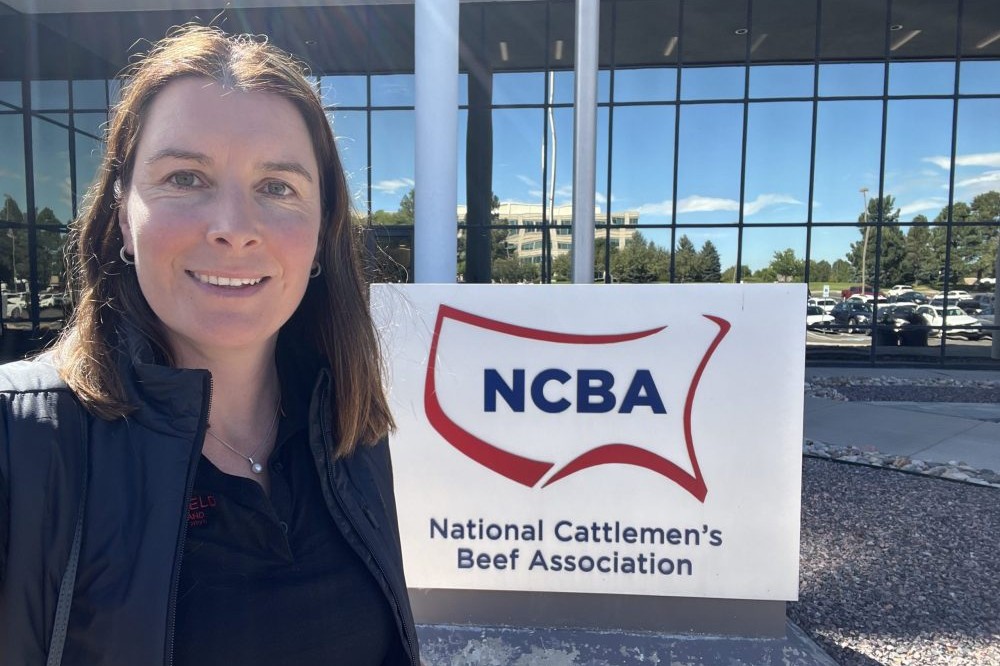
It recently announced a $9.9 million investment to accelerate ArkeaBio’s development of a methane vaccine for ruminant animals, including cows, sheep and deer, with an initial focus on cattle, and a $5 million investment in BioLumic, an agriculture biotech company utilising ultraviolet (UV) light to develop a low emissions farm pasture with increased productivity gains.
These are just two of a portfolio of tech investments the JV has made in its pursuit of emissions reductions. Other investments include funding for a methane inhibiting bolus, novel probiotics, the New Zealand research to develop a methane vaccine and construction of a greenhouse gas testing facility.
Chief executive Wayne McNee, who has been with AgriZeroNZ from the start and has a wealth of experience at the helm of primary industry organisations, says the goal is to not just cut emissions, but to deliver efficiencies for farmers.
McNee says the JV needed to make some bold moves if it is to deliver on its ambition to reduce emissions by 30% by 2030, which would require tools in the hands of farmers by 2026/27 to enable widespread availability by 2030.
AgriZeroNZ has a pot of $183 million to spend, which includes its operating costs of about $5 million per year. “The key thing we bring, aside from cash, is we are a strategic investor. We’re getting a commitment from these companies to bring the tools to New Zealand, to do the necessary research to be approved by the regulator and to work with them to get the product into the market,” McNee explains.
“These are not our companies, but we’re looking to help identify distributors and working closely with the Ministry for Primary Industries (MPI) on the regulatory framework, which needs streamlining. No one has applied yet in New Zealand for a methane inhibiting tool.”
With the tech investments spread across dairy, beef, sheep and deer, a crucial piece of the puzzle is gaining the approval needed and getting tools into farmers’ hands. This also covers whatever the incentive is to implement the tools, once available. “What will farmers need to take up these tools, and who will pay for it?”
He understands there is some reluctance from farmers, who see these tools as another cost, but equally there is excitement amongst farmers who can see value. Part of their work is speaking to farmer groups who would like to be early adopters when the tools do come to market. McNee points out that some of these tools will also deliver efficiencies onfarm, which may make them more attractive.
He acknowledges that for sheep farmers, in particular, times are extremely tough and profitability is challenged. “When we start talking about adding any cost it’s natural for farmers to ask what’s in it for them.” He does see the mindset changing and from AgriZeroNZ’s perspective, it’s their job to make those tools available. Ultimately, it’s up to farmers to choose to take them up, or not.
“There’s a range of views from farmers on methane mitigation. Our shareholders include major processors and banks. The market pull for these tools is massive. But there are certainly some farmers out there who don’t see the need for the work.”
Despite this, McNee believes it is important for New Zealand to play its part and reduce emissions. There is a desire from consumers for us to demonstrate we are taking steps in this space. “The likes of McDonalds, Sainsburys or Tesco all have targets they have set and they all want to see emissions reducing. At the moment, we are in a leading position in terms of our emissions efficiency, but others are catching up and will go past us.”
Trade and market access are another consideration. Free Trade Agreements have obligations associated with them and McNee says this could an opportunity but also a barrier, if they require certain emissions reductions and we cannot meet them. “MFAT are well aware of this. It’s a risk if we are not seen to be taking action, which we are. I think that’s been recognised and respected.”
AgriZeroNZ has invested in the only two vaccine programmes in the world, the New Zealand programme and ArkeaBio. In an extensive farming system, a methane vaccine is the easiest solution, he says. In small amounts, there is no concern about residue in milk or meat and a vaccine that only needs to be administered every six months, or once a year, to deliver a 20% or more reduction in emissions would be an excellent result.
“We’re still a way from market, but we want a range of tools across farming systems. Equitable access is what we talk about.”
He points to Dr Harry Clark, chief scientist at the New Zealand Agricultural Greenhouse Gas Research Centre, which has co-funded the New Zealand research since 2010, who was recently quoted saying a vaccine could be available within five years.
McNee believes this is a realistic possibility within the two programmes. “ArkeaBio was only formed three years ago to find something that works in extensive grazing systems, like Africa and South America, to make a difference worldwide. We bring insight into the practical application.”
“I think this can be an opportunity. We are here to deliver tools to help farmers reduce emissions and also improve the efficiency of their farms. We don’t want to get rid of animals, we want to see farmers maintain and improve productivity and profitability.” – Wayne McNee, AgriZeroNZ chief executive.
As well as ArkeaBio, they are working closely with the team at AgResearch to accelerate the research they are undertaking, which includes plans to inject a significant increase in funding to further boost that work.
For McNee, who grew up on a farm in Oamaru, reducing emissions is a challenging problem for New Zealand due to the nature of our farming systems, especially when compared with the other markets we compete with.
The chance to make a real contribution in this space is something he is excited about.
“We wouldn’t exist if this was easy. It would be great to look back and see we have helped New Zealand farmers, and farmers worldwide, deal with this difficult issue and, hopefully, made a real difference to the climate.
“I think this can be an opportunity. We are here to deliver tools to help farmers reduce emissions and also improve the efficiency of their farms. We don’t want to get rid of animals, we want to see farmers maintain and improve productivity and profitability.”
What is AgriZeroNZ?
AgriZeroNZ is a world-first public-private joint venture focused on helping farmers cut emissions while maintaining their competitive edge. Established on 1 February 2023, the JV is half owned by the New Zealand government through the Ministry for Primary Industries and the other half owned by The a2 Milk Company, ANZ Bank New Zealand, ANZCO, ASB Bank, Fonterra, Rabobank, Ravensdown, Silver Fern Farms and Synlait.
Private sector funding is matched by Government, dollar-for-dollar, to provide $183 million for AgriZeroNZ’s first four years. The JV’s ambition to ensure all farmers in Aotearoa New Zealand have equitable access to affordable, effective solutions to reduce biogenic methane and nitrous oxides emissions, with a goal of supporting a 30% reduction by 2030 and drive towards ‘near zero’ by 2040. AgriZeroNZ is part of the Government’s Centre for Climate Action on Agricultural Emissions alongside the New Zealand Agricultural Greenhouse Gas Research Centre.