From Farm to Fashion
Honesty has been a hard thing for marketers of wool to deliver on in the fashion industry, with an archaic way of trading wool hindering the full traceability, one merino industry expert says. Words Sarah Perriam-Lampp

Set among the harsh Scandinavian elements of Norway, Devold of Norway was established over 165 years ago when Ole Andreas Devold set out to create knitwear suitable for land and sea to keep workers warm and dry. In the same decade, the 1860s New Zealand established pastoral farming of the Merino fibre; destined centuries later to connect the high country of the South Island with the premium brand in the Northern Hemisphere.
When 17 merino growers from Canterbury, Marlborough, Central Otago and the Mackenzie region travelled to Norway in mid-2023 following their wool from farm-to-fashion there was no question from reporters the farmers dodged. “Topics like mulesing and environmental land use came up and our farmers provided honest insight into their farming practices right from the growers mouth,” explains Devold New Zealand manager, Craig ‘Smithy’ Smith, who led the group to Europe.
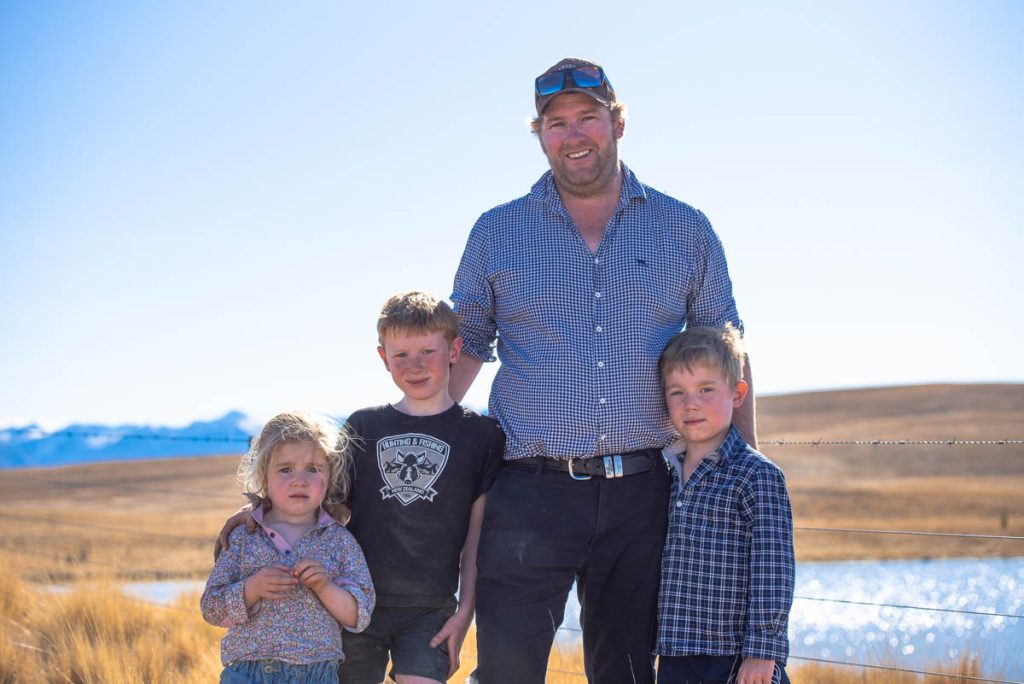
In September 2023, growers returned the favour by hosting the Devold leadership team on their properties in Marlborough, Canterbury and Otago. The growers found there was a natural partnership with the Norwegians as they share many of the same values as New Zealand farmers, namely a love for the great outdoors and the pursuit of sustainability. “They appreciate what we do, and we appreciate what they do. There’s mutual respect. But it’s their commitment to quality and understanding the raw product that is refreshing,” says supplier and Balmoral Station farmer Sam Simpson.
A stop at an outdoor trade show in Munich, Germany, gave growers a chance to view the new season Devold product, something Sam described as a real eye-opener. “What blew me away was just the amount of competition in the outdoor clothing space over there. You can see why Devold has to be the wool expert – you have to carve out a niche because the competition’s massive.”
From there they headed to Lithuania to view the manufacturing process from yarn to boxed garments, then to Devold’s head office in Norway where they met with owner and CEO Knut Flaak, who is passionate about building a transparent value chain with growers; directly contracting their wool so there is full transparency from sheep-to-shop. Every garment is designed in Norway and comes with a swing tag showing the origin story of the farm from which the wool originates. “It’s so important for grower families to see the wool they put their heart and soul into growing for 12 months, going into quality garments,” Smithy says.
Achieving this transparent value chain will take a redesign of the way wool is procured and sold. This is something Smithy is adamant needs to change for all wool growers to realise the true value of their fibre. “I can sell 18.7 micron wool any day of the week, all I would do is get 15 micron, 38 micron, do the right blends and come out at 18.7 micron. And that’s no good for anyone, so why are we doing that? When I go into a store and see on a merino garment that it’s 100% traceable, I know it’s not,” he says.
He stresses that if we want to get wool to where it should be, both crossbred and merino, we’re going to have to be a bit more honest and that starts by changing the process that allows the wool price to be driven to the floor every auction as a by-product commodity of sheep farming.
Procurement Requirements
PGG Wrightson Wool is the procurement and payment agent for Devold for wool purchases, and have been contracted for four years through until 2026 with a micron range of 16.0 – 20.0, average minimum staple length of 80mm and 38 Newtons Per Kilotex (NKT) minimum staple strength. About 10 tonnes of wool equates to 30,000 Devold garments.
The contract price ranges from $20.50 (19.4-20.0 micron) through to $27.00 (16-16.5 micron) per kilogram clean. At the beginning of the contracted year, Devold evaluates their volumes for that year and if they require more, the contracted growers get first right of refusal to increase the bale numbers to a maximum of 30% of the original contracted volumes. “My phone has been running red hot with growers wanting to supply Devold New Zealand over this last shearing season,” Smithy says.
There is a lot that goes into well-styled wool and Smithy is calling on merino wool growers to consider style when making their breeding decisions. “When we ran one line through the manufacturing process, we had to reject 15 out of every 100 garments, which is too high and this comes down to a lack of repeatability of style and crimp formation.”
This is why Devold procures through direct supply contracts with individual growers, as the Norwegian company can trace and identify poorer lines that will be excluded, as opposed to purchasing wool tops from the commodity market and blending them.
Style Assessment Defined
What exactly is style? It’s the crimp definition and fibre alignment allowing for more fibres per square centimetre. If the fibres come out of the skin in different directions, even just a few degrees, then this can reduce wool weight. Style assessment is somewhat subjective, with curvature as one physical measurement, Smithy explains.
Fibre migration is the main cause of pilling and fabric made from poorer quality wool will tend to have holes develop quickly, causing consumers to lose faith in the brand.
In the auction system, the buyer will visually assess the wool and downgrade their buying limits if there is poor crimp definition. Devold offers a bonus for the top performing wools of $2/kg on top of the contract price. “The wool classer and handlers have the biggest influence over what goes into the contract line, reducing the change of the bale or a whole line missing the contract,” Smithy explains.
Balmoral Station
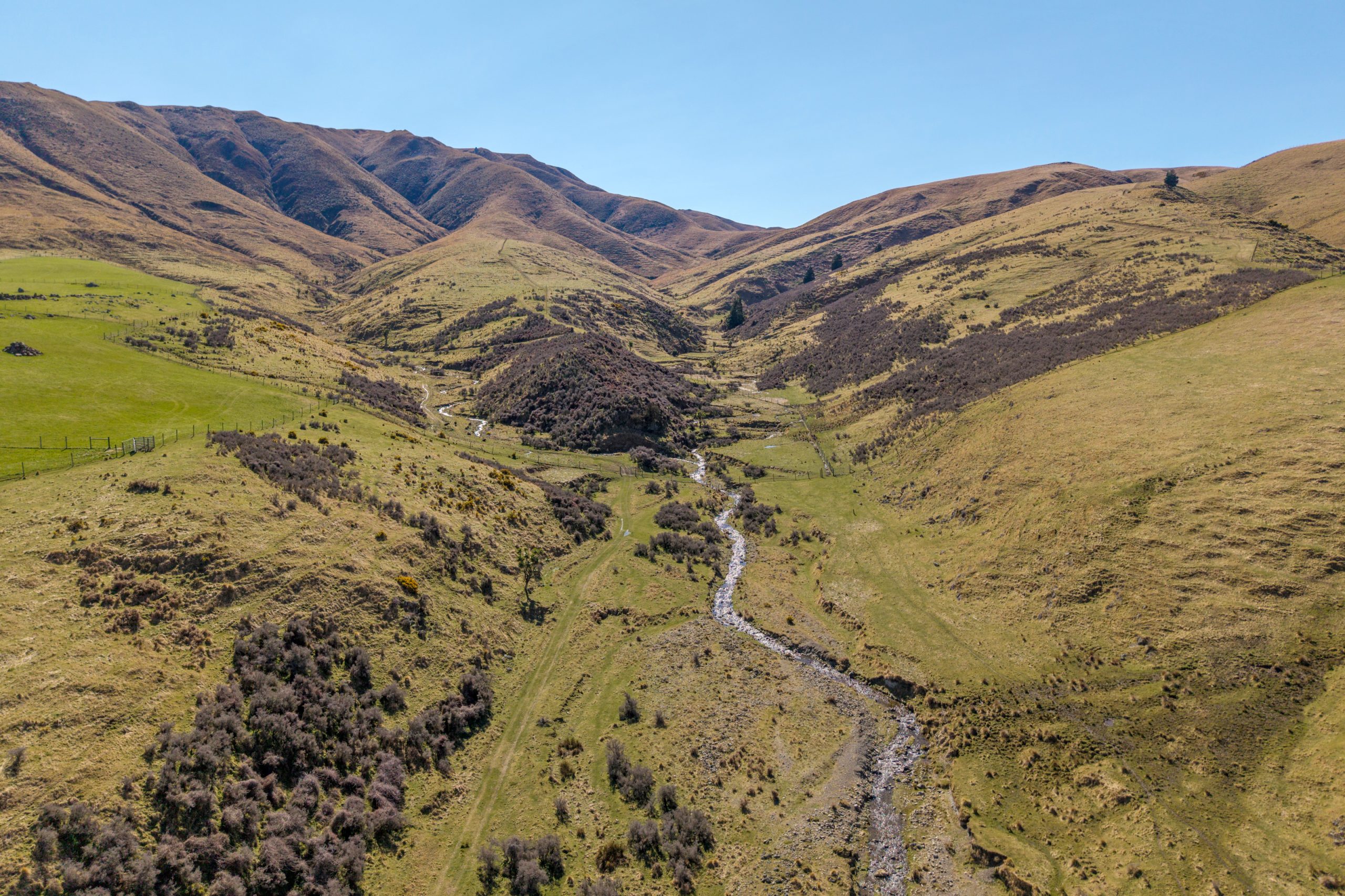
Sam Simpson and wife Sarah, along with his parents Andrew and Karen, purchased a half share three years ago in Andrew’s brother’s property Mt Hay, which is run in conjunction with Balmoral Station.
Balmoral Station produces rams for both their properties as well as supplies rams to Mount Arrowsmith, who are running 4,000 merino ewes in Canterbury’s high country. Managers, Alan and Vicky McIntyre, and owner Philip Wareing were also on the Norway trip.
Sam is breeding big, white, robust wool animals targeting length and strength with anything under 38 newtons in strength getting culled. This is achieved by a closed flock that is AI with semen from Australia every second year. He’s also introduced poll rams into the stud with the aim of finishing progeny quicker, but what remains paramount is the wool quality.
Sam credits farm manager, Brian May, at Mt Hay for his great work this year with one line of high spec wool that hit a bonus, on top of their contracted price. This was a significant milestone after supplying Devold for five years. “We quite like Devold and their morals as they don’t compromise and it’s knowing they are producing quality products,” says Sam. “That’s important if your names are attached at the end.”