Farming is generational, co-operatives get that
LIC chair Corrigan Sowman shares his thoughts on the generational importance of co-operatives. Words Corrigan Sowman.
As a farmer, I’ve learnt pretty quickly that the best results don’t show up straight away. Some of the most important decisions you make won’t pay off this season, or even the next. They show up slowly, over time and often in ways you only notice when you stop and look back.
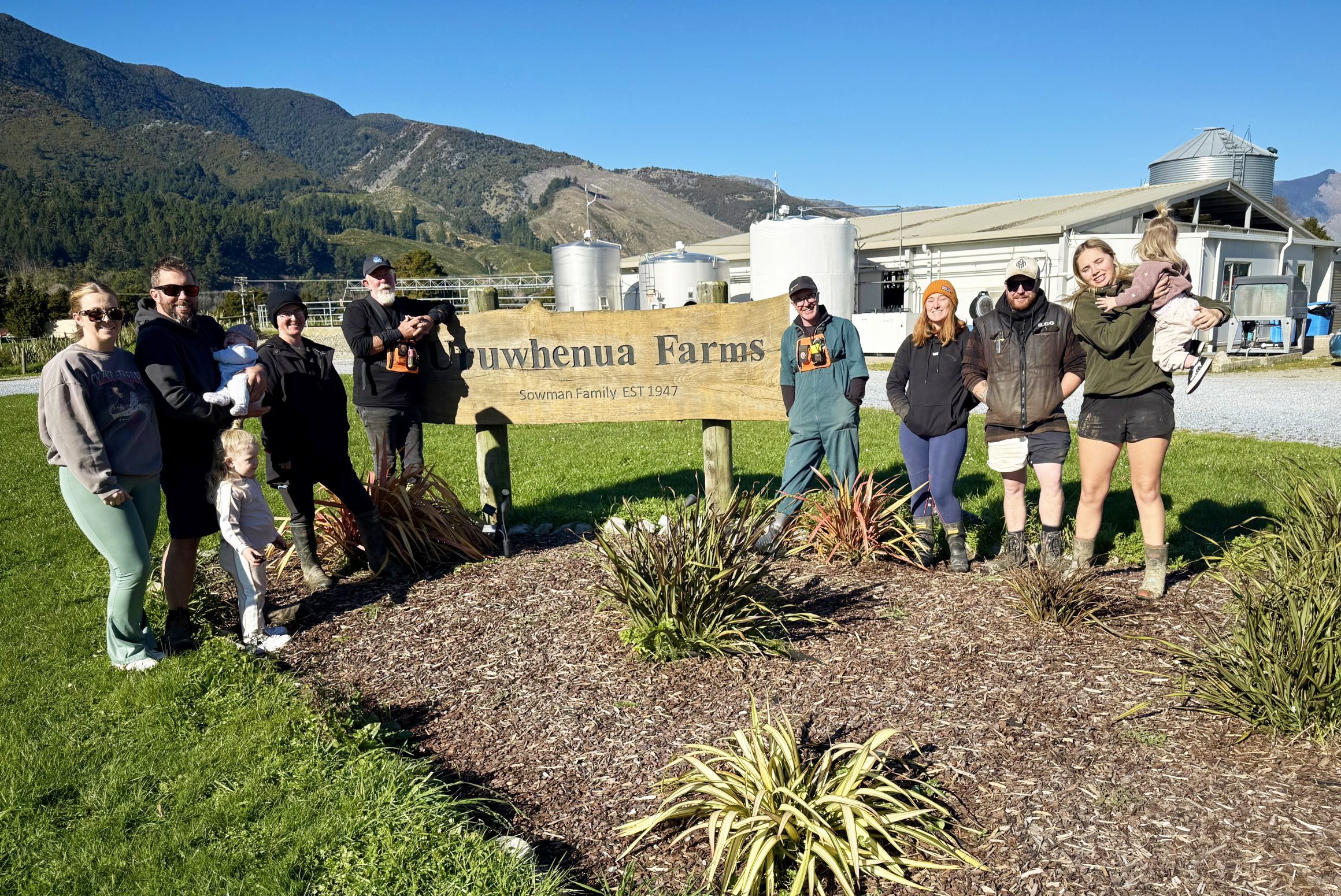
This perspective is shaped by my own farming reality. I co-own and manage Uruwhenua Farms in Golden Bay, a 400-hectare family operation which I hope to someday pass down to the next generation. My goal, like many of the farmers I talk to, is to make sure that the herd and the land I leave behind is better than the one I started with. And that’s why our co-operative model has always made sense to me.
Improvement is a long term goal, which means it needs long-term structures behind it. In New Zealand, we have chosen to build those structures ourselves. Co-operatives have allowed us to pool investment, share data and lift herd performance at a national level, in a way that none of us could have achieved individually. They have also allowed us to build organisations that attract and retain world-class talent here in New Zealand, creating skilled jobs that continue to strengthen our industry.
LIC is a great example of a generational co-operative. For decades farmers have understood that improving the national herd isn’t a short-term commercial opportunity, It’s a long term investment. Our unique pasture-based, seasonal system is different from most of the world, and it needs genetics developed specifically for it, not adapted from somewhere else.
That work takes scale, investment, discipline and time. Co-operatives are uniquely suited to this task because they are owned by the people who understand that progress in farming is cumulative, not instant.
I’ve seen that play out on my own farm. The biggest improvements haven’t come from chasing the latest idea or product. They’ve come from sticking to sound principles and building steadily, increasing fertility, efficiency, and production year on year.
That same thinking underpins New Zealand’s dairy industry more broadly. Farmer ownership of the supply chain has given us stability in a volatile world. It’s helped manage risk in a sector dealing with perishable products and distant markets. And it’s allowed value to be reinvested back onto farms rather than extracted elsewhere.
“While the value from co-operatives has been proven over time, this does not mean we can stand still.” – Corrigan Sowman. LIC Chair
Co-operatives also tend to hold their nerve when conditions get tough. Farming will always involve uncertainty, whether it’s climate, markets or regulation. By pooling resources and spreading investment, co-operatives reduce the exposure individual farmers face. That collective approach is one of the reasons New Zealand’s dairy sector has proven so resilient through economic cycles and global shocks.
Perhaps most importantly, co-operatives preserve something that is easy to lose in modern agribusiness – trust. Long-standing relationships, shared purpose and farmer governance create confidence that the co-operative is acting in members’ best interests. This trust underpins participation, data sharing and long-term customer experience, all of which are essential for continued improvement at a national level. Because members are invested for the long term, decisions are made with sustainability in mind. That resilience is easy to overlook when things are going well but it matters when they aren’t.
While the value from co-operatives has been proven over time, this does not mean we can stand still. Farming is changing quickly. Data, technology, and environmental expectations are reshaping how we farm and how we prove performance. Global players are moving fast, and competition is only going to increase. The co-operative model ensures innovation stays grounded and the focus remains on outcomes uniquely related to us.
As a generational farmer, that really matters to me. My experience has taught me that you can’t focus on today alone. The gains that really count take time and you only get them if you’re prepared to think beyond the next season.
That’s why our co-operatives remain so important. They create the space to make disciplined decisions that may not deliver immediate returns, but will shape stronger farms, better herds and a more resilient sector over time.
As farmers, we are guardians of the land. It’s our job to care for this unique asset and pass it on in better shape than we received it. Our sector is built on inheritance. Inheritance of land, livestock and most importantly, of knowledge. It makes sense that the organisations supporting us are built the same way.
Farming is generational. Co-operatives get that.
Visit lic.co.nz