Ensuring Farmers Don’t Bear Cost of Misattributed Emissions
NIWA research is under way in the Wairarapa to differentiate how much methane in the atmosphere comes from farm animals vs local wetlands. Words Sarah Perriam-Lampp.
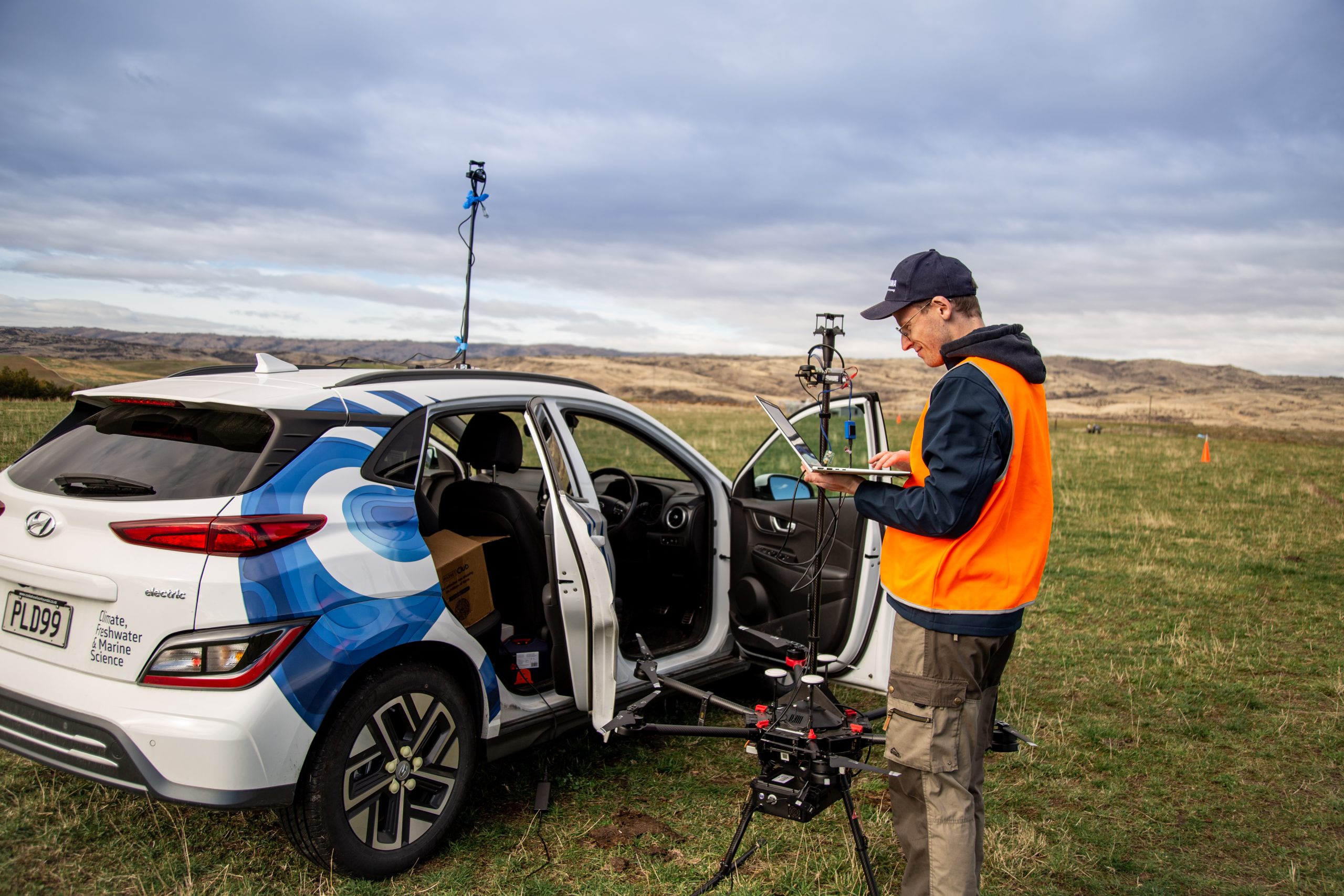
Wellington-based Greenhouse Gas Emissions Scientist Dr Christian Stiegler and his team at NIWA are working to unravel a method to attribute methane to the correct source.
“It’s critical to ensure farmers don’t bear the carbon cost of misattributed emissions,” he explains. “We are working to understand how much methane wetlands emit and their role in the wider ecosystem.”
In April 2025, they began research work in the Wairarapa around Wairio Wetlands, Boggy Pond and Lake Wairarapa as part of an MBIE Endeavour-funded Smart Ideas project titled ‘Top-down accounting of methane: Protecting farmers from carbon-cost for misattributed wetland’.
The team of scientists is developing a way to identify the different molecular signatures of methane from farm animals compared with methane emitted naturally by wetlands.
“Wetlands naturally produce methane, but they are also highly effective at storing carbon, making them an important carbon sink rather than a source, ” explains Christian. “ By measuring methane emissions and using isotope analysis, we can better understand their role in greenhouse gas dynamics and their response to climate change.”
During the field campaign the team collected more than 80 methane-enriched air samples from different wetland areas, Lake Wairarapa and livestock. They analysed the methane isotopic composition in these samples using NIWA’s new, field-deployable Picarro isotope analyser.
“This knowledge can help farmers better manage emissions on their land and recognise the value of wetlands as carbon stocks. Accurate methane measurements can guide effective environmental and agricultural practices.”
The researchers intend to continue their field work in the Wairarapa over the next year, applying their results to help them attribute methane sources in the Waikato.