All in the genes?
A Massey University project looking at the DNA and behaviour of working dogs in New Zealand hopes to shed light on the origins of the heading dog and Huntaway breeds, and identify predisposition to genetic conditions, helping inform breeding decisions for farmers. Words Rebecca Greaves, Photos Pam Stephen Photography.

Listen to the podcast:
The ability to make breeding decisions based on genetic information so that we have working dogs with longer, healthier lives is the goal for a large-scale Massey University study of working dogs.
The Right Dog for the Job project is co-funded through the Ministry for Primary Industries Sustainable Food and Fibre Futures programme and led by researchers at Massey University’s AL Rae Centre for Genetics and Breeding.
Dr Melissa Stephen, a senior research officer with Massey and key team member, has spent countless hours acquiring samples from working dogs around the country.
There are two parts to the project, the first is trying to understand genetic conditions that could affect working dogs. As heading dogs and Huntaways are breeds specific to New Zealand, global research on dogs and their genetics has never included these unique breeds, which play a vital role on our farms.
“We want to bring new technologies being developed around the world and apply them to our working dogs,” Dr Stephen explains. “They are important breeds for our country and hopefully we will be able to provide breeders, shepherds and farmers with some useful tools when it comes to selecting healthy, productive working dogs.”
Another part of the project is aimed at understanding the origin of the two breeds. For the heading dog, it is likely to be very border collie-centric, but although heading dogs may look like
a short-coated collie, their behaviours are quite different; perhaps indicating some other influential founder breeds.
“The Huntaway is unique and there’s likely to be a wide range of breeds contributing to their establishment. We would like to get a good reference point and compare that to what we know about other breeds and identify when the Huntaway may have broken away on the canine family tree. This information could help us target genetic screening of Huntaways, for example, if we find that labradors have had influence in the origin breed and we know of genetic conditions that are prevalent in labradors, we might target that condition for testing.”
Health and welfare and the behaviour of the dogs is an important aspect of the study, too. “We want to understand genetic conditions that could be affecting those dogs and provide breeders with the tools to breed healthier puppies, but we’re also interested in behaviour as these dogs are often selected carefully for what they do and how they behave, not necessarily what they look like.”
Dr Stephen says working dogs are predominantly bred for the job they do – what’s between the ears – and there is the potential to use genetic technology to predict how a puppy will behave. For now, that’s more of a blue-sky possibility, but this project lays the foundation for that type of approach in the future. As well as the DNA samples obtained from dogs, health information is collected, and owners are asked to complete a behaviour survey.
The project began in October 2023 and will run for three years. The first cab off the rank was taking blood samples from about 250 dogs (even spilt between the two breeds) to build a detailed picture of their DNA. They worked with state-owned farmer Pāmu, vet clinics, the NZ sheep dog trial association and big stations to source dogs to take part. Results are currently in the lab being processed and data is starting to come back, which will provide a high-resolution data set to work with.
From here, they will collect cheek swabs from about 2000 dogs (this is easier and less time consuming than blood testing). “We run a sponge under the lip of the dog and that gives us some DNA from the cheek cells, it’s easy and fast. We’ve done 400 dogs so far.”
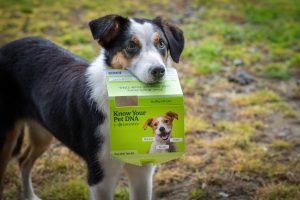
Massey has partnered with well-known human DNA testing organisation, Ancestry, which has just launched a dog product and is providing the sample kits for the project.
Every working dog the team come across is swabbed, basic anatomy measurements are taken (chest depth, height, length etcetera) and owners will be sent the behavioural survey to determine how well the dog works stock. Dr Stephen says the emphasis is on getting wide coverage around the country, as there may be regional differences, and different demographics, such as working with both shepherds on commercial farms, and the New Zealand Sheep Dog Trial Association. “The demographics of purpose-bred trial dogs and station-bred farm dogs may vary.”
The best-case scenario is that the project will successfully identify conditions that give a clear genetic signal, so that that information can be passed on to farmers and breeders. One of the conditions they are particularly interested in, and which seems to have a high prevalence in Huntaways, is twisted gut. “It is prevalent, and so sad for farmers to lose loved and valuable dogs to this condition, so that is one we are actively targeting. We are also working with vet clinics and asking them to swab dogs that present with it, and we hope to gain a better understanding of the genetic basis of this condition, and perhaps even a genetic test that farmers and breeders use. For example, if you have a good bitch you want to breed from that is high risk for the condition, you might look for a dog much lower risk to mate her with.”
Arthritis or joint issues that gradually rob dogs of their mobility are another area of focus. “It will be really interesting to see if we can capture the genetic factors at play. Of course, there are also environmental factors, like the work intensity and feeding regime, but to an extent genetics will always play some role.”
Pāmu pups provide first DNA
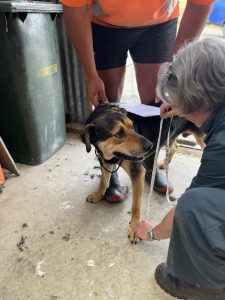
More than 200 working dogs from Pāmu farms around the country were the first to provide their DNA to Massey University for a project to protect the future of the New Zealand working dog breeds.
Seven dogs from Mt Hamilton, near Te Anau, were amongst the first to contribute to the study. Pāmu farm manager Thomas Scanlan said he was keen to be involved as he was really interested to find out more about his dogs, as well as to be part of improving the overall health of New Zealand working dogs in the long run.
Chief Executive Officer Mark Leslie said Pāmu had a role to play in research and development. “With our scale and geographical spread, we are perfectly positioned to support Aotearoa New Zealand science that benefits the wider sector and makes commercial sense. Innovation is the way forward to meet challenges and ensure farming excellence. As vital parts of the farm team, working dogs are a big investment in money, time, and training. Knowing the genetic profile of working lines will potentially have big advantages for shepherds and their dogs.”
Pāmu is a co-funder of the project.