A century in the making
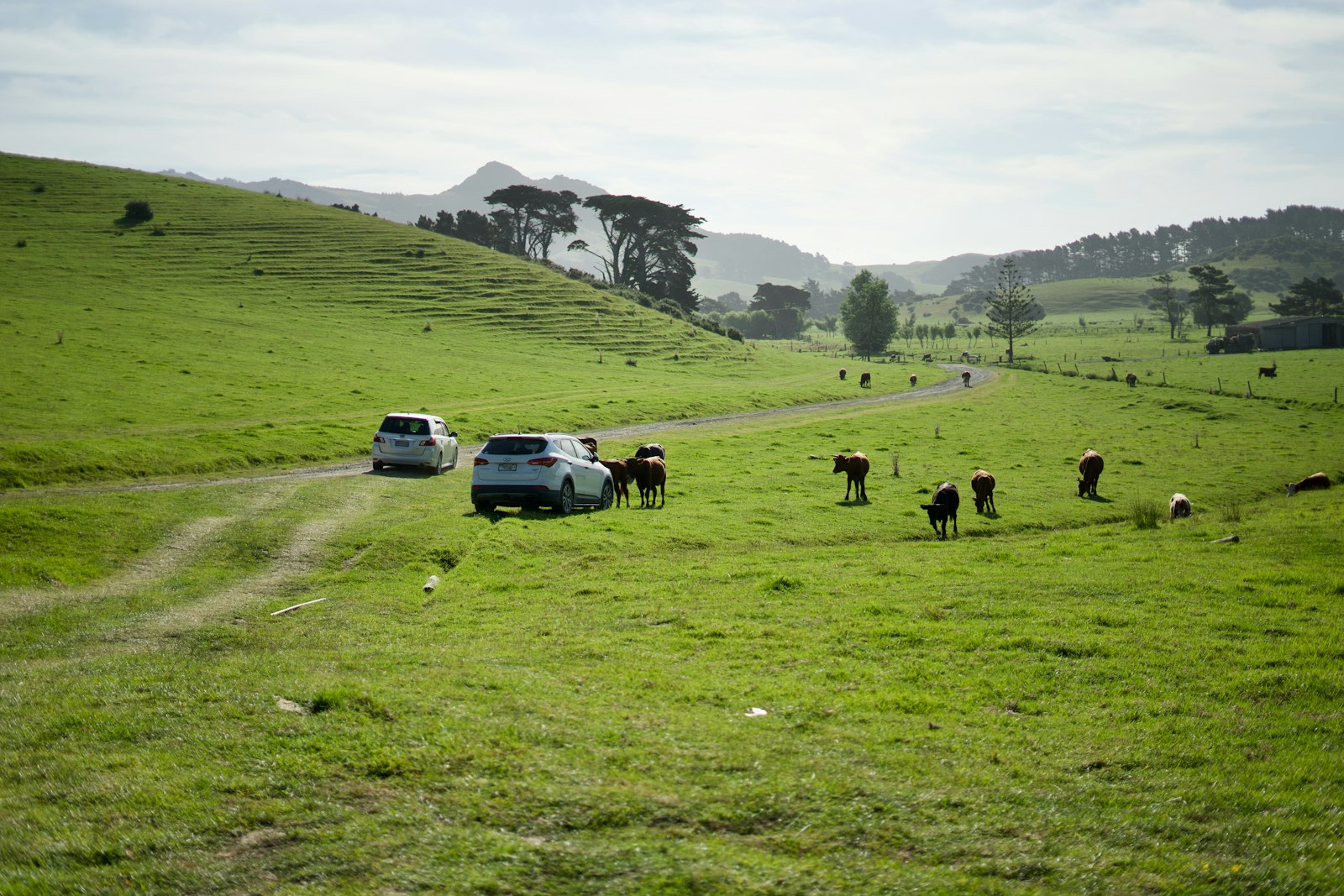
Monowai Station, Waimatā Valley, Gisborne, has entered its 100th year of being farmed by descendants of the Savage family. This is a farming business where long-held family values and traditional farming practices merge with efficiency, responsiveness to opportunities, and environmental good practice. Words & Photos Louise Savage.
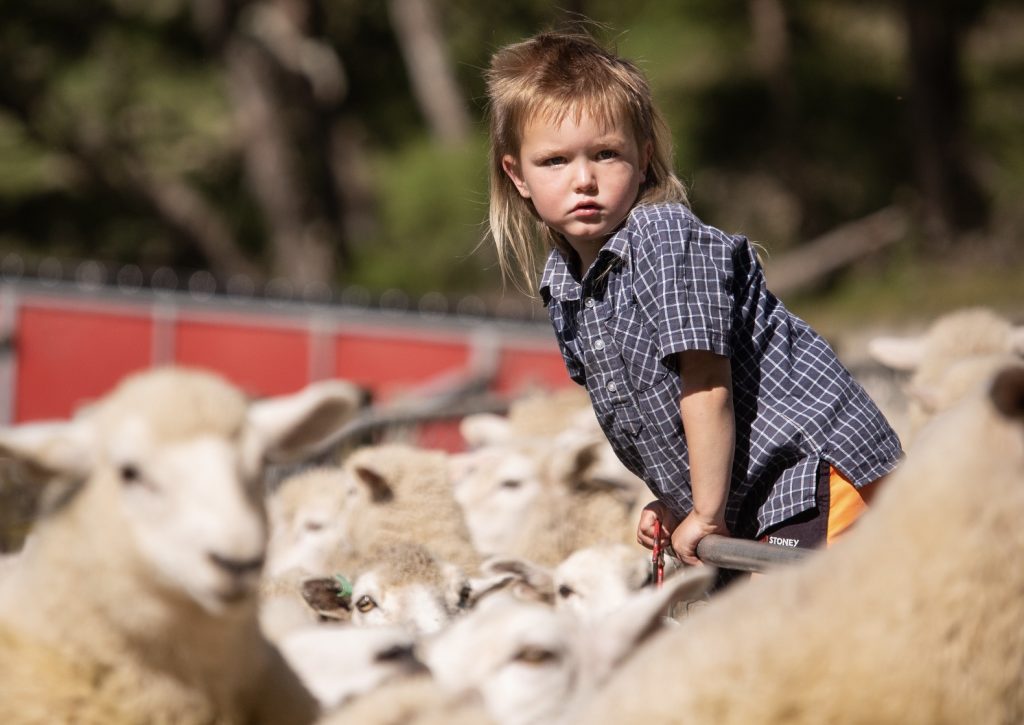
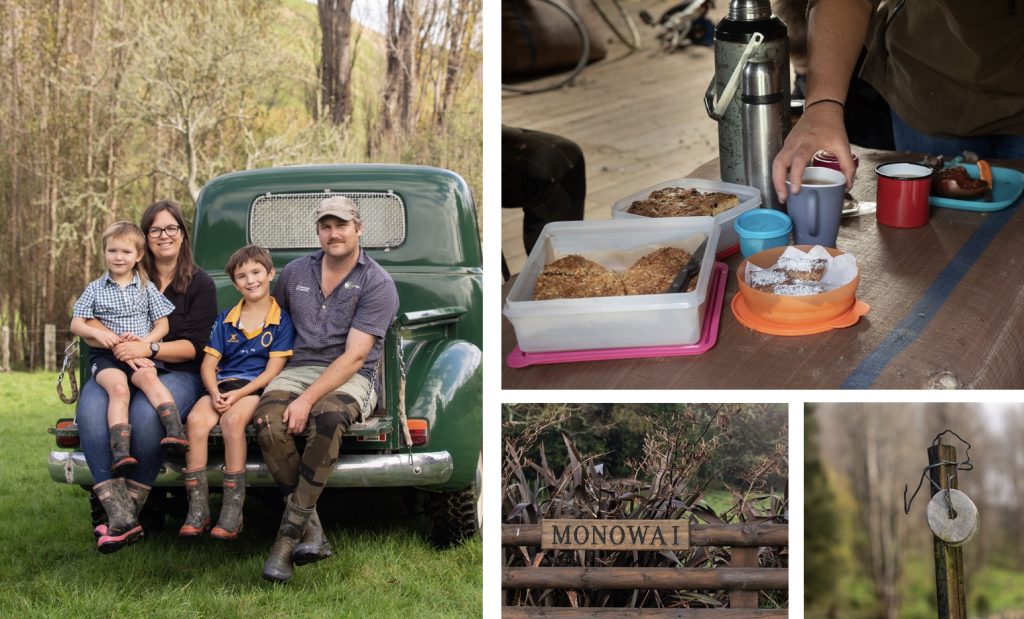
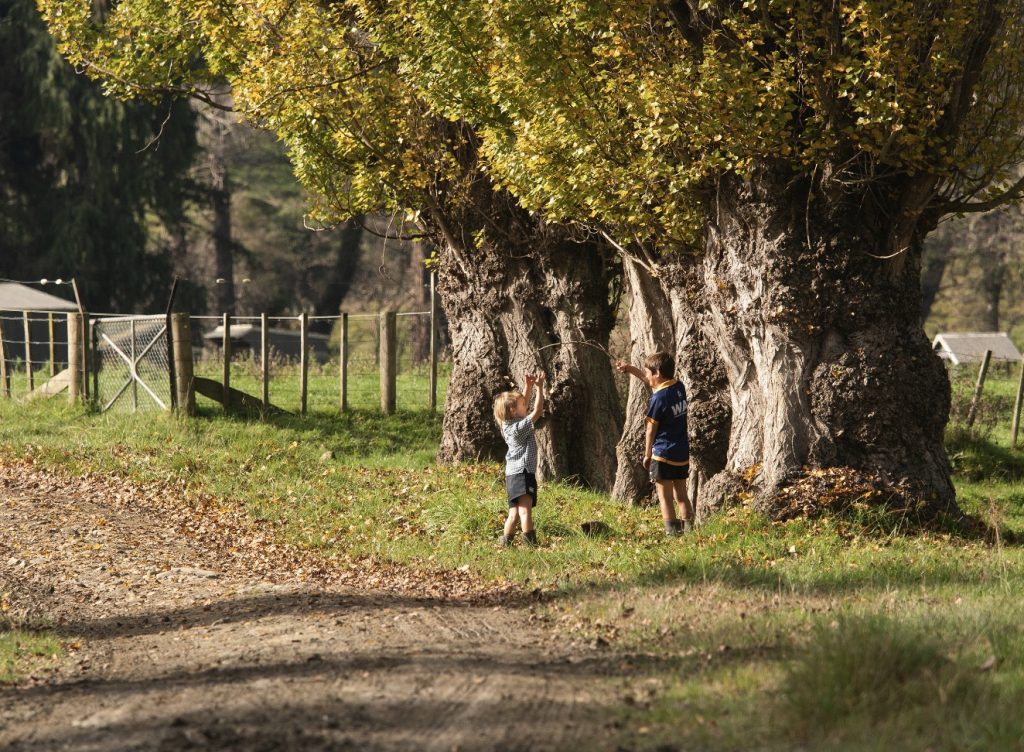
Eight-year-old George Watson and four-year-old Blake Watson are the fifth generation on Monowai Station and are already keenly involved with the farm. It is this heritage that motivates and inspires their parents Laura and Jeremy Watson who farm the station and see themselves very much as the caretakers of Monowai, building upon the hard work of the previous generations.
Monowai was bought by Laura Watson’s great-grandparents, Victor and Florence Savage, in 1926. They handed over to David (their eldest son) and Virginia Savage, followed by Michael and Adele Savage. Now Mike and Adele’s daughter Laura, and son-in-law Jeremy are carrying on the legacy, leasing the farm from the Monowai Trust.
Jeremy’s passion for farming was inspired by helping his grandmother on her farm that is still in the family at Pleasant View, in Goodwood, North Otago. Jeremy went from school straight into shepherding, which led him, 15 years ago, to Okare Station, northern Hawke’s Bay. On Okare he worked with Laura’s brother Andrew Savage, first meeting Laura when she was visiting her brother, and they hit it off.
“When we first started our business, Monowai Farming Ltd in 2019, we were in a share-farming agreement with Laura’s brother, Andrew,” says Jeremy. “We purchased the cattle from Laura’s parents and at that time her brother owned the sheep, which were part of his St Leger stud. In 2021, the share-farming agreement ended, and we purchased our own sheep flock including a terminal stud from Andrew.”
The family business has a long-term planning horizon to ensure Monowai will certainly remain in the family, therefore all decisions are considered against impacts and benefits for future generations.
Tradition, a simple farming system, good genetics, optimum environmental practices and matching stocking rates to feed supply underpin farming on Monowai. All stock bred on Monowai is finished and sold to AFFCO, with no stock bought in.
Michael and Adele live on Monowai and help on the farm when needed, meaning some day-to-day tasks are a three-generation collaboration, which Laura holds dear, as a long-standing tradition. Jeremy is full-time, helped by Laura and nieces Claire and Jade Hopper when things get busy with docking, weaning and shearing. Casual staff are brought in when needed, and Louise Kennard, who lives in the farm cottage, runs the pest trap-lines and maintains the extensive native plantings.
“We were devastated when the cyclones buried and washed away 5,000 native plants and 500m of riparian fencing, not to mention the damage to the rest of the farm fences and infrastructure.” – Laura Watson, Monowai Station, Gisborne
Environment is paramount
Five generations ago, ‘scrub cutting’ was how the land was won for farming. On the steep (Class VI and VII) erosion-prone mudstone hills of Waimatā Valley, the need for soil conservation was recognised early on. From the 1930s onwards, Victor Savage allowed erodible gullies to revegetate and began a pole-planting programme. Willow and poplar poles were loaded on sledges and dragged by draft horses out to where they were to be planted on the farm.
After the devastation wrought by Cyclone Bola in 1988, conservation tree planting became an even more important and ongoing part of repairing and future-proofing the hill-country farms of Gisborne.
Farm plans were produced for a high proportion of farms, a collaboration between Gisborne District Council soil conservation officers and landholders. An outcome was the creation of pole nurseries on farms, and planting plans that spanned decades. The soil conservation programme on Monowai was continued by David Savage, helicopters rather than draft horses delivering the poles onto the hills. Mike followed suit, and now under Laura and Jeremy’s management, intensive predator trapping and weed control is also undertaken, five wetland areas on the farm have been restored, native bush and waterways fenced off, and areas of native trees have been planted.
Before taking on the farm and starting her family, Laura was an environmental manager with the Gisborne District Council, a background that has given her the knowledge to keep abreast of policy and regulation, and a conservation mindset that underpins all the decisions made for the business.
“Tairāwhiti region experiences the most severe soft-rock soil erosion in New Zealand,” Laura explains. “Recent cyclones and other extreme weather events have increased environmental damage, and although landholders have already done a lot to stabilise gullies and steep hills, we need better risk management.
“Since our region relies on forestry, farming, and horticulture, we must ensure these are matched with land that can sustain them. This will involve significant land-use changes, and some areas will require permanent vegetation for protection.”
 Community involvement
Laura manages the Waimatā Catchment Restoration Project, established in 2019. The group’s goals include restoring the riverbanks, improving water quality, and providing recreational and educational opportunities for the community.
“We’ve made the most of the funding opportunities provided by our catchment group, to complete projects that otherwise would have taken decades,” says Laura.
“It’s been possible to develop a farm environment plan, release dung beetles, restore five wetlands, complete 5.4km of riparian and wetland fencing, and plant 35,000 natives plus an additional 500 erosion control poles. We also have a comprehensive network of predator traps.”
In a typical year, Monowai receives an average of 1,500mm of rain, but in 2023, rainfall topped an incredible 3,500mm, with Cyclones Hale in January, and Gabrielle in February 2023, destroying the planted riparian areas.
“Around 150ha of the farm was damaged by slips, riverbank slumping and inundation with deep silt. We just had to take a deep breath and carry on with our environmental projects while we had the chance, as well as all the other repairs needed on the farm.”
In 2023 Laura received a Kiwibank Local Hero Award for her work in securing $650,000 to support the farmers in her community with cyclone recovery.
The work that Jeremy and Laura had put in with on-farm biodiversity enhancement as well as their community involvement was recognised with two awards in the East Coast Ballance Farm Environment Awards in 2024.
Laura’s newest job is as a facilitator for Trees for Survival, an initiative that enables schools to grow native trees. Schools are then matched with committed landholders, and students plant trees as part of restoration projects.
Sheep on Monowai Station
The sheep flock that is run on Monowai comprises 1,500 ewes, 500 hoggets, 50 terminal stud ram hoggets, and 20 ram sires.
Romneys are preferred for their good constitution, fertility, worm tolerance, and high facial eczema tolerance.
Jeremy and Laura are working on improving both sheep and pasture productivity, facial eczema tolerance, and soil fertility. This has enabled ewe numbers to be reduced, while number and weights of lambs born and finished have increased.
Rams are selected for their facial eczema tolerance, constitution and feet, essential qualities in the Gisborne climate. They’re mated to the ‘A mob’ ewes.
The terminal rams comprise composite Kelso genetics for high performance, good feet and early maturation. The terminal ram hoggets bred on farm are then mated to the ‘B mob’ ewes which comprise 40% of the Romney ewe flock, and the five-year-old ewes. They are also put to all the replacement Romney ewe hoggets.
“All hoggets are mated; we’re doing this in line with our policy to try to make every sheep on the farm as productive and profitable as possible,” Jeremy explains.
There is a terminal stud flock of 160 stud ewes that lamb at 120%, from which 40-plus stud ram hoggets are sold to clients around the North Island.
The mixed-aged ewes and two-tooth ewes are mated from 15 March, and the hoggets on 15 April. The mixed-age ewes scan 199%, two-tooths 179% and hoggets 86%. Lambing spans August and September with 151% lambing achieved overall.
“We’re aiming to achieve scanning of 210% for the ewes, 180% for the two-tooths and 90% for the hoggets over the next few years,” says Jeremy. “We shear the ewes prior to lambing and provide plenty of feed and shelter. Every paddock has great shelter and a mix of aspect, so even when we have weather events, lamb survival is good.”
They have recently found out they have an iodine deficiency, so are hoping to supplement with iodine to help improve the dry rate in their two-tooths which is sitting around 5%.
Ewes are set-stocked according to scanning: those carrying multiples given preferential feeding, those with singletons separate, and the in-lamb hoggets are run together.
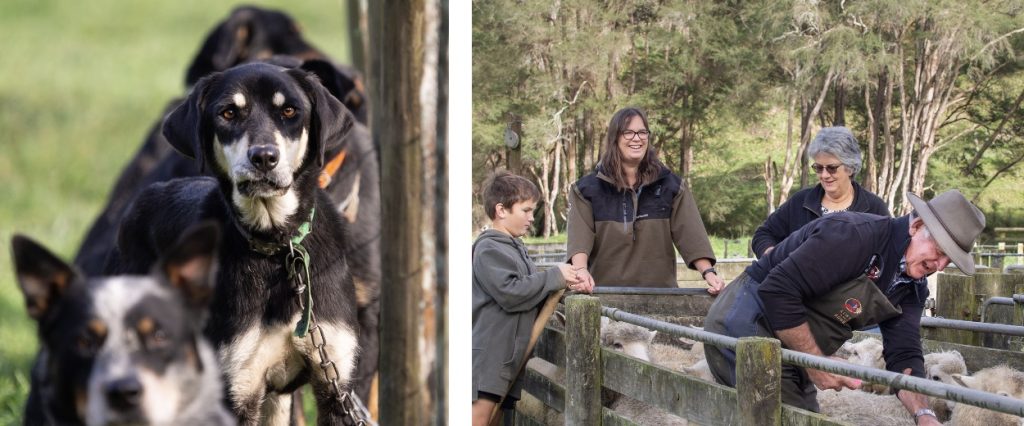
Lambs are docked at the start of October, with hogget lambs docked in November. Docking is a Savage family affair with help from the Haenga family for over 25 years.
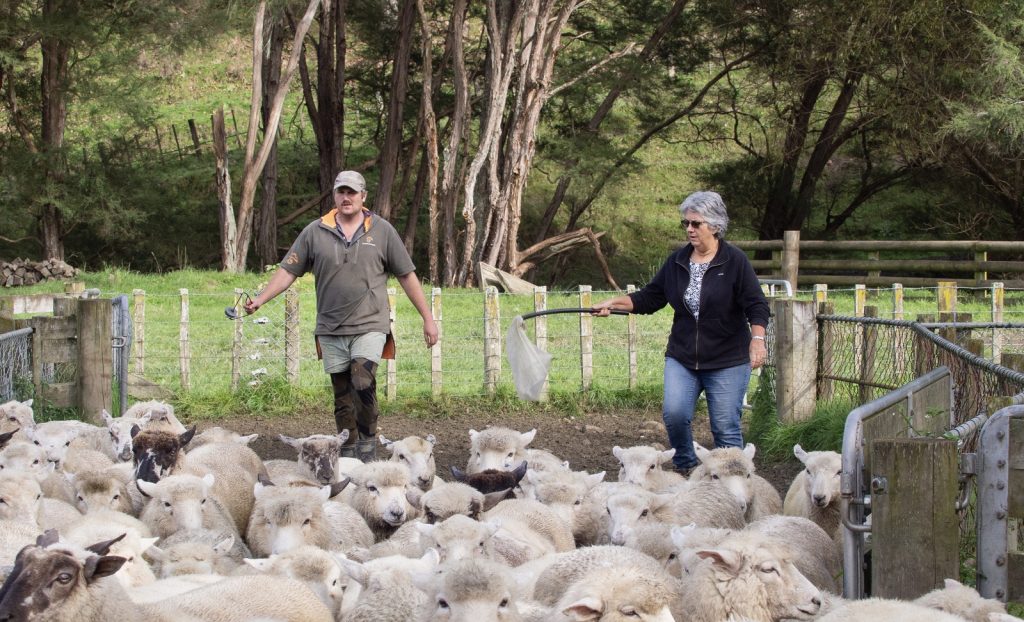
Lambs are then weaned in November, at 30kg, and set-stocked. The terminals achieve 35kg with 40–60% of them sold off the ewes that achieve 17–18kg CW. The remaining lambs are picked when prime, typically once a month between November and May, by long-standing livestock buyer and friend Alec Kirkpatrick, on schedule for AFFCO. Some may be sold store, depending on the season.
Ideally all lambs are gone by May, but thanks to the weather events of the past few years, and the damage to fences, a fair few lambs turned up later from neighbours unannounced, and quite a few strangers needed to be returned. The ewes are shorn in December, then set-stocked according to body condition scores, the lighter ewes drenched and put on the higher-cover pastures to bring up their weights. Scales are a planned future purchase.
Feed can be a little short around set-stocking, because limited numbers of paddocks (16 large and 12 smaller holding paddocks) mean not many can be locked up to conserve pasture.
The Watsons’ policy is to run fewer, yet more productive ewes, rather than rely on nitrogen, only used if necessary.
“We have the option of selling certain stock classes like steers, dry hoggets or ewes with lambs at foot if we are lighter on feed heading into spring, or if we are in a drought situation,” Jeremy says.
“Monowai Station is in the capable hands of the fourth generation and continues to go from strength to strength.” – Michael Savage, Monowai Station, Gisborne
Soil fertility
Over the years the Watsons have worked closely with their fertiliser rep to design plans for the property. Accurately targeted application enables the exclusion of 150ha of bush, wetlands, a large mud volcano and waterways, allowing higher rates to be applied over the productive area of farm.
A detailed class-by-class analysis, coupled with tailored fertiliser application ensures economic optimum fertility levels while staying within the fertiliser budget. Higher rates of fertiliser are applied on areas of the farm with lower fertility levels, or that have more production potential.
Sheep health
Eczema spore counting at Monowai is undertaken as part of Beef + Lamb New Zealand’s three-year ‘sheep poo study’ which encompasses 350 farms across the country. Samples are collected and sent in every two weeks from October to May.
The two-tooth ewes have a pre-tup drench, and if needed, so do the mixed-age ewes (based on faecal egg counting). The ewes and ewe-hoggets have had capsules for the past five years, but
now only in-lamb hoggets get an injectable. Two-tooths are vaccinated against campylobacter and toxoplasmosis. Lambs are drenched every 28 days during Barber’s pole season and given an exit drench at the end of the season.
Sheep health costs amount to $6/su, and no signs of drench resistance have been found. Due to the large paddock sizes, cattle are used as a tool to maintain and provide better pasture quality for the sheep, reduce parasite burdens and to improve pasture utilisation.
Cattle on Monowai
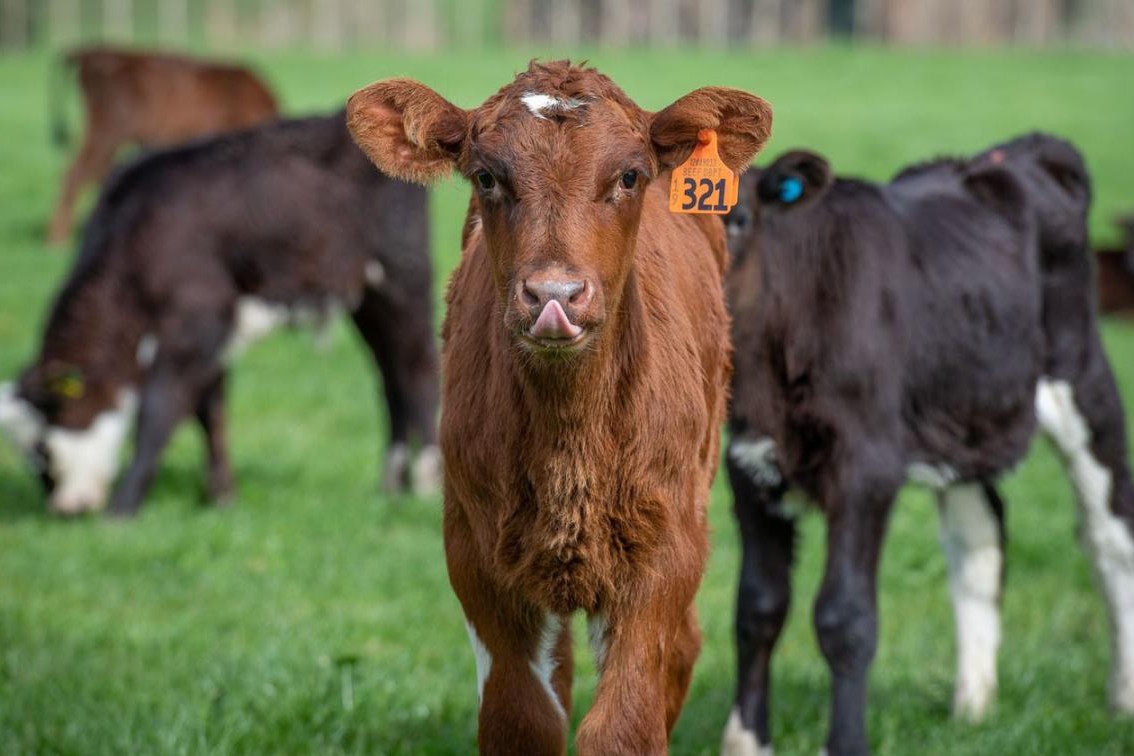
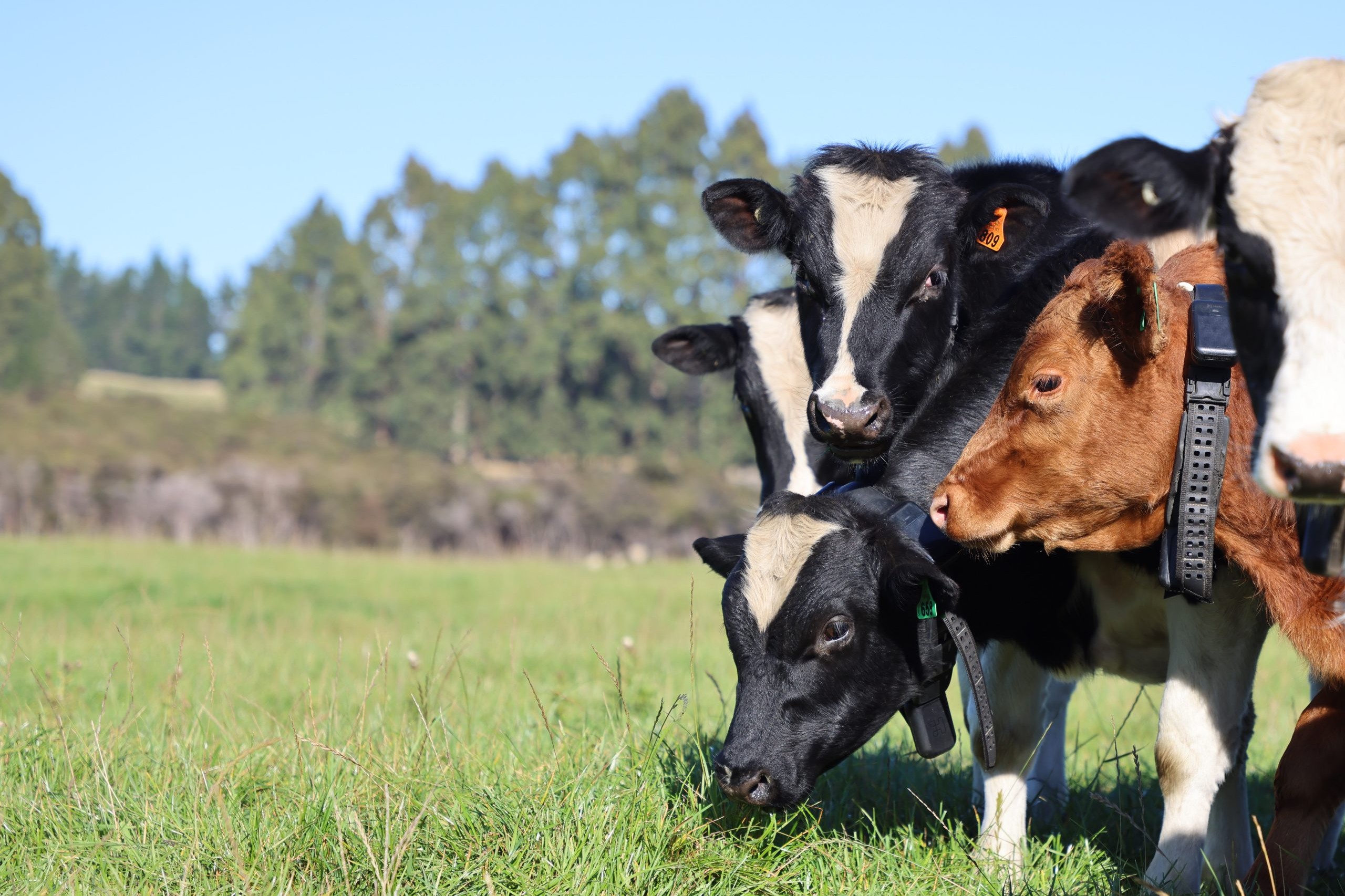
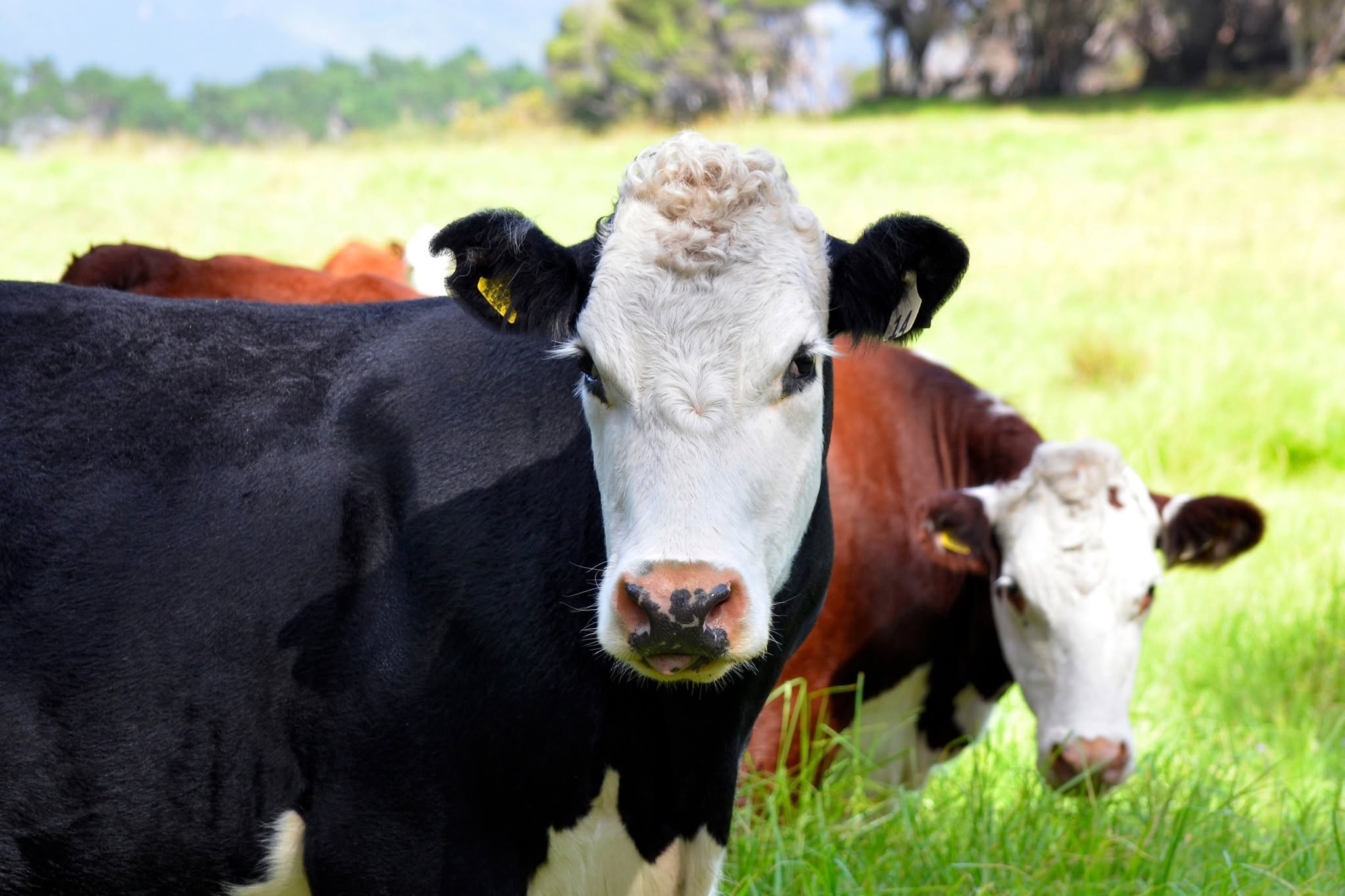
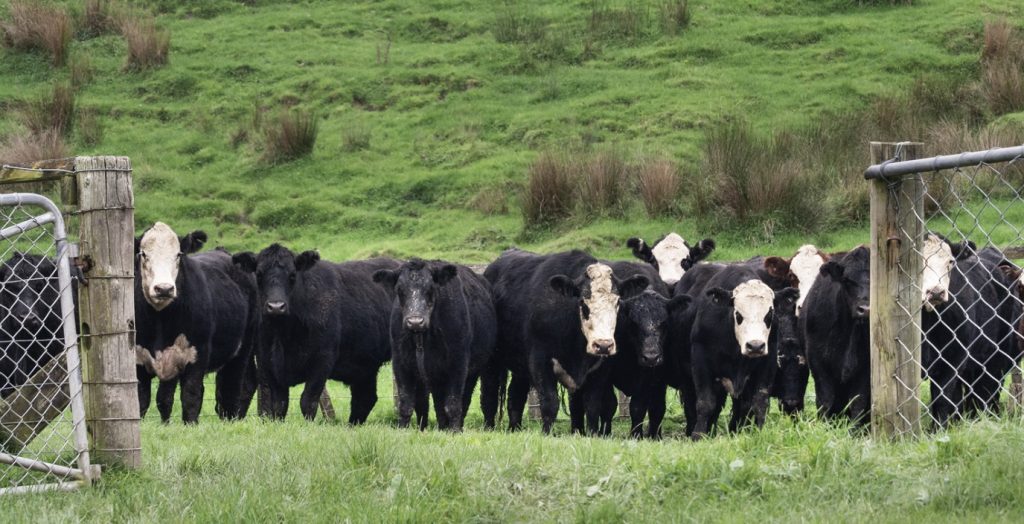
The 185-cow herd is Angus-based and calves at 90%. Alongside the Angus bulls, the Watsons have been using a Hereford bull to give some hybrid vigour as well as some of
the Hereford temperament and milking ability.
Characteristics sought in bulls are constitution, fertility, a good head, moderate growth rate, and good fat breeding values.
Bulls are put out on 20 November for three cycles, until 20 January, to achieve September-October calving, when the Gisborne grass is pumping.
A terminal sire bull, a Simmental, is introduced in the third cycle to help the later-born calves to catch up in growth with the earlier-born calves.
Heifers are mated as two-year-olds, and achieve 89% calving, while the mixed-age cows calve 94%.
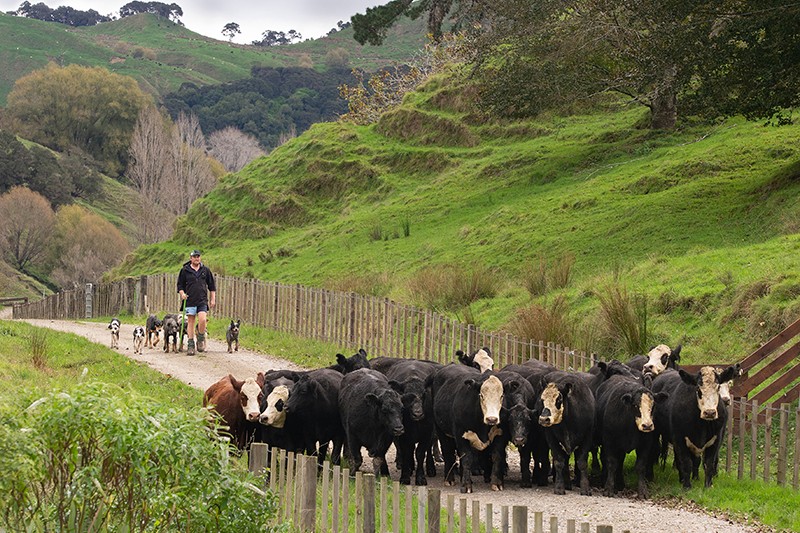
All stock are finished at Monowai and sold to AFFCO. The non-replacement heifers are finished at 20 to 24 months (220kg CW) and steers are killed at 24 to 30 months (300–320kg CW), depending on the season.
No cattle are bought in, except for four bobby calves raised by Adele each year, and Laura, George and Blake each have a pet cow on the farm.
Business planning
Jeremy and Laura are part of a local farm discussion group. Farm Focus software is used as the planning and budgeting tool, alongside PaySauce to manage payroll.
The couple’s long-term goals are to produce high-quality meat and wool, all the while improving biodiversity on the farm.
“In two to five years we hope to achieve 160% lambing in ewes, 100% lambing in hoggets and by improving genetics and developing our finishing country, have all steers finished by Christmas at 300kg+ CW,” Jeremy says.
“Ultimately, we want to be a profitable, environmentally considerate family business, make ongoing capital improvements, and be in a position to buy Monowai Station.”
Farm Facts
- Laura and Jeremy Watson
- Monowai Station, 735ha (580ha effective) hill-country sheep and beef breeding and finishing
- 25km north of Gisborne, in the Waimatā farming district
- 99% medium to steep hill country
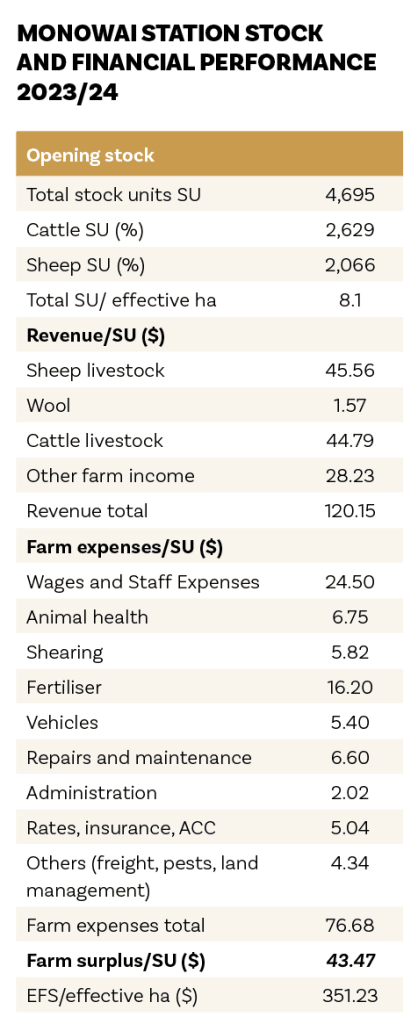
- 4,686su (8su/ha)