Top 6 Megatrends of 2026
It’s never been more important to have eyes to the future, looking for signals ahead to what might be coming rather than looking in the rear-vision mirror. This special report arms your farming business on how to set a strategy that is resilient and aiming in the right direction – meeting the market. Words Anne Lee.

Meet the Experts
 Ian Proudfoot leads the Agribusiness line of business for KPMG in New Zealand. He works globally with clients across the food system on the future of food and has been the lead author of the KPMG Agribusiness Agenda since 2010. Ian has been appointed to various Ministerial advisory groups relating to the food and fibre sector in New Zealand. He also provides audit services to agribusiness and consumer markets clients and leads the ESG Assurance business in New Zealand.’
Melissa Clark-Reynolds ONZM Melissa is an entrepreneur, foresight practitioner and professional company director. She is the Managing Director at FutureCentre.nz which  specialises in Food and Agriculture systems, and the Future of Food Production. They work with companies who want to create their own futures, and not be victim to changes beyond their control. Using evidence-based methodologies, they design deliberate and emergent strategies to give companies the best chance of success. Melissa is currently on the board of Wētā Workshop, Atkins Ranch and Alpine Energy.
 Roger Dennis is Dennis is a Strategic Foresight Advisor at Dennis & Partners and has worked around the world for two decades globally advising leadership teams on the links between long-term thinking and strategy. His work on foresight has been referenced in the Financial Times, Knowledge at Wharton, CNN, The Australian Financial Review, and many other publications. He is an Edmund Hillary Fellow, and has previously been a Senior Fellow of The Atlantic Council in Washington, and a Ministerial Advisor on the Digital Council of Aotearoa New Zealand.
Getting stuck in the mindset of fighting for the past or even the status quo can be a recipe for going broke, Wellington-based Food and Fibre Futurist Melissa Clark-Reynolds warns. Having an intergenerational view requires foresight, but it’s also arguably never been as difficult to pick out the signals from the noise.
“Every generation farms a little differently to the previous generation and there’s this drive by leading farmers to farm better and make more money, to look after the land and get a better return so their kids still have a good going concern to come into,” says Melissa.
Being succession-ready, by definition, means being ready to farm into the future rather than being locked into a rear-view or entrenched position.
Since the 1990s, with the dawning of the digital age and globalisation of economies, the world has become more complex and interconnected.
“It used to be that you could set your course in business and pretty much make it happen – it was your actions that determined your future,” Melissa says.
Christchurch-based Strategic Foresight Advisor Roger Dennis highlights businesses that identify the signals of structural change among the noise of global volatility, have a better framework for lifting their thinking above the current strategy.
He told the recent DairyNZ Farmers Forum that the world is in a state of ‘polycrisis’ where numerous complex systems are interacting with each other causing a cascade of effects that become inherently unpredictable.
That’s a change from the 1980s and 1990s when the world was in a period of relative stability. People who grew up through that period or started their working careers then, are more likely to have mental models still embedded in that idea of stability, growth and prosperity.
Melissa points out that now there are just so many more interactions between factors that on their own may have little or no direct relevance to your business but when they interconnect the effects resonate to New Zealand farmers and growers.
Artificial intelligence (AI), gene technologies and understanding the human biome are all part of our future food story, says Ian Proudfoot, KPMG’s Global Head of Agribusiness in New Zealand and author of KPMG’s leading annual publication Agribusiness Agenda.
“We are now in a world where nutrition choices will increasingly be tailored to the needs of individual consumers,” says Ian.
“It pays to spend time with people who don’t have the same mental models as you because often they will spot things that you won’t because you’re so close to it that you can’t see change happening.” – Roger Dennis, Strategic Foresight Advisor, Dennis & Partners
“If we continue to operate in commodity price cycles – and we’re going to see the highs get higher but the lows get deeper – then to achieve more stable earnings and provide greater resilience to farmers, we need to be working harder to monetise all the co-products being produced in a farming system.”
He explains that global food systems are facing a range of challenges from shifts in historical geopolitical settings to disruption caused by climate change, as well as changes in consumer preferences and the ongoing consequences of the Covid pandemic.
These factors are impacting the resilience of food supplies around the world, with implications on availability and costs, and have created an environment where innovation in how food is grown, processed and consumed is unlocking new opportunities for farmers and growers around the world.
To capture these opportunities, Roger says, leaders need to look at what’s over the horizon, what will become urgent and important rather than what is currently urgent and important.
“Understand what’s happening across the highest levels, not just where you are or where you play. Look at the macro-scale change. Don’t get caught in the noise so much because the noise is there every day, but look at the deep structural shifts underlying all the noise.”
Roger hopes that businesses can adopt realistic optimism, acknowledging that the way ahead is hard but possible.
“How do you change direction in the face of the headwinds? How do you tack through this volatility to gain an advantage?”
Understanding what those changes are likely to be ahead of time builds resilience and success – and that’s important, says Melissa. Megatrends, the big drivers of change, are not fads but factors that are more structural or can have far-reaching implications. Being aware of these when you set strategy means you can ensure you’re heading in the right direction and not building roadblocks that can be expensive to break down.
“Part of why I care about foresight is because I want us to farm for the future. I want us to stay in business for the long-term,” shares Melissa.
“We are now in a world where nutrition choices will increasingly be tailored to the needs of individual consumers.” – Ian Proudfoot, Global Head of Agribusiness, KPMG New Zealand
Futurists and strategists use foresight to assist their clients to model what alternate futures might appear, and think about multiple possible outcomes.
To help identify structural shifts, Roger believes business owners should spend time with people outside their industry.
“Paradigm changes are more often brought to your attention by people outside of your immediate industry or sector,” says Roger. “It pays to spend time with people who don’t have the same mental models as you because often they will spot things that you won’t because you’re so close to it that you can’t see change happening.”
Melissa says farmers shouldn’t be afraid of this change. She says we should take comfort from the past as New Zealand farmers are very good at dealing with change, whether that is shifting away from being the little farm in the South Pacific just for Britain mid last century, to the removal of subsidies in the 1980s, to taking on innovations and technologies in the 2000s.
“The world has to eat,” she says. “We’re really good producers of food and part of why we’ve succeeded is that New Zealand farmers have been able to produce what the world wants. But what the world and our consumers want changes and we have to expect major changes will happen maybe every generation – maybe twice in a generation now.”
NZ Agriculture’s To-Do List
The 2025 KPMG Agribusiness Agenda presents a comprehensive ‘to-do list’ for the sector, grounded in real-world conversations and designed to provoke action. Now in its 16th year, the Agribusiness Agenda draws on insights from almost 200 industry leaders.
“This year’s Agenda is intended to be a provocation to the food and fibre sector, imagining what its potential could be in the future,” says Ian Proudfoot, Global Head of Agribusiness, KPMG New Zealand. “We’re asking leaders to be brave, to be curious, and to act. The challenges we face are complex, but complex challenges unlock significant opportunities. If we lean in together, we can shape a future that’s not just resilient but thriving.”
KPMG’s 2025 Agribusiness Agenda shares the results of our annual Agribusiness Leaders Priority Survey, a key resource for industry leaders and influencers. In preparing the insights for the Agenda this year, we engaged with industry leaders to discuss what needs to be done now to create the future they envision for the sector, as well as five alternative voices: farmers and growers, emerging leaders, future food innovators, sustainability professionals, and banking and insurance providers.

1. Artificial Intelligence (AI)
Ian stresses how AI is fast becoming part of the fabric of food production, business, education, health, and everything else.
“I heard the CEO of The Coca-Cola Company speak at the recent Global Consumer Goods Forum in Amsterdam and he pointed out that two years ago his view was that using AI was going to provide a competitive advantage, but now he said that’s not the case because it has become a must-have. It’s become like having a cell phone – if you’re not using it, you just aren’t in the game any more.”
Ian says one example of how AI will impact the food sector is in understanding the human gut biome and its health implications. Scientists are having people consume a capsule that’s collecting data as it passes through them.
As they do this across thousands of people, they’re building a picture of how the gut biome functions using AI to manage and analyse data. In the future that information is likely to be used in the next generation of drugs such as GLP-1s.
“It could be used in the development of molecules in precision fermentation and the design of functional foods and drugs that are specific to individuals,” explains Ian.
“AI has become like having a cell phone – if you’re not using it, you just aren’t in the game any more.” – Ian Proudfoot, Global Head of Agribusiness, KPMG New Zealand
“Another use will be in breeding. AI will be able to simulate all the crosses that could be carried out in a breeding programme and narrow the options down to just a handful of crosses to get a desired outcome.
“That’s got the power to cut a traditional breeding programme down from what might have taken 20 years, for instance, to just two. So we could have new cultivars coming out every two or three years – it could mean new varieties of fruit become like fashion products.”
But what does that mean for growers?
“They will need to stay extremely connected to their consumers so they understand what they want ahead of time. An interesting New Zealand example highlighted in the Agribusiness Agenda is in the wine sector. A contributor noted that 10 years ago the wider industry looked at those experimenting with low and zero alcohol wines as slightly left-field, whereas today it is one of the fastest growing categories the industry has. We need to be thinking about what seems left-field today as it might just be the growth driver in a decade.”
The single most important action the primary sector can make at the moment is to ensure it is collecting high-quality, reliable data and that data can be shared.
“Data on its own is not valuable – it’s most valuable when it’s shared.”

2. GLP-1 (Weight-Loss Drugs)
A new generation of weight-loss drugs is set to have an impact on global health and food production that goes far beyond cutting inches off the waistline. Glucagon-like peptides-1 (GLP-1) drugs currently include brands such as Ozempic and Wegovy and they’ve caught the attention of analysts and futurists as a likely ‘game changer’.
Ian believes that GLP-1s are the most significant transformation coming to our global food system – possibly in history.
Melissa says that companies are already recording significant changes in food-purchasing behaviour and are reacting.
“Walmart has both pharmacies and supermarkets and their data shows people taking these drugs buy 20% less groceries,” says Melissa. “There’s also evidence in the US that people are changing what they eat and choosing more whole foods, less processed and fast food which is good news for primary producers here. They want vegetables and clean protein – fish, steak or chicken.”
Predictions are that in 10 years about 20% of Americans could be taking GLP-1 type drugs. Ramifications go beyond the food sector with airlines also looking at the impacts.
“If Americans lost 10% of their body weight, the US airline industry would meet all their climate goals,” she says.
Ian says their current use, while having huge impacts already, is only the prelude to where they could lead in terms of functional nutrition and health care.
GLP-1s are shifting people from a three-meals-a-day type diet to a diet that’s designed to produce functional support to our bodies, he says.
They work via a number of pathways, including slowing the passage of food through the gut, increasing signals to the brain to cause a feeling of fullness, stimulating the pancreas to release insulin and inhibiting the hormone glucagon which increases blood sugar.
Ian says the ability to manage digestive processes and the human gut biome, and link that to the brain already has scientists looking at the next generation of the drugs.
Dementia, Parkinson’s Disease and even neurodivergency conditions such as ADHD could be targeted, he predicts.
Nestlé has already introduced specific food lines and ready-to-cook packs marketed as designed to support people on the drugs, Melissa says.
Whey-based proteins and supplements to support muscle mass and bone health are also already seeing a rise in use.
Ian says there are some predictions that world-wide two-thirds to three-quarters of the population could be taking some iteration of GLP-1 type drugs in 10 years and they could be administered as tablets rather than by injection, as they are currently.
Portion sizes are going to become smaller and many consumers using the drugs will have a preference for high-quality protein that has a strong sustainability footprint.
Consumers have been very protein-centric but we’re seeing the rise of fibre, he says.
“The rise in fibre’s importance is going to create opportunities for our horticulture and arable sectors that will be exciting,” says Ian.
3. Climate Change
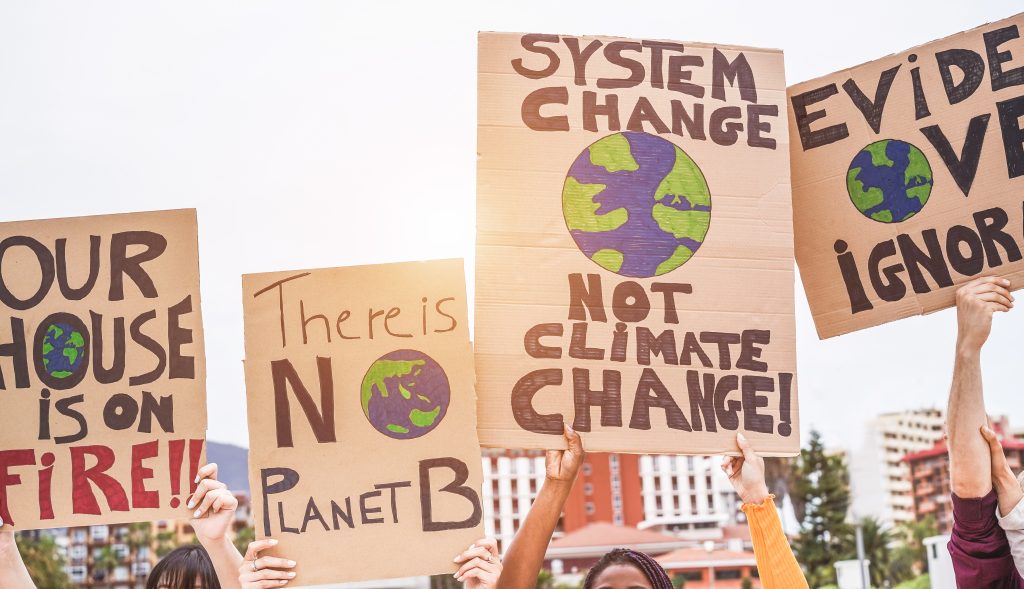
Regardless of people’s personal position on the topic, making your business resilient to extreme weather events is always going to be a positive move forward. A single event could have repercussions for months or years, if you are not prepared.
But also climate change as a megatrend is not going away anytime soon, says Melissa, and is the number one megatrend she thinks farmers and growers need to pay the most attention to as there are numerous opportunities as well as challenges.
“We have this perennial debate going on here over whether we should stay in the Paris Agreement or whether agriculture should be covered under the ETS (Emissions Trading Scheme), but at the same time our customers overseas like Walmart, Nestlé, Danone and Whole Foods are saying actually we have to publish Scope Three emissions and we just need you to get your emissions down.”
She says there is money to be made in premium markets willing to pay for low climate impact products and risks that customers won’t do business with producers with high or increasing emissions.
“You get this real tension between domestic politics that might be saying ‘let’s not bother’, and our customers who are saying ‘you know, this really matters to us’. And in the end, it’s our consumer base rather than our regulatory regime that is more likely to determine what it is we have to manage or report on.”
“In the end, it’s our consumer base rather than our regulatory regime that is more likely to determine what it is we have to manage or report on.” – Melissa Clark-Reynolds ONZM, Foresight Practitioner and Professional Company Director
Proving reductions in emissions on farm is likely to become a requirement for continuing to do business.
From her research in the market, Melissa says there are consumers who are willing to pay a premium for carbon neutral products.
“But what I’ve found when you turn the product over and look at the labelling on the ones claiming to be carbon neutral, is that they’re doing it by off-setting – by paying someone else to grow trees for them.”
She believes there’s a real opportunity for New Zealand producers who want to achieve carbon neutrality on farm through their own practices.
Melissa stresses that she doesn’t advocate for any one farming type or method or whether it’s better to operate in a premium or commodity market. Her foresights are a means to give producers and processors an idea of what trends are emerging and some of the numerous opportunities or threats that might exist.
“Climate and carbon emissions are going to become a bigger and bigger opportunity in the premium market space, so if that’s where you want to be operating then it’s something to think seriously about.”
The message is the same for processors and the need to move away from coal as an energy source.
“Sixty per cent of the coal used in the South Island is used in the Timaru District and it’s almost entirely used for food and fibre production.”
4. Biotechnology
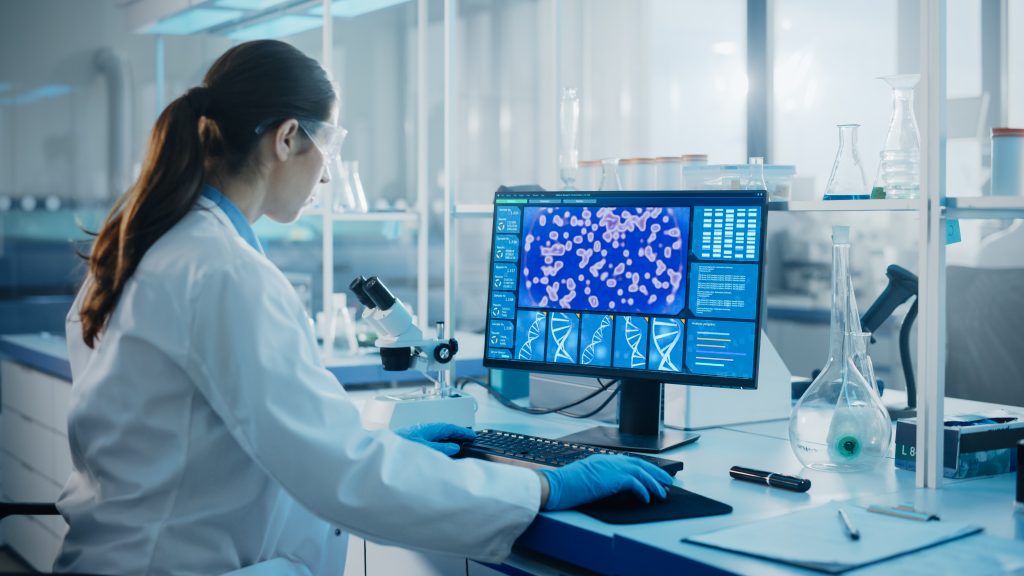
Biotechnology and more specifically genetic technology will be a huge part of the future for the primary sector.
Biological ‘magic’, Roger says, is where advances in artificial intelligence (AI), computing power or software systems will bring extraordinary discoveries and innovations in the biological world.
“DeepMind and AlphaFold are examples,” says Roger. “The two came together to map thousands of protein structures that would have traditionally taken scientists years to map only one. All the information produced in the programme is open source too.
Genetic technologies encompass a wide range of biotechnologies, but in New Zealand we have grouped them all as genetically modified organisms (GMO) and have treated them all the same, which they are not, says Ian.
“From conversations I have internationally, the discussion about gene editing is done – it’s happening, it’s part of the future,” he explains. “In fact the feedback we get now internationally is that there’s an ethical question as to why you’re not using the technology already because the benefits of it are becoming so clear.”
Those benefits include the ability to improve the nutritional quality of food, enhance yield, the ability to create environmental benefits, make the product more climate-change friendly or resistant to climate-change effects.
If we have a regulatory system and guard rails around the technologies that recognise the difference between each, and which is nuanced, then science can start to unlock the benefits.
“It can unlock the benefits to farmers, unlock the benefits to the community, and unlock the benefits to the environment,” says Ian.
While Europe is moving at a slower pace on genetic technology than some regions, there are strong signals that Asian markets see them as critically important to food resilience as do markets in Africa.
The newly formed Bioeconomy Science Institute – which brings together AgResearch, Plant & Food Research, Manaaki Whenua Landcare Research and Scion – gives New Zealand the potential to be a world-class leader in the bioeconomy, says Ian.
It will become increasingly important for New Zealand to find ways to utilise more of the biomass produced alongside our main crops and primary products, he says.
In the wine industry, for instance, only about 2% of what’s grown on the vineyard is turned into a saleable product (the juice from the grapes).
“We have 98% of the biomass that’s just wasted,” Ian says. “We need to pivot and think about how we monetise 100% of what we grow – or close to it.
“We need to think about the connection between biomass and energy or think about bio-based products we can produce such as bio-based adhesives or anything that would have traditionally come from a fossil fuel product.”
 5. Declining Birth Rates & Higher Expectations
The primary sector’s growth strategy has largely been linked to an increase in the global population, but birth rates are now declining across much of the developed world.
“We have to think about what our strategy is going to be in a world with a declining population – are we going to continue in the commodity space or are we going to find premium markets?” says Melissa.
The dairy sector has invested heavily over the years into infant and ‘growing up’ milk powder products, however as the population ages it’s important we ensure our dairy product range evolves to include products that support healthy ageing. The product formulation may not change significantly, but the way we tell the story and explain the product attributes must be completely rethought to ensure it reflects the needs and expectations of current and potential customers.
In a world where population is declining, infant formula might come up against some challenges and not just in a volume sense. Even high-quality dairy ingredients for premium brands could face disruption.
“This is happening already – precision fermented ingredients are being produced by microbes in vats in laboratories,” says Melissa. “They’re not nutrients produced by a cow for a calf – they’re nutrients that are identical to what you’d find in human breast milk.”
The back-lash against meat alternatives because they’re seen as highly processed or produced in laboratory type settings may not always hold true for products that are bio-identical, such as infant formula ingredients. Don’t expect to achieve the best premiums with just a single claim, she warns.
“The best premiums require at least three claims and that’s where those looking to attract the top prices have to push their marketing. The most expensive milk I can find in US supermarkets is Alexander Farms branded milk which is A2, certified regenerative, and has chocolate in it.”
You may not have to change anything about the way you’re producing your product, but you will need to show three beneficial aspects to it.
She also warns that there’s no evidence to suggest genetically modified products would earn a premium.
“Precision fermented ingredients are being produced by microbes in vats in laboratories … they’re nutrients that are identical to what you’d find in human breast milk.” – Melissa Clark-Reynolds ONZM Foresight Practitioner and Professional Company Director
“I’m not making a judgement on GMO (genetically modified organism) products but I just don’t see customers at the moment saying they’ll pay a premium because a product has been modified to be nutritionally enhanced or made more environmentally friendly – I see farmers talking about it, but not consumers.
“Equally I don’t see customers saying, ‘I’ll pay more for that product because your animals have been vaccinated with something or given an additive to eat that reduces their emissions.’ Farmers and processors are talking about it but consumers aren’t demanding it or saying they’d be willing to pay a premium for it from the evidence I see.”

6. Geopolitical Volatility
Where will the current geopolitical volatility lead in terms of trade and warfare? Who will be your consumer of the future due to instability and what will be important to them? How could a Russian war in Europe impact that for instance?
It is often referenced as a VUCA (Volatile, Uncertain, Complex, Ambiguous) world – a complex world.
“The first five months of 2025 were complex and described as inexplicable, verging on a new world order,” says Ian.
He says it is critical for organisations experiencing volatility to be able to discern what are unexpected shocks and events now but do not ultimately change the long-term direction of travel. This is in comparison to the deep shifts happening to stay focused on for global society, that will continue regardless of the shocks that occur.
Biosecurity is continually ranked first in the KPMG Agribusiness Agenda every year. Given the disruption reshaping global markets and trade flows, industry leaders place high priority on market diversification, signing high-quality trade agreements and developing resilient supply chains.
Having recently secured FTAs with the UK, the EU and the UAE, and with the US setting itself on a course towards self sufficiency, Ian believes there’s a strong need to leverage all our available market access as a priority. With a focus on China, the US, and Europe, he says we have often bypassed the opportunities in our own backyard in Southeast Asia – in countries like Indonesia, Vietnam, Singapore and Thailand.
The India FTA opportunity is worth pursuing in the current geopolitical environment. But while India has 1.4 billion citizens, the point was made that the addressable market for potential consumers of New Zealand products is likely less than 50 million people.
“A controversial view was expressed by one contributor to the Agenda, who suggested that we need to be open to signing an agreement with India that does not include all of our key sectors, as the benefits of a partial agreement will outweigh having no agreement and create a platform for extending the relationship in the future,” explains Ian.
“The first five months of 2025 were complex and described as inexplicable, verging on a new world order.” – Ian Proudfoot, Global Head of Agribusiness, KPMG New Zealand
He says it’s crucial to always remember the importance of the Australian market as it remains one of our biggest markets but is often overlooked.
“Our commonality with Australia (for instance the sharing of food safety standards) should see more organisations explore Aussie market opportunities to learn how to export more there.”