The value of EID
Australia's sheep and goat producers have until 1 January 2027 to get an electronic identification device (EID) into every animal leaving its property of birth or last property of residence. Sheep Producers Australia says the biggest gains will be won not just at the border, but also on farm. Words Sarah Perriam-Lampp.
Australia is shifting the last of it’s states to mandatory individual electronic identification (EID) for sheep and goats by 2027. Victoria was well ahead of the rest of the country starting in 2017, followed by Western Australia and Northern Terriorties. New South Wales, Queensland and Tasmania are now in the spotlight of transition.
The other states moved only after foot and mouth disease (FMD) was detected in Indonesia. Sheep Producers Australia Policy Council Chair Dougal Gordon says the incursion forced a reassessment of how prepared Australia was, and a huge amount of activity has happened and money spent since.
Support from sheep farmers and industry for that decision was not evenly spread.
“The processing sector was very supportive. They could see the value in terms of market access, international competitiveness, but also brands,” Dougal says. “Lifetime traceability lets a brand owner verify claims about animal welfare or emissions reduction, among other things.”
He said that farmers are bearing the largest cost of EID through the purchase of tags.
“It’s harder for them to see the value of it because market access is a bit removed from farm gate, and given there’s so many of them, it’s the biggest challenge in terms of education, support, training and cultural shift.”
He expects the apprehension to fade. Mandatory EID arrived in the Australian cattle industry in the mid-1990s and, in Dougal’s words, “it’s not even an issue now”.
A rollout in stages
Traceability sits under state biosecurity legislation, so each state sets its own timetable. One of Sheep Producers Australia’s roles has been to pull those back towards national consistency, and it has done that with a final date for EID compliance.
From 1 January 2027, all sheep must carry an EID device before moving off their property of birth.
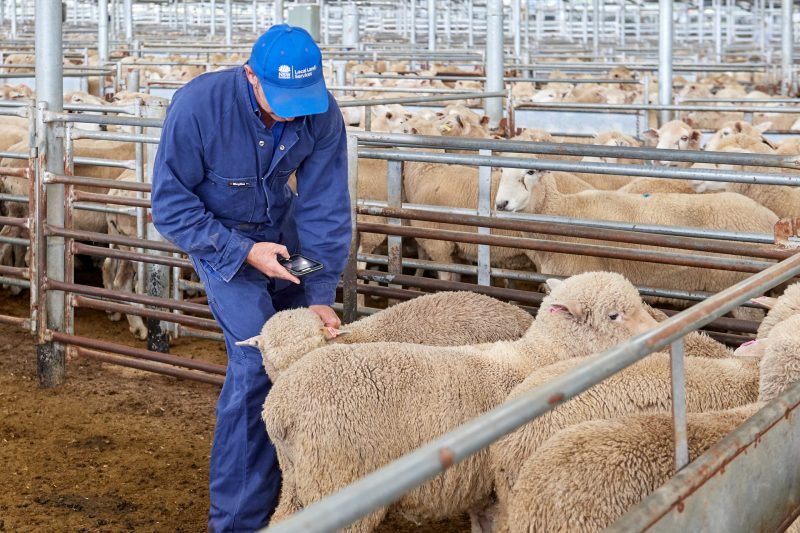
The rest of the chain moved first. In New South Wales, processors have been required to read all EID devices since 1 July 2024, and saleyards have been scanning since 1 January, 2025.
Enforcement runs through state departments of agriculture, supported in New South Wales by Local Land Services and police. Processors are audited regularly and the National Livestock Identification System (NLIS) database is the backstop.
The value of EID
Bonnie Skinner, CEO of Sheep Producers Australia, presented in Christchurch to the Beef + Lamb New Zealand Out the Gate Conference in May and shared the insights of the challenges facing sheep farmers in Australia (similar to New Zealand) that caused a rethink and reshape.
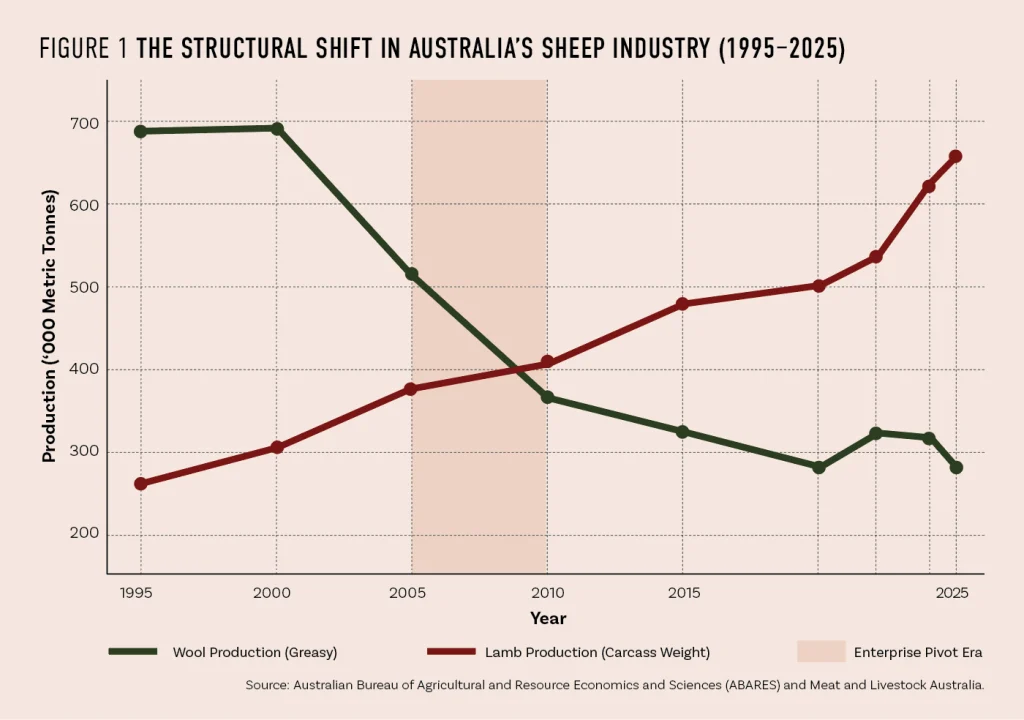
With the phase out of live export, declining wool prices and the real cost of continued dry conditions, they have been working to be more strategic in a smaller flock with a heavier carcass.
Co-funded with the Department of Agriculture, Forestry & Fisheries, Sheep Producers Australia have developed a ten-year vision to 2036. The Future Flock has brought together extensive industry consultation and economic analysis to build a clearer picture of the opportunities over the next decade.
She explained that the innovation adoption curve found top sheep farmers were three times more profitable, with a 2.5% higher return on assets than their peers. “The opportunity is to have change generate value – to the industry and the farmer – rather than just be solely viewed as compliance,” she explains.
This gap is widening. Those early adopters saw value in collecting individual animal data well before the legislation – reducing reproductive wastage, improving survival and making more informed commercial decisions.
The key value however is the ability to more quickly and accurately identify and trace animals; thereby reducing the cost and impact from biosecurity incidents and reducing the time Australia is banned from international markets.
“Materially being able to reduce the scale, duration and cost of a response, with strong traceablity underpins trade and market access confidence,” says Bonnie.
“This is followed by the ability to collect indivdiual data,” says Dougal. “Capturing productivity traits, reproductive traits, carcass traits, wool traits.”
Meat & Livestock Australia (MLA) has published return-on-investment work on EID, with gross margin data from state departments of agriculture. The study showed there was a 5-15% production efficiency from auto-drafting by weight, sex and age which is a real labour saving in a tight labour market.
The return-on-investment data around pregnancy scanning and identifying non-productive animals showed a $5.81 return per $1 invested.
“We’re certainly moving towards producers getting paid for the actual value of their carcass based on objective assessment tools, not subjective proxies, which is what we’ve traditionally done.” We’ve still got some way to go,” Dougal says.
Bonnie says that when the trio of enablers come together – EID, genomics and objective carcass measurement – it closes the feedback loop on decision making.
Dougal says that the Meat Standards Australia eating quality model for sheep and cattle takes into account a number of factors including genetics, nutrition, stress, transport, processing and cooking methods. In MLA economic modelling, there is a AUD$1.3 billion net benefit to the red meat sector from full objective measurement adoption from 2025-2045. The pieces of the puzzle link back to EID. The first is objective carcass measurement, where Dougal says the sheep industry has the greatest uptake. Spectroscopy, infrared, DEXA and a range other technologies have all been reviewed. Processors so far have largely been unwilling to move on value-based payment systems until objective measurement of traits such as lean mean yield, intramuscular fat and meat colour could be done accurately, consistently and integrated cost effectively. The second is hook tracking, which would connect not just whole carcasses to individual animals but individual cuts with RFID gambrels and potentially etched QR codes.
Bonnie pointed out in her presentation that only one processing plant in Australia currently pays on quality with producer feedback. She explained that while the technology is ready, the commercial model could follow based on all farmers having EID.
The Future Flock project acknowledges that a stronger, more profitable sheep industry doesn’t happen by accident, so the world’s largest sheepmeat producer is focused on industry evolution that aligns and collaborates along the supply chain. The interlinking piece is electronic identification of all sheep.