The Future of Forestry: Time to re-establish a native tree industry?
Parliamentary Commissioner for the Environment Simon Upton is urging a “fundamental rethink” of New Zealand’s forestry policy and its role in emissions reduction in his latest report Alt F Reset which looks at the feasibility of large-scale native afforestation. Words Sarah Perriam-Lampp.
New Zealand’s reliance on afforestation to meet its climate targets has been under increasing scrutiny. The government recently announced that they are introducing legislation to halt the locking up of high-quality farmland into carbon forests.
Federated Farmers Meat and Wool Chair Toby Williams says there are still loopholes that remain. “We’re hearing stories of farmland being bought for conversion to forestry, with the intention of selling to foreign investors to get around overseas investment rules.”
Agriculture and Forestry Minister Todd McClay says the legislation will restore balance to recognise the value of both forestry and farming.
“We remain concerned about the effect that farm conversions are having on highly productive land, particularly sheep and beef farms in Northland, the east coast and parts of Otago and Southland.”
Parliamentary Commissioner for the Environment Simon Upton is aligned in challenging the country’s current approach to forestry, questioning the dominance of Pinus radiata and the reliance on carbon offsetting through the Emissions Trading Scheme (ETS).
His recent report Alt F Reset delivers a clear message: the country must rethink how and why it plants trees.
“Afforestation has been latched onto as a cheap, easy way for New Zealand to achieve its climate goals,” Simon said at the report’s launch. “But this strategy only makes sense if your goal is purely an accounting one. The world needs real reductions in gross emissions, not an accounting triumph.”
The report is a result of the Parliamentary Commission for the Environment’s inquiry into the feasibility of large-scale native afforestation – a response to modelling by the Climate Change Commission that assumed the establishment of 300,000ha of native and 380,000ha of exotic forest between 2021 and 2035.
“Establishing native forests is neither simple nor cheap. And while transition forests show promise, they also come with the risk of a ‘carbon dip’ during the shift from exotics to natives.” – Simon Upton, Parliamentary Commissioner for the Environment.
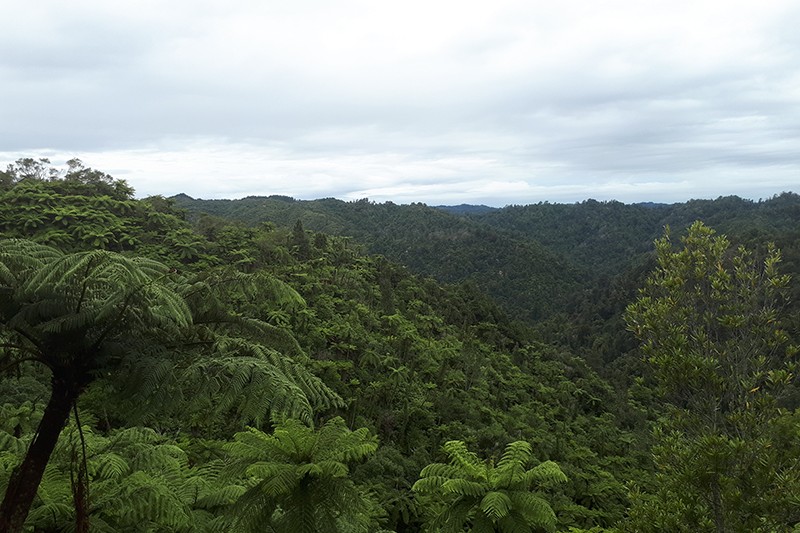
“As someone battling to establish a few hectares of natives on my own land, I was immediately sceptical,” says Simon. The report evaluates alternatives to radiata, including mixed-species forests, native forestry for timber, and transition forests – where fast-growing exotics are used to nurse native species. But Simon warns these alternatives face considerable economic and regulatory hurdles. “Establishing native forests is neither simple nor cheap. And while transition forests show promise, they also come with the risk of a ‘carbon dip’ during the shift from exotics to natives.”
What started as a study of native reforestation soon widened to a deeper investigation into the drivers behind afforestation in New Zealand, particularly the financial incentives created by the ETS. “The scheme, with its offer of unlimited forestry offsets as an alternative to emissions reductions, incentivised significant, afforestation-led land-use change,” he notes.
Simon does not oppose production pine forestry outright. “Radiata pine has, and will continue to have, an important role in New Zealand’s economy … but if we are going to drive large-scale afforestation while advocating for alternatives, we need to ask: what sort of forests do we want long-term?”
One area of strong agreement across sectors is the need to prevent further environmental degradation caused by inappropriate forestry practices.
“But clear-fell harvest should be banned in areas where it is identified as high risk. And if the current forestry sector can’t bear the cost of avoiding environmental damage, then the forestry sector must change,” urges Simon.
The commissioner also called for a major reform of the ETS. “Forestry offsets should be phased out of the NZ ETS. This would allow a simpler, fossil-fuel-only ETS to drive carbon prices up and gross emissions down – as an ETS is supposed to do.”
He acknowledged the impact this might have on Māori landowners, who often rely on carbon forestry for income. “But I don’t believe they should have to rely on a flawed and environmentally unstable scheme to restore the mauri of their land.”
Beyond reform, Simon advocates for more research, consistent policy, and a cross-party commitment to shaping future forests. “If we want a different forestry estate, we need to do things differently. If we continue on our current path, we may live to regret it.”