Summer forage crops an ideal lamb finishing option
Strong returns for lamb, increasingly widespread drench resistance and the prospect of a hot, dry summer all build a strong case for establishing specialist lamb finishing forages this spring. Words Sandra Taylor.
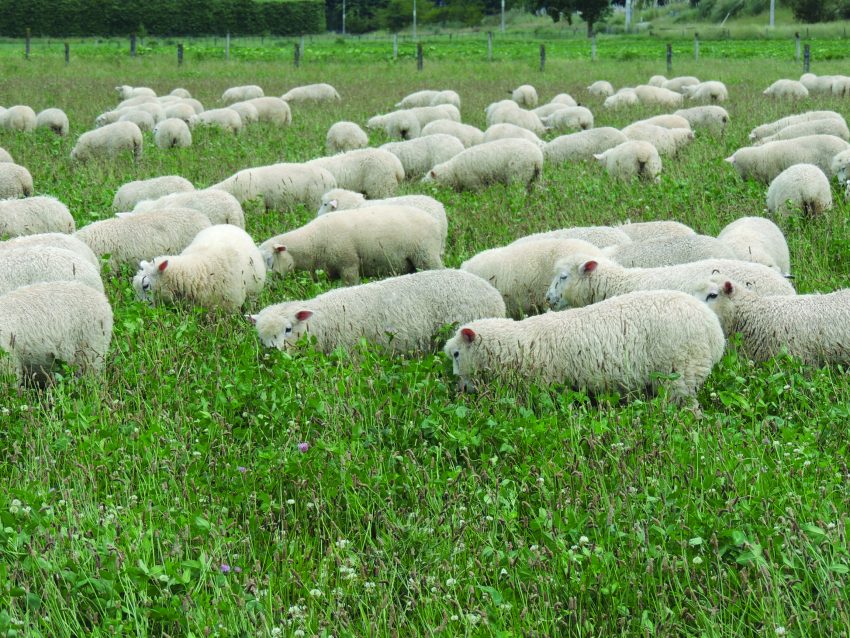
With the correct management, it is possible to grow lambs at 300gms/day on specialist forage crops. This helps drives efficiencies as lambs are finished faster and eat less total drymatter than lambs growing at 100gms/day.
Summer forage crops such as chicory, plantain, clovers and brassicas are higher in protein than ryegrass and have a faster rumen degradation rate so lambs can eat more over a 24-hour period. Ryegrass has a rumen degradation rate of around six hours while brassicas, chicory and clovers have a rumen degradation rate of around 2.5 hours.
To make the most of summer forage crops, factors to consider include accurate allocation to ensure stock are fully-fed without posing animal health risks, transition time, ideally 10-14 days, clostridial vaccinations (particularly for lambs) and grazing withholding times where agrichemicals have been applied.
Herbage tests will provide detailed information on the nutritional value of summer forage crops and help inform decisions around feed allocation and supplement requirements.
Brassicas
Compared to pasture, brassicas are very efficient at turning water into drymatter, growing around 34kgDM/1mm of water – provided nutrients aren’t a limiting factor.
Brassica crops are an effective way of transferring a spring surplus to later in the year, but there are costs involved with growing brassica crops and they need to be able to fit into the farm system. For example, taking out ground in spring may not be ideal. While brassica crops can drive high lamb growth rates, there is a transition period, so the longer the lambs are on the crops the higher the growth rates.
“Summer forage crops such as chicory, plantain, clovers and brassicas are higher in protein than ryegrass and have a faster rumen degradation rate, so lambs can eat more over a 24-hour period.” – Sandra Taylor
As a ‘clean’ crop, brassicas can also be used to manage worm burdens, particularly on farms with drench resistance, although there can be other health risks associated with these crops. A high fibre supplement such as hay or straw may be required when feeding brassica crops to support rumen function, but will add to the crop’s overall performance.
Possible health issues associated with brassica crops include scald, nitrate poisoning and pulpy kidney.
Hybrid brassicas
These include Pasja, Hunter and Pallaton raphno. These crops can offer multiple grazing options and again, lambs need to be transitioned. Some hybrid brassicas do better under a rotational grazing situation. They carry the same animal health risks as rape, including nitrate poisoning and pulpy kidney.
Legume / Herbs
These highly digestible mixes, such as chicory, clover and plantain, can last three to five years and are suited to summer dry conditions. With the correct management, they can drive impressive growth rates, but there are health risks associated with them, particularly clostridial diseases. From an agronomic point of view, weed control options for these mixes are limited as the agrichemicals that kill the weeds could also kill the forage.
Lucerne
Protein – rich lucerne is capable of very high growth rates – both animal and drymatter. Because it has a shorter growing season – it doesn’t come away until late spring – within a breeding system, it can exacerbate the early spring feed pinch.
Lucerne is high in crude protein, so it may require a high-fibre supplement if lambs are not growing as well as expected. Feed can be tested once factors such as internal parasites and trace element deficiencies have been ruled out.
When the lucerne stand is mature or flowering, feed quality can be variable; for example the stem can have an ME of 8 while the leaf has an ME of 12.
Measuring the proportion of stalk and leaf can help determine the lamb stocking rate. Once the lambs have grazed the high-quality leaf, cattle can be used to utilise the stem with less risk of bloat. Stock do need access to salt when grazing lucerne.
Red clover
Red clover can be used as an alternative crop to brassicas. Its drymatter production is similar to that of a summer brassica and has the same potential for lamb growth.
Beef + Lamb New Zealand have a number of resources on their Knowledge Hub outlining the possible benefits of summer forage crops and how to make the best use of them. Download their Making the Most of Summer Forage Crops for more information or watch part three of the B+LNZ Grass to Gold webinar.