Setting up for growing great lambs
With the outlook for lamb positive, Beef + Lamb New Zealand’s Growing Great Lambs workshops outline ways farmers can maximise lamb growth rates to make the most of the strong returns. Words Sandra Taylor.
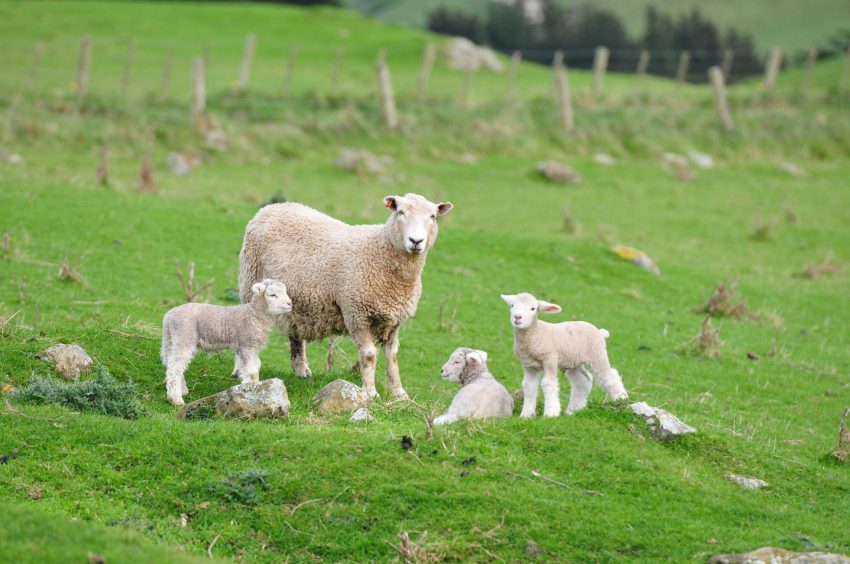
A one-week delay in putting the rams out could mean ewes are lambing in a part of spring with higher pasture growth rates which help drive lactation and higher pre-weaning growth rates.
Speaking at a Beef + Lamb New Zealand Growing Great Lambs Workshop, vet and Wormwise Project Manager Ginny Dodunski said trial work carried out in Canterbury and Southland showed there was no difference in weaning weights between lambs born in early, mid or late September. “For a farm carrying both sheep and cattle, if pasture cover is below 1600kgDM/ha at lambing, then it is too short.”
Ideally, ewes should be lambing when daily feed demand and pasture growth rates are in balance.
With the theme of growing and selling lambs as quickly as possible, Ginny challenged farmers to think about their lambing date and the feeding and management of ewes pre-lambing and ewes and lambs post-lambing to drive lamb growth rates. The faster lambs are finished, the less feed they eat and the less exposure they have to worms and other production-limiting diseases such as viral pneumonia and facial eczema.
Pre-lamb
In the lead up to lambing, ewes need to be eating about three percent of their liveweight in drymatter (DM). For a 70kg ewe, this equates to roughly 2kg DM/ewe/day, so ewes set-stocked at 10/ha will be eating 20kgDM/ha/day. Ewes’ requirements will nearly double after lambing.
Strategically managing multiple ewes in lambing date and BCS groups can help save feed and ensure ewes are getting enough feed to meet demand at set-stocking. Ginny says, if necessary, ewes in good condition can milk off their own backs, but it is important to keep the feed up to them to the point of lambing rather than putting them into a feed pinch just prior to lambing. “One of the worst things you can do to ewes in good body condition is to underfeed them just before lambing. It leads to metabolic disorders where the body tissue begins to break down and the lamb is more likely to die at birth.”
Mixed age ewes can be pulled back onto maintenance after the first 10 days of mating, but Ginny points out that ewes that have put weight on pre-mating will have higher maintenance requirements through winter.
To ensure there is adequate average pasture cover over the farm during winter and into lambing, feed planning should begin on 1 February.
Realising genetic potential
An elite birth to weaning lamb project, carried out at Poukawa Research Station, showed what was possible with the right mix of genetics and unlimited feed. In the trial, East Friesian-cross ewes were put to high genetic worth terminal sires and lambed on high pasture covers, with minimum residuals of 1800kgDM/ha. On this feed, the single lambs grew at 437gms/day, the twins at 407gms/day and triplets at 380gms/day.
While this is unrealistic on hill country farms, Ginny says it highlighted the genetic potential of today’s ewes which have, through SIL, been selected for fecundity and milk production.
“We’ve learnt how to feed our ewes better than
we did 20 years ago, but we need another step-change in ewe feeding to drive better pre-weaning growth rates.”
Birth to docking
Ewes at an optimum BCS lambing on high pasture covers can easily grow lambs at between 215-350gms/day between birth and docking.
Docking to weaning
Ginny encourages farmers to identify and weigh a sample of lambs at tailing and weigh them again at weaning. This provides the opportunity to compare the performance of lambs in different mobs, paddocks and management systems. Ideally, lambs should be growing at between 215-250gms/day between docking and weaning, but a national project looking at the performance of lambs over this period found the average growth rate for hill country lambs was 180gms/day. “Whatever growth rate you’re doing up until tailing will almost invariably drop off. Old-fashioned, short ‘quality’ pasture is usually not good enough to drive the growth rates we want.”
Easily harvested legumes are critical to driving pre-weaning growth rates and Ginny recommends shuffle or rotationally grazing ewes and lambs (just leaving the gate open to let them wander through and then shutting the gate behind them) to give lambs the chance to have a pick of clover.
It also gives clovers in grazed paddocks a chance to recover. Sheep will mine the clover out of the pasture when they are set-stocked.
Mis-mothered, poorly fed lambs will often recover growth rates when drafted off and put into chicory, lucerne or clover paddocks.
Post-weaning
Post-weaning growth rates vary massively, but on hill country pastures they average around 80gms/day. Even on finishing farms, when the diet is predominately grass, growth rates average around 180gms/day.
Most often, lambs are simply not getting enough drymatter, energy or protein to sustain high growth rates. Pasture covers of 1400kgDM/ha are too short for lambs to eat and pasture quality drops off when pasture covers are over 2500kg DM/ha.
Ginny says there is a big difference between the in-rumen degradation rate of ryegrass (around six hours) and chicory and brassicas (around 2.5 hours). The faster the rumen degradation, the more the lamb can eat, hence the value of specialist finishing forages.
Worms
Worms challenge a lamb’s immune system and it is the immune response that will result in reduced growth rates and clinical symptoms such as scours or ill-thrift. Green, leafy, ‘clean’ forages can reduce a lamb’s exposure to larvae, but the best strategy is to grow lambs as fast as possible in spring and early summer so they are not being carried through into autumn when levels of infective larvae increase.
How to grow great lambs
- Ewes should be lambing onto paddocks with pasture covers of at least 1400kg DM/ha (typically >3.5cm in Spring).
- Feed management is easier when lambing date is close to ‘balance date’ – the time when pasture growth rates have lifted to equal ewe demand.
- Ewes in good body condition should not be pinched for feed just before lambing.
- Winter feed planning should start on 1 February.
- Well-fed ewes have higher maintenance requirements through winter because they weigh more.
- Easily harvested legumes are critical for driving pre-weaning growth rates. If pasture covers are short, clover grows very low to the ground and lambs can’t harvest it.
- Ryegrass has a slower rumen degradation rate than legumes so lambs cannot eat enough volume to sustain high growth rates.
Click here to calculate ewe intake requirements, using the B+LNZ’s FeedSmart tool.