Protecting Central Otago’s largest stand of alpine tōtara
Andrew Paterson is a third-generation farmer at Matakanui Station near Ōmakau with his wife Tracy where they farm Polwarth merino sheep and Hereford cattle.
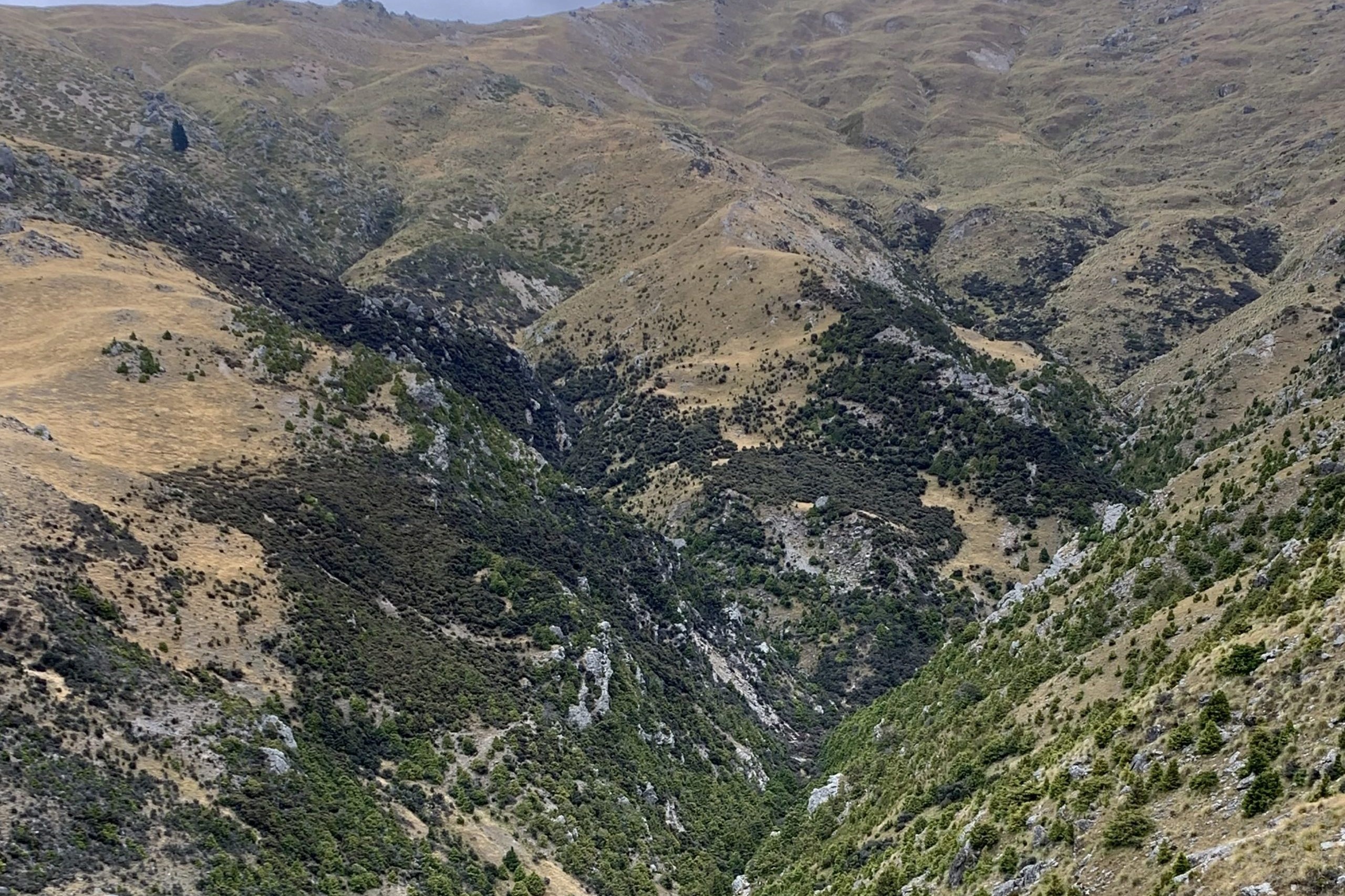
The most exciting achievement for Matakanui Station we are very proud of has been the recently signed agreements with QEII to protect between 110–132ha of mountain tōtara (Podocarpus laetus, commonly referred to as ‘Hall’s tōtara’).
The area is very steep and ranges from 600–1,000m above sea level and is believed to be the biggest stand of alpine tōtara in Central Otago which is regionally significant. QEII Ecologist Brian Rance has recorded that there are 97 species of flora found in the covenant with the most common being trees and shrubs and herbaceous plants. Four podocarp species have been recorded – mountain tōtara, snow tōtara, celery pine and bog pine.
“Native birds flourish in the area and play an important part for ensuring the spreading of seed.” – Tracy Paterson, Matakanui Station, Central Otago
There are five nationally rare plants recorded as well as others that are of regional importance.
In early 2021 we were contacted by Ben Teele, University of Otago PhD student, requesting access to part of our hill country to look for remnant tōtara to collect seed from. We knew that there were natives on that part of the farm so we welcomed Ben to Matakanui. He advised us that what we had was pretty special and arranged to come back and collect seed in March of that year.
We then held a biodiversity field day through New Zealand Merino, with David Norton, where Rob Wardle of the QEII Trust attended. Discussions followed and, together with our neighbour, Charlie McNally of Airdrie, the decision to protect in perpetuity was made.
Ben Teele has predicted that one of the trees is male and 800+ years old. It is agreed by the experts that this stand represents an excellent example of the pre-human ecosystem that was commonplace in Central Otago.
Native birds flourish in the area and play an important part for ensuring the spreading of seed. With little to no pressure from livestock grazing, we are excited to see how the stand will be further protected from pest species such as wild pigs when fencing goes in. It highlights that despite not being fenced off it is possible for farming and regeneration to occur.