Phillip Yates A pioneer in his field
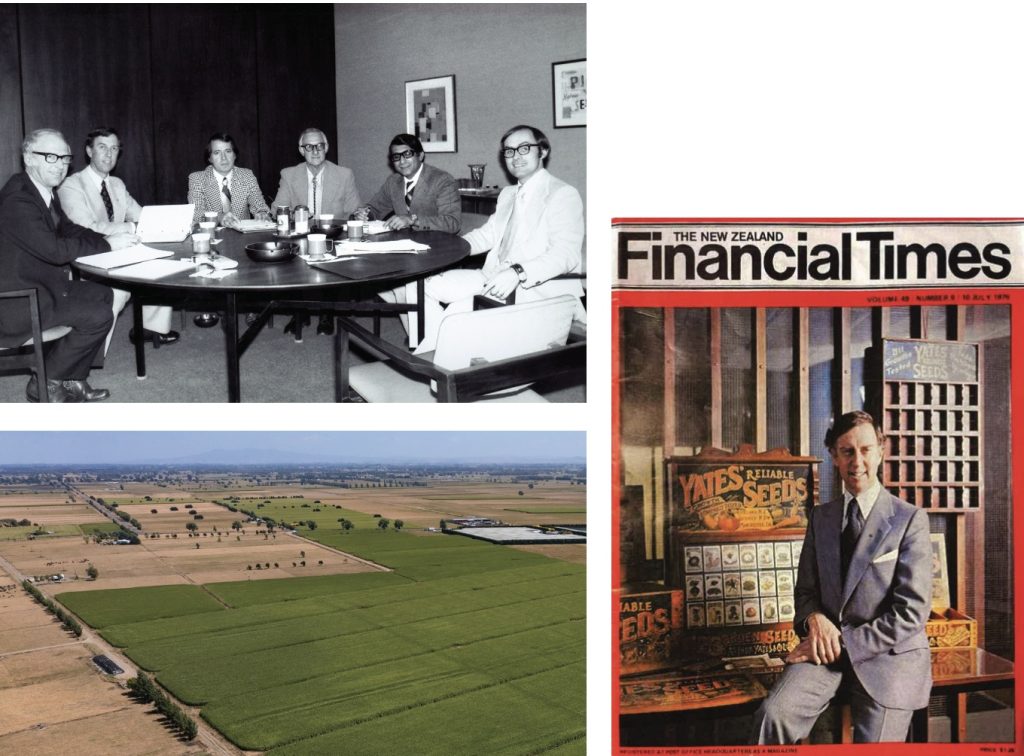
I joined our family seed business, Arthur Yates and Co, as a shy teenager in 1949, eventually becoming chief executive and managing director in 1973.

How did you start selling Pioneer maize seed?
I joined our family seed business, Arthur Yates and Co, as a shy teenager in 1949, eventually becoming chief executive and managing director in 1973.
Yates’ Reliable Seeds was a household name, selling seed of every kind from flowers and vegetables to agricultural and bird seeds. While gardening was booming in the 1970s, home garden seed sales were declining as people opted to purchase plants. Yates’ opportunity to maintain sales lay with the agricultural seeds division. I read a magazine article on hybrid wheat, which led to a meeting with Pioneer Hi-Bred in Des Moines, Iowa. They convinced me that hybrid maize had more potential than wheat. Consequently, I signed a distribution agreement with Pioneer in 1975, marking the start of a 50-year journey.
How has the way you grow and sell maize seed changed since the 1970s?
Maize seed production has changed significantly. We started growing maize in the Waikato but moved to Gisborne because it has a longer growing season and a more suitable climate for growing seed maize. Initially maize seed was sold by weight, not kernel count and there was no sizing of seed. This made accurate planting challenging. Seed sizing improved plantability and we were the first company in the world to sell maize seed by kernel count. This means every bag of seed plants the same area.
Over the past decades we’ve learned a lot about seed quality and the things that impact it. We are very focused on producing the highest quality seed because even plant stands deliver better yields.
What core business philosophies have you held firm throughout the years?
It’s simple really – we always put the interests of the customer first. Guided by Pioneer’s ‘Long Look’ philosophy, we endeavour to produce the highest-quality seed, deal with people fairly, market our products honestly and provide knowledgeable field service and support to help growers make optimum profits from our products.
What climate and economic drivers will result in maize production and management adapting and changing into the future?
As the frequency of droughts increase, farmers will be unable to rely on pasture alone. Hybrid maize has some tremendous advantages. It’s deep rooted, can be stored as silage or grain, fed when required and yields continue to increase. Consumers are demanding more sustainably produced food and locally grown maize can help by lowering the greenhouse gas emissions associated with livestock production.