Pest to Profit?
Goats get a bad rap as feral pests and are often remembered as a fledgling industry that went bust in the 80s. But the tide has turned and New Zealand Cashmere believes there has never been a better time to diversify into cashmere and integrate goats into farming systems in New Zealand. Words Rebecca Greaves.

Listen on the Country-Wide Podcast:
Low maintenance pasture groomers who eat weeds, create 30% more clover and grow a sought-after luxury fibre – Cashmere goats are back on the radar.
New Zealand Cashmere Business Development Manager, Olivia Sanders, is sold on the virtues of goats, and excited about the opportunities they could bring. New Zealand Cashmere is now owned by Woolyarns, a textile manufacturer in Lower Hutt, and it is on a mission to build the cashmere industry here in New Zealand. Woolyarns has invested in a $3-million onshore processing facility. “That’s a real show of confidence and security for the industry to have that facility here in New Zealand,” Sanders says. “We now have the supply chain and that will enable better returns for farmers.”
Once processed, the fibre is being shipped offshore to high-end markets in Europe, America and Asia.
While many farmers have a hangover from the 80s, vividly remembering the boom and bust with goats, Sanders says a lot has changed, and the time is right to revisit the opportunity to integrate goats into existing farming systems.
“There were a lot of reasons why it didn’t work then, and a lot of reasons why now is a good time to look at goats. A lot of people jumped on the bandwagon in the 80s and didn’t really know how to farm goats. The industry grew faster than knowledge and good management did.”
Sanders says it is now well understood how goats eat, and how to reduce the worm burden. She points to industry pioneer, South Otago farmer David Shaw, who has played a pivotal role in improving genetics and breeding purpose bred goats for New Zealand conditions.
“The 80s were a perfect storm. Aside from the fact we couldn’t process the fibre here, there were market access issues with China, which created a bottleneck and nowhere for the fibre to go. We had warehousing issues and then Black Monday hit. There were a lot of industries that went down, not just goats.”
Sanders says we now have a secure supply chain, better animal management and genetics, purpose-bred animals for New Zealand conditions and high market demand. “The market is more than ready for us. We have daily enquiries from overseas companies desperate for New Zealand grown cashmere fibre and willing to pay a premium – we just need more people to farm the goats.”
New Zealand is ideally placed to provide a sustainable, traceable and ethically produced product that luxury fashion brands are demanding, Sanders says. “Our animals are farmed to the Five Freedoms and there is currently no global standard, so we have created our own Sustainable Cashmere Programme, which is being piloted onfarm at the moment, to put us ahead of the game.”
In time, Sanders hopes this programme will be able to clip on to the NZFAP or onfarm audit programmes, reducing administration for farmers.
INTEGRATING GOATS INTO THE FARM SYSTEM
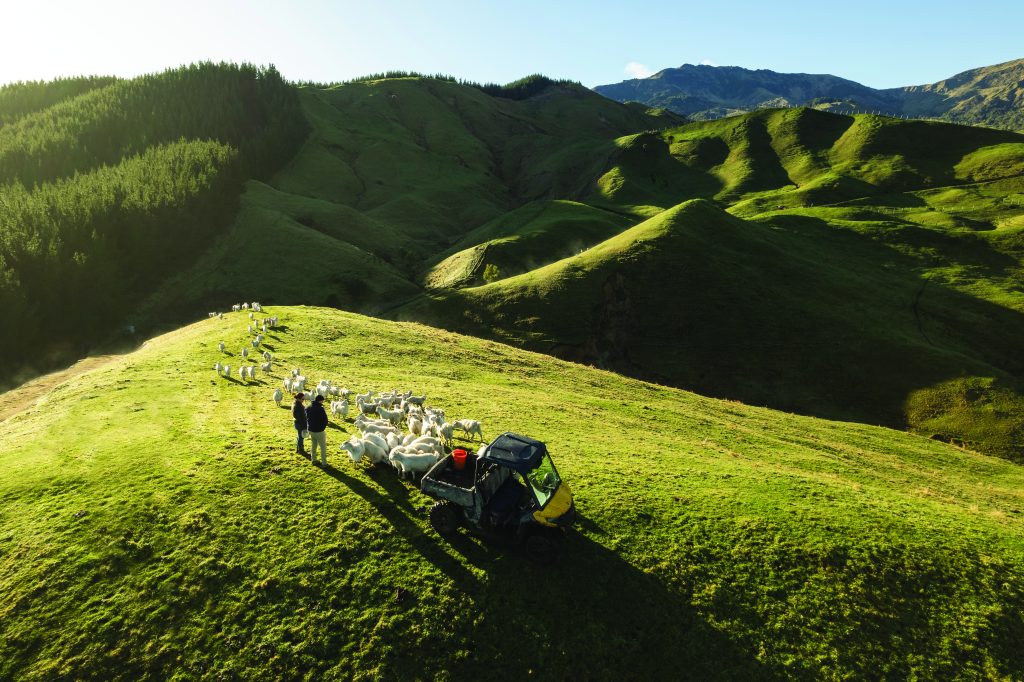
The beauty of goats is they can fit into any farm system, Sanders says, from dairy to deer and sheep and beef. The key is that goats need to be doing a job, as well as producing a beautiful, high value fibre.
Goats prefer to graze at chest height or just lower and are browsers, making them the perfect pasture grooming tool. They will first eat troublesome weeds, like thistles, then seed head and finally, the tops of pasture. There are 16 species of shrubs and weeds, including gorse and blackberry, that goats will eat. Sanders says this can equate to less time and money spent on chemical and weed control.
Research has shown goats can increase clover cover by up to 30%, which could be utilised to finish stock to higher weights, Sanders says.
“Clover is about 2% of a goat’s diet. They like to take the fibrous tops out, which opens up pasture and enables clover growth. Goats are groomers, they take out the weeds and rubbish farmers don’t need or utilise for other stock classes. For me, I’m driven in terms of lifting production and if we can reduce inputs in the farming system, great. If there are farmers out there with lower productive land classes, goats could lift the return on that land.”
“Research has shown goats can increase clover cover by up to 30%, which could be utilised to finish stock to higher weights.” – Olivia Sanders
Goats are hardy and fairly low maintenance, drenches can be annual when goats are run correctly, and they are shorn once a year, which can be done on your normal shearing plant. If you are kidding, does will need to be brought in annually to wean the kids. Goats have the same gestation period as a sheep, but they will kid at any time of the year. Kidding tends to be hands-off, with minimal assistance required.
If farmers don’t want to deal with kids, they can run a wether only model and push the goats a bit harder. “They’re a bigger animal, grow up to 30% more cashmere and wild goats are not an issue. They’re a very low-input stock class.”
Goats grow cashmere from the shortest day to the longest day, like a winter coat, which will moult naturally once it warms up if not shorn off. Shearing is done in spring and goats do not require crutching or get flystrike.
Sanders says it is possible to add up to 10% of your stock units in goats without reducing other stock class numbers, due to the way they eat.

An adult goat will clip about 1kg of fleece, however a portion of this is what is referred to as ‘guard hair’, so the average yield is typically 200-300 grams of cashmere fibre per goat. Fibre traits are highly heritable in goats, and the ability to drop micron is quite remarkable, Sanders says.
The strongest micron they are processing is 18, with some exceptional flocks testing down to 11 microns. Payment is made across three grades: $110/kg for 16.8-18 microns, $125/kg for 16-16.7 microns and $150/kg for 14.5-16 microns.
In terms of building a herd, feral goats are not a bad place to start, she says. “They are incredibly resilient, have a great set of feet and survivability. A feral goat is not a bad foundation animal, they’re very hardy, already grow some coloured cashmere down and it’s a low-cost way to start.”
If you don’t want feral goats, there are some growers who are focused on breeding stock for the industry and selling them on. A doe or wether hogget is worth about $50-60 and mature does about $120, with performance recorded bucks selling for about $1000. A buck can cover 80-100 does, similar to a ram.
Sanders believes goats are a no brainer and she poses the question, what can goats do for your business?
“If you could reduce your weed control bill by 20%, increase your clover content by 30% and put that into liveweight gains in the lambs, what does that allow you and your business to do? It could be to spend less time or weed control or apply less chemical, or to get rid of more lambs, faster, and set you up better for the next season.”
New Zealand Cashmere is setting up a two-year project with consultants, AgFirst, that will put 150 mated does on two properties, one in the North Island and one in the South Island, to see what effect they have on pasture and stock. Sanders hopes it will be a good chance to demonstrate what goats can do, and to hold open days for farmers to see for themselves.