No quick fix to eliminate crop weeds
South Canterbury grower Nigel Rathgen has had difficult-to-eliminate grass weeds in some cropping paddocks for a few years. Words Heather Chalmers.
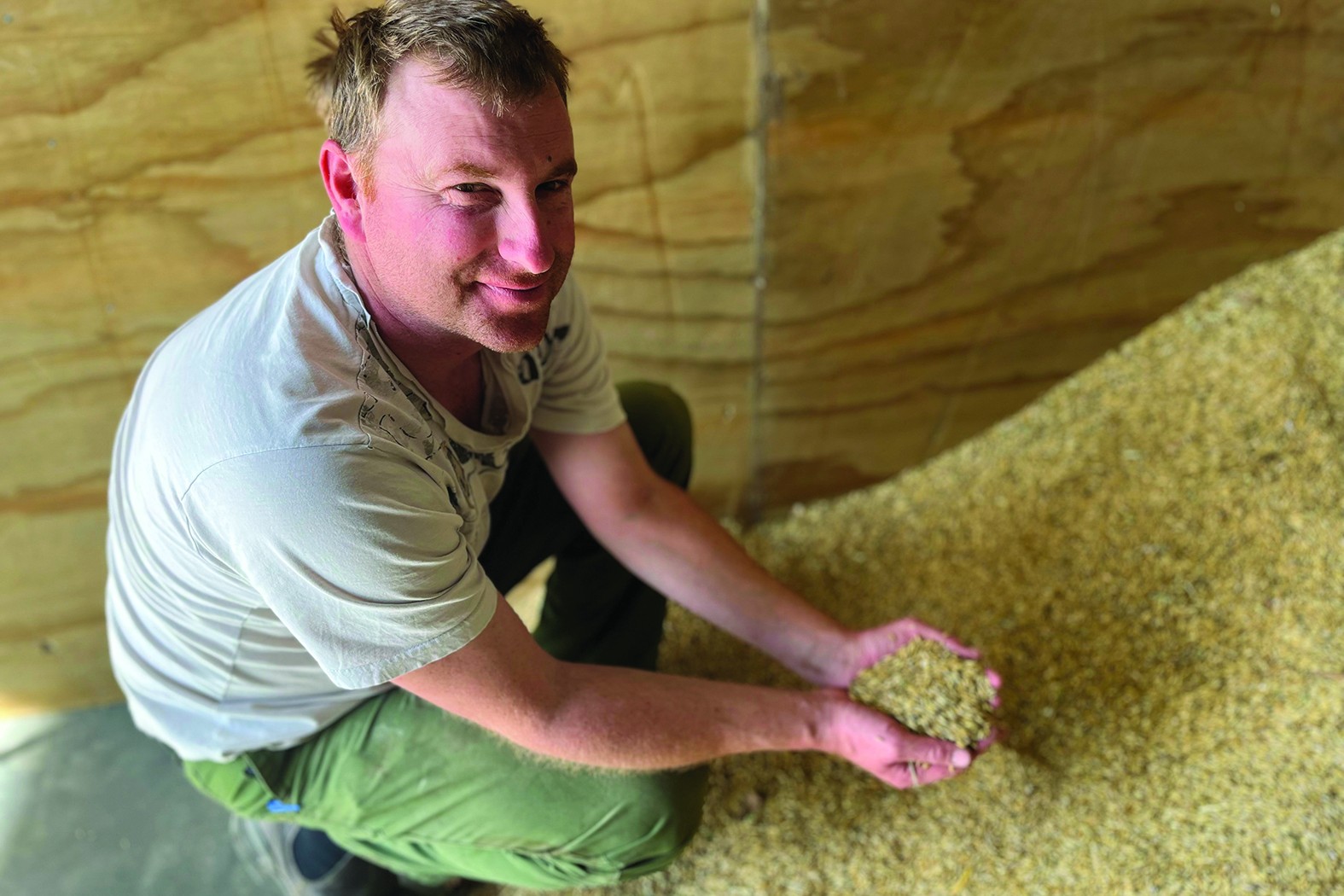
South Canterbury grower Nigel Rathgen has had difficult-to-eliminate grass weeds in some cropping paddocks for a few years. It is only since the formation of a Foundation for Arable Research (FAR) Growers Leading Change (GLC) group focused on grass weed control in South Canterbury that he is now getting on top of the problem. He is one of about 15 farmers in the group. “I was trying to get rid of weeds with mixed success prior to the GLC group,” Nigel says.
While he was working to control weeds, he now realises that he was missing some steps and that a multi-pronged, year-round approach is needed.
Ryegrass seed is an important crop option for arable farmers, but if other, unwanted, grass weeds appear in these or cereal crops (also members of the wider grass family) they can be difficult to eliminate. The issue is further compounded by the belated identification of Group 1 and 2 herbicide resistance in some ryegrass varieties imported for seed multiplication, as well as some New Zealand breed lines.
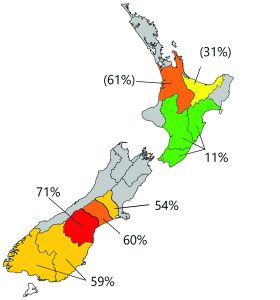
Grass weed herbicide resistance is a bigger problem in districts where grass seed crops are grown and rotation options are limited. Surveys found resistance in 71% of arable farms in South Canterbury, compared with 60% in Mid Canterbury and 11% in the lower North Island.
The Rathgen family run an extensive arable and dairy farming operation at Esk Valley, near St Andrews. Nigel manages Rathgen Farms, comprising 600 to 700 hectares in arable crops as well as Glen River Seeds, an on-farm seed cleaning business. The farming operation also owns two dairy farms and a dairy support block.
The arable rotation is brassica/cereal/grass seed. Oats and red clover are grown for seed, with oats also used as a winter break crop either for grazing or silage. “The rotation is not set in stone. It depends a lot on the livestock, with the arable block grazing mainly dairy replacements for the dairy farms and a few beef cattle,” Nigel says. Grass weeds and wild oats are the most difficult to control weeds on the farm.
A hybrid grass grown for seed seven years ago has proved difficult to eliminate and was probably a seed line with herbicide resistance. This means he hasn’t been able to use the paddock for a grass seed crop since. “It is rogueable now, but it has taken a long time to get to that stage.”
In other paddocks, weeds are coming in with birds. In the GLC group’s first year, a FAR researcher completed a weed assessment survey of two paddocks on 36 South Canterbury farms including the Rathgens’ to benchmark the situation as part of MBIE funded research.
“By having different herbicide timings, any plants not killed, or germinating after the first treatment, can be eliminated by the following one.” – Nigel Rathgen, South Canterbury grower
Nigel says that his involvement in the GLC group has made him realise that he was missing some of the steps required for more complete weed control. Changes that have been made onfarm include a return to ploughing for ex-ryegrass paddocks and any paddock considered a problem. Full inversion buries the weed seed burden. Otherwise, he uses a shallow incorporation method.
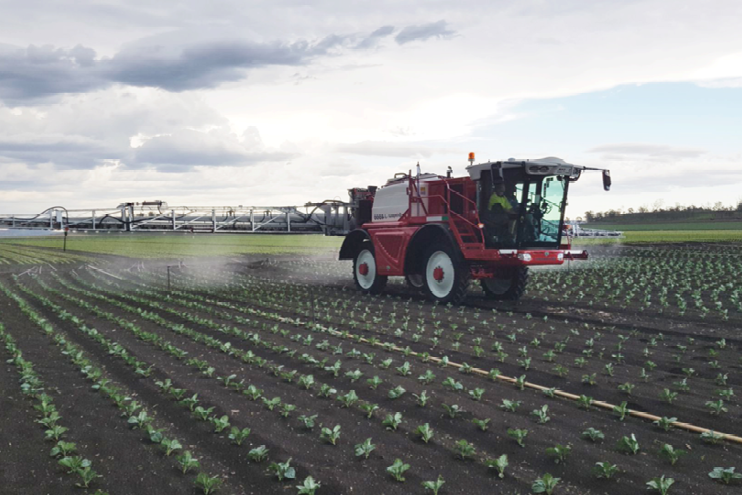
The timing of chemicals has also changed, particularly pre- and post-emergence treatments. “By having different herbicide timings, any plants not killed, or germinating after the first treatment, can be eliminated by the following one.
 “I have changed chemistry a bit and seek more advice before applying something now.” Red clover seed crops also provide an opportunity to apply different chemistry.
The weediest paddocks, or patches in paddocks, are made into silage rather than being harvested, to stop weeds seeding. “As we have dairy farms, we have the option of feeding these as silage to cows. But we do have to identify those paddocks early so we don’t apply fungicides and chemistry with withholding requirements. You could harvest them, but it is not fixing the weed issue.”
A thorough rogueing (hand-weeding) programme is the final backstop, with five students employed over summer. The farm is now more conscious of cleaning machinery such as combine harvesters and balers before moving to a new paddock, to prevent the spread of weed seeds. Most cereal crop residue is burnt. Post-harvest and before cultivation, paddocks are fallowed as long as possible to get a strike of weeds before applying glyphosate. It has taken three to four years to make a significant improvement on the worst paddocks and Nigel says his goal is to eliminate grass weeds long term.
While it is just some paddocks on the farm where weeds are a particular issue, limited cropping options mean these few can have a big effect on the whole rotation. “It needs to be a complete year-round control programme. The GLC group emphasised that I was on the right track, but adding a step here and a step there made a huge difference,” Nigel says.