New Logo Highlights New Zealand – Grown Grains
Most consumers are unaware that the bread they buy from the supermarket is more likely to be made from imported, rather than domestically grown milling wheat. Words Heather Chalmers.
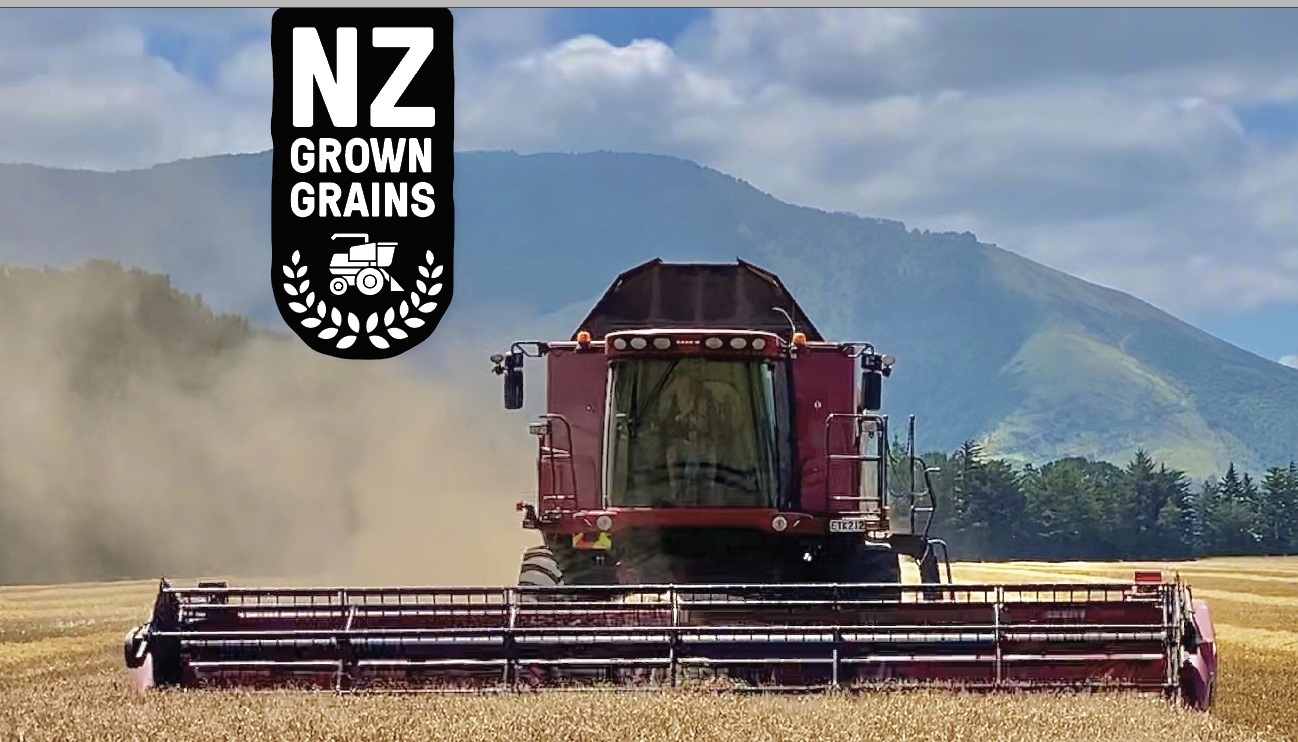
Despite New Zealand arable growers producing some of the world’s best-quality grain, most consumers are unaware wheat in their bread is most likely imported.
To make it easier for consumers to identify and seek out food and drink products made from domestically grown grain, a new ‘NZ Grown Grains’ logo will soon start appearing in bakeries and on shop shelves.
The initiative is part of a wider industry campaign under way for about five years, to make New Zealand become more self-sufficient in the growing of milling wheat, used to make bread.
“Despite the arable industry’s reputation for quality product, at least three-quarters of the bread sold in New Zealand is made from imported grain, primarily from Australia,” says FAR General Manager of Business Operations Ivan Lawrie
The certification trademark for products made with New Zealand-grown grains is the initiative of growers via their levy organisation, the Foundation for Arable Research (FAR), in collaboration with Eat New Zealand which promotes locally sourced food.
Ivan says the certification trademark will start appearing on packaging and advertising.
“There is interest already from bakers as well as makers of breakfast cereal and plant-based milk.”
FAR owns the trademark which became available under licence from 1 July for companies that meet its specifications. The trademark not only applies to milling wheat, but also other grains such as oats and barley.
“The campaign is a unique opportunity for farmers to join with bakers, chefs and consumers using their grains and seeds, to tell a compelling story about what makes New Zealand-grown arable foods so wonderful,” says Eat NZ Chief Executive Angela Clifford.
Capital publicity around the trademark is planned in spring as food and beverage makers are signed up.
Growers are keen to expand production and maintain a strong industry, but infrastructure remains a major hurdle. While most cereal production is in the South Island, it is expensive to transport this grain to where most consumers live, in the North Island.
“It costs less to transport grain from Australia to the North Island than across Cook Strait from the main growing region of Canterbury,” says Ivan.
In terms of consumer preference, market research showed that 50% of bread purchasers are prepared to pay up to 20c extra a loaf and some consumers up to 50c for a loaf guaranteed to be made from New Zealand-grown grain.
“Although the grain component may represent only a small share of a final product’s total cost, even a modest rise in demand can have significant long-term effects, encouraging investment by plant breeders, traders and processors and helping to maintain a diverse and resilient portfolio of cropping options for New Zealand growers,” Ivan says.
When the price of a loaf of bread is broken down, the wheat raw ingredient only represents 25–30c, or 10–12% and milling 12–15c, or 4–5%; 80% of the price covers baking, logistics, packaging, retailing and taxes.
“At least three-quarters of the bread sold in New Zealand is made from imported grain, primarily from Australia.” – Ivan Lawrie, General Manager – Business Operations, Foundation for Arable Research
“From the quality to the connection to our land, from food security to social licence, we all win when our farmers and those eating the food they grow, work together,” says Angela.
Other research commissioned by FAR and Eat NZ has debunked some industry myths which questioned the suitability of New Zealand-grown wheat for baking. An independent analysis compared the performance of Australian wheat grades most often imported into New Zealand with domestically grown wheat in terms of the baking properties of the flour.
“This highlighted the superior performance of New Zealand milling wheat compared with imported Australian grain,” explains Ivan. “It is not only better than the Australian product, but as good as Canadian, which is rated as the international standard.”
New Zealand grain growers are already certified through a United Wheatgrowers’ QAgrainz quality assurance and traceability programme.
In terms of greenhouse gas emissions, an analysis showed that 1kg of flour, milled in New Zealand from local wheat, has a lower carbon footprint than 1kg of flour milled using Australian wheat at the same mill.
New Zealand-grown grain not only has lower transport emissions, but its much higher yields result in lower emissions per tonne of grain, Ivan says.