Money Talks
Farm employers across the sheep and beef and arable sectors have continued to invest strongly in one of their greatest assets – their staff. But in a competitive market, employers are warned they cannot afford to be complacent when it comes to staff. Rebecca Greaves reports.

Listen to the podcast:
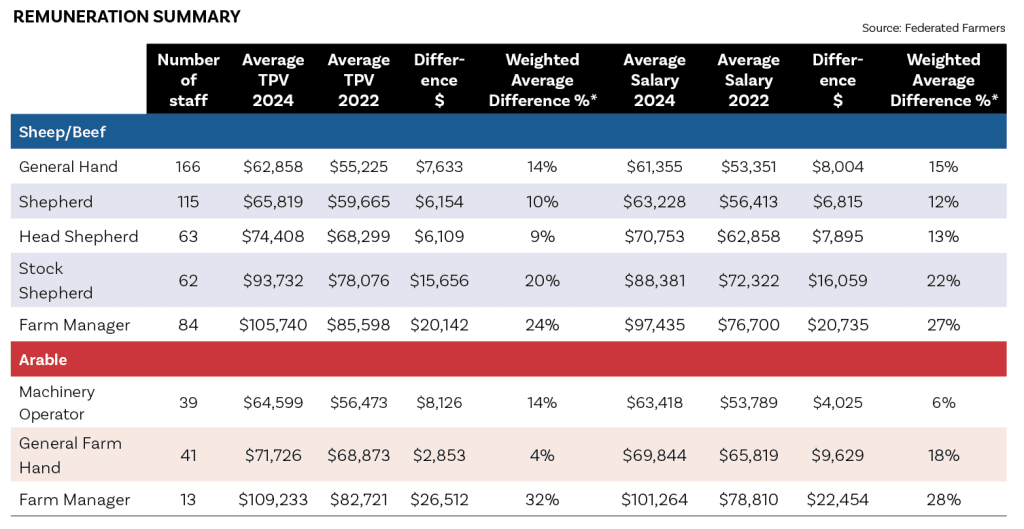
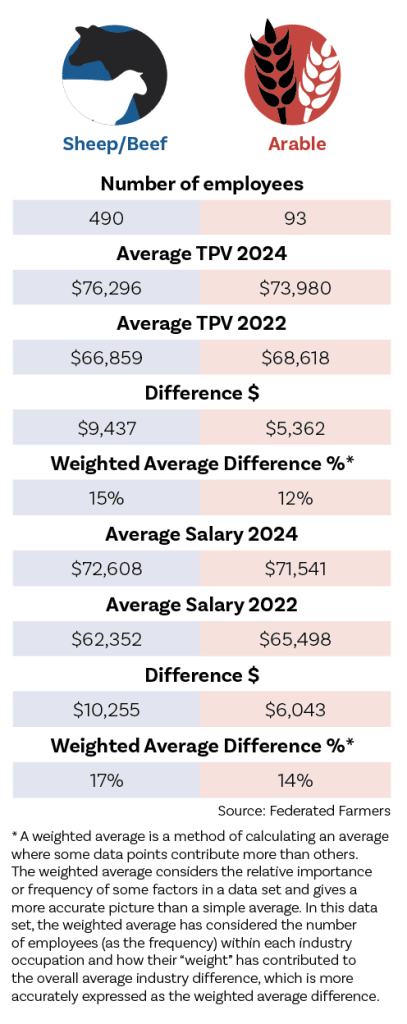 Reports in the primary sector show rises across the board when it comes to salary, but the real Total Package Values (TPV) when housing and perks are included bumps the appeal up significantly, making agriculture an attractive industry to work in. The 2024 Federated Farmers-Rabobank Farming Salaries Report, released in April, shows that since the last report in 2022, the average salary for a farm worker has increased by $7,480 to $71,411 and the weighted average annual salary across the 13 surveyed onfarm position categories has grown by 13%.
Federated Farmers employment spokesperson, Richard McIntyre, said that for some more senior roles, the increases were significantly higher. “For example, a sheep/beef farm manager is earning an average 22% more than two years ago ($88,381) and the average income for an arable farm manager is up 28% to $101,264.”
McIntyre said the increases were impressive, especially in light of all the headwinds farmers have contended with over the past two years, including Covid, severe weather events, production-suffocating red tape, inflation and roller-coaster commodity prices. “And these upwards salary movements underline that careers in agriculture are not only satisfying, but also pay-competitive,” he said.
The 2024 report is the 14th Farming Salaries report that Federated Farmers and Rabobank have produced. The report collates the results from a remuneration survey conducted by independent firm Research First in early 2024, and the findings cover data collected from 529 farm employers relating to nearly 1800 employees.
The report shows that between 2022 and 2024, weighted average salaries rose by 17% for sheep and beef roles, and by 14% for arable roles.
McIntyre said the report also highlighted strong growth in TPV for farm employees. “The salary figures do not include the range of other benefits provided to farm employees, which can include things like vehicle usage, meat, firewood, phone and power allowances.”
For many farm employees those extras can add up to several thousands of dollars a year. For example, the average TPV for someone working in the sheep and beef sector rose to $76,296, nearly $3,700 more than the salary.
The report shows the average weekly hours worked on farms is below the International Labour Organisation’s recommended maximum standard weekly total of 48 hours. The average number of hours worked on a sheep and beef farm was 44.4 hours and on an arable farm 46.3 hours. Rabobank General Manager for Country Banking, Bruce Weir, said the low unemployment environment was one of the key factors which had driven onfarm salaries higher over the past 24 months. “Many farm owners have found it incredibly difficult to source skilled labour over recent years, and this has played a key role in lifting wages as employers have had to pay more to attract and maintain good staff,” he said.
“We know that remuneration is a key consideration for this group when they’re thinking about career pathways and, if we want to attract good young people into the sector, it’s vitally important that growth in salaries for onfarm roles keeps pace with, or exceeds, what is happening across the wider employment market.”
Best behaviour
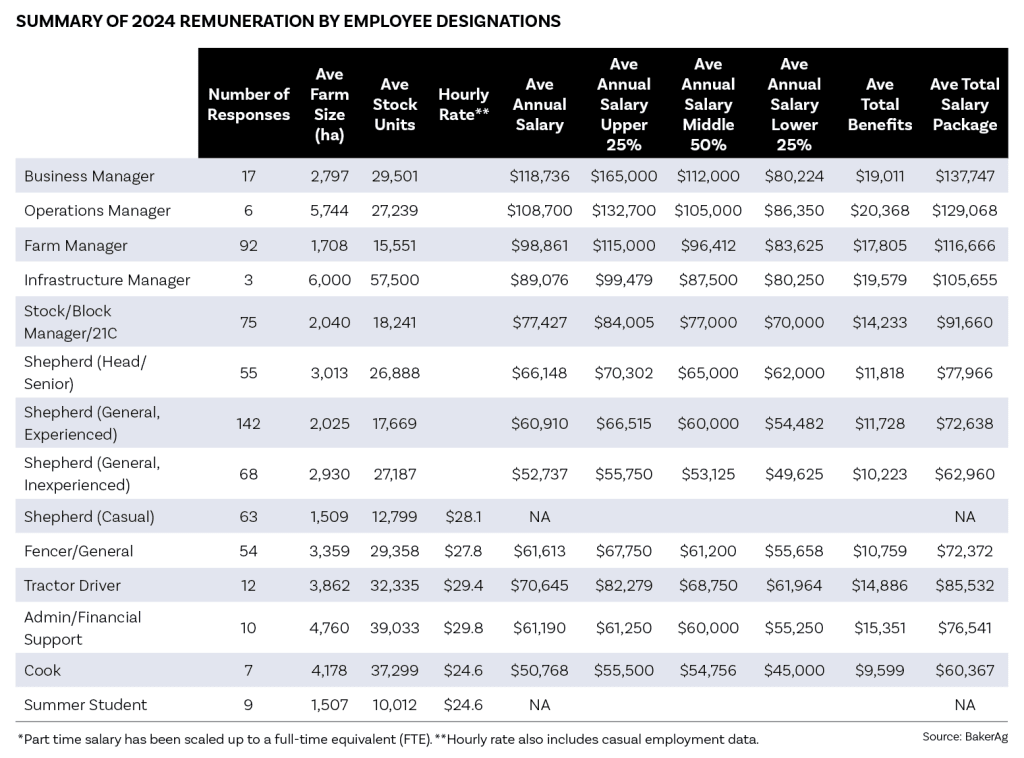
Agricultural consultancy firm BakerAg also released its 2024 Remuneration Survey for the sheep and beef sector earlier this year, which is a service available to clients on request. It too noted a rise in mean salary, and total remuneration package value since its last survey, released in 2022.
The 2024 survey suggests that the mean salary for the sheep and beef sector overall is 9% higher than that reported in 2022, rising to $76,401. When other employment benefits are included (e.g., accommodation, meat, Kiwisaver), this brings the mean TPV to $91,014.
“The recent low unemployment, and high inflation rates mean we are facing uncertain times. Our survey results give a snapshot at a single point in time, highlighting the remuneration and rewards made available within the sheep and beef sector. We note that many employees are in their first year of employment and that there are challenges attracting new entrants to the sector. We think it’s a positive sign that many respondents remain able to fill vacancies with good people and within a reasonable timeframe,” the executive summary noted.
However, its message to employers was not to become complacent about their employees. “In all agricultural sectors we are seeing competition for good employees, and those employees are mobile.
Make sure that you are communicating with your employees, understanding their needs and aspirations, and working with them. Often at times a chat, some assistance with training or recognition of a job well done will strengthen and secure the employer-employee relationship.”
It said the upward trend in salaries showed that the sheep and beef sector provided an attractive employment opportunity, offering a variety of competitive remuneration packages.
BakerAg consultant, Rachel Joblin, said since the survey was released, she had observed a slight softening in the job market as people chose not to replace fulltime staff members if they had any turnover, a sign of the tough environment currently.
“For those large to mid-size businesses with a fencer general, for example, they may not have that work because they’re saving on materials. We’re seeing some reshuffling of roles and we are hearing more of owners getting back into the day-to-day operations.”
Farmers were keen to retain good staff, she said, and there was a cost attached to staff turnover. Over the last two to three years, they had observed more ‘good behaviour’ from employers when it came to best practice, understanding their team and investing in their people.
“That includes understanding staff career plans and having a professional development programme for them. We are seeing a lot more young people at Farming for Profit and Farmer of the Year field days, and at discussion groups, using them as learning opportunities.”
As well, more employers are undertaking annual job sizing and formal reviews every six months. By job sizing, Joblin means considering the size of the role that the employee is employed to do, and ensuring remuneration is in line with market rate.
She says it’s critical we are competitive as an industry when it comes to pay, and this means taking into account the total package, with things like accommodation being included. “If we’re not competitive people will exercise the choice they have to look for another industry that’s better paying, has better conditions or has better career prospects.
“On the whole, I think we are doing a good job as an industry. Training and learning opportunities are the big ones, job satisfaction comes from knowing you are growing in the role. Job satisfaction and growth are strongly linked. Recognition is also important, not just financially, but verbally.”
When asked what we could do better Joblin pauses before suggesting that understanding each employee as a unique person and getting to know what matters to them could be a work-on. “Do they have a young family? If so, flexibility to get to school events might mean a lot to them. Do they play sport? The ability to get to practices and games is likely important to them.”
She says the standard of housing can also be a significant attraction (or detraction). “There’s a standard and you lose marks pretty quickly when those things are not up to scratch. Easy care, tidy sections, warm, dry house, access to schooling or bus routes are all considerations for people.”