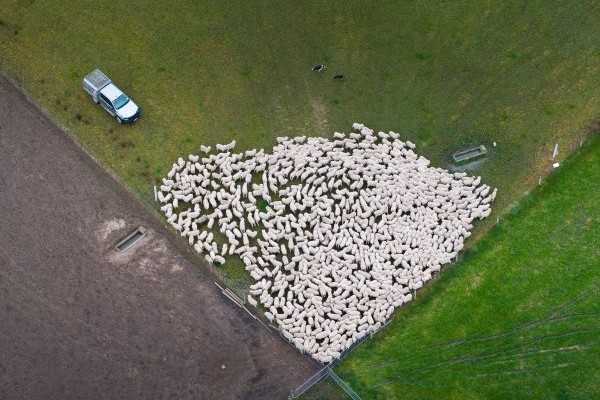
Managing challenges
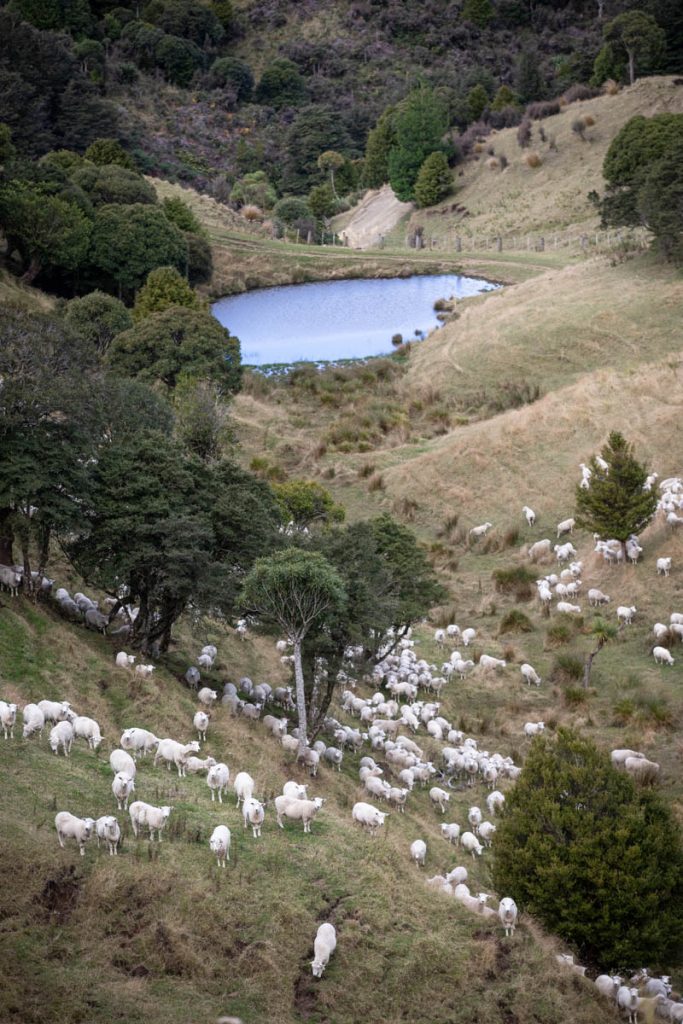
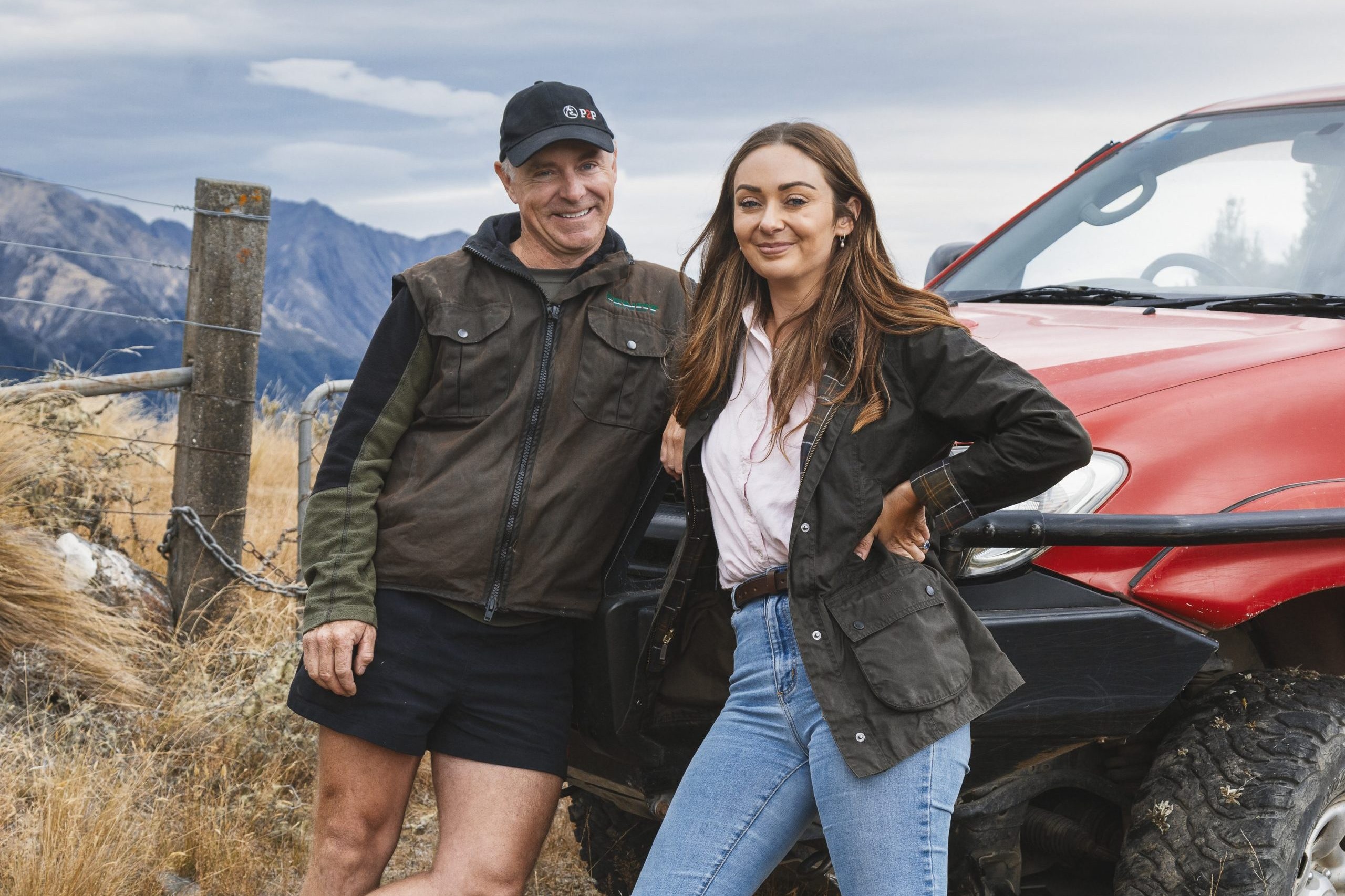
Motukawa Station is the engine room at the centre of the 5000 hectare Plimmer & Co farming operation. New manager Rimu Wipaki is looking to make changes that will harness its Taihape hill country power and lift productivity in both the sheep and beef operations.
Words & Photos Sarah Horrocks

From Wellington’s Plimmer steps to the green hills of Motukawa. These are words from the Plimmer family’s history records, which began with ‘the father of Wellington’ John Plimmer. Simon Plimmer is his great-great-great grandson and a co-owner of Plimmer & Co Farms, a landholding of 5000 hectares that incorporates four farms – Motukawa, Black Hill, Kellys and Northview – which all sit to the north of Taihape in the central North Island.
The total farming operation boasts 32,000 ewes and 1400 head of Angus cows/R2 heifers. Motukawa is the 2200 ha engine room in the centre of the four farms and, while Simon was brought up there with his siblings Sally and Hamish by his parents Anne and the late Warren Plimmer, he leaves the day-to-day farming in the capable hands of new manager Rimu Wipaki.
Motukawa hosts 13,000 of the sheep, with 10,000 Romdale ewes and 3000 ewe hoggets that now have a heavy influence from Forbes Cameron’s Ngāputahi Romneys.
Simon says it was a big decision to shift to Forbes’s Romneys, but ultimately the group wants to start its own stud at Black Hill to supply rams for the other farms, and Ngāputahi genetics are being used as the base for that. “We’ve leased 40 Ngāputahi hogget rams for the past two years,” Simon says.
Those rams are only put over the two, three and four-year-old ewes to breed replacements. The hoggets haven’t been rammed for three years after having lambing issues in the past. “We decided it was more profitable to put 500-1000 six-year-old ewes to a terminal ram since we get far more live lambs.”
The terminal used for the first time this year is a Headwaters ram, the final product being Lumina lamb. They’re not finishing the progeny at Motukawa, but rather just trading out the lambs at weaning. “It’s working pretty well,” Rimu says. The 1500 five-year-old ewes go to a terminal black face ram.
The overall lambing percentage is 135% at docking and although Rimu says he’d like to get that up a few percent, he says it’ll be a battle in such extensive, tough country.
Rimu has a good relationship with Anthony Oswald, a director at Taihape and Ruapehu Vets. He fills the knowledge gap in Simon and Rimu’s conversations, offering plenty of sound advice within the sheep and beef programmes.
This year 13,500 lambs came off Motukawa. The season has been really good but Simon says Rimu deserves a lot of the credit for the condition of the lambs being finished.
Hogget replacements are selected on type rather than size to try to get more of the Ngāputahi genetics cycling through, which Rimu says would typically be a bit smaller than the Romdale lambs at weaning.
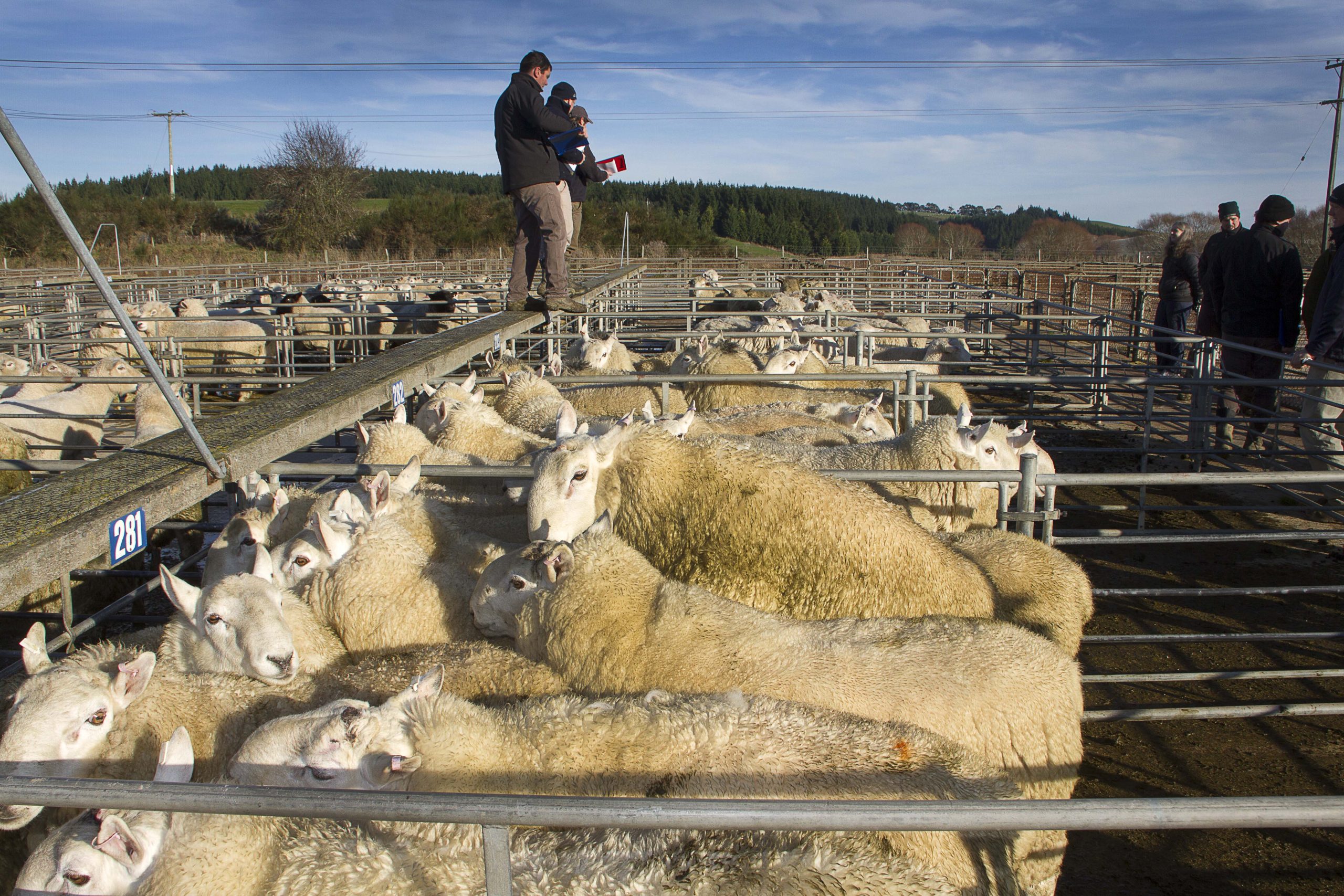
Usually, they get 2000 away off mum, killing fats to 17.5 kg carcase weight at Ovation and stores to 34 kg live weight. Lambing is in early September and after weaning remaining lambs are shorn and held on farm until early March when the store and fat markets pick up again. Rimu and Simon like to have all trade lambs sold by 30 April. “This year we had 4500 to go in March and the last 4000 in April,” Rimu says.
While the late lambing may seem a disadvantage for the Christmas lamb market, the lambs are attractive to a lot of finishers since they’ll be later cutting their teeth. “They’re all sold to Ovation finishers so essentially everything goes to Ovation in the end,” says Simon.
To get into the Ovation programme you need to be GAP (Global Animal Partnership) certified, which is a five-star global standard. Animal health is a big part of the certification – ensuring weaning isn’t too early, docking isn’t too late, animal health records are checked, water trough quality is monitored etcetera. The premium is there to be captured by farmers who are certified, and that lamb attracts premiums on the global stage. “We don’t get facial eczema or much fly so that makes it simple,” Rimu says. And since capsules are no longer available, they’re using a long-acting injection Marathon LA in the young stock for the treatment and control of internal parasites.
One big part of animal health that used to bring in the main income for the station is shearing. Rimu and Simon both see shearing as strictly an animal health cost nowadays, but still try to look at it in a positive light.
Simon did some math on the $5 it costs to shear the lambs at weaning. The wool is worth $2.50, assuming 1 kg/lamb. When those lambs are sold store at 35 kg they get a 10 cent per kg premium for being shorn. “If you include the $2.50 for the wool that’s a $1 profit – perhaps wishful thinking,” Simon jokes.
Despite the cost of shearing, Rimu has just shifted from 12 months (March) to six-month shearing (June and January). All the wool is sold to Segard Masurel. “We had to clip the ticket with an 11 month clip this year,” he says.
Rimu notes that with six-month shearing in this type of country, you’re going to eat a lot more grass, but that’s where the crops come into play – 80ha of kale or a kale swede mix for 7000 of the ewes. “We should be able to store enough feed and we’re on track this season,” he says.
Black Hides
Motukawa has always farmed black Angus cattle and the 450 mixed age (MA) cows and 160 heifers currently in residence are true to tradition. The bulls used have to be structurally sound and docility is paramount.
Rimu says he’s making some changes in the bull department, with temperament a big focus to ensure progeny are meeting specifications at processing.
The cattle progeny (steers) aren’t finished on Motukawa, instead shifting sideways to Northview, where they’re grown to 650 kg live weight and then killed into the AngusPure Special Reserve programme, which is destined for export to the USA. To qualify for the programme the steers or heifers need to be above 2.2 for marbling, and they must be tagged with an AngusPure Source and Trace tag. Among other specifications, there is also a pH requirement and therefore docility is essential to ensure carcases qualify.
When buying bulls for Motukawa, Rimu is looking for 600-day weights, IMF, carcase weight and of course, the maternal traits too. “IMF is a big focus for us,” Simon says.
The cows are bigger hill country cows at around 550kg and they do well in the winters, which are often laden with heavy snow and bitterly cold winds.
The tops of Motukawa reach up to 1100 metres above sea level (masl), the same height as the top of the Desert Road, so the cattle fend for themselves and have to work hard for food.
Heifers are mated to low birthweight Te Mania bulls and they have no issues with calving. Only those that reach 340kg by mating are put to the bull, with the remainder of the heifers having always been sold to live export.
Simon says it was a good income stream, with the heifers fetching $1000/head when they were only 200kg. This income has ceased for now but both Rimu and Simon are hopeful it will get going again with recent government changes.
The heifers not sold to export this year haven’t gone to waste, however. Rimu plans to increase MA cow numbers to 600, which would clean up a lot more of the tougher country. Sheep numbers would remain the same.“We could do with some more mouths,” Rimu says.
Heifer replacements have always been selected on type and size, the same as with the sheep, however, Rimu may look to utilise genomic testing to highlight heifers with better genomic packages. This would allow him to feed those chosen heifers better and improve the genetics coming into the main cow herd.
There is a range of bulls from various studs used in the MA cows, and genomic testing would also make it easy to see which bulls were leaving the better progeny.
The heifers were scanned at the end of March, with only 10 dries in the mob of 160, so this was a pleasing result.
KEY POINTS
- Motukawa Station is 2200ha
- Ranges from 550-1100 metres above sea level
- 13,000 sheep and 510 Angus females
- Part of Plimmer & Co Farms
- Central North Island High Country
Environmentally Minded
While the Plimmer family don’t call themselves eco-warriors, Simon is environmentally conscious and says that at the end of the day, it’s what Rimu is doing on the farm that makes the biggest difference. “He makes far more impact than I do filing paperwork in Wellington,” Simon says.
Simon goes on to say that making positive environmental change is about making small 1% changes that all add up to making a big difference. The farm is also home to lots of wild pigs and deer, and the numbers need to be closely monitored. Staff are encouraged to get out and cull for sport at every opportunity.
Simon is Chairman of the Upper Rangitikei River sub-catchment group, part of the Rangitikei Rivers Catchment Group, which encompasses 706,000 ha of farm land. There are 23 sub-groups and their initial focus is on water testing. “We need to get some factual information.”
Water testing will be carried out over five years to establish whether the quality is improving, or declining, or whether there’s even a problem.
The group also facilitates farmer workshops and field days to get farmers together and talk through regulatory changes and how to manage them. “We get farmers together to share ideas and get everyone on board.”
Simon says there’s no point in one farmer doing everything right if the farmer on the other side of the valley is not so willing. “Sometimes farmers just don’t know where to start and need some guidance and education.”
Motukawa has done a Sustainable Land Use Initiative (SLUI) with Horizons Regional Council, which outlines future projects, and what has been done so far, as well as monitoring progress.
There isn’t much of Motukawa that sits within the 10% gradient limit for winter cropping but common sense comes into play and Rimu ensures crops are set back from waterways and he always grazes down a slope to minimise run-off and mud. “When things look ugly, they generally are,” Simon says.
Horizons is proactive when it comes to fencing off waterways and native bush, having recently paid for 70% of a deer fencing project that closed off 20ha of native bush on Motukawa. Rimu and the team are also planting 40 poplars annually to help reduce slippage.
Pine trees make an appearance, but there are not as many as you may think when you cast your eye over the steep countryside. There is no more than 80ha of pines, and half of those are in the Emissions Trading Scheme, however, Simon admits they will be difficult to mill when the time comes. “My father planted a pine tree on any small pocket of land he deemed unproductive.”
There’s a large pocket of pine trees at the top of the farm, however recent upgrades to the central farm track may mean they can now be milled. The track now seems more fit for a car than State Highway 2 (Wairoa to Gisborne)!
Progress
The first 5 km of the 13 km main farm track is suitable for a stock truck, which makes trucking stock far less intensive. The stock themselves suffer less than they did when they had to trundle back to the homestead to be trucked.
The middle woolshed has also been reinstated, which means that same trip is travelled less frequently by the sheep at shearing time also. “That’s changed the farm from a management perspective,” Simon says.
While the top country is larger blocks, Rimu is working on reducing paddock sizes further, with the middle country fenced into 5ha blocks. Water is the biggest restriction currently, with natural dams and waterways being replaced with gravity-fed troughs throughout the farm. “We will pump the water to the top of the farm first,” Simon says.
The farm track upgrades will also make getting fertiliser to the bins on the airstrip easier. Access limitations were the primary reason for not getting any fertiliser onto Motukawa last year, and despite Rimu thinking this would have a big effect on fertility, historical habits paid forward. “They’ve never missed a year before and the levels aren’t as bad as I expected,” Rimu says. He adds that the volcanic ash soils help the Olsen P levels and the pH is pretty good.
Simon allows a strict budget for fertiliser and Rimu works with Ravensdown to put it on where it’s needed most. When questioned on how prices are affecting them, Simon was pretty pragmatic. “As fertiliser gets more expensive we’ll put less on,” he says.
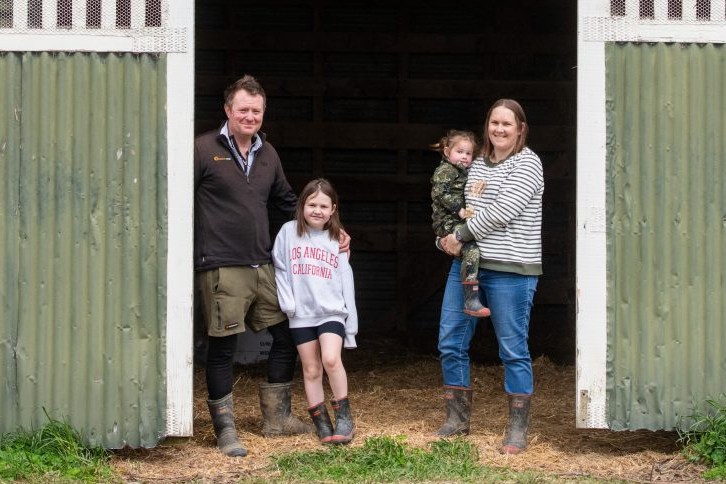
Farm IQ software is used and tells them 25% of the farm is croppable, but Rimu explains that those flatter areas are quite high (up to 1100 masl). The house where Rimu lives with his partner Shauna Pye and their children Clay (4) and Isaac (3) sits at 500 masl.
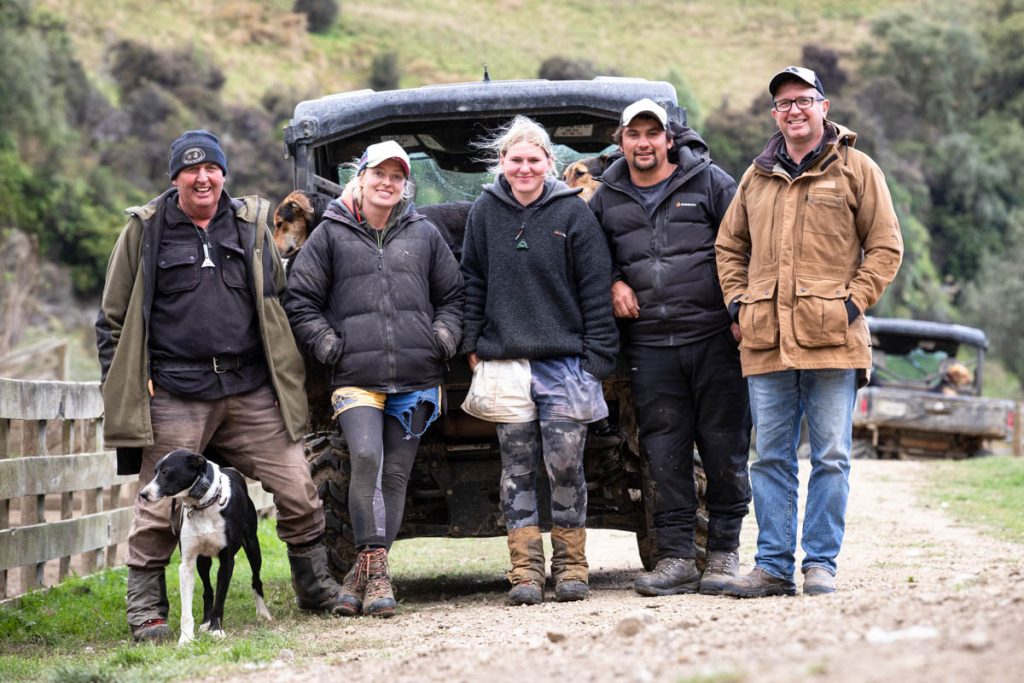
Rimu works alongside junior shepherd Ronaele Jones and there are a lot of casual staff while Rimu figures out what staffing structure he wants. “We definitely need two stockmen and a general hand, as well as myself,” he says.
The structure he’s figuring out is whether that means one senior and a junior, or perhaps two juniors, and the type of country may dictate that. Horses are used wherever possible since it’s safer, especially in winter. “We’re on horses 80% of the winter because the tracks are wet.”
Staff turnover also makes it hard to have machinery, since there may or may not be a capable driver available from one season to the next. For this reason, among others, Simon likes Rimu to use contractors for all the cropping and balage.“We don’t have iron disease,” Simon says.