Maize is a team effort
Maize has become a reliable and valuable crop for King Country farmers Matt and Olivia Buckley, but changing seasons and growing pressure from damaging insect populations mean consistently good yields don’t happen without effort. Words Anne Lee.
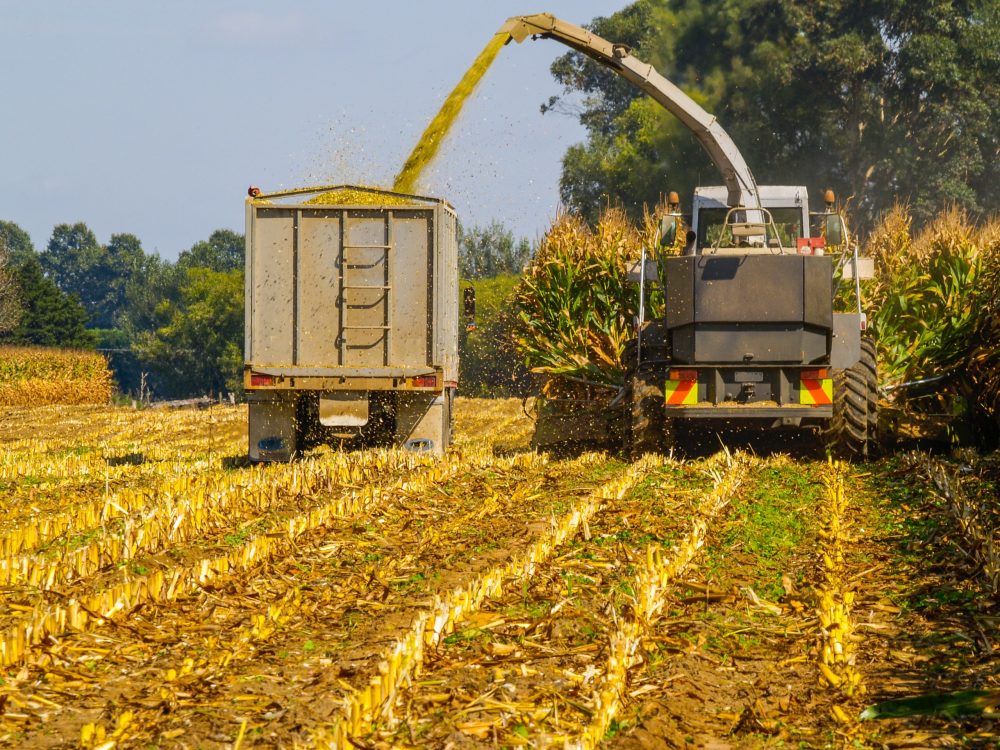
Maize fits in nicely with a winter annual grass crop used to fatten lambs at Eight Mile Farms in the King Country – a 2400ha operation that includes a 340ha dairy farm milking 820 cows, all wintered on the property. The enterprise also includes four sheep and beef properties, one of which is also run as a support block for the dairy unit rearing heifers and growing crops such as maize that’s then brought back to the dairy farm for milkers.
They converted the dairy farm in 2008 and maize silage has always been used as part of the system because its nutritional profile, of lower protein but high starch and soluble carbohydrate, complements that of pasture.
“We used to grow maize, before the dairy conversion, and sell it on contract to dairy farmers and we were getting yields of about 18t drymatter (DM) in those days, but I think we’re doing a better job now feeding it and obviously the hybrid varieties just keep getting better and better,” he says.
They’re now consistently producing 22-25t DM/ha regardless of seasonal variations and Matt says that’s also down to a team effort with great field support from his Farmlands Technical Support Officer, Nick Morrison, and Pioneer Area Manager, Sophie Rider, alongside fertiliser advice from AgKnowledge.
“Nick (Farmlands TFO) is like a terrier monitoring the crop throughout the season. He gets right into it, digging around in the soil to check for cutworm, monitoring any weeds or other pests right through to then advising us on harvest,” – Matt Buckley, King Country
“Nick is like a terrier monitoring the crop throughout the season. He gets right into it, digging around in the soil to check for cutworm, monitoring any weeds or other pests right through to then advising us on harvest,” Matt says.
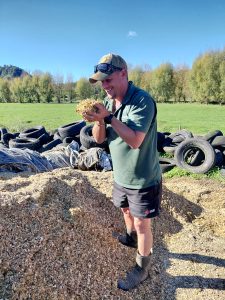
That support reduces the mental load for Matt and the farm teams as they have the confidence any issues will be identified or pre-empted, protecting yields.
But Nick says that works both ways, with Matt and the team always quick to act on advice.
“They don’t take short cuts. If we advise it needs spraying for example, they spray it straight away.”
Cutworm has become an increasing problem in recent years with changing climate, Nick says.
The pest is the larval or caterpillar stage of moth species and as the name suggests, the soil dwelling larvae attack plants, cutting into stems and young leaves. They can destroy whole paddocks of newly emerging maize crops within days, so prompt action is required, he says.
The pest has increased to such an extent that Nick’s been advising some farmers to include insecticides in pre-emergence sprays that have usually only required herbicides in the past.
Matt grows 20ha of maize – 15ha on the support block and 5ha on the dairy farm where it receives solids from the effluent system each year.
Maize silage is used strategically at two key times throughout the season.
“The first is over calving. It’s really lowered any incidence of metabolic issues at that time when cows are really mobilising calcium because its negative DCAD (dietary cation-anion difference) helps that mobilisation.
“We feed them 1–2kg DM/cow on trailers in the yard and it’s also become a really calm way to draft those freshly calved cows off and remove them from the springer mob. It’s also a great way to get minerals into them.”
Minerals such as magnesium oxide, sometimes a little salt or dicalcium phosphate (DCP) can easily be added to the diet that way. The second key feeding period is through summer and autumn when it’s used to meet feed deficits.
“We’ll feed 4–5kg DM/cow/day of maize silage out in the paddock if pasture growth isn’t keeping up with demand and we’ll top up with grass silage if needed,” he says.
Maize will stay in the system through autumn and can also be used after dryoff through the early part of the winter to add energy for those cows needing to increase body condition.
“It’s a great feed to complement our pasture because we know grass is high in protein so we want low protein, high energy and that’s how I select the maize varieties we actually use. I’m looking for the ones that are high starch and high soluble carbohydrates and have good digestibility and obviously a good silage yield.”
At 24–25t DM/ha he says it’s costing him about 14c/kg DM to grow and about 48c/kg DM in the stack, making it both nutritionally and financially a great option.
Visit farmlands.co.nz